
Training content development services create the materials organisations need to run consistent training, from trainer manuals and facilitation guides to slide decks, participant workbooks, job aids and self-learning modules. Bodhih develops content across leadership, soft skills, sales, HR and trainer certification, starting with needs analysis and learning objectives, followed by design, writing, review and testing.
- Delivered in person at your location or as live virtual sessions
- Designed with the ADDIE model and evaluated for behaviour change
- Offered by Bodhih since 2008 to 2,000+ organisations across 7 regions
Where and how: training content development services training as an in-person workshop in Bengaluru, Mumbai, Delhi NCR, Gurugram, Hyderabad, Chennai, Pune, Kolkata, Ahmedabad and Jaipur; as a live online course; or delivered overseas in Dubai, Singapore and across the Middle East, Asia and Africa.
Last reviewed by Siddharthan VGJ, Founder · Bodhih Training, Bengaluru
Training content development represents the cornerstone of successful learning initiatives. Without professionally designed materials, even the most skilled trainers struggle to deliver consistent learning experiences. Organizations require comprehensive training materials that support both facilitated sessions and independent learning journeys.
Bodhih Training transforms organizational learning through specialized content development services. Our end-to-end solutions encompass trainer manuals, participant workbooks, presentation materials, activity sheets, and self-learning resources. These materials elevate training delivery across leadership development, soft skills enhancement, communication capabilities, HR functions, sales excellence, and trainer certifications.
Discover comprehensive training content development solutions designed for organizational excellence. Explore how professionally crafted materials transform learning outcomes and accelerate capability building across your workforce.
Understanding Training Content Development
Training content development encompasses the systematic creation of educational materials that facilitate learning and performance improvement. This process transforms organizational knowledge and objectives into structured learning experiences. Content development requires careful analysis of learner needs, clear learning objectives, and strategic design decisions.
The development process begins with understanding what employees need to learn and why it matters to organizational success. Effective training materials bridge the gap between current performance levels and desired capabilities. Each component serves specific purposes within the broader learning ecosystem.
Core Components of Training Content
Comprehensive training programs rely on multiple content formats working in harmony. Trainer manuals provide facilitators with detailed guidance on session delivery. These materials include timing recommendations, facilitation notes, discussion prompts, and instructional strategies. Trainers depend on these resources to maintain consistency and quality across training sessions.
Participant workbooks complement facilitator materials by giving learners tangible resources for active engagement. Workbooks contain exercises, reflection questions, note-taking spaces, and reference materials. Participants use these tools during training and afterward as performance support resources. The workbook becomes their personalized learning companion throughout the development journey.

Presentation Materials
Visual presentations form the backbone of trainer-led sessions. Professionally designed slides communicate key concepts clearly and maintain learner attention. Effective presentation materials balance text, visuals, and interactive elements. They guide the training flow while reinforcing critical learning points.
Activity sheets extend learning beyond passive consumption. These tools engage participants in hands-on practice, problem-solving exercises, and skill application scenarios. Activities transform theoretical knowledge into practical capabilities through structured practice opportunities.
The Content Development Process
Professional content development follows structured methodologies that ensure quality and effectiveness. The process typically progresses through distinct phases. Each phase builds upon previous work while moving closer to finished materials ready for deployment.
Initial analysis establishes the foundation for everything that follows. Developers examine organizational objectives, learner characteristics, performance gaps, and environmental factors. This needs analysis phase clarifies what training must accomplish and who will benefit from the learning experience.
- Define measurable learning objectives aligned with business goals
- Identify target audience characteristics and prerequisite knowledge
- Determine appropriate content depth and breadth
- Select instructional strategies matching learning objectives
- Establish content structure and logical flow
- Create engaging activities that reinforce key concepts
Design decisions shape how learners will interact with content. Instructional designers select appropriate formats, develop content outlines, and plan learning activities. Design phase decisions directly impact engagement levels and learning transfer. This strategic planning prevents rework and ensures coherent materials.
Development brings designs to life through actual content creation. Writers craft instructional text, designers produce visuals, and developers build interactive elements. Quality assurance processes validate accuracy and usability throughout development. Iterative reviews refine materials before final delivery.
Comprehensive Trainer Support Materials
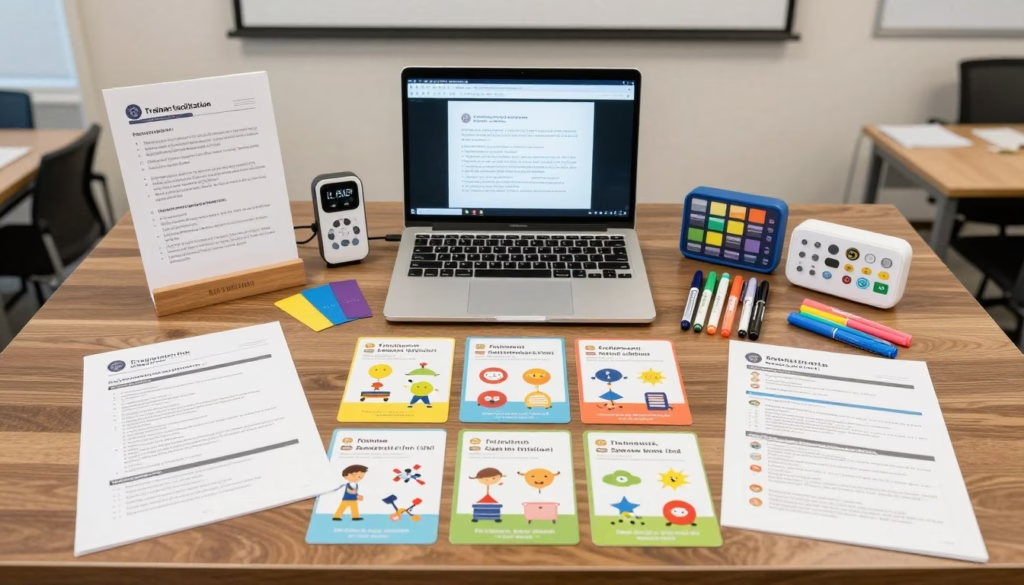
Trainers require robust support materials to deliver engaging and effective learning experiences. Professional trainer resources eliminate guesswork from facilitation. These materials empower even less experienced trainers to deliver consistent, high-quality sessions that achieve learning objectives.
Trainer Manuals and Facilitation Guides
Comprehensive trainer manuals serve as the facilitator’s primary reference throughout program delivery. These guides contain everything trainers need to conduct successful sessions. Detailed instructions walk trainers through each segment of the program from opening to closing activities.
Effective manuals include precise timing allocations for every component. Trainers appreciate knowing exactly how long each activity should take. This timing guidance helps maintain program flow and ensures coverage of all essential content within allocated time frames. The manual becomes an invaluable session management tool.

Discussion Facilitation
Skilled facilitation transforms content delivery into engaging dialogue. Trainer manuals provide carefully crafted discussion questions that stimulate thinking and encourage participation. These prompts guide conversations toward learning objectives while allowing natural interaction flow.
Activity Instructions
Complex activities require clear setup and facilitation guidance. Manuals break down each activity into manageable steps. Trainers receive specific instructions for introducing activities, monitoring progress, and conducting meaningful debriefs that connect experiences to learning points.
Expert facilitation tips enhance trainer confidence and effectiveness. These insider notes highlight common pitfalls, suggest adaptations for different audiences, and offer strategies for handling challenging situations. Experienced instructional designers share wisdom accumulated across hundreds of training sessions.
Presentation Slide Decks
Visual presentations powerfully reinforce verbal instruction and maintain learner focus. Professional slide decks balance aesthetics with functionality. Every slide serves clear instructional purposes rather than merely displaying information. Design principles guide layout decisions to maximize comprehension and retention.
Effective training presentations employ visuals strategically. Images, diagrams, and graphics illustrate concepts more effectively than text alone. Visual elements break up content and provide mental processing breaks. Well-designed slides enhance rather than distract from the trainer’s message.
- Clear visual hierarchy directing attention to key information
- Consistent branding elements maintaining organizational identity
- Minimal text per slide promoting verbal elaboration
- Relevant imagery connecting concepts to practical application
- Strategic use of color emphasizing important information
- Transition slides marking program sections and breaks
Presentation materials align perfectly with trainer manual instructions. Slide numbers referenced in facilitation guides help trainers navigate seamlessly. This synchronization between visual and written materials eliminates confusion and supports smooth delivery throughout training sessions.
Activity Sheets and Job Aids
Interactive activities transform passive learning into active skill building. Activity sheets provide structure for hands-on practice and application exercises. These resources guide participants through experiential learning while maintaining focus on intended outcomes. Structured activities yield better results than unguided practice.
Job aids extend learning beyond the training room into workplace performance. These reference tools help employees apply new knowledge on the job. Quick reference guides, checklists, and decision trees support performance without requiring memorization. Job aids bridge the gap between knowing and doing.
Develop Professional Trainer Materials for Your Organization
Elevate your training delivery with comprehensive facilitator resources. Receive customized trainer manuals, presentation decks, activity sheets, and job aids designed specifically for your organizational objectives and training programs.
Self-Learning Training Materials
Organizations increasingly recognize the value of self-directed learning opportunities. Self-learning materials enable employees to develop capabilities at their own pace and convenience. These resources democratize learning access across geographically distributed teams and diverse work schedules. Employees appreciate flexibility in their development journeys.
Effective self-learning content maintains engagement without instructor presence. Materials must be exceptionally clear, well-organized, and intrinsically motivating. Learners navigate content independently, so structure and usability become paramount. Professional development transforms instructional content for standalone effectiveness.
Digital Learning Modules
Digital modules deliver structured learning experiences through technology platforms. These self-contained units break complex topics into digestible segments. Each module focuses on specific learning objectives and includes built-in practice opportunities. Learners progress through content at comfortable speeds while maintaining clear direction.
Multimedia elements enrich digital learning experiences. Videos demonstrate procedures and skills in action. Audio narration supports different learning preferences. Interactive elements encourage active participation rather than passive reading. Technology enables engagement strategies impossible in print materials.
Video Content
Professional videos bring concepts to life through visual demonstration. Subject matter experts explain complex ideas clearly. Learners observe skills and procedures performed correctly. Videos provide models for performance improvement.
Knowledge Checks
Embedded assessments verify comprehension throughout modules. Immediate feedback reinforces correct understanding and corrects misconceptions. Regular knowledge checks maintain engagement and support retention through retrieval practice.
Interactive Scenarios
Realistic scenarios challenge learners to apply knowledge in simulated situations. Decision-based activities reveal consequences of choices. Scenario-based learning develops judgment and decision-making capabilities through safe practice.
Participant Workbooks for Independent Study
Workbooks adapted for self-study provide structure for independent learning journeys. These materials guide learners through content systematically without instructor presence. Clear instructions replace verbal explanations. Self-assessment tools help learners gauge their own progress and understanding.
Self-directed workbooks include more explanation than instructor-led versions. Concepts receive fuller treatment since no trainer elaborates verbally. Examples illustrate application more extensively. Additional context supports comprehension for diverse learner backgrounds and experience levels.
- Detailed explanations replacing verbal instruction
- Self-check questions with answer keys for independent verification
- Guided practice exercises with step-by-step instructions
- Reflection prompts encouraging metacognitive processing
- Application planning tools connecting learning to work context
- Progress tracking mechanisms maintaining motivation
Microlearning Resources
Microlearning delivers focused content in brief, targeted segments. These resources address specific knowledge gaps or skill components efficiently. Employees access learning in moments between tasks rather than extended sessions. Short duration reduces barriers to engagement and fits modern work patterns.
Effective microlearning content focuses tightly on single objectives. Each piece stands alone while potentially connecting to broader learning pathways. Concise presentation respects learner time constraints. Resources provide maximum value within minimal time investment. Organizations deploy microlearning for performance support and continuous development.
Flexible Learning Access
Self-learning materials empower employees to control their development timing and location. Learners access content during convenient moments throughout their workday. This flexibility increases completion rates and learning transfer. Organizations benefit from reduced training logistics and scheduling constraints.
Mobile-optimized content reaches learners anywhere on any device. Responsive design ensures usability across smartphones, tablets, and computers. Cloud-based platforms track progress automatically. Employees pick up exactly where they left off across different devices and sessions.
Comprehensive Training Areas Covered
Organizations require training content across diverse capability domains. Bodhih Training develops materials spanning the full spectrum of corporate learning needs. Our expertise encompasses both technical competencies and essential human skills. Comprehensive coverage ensures organizations find solutions regardless of development focus areas.
Leadership Development Content
Leadership capabilities determine organizational success across industries and contexts. Effective leaders inspire teams, drive results, and navigate complex challenges. Leadership training content addresses strategic thinking, decision-making, change management, and people development. Materials prepare emerging and established leaders for increasing responsibilities.
Leadership development programs require sophisticated content reflecting real organizational complexity. Materials incorporate case studies, strategic simulations, and reflection exercises. Content challenges leaders to examine assumptions and develop new perspectives. Practice activities build confidence in applying leadership principles to actual situations.
Strategic Leadership
Strategic leadership content develops executive-level thinking capabilities. Materials address vision setting, strategic analysis, resource allocation, and organizational alignment. Leaders learn frameworks for navigating uncertainty and positioning organizations for sustained success.
Team Leadership
Team leadership programs build capabilities for managing people effectively. Content covers delegation, motivation, performance management, and team development. Leaders develop skills for creating high-performing teams aligned with organizational objectives.
Request Team Leadership Content
Change Leadership
Change leadership content equips leaders to guide organizational transformations. Materials address change models, stakeholder engagement, communication strategies, and resistance management. Leaders learn to champion change while maintaining team morale and performance.
Explore Change Leadership Solutions
Soft Skills and Communication Training
Soft skills drive workplace effectiveness across roles and levels. Communication, collaboration, emotional intelligence, and adaptability impact daily performance. Organizations invest heavily in soft skills development recognizing their fundamental importance. Well-designed training content accelerates capability building in these critical areas.
Communication skills training materials address multiple dimensions of effective interaction. Content covers verbal communication, active listening, written communication, presentation skills, and difficult conversations. Learners practice techniques through realistic scenarios and receive structured feedback on performance.
- Professional communication protocols and business writing standards
- Active listening techniques for improved understanding and relationships
- Presentation design and delivery skills for impactful messages
- Conflict resolution strategies maintaining professional relationships
- Cross-cultural communication for diverse workplace environments
- Digital communication effectiveness for remote collaboration
Emotional intelligence content develops self-awareness and interpersonal effectiveness. Materials guide learners through understanding emotions, managing reactions, and navigating social situations skillfully. Exercises build empathy and relationship management capabilities. Emotional intelligence training enhances leadership potential and team collaboration.
Time management and productivity training helps employees maximize effectiveness. Content addresses priority setting, planning techniques, distraction management, and workflow optimization. Learners develop systems for managing competing demands and maintaining focus on high-impact activities. Productivity improvements directly benefit organizational performance.
Sales Training Content Development
Sales capabilities directly impact revenue generation and business growth. Effective sales training content addresses consultative selling, relationship building, objection handling, and closing techniques. Materials balance product knowledge with interpersonal skills. Content reflects current sales methodologies and customer expectations.
Sales training programs require extensive practical application opportunities. Content includes customer scenarios, sales conversations, and negotiation simulations. Learners practice skills in safe environments before facing real prospects. Structured feedback mechanisms accelerate skill development and confidence building.
Consultative Selling Skills
Modern sales approaches emphasize understanding customer needs deeply. Training content develops questioning techniques, needs analysis capabilities, and solution positioning. Sales professionals learn to create value through consultation rather than merely presenting products. Materials include customer conversation frameworks and discovery questioning guides.
Objection handling content prepares salespeople for customer concerns and resistance. Materials provide frameworks for addressing common objections constructively. Practice scenarios build confidence in navigating difficult conversations. Effective objection handling transforms resistance into opportunities for deeper understanding and relationship building.
HR Training and Development Programs
HR professionals require specialized knowledge spanning recruitment, performance management, employee relations, and talent development. Training content addresses both technical HR processes and interpersonal capabilities. Materials prepare HR teams to support organizational objectives through effective people management.
Performance management training equips managers with skills for developing employee capabilities. Content covers goal setting, feedback delivery, performance conversations, and development planning. Materials provide frameworks and tools for conducting meaningful performance discussions that drive improvement.
- Recruitment and selection techniques identifying top talent
- Onboarding program design accelerating new hire productivity
- Performance management systems driving continuous improvement
- Employee engagement strategies building organizational commitment
- Conflict resolution maintaining positive workplace relationships
- Compliance training ensuring regulatory adherence
Trainer Certification Programs
Organizations building internal training capabilities require trainer certification programs. These programs develop facilitation skills, instructional design knowledge, and platform presence. Content transforms subject matter experts into effective trainers who engage learners and drive results.
Trainer certification content addresses adult learning principles, facilitation techniques, and training delivery best practices. Participants learn to create engaging learning experiences and manage classroom dynamics. Practice sessions with feedback accelerate skill development. Certification programs ensure training quality and consistency across the organization.
Develop Customized Content for Your Training Domain
Transform your training programs with professionally developed content tailored to your specific needs. Whether leadership, sales, soft skills, HR, or specialized domains, receive materials designed for maximum learning impact and organizational results.
Call +91 99000 11601 Call +91 99000 11602 Email Solutions Team
The Content Development Process
Effective training content emerges from structured development processes. Professional methodologies ensure materials meet organizational needs and achieve learning objectives. Each phase builds upon previous work systematically. Organizations benefit from proven approaches that minimize risks and maximize quality outcomes.
Needs Analysis and Objective Setting
Content development begins with understanding organizational requirements thoroughly. Needs analysis identifies performance gaps, clarifies desired outcomes, and establishes success criteria. This foundation prevents misaligned content that fails to address actual organizational challenges. Time invested in analysis yields significant returns throughout development.
Stakeholder engagement ensures content alignment with business objectives. Conversations with leadership, managers, and learners reveal multiple perspectives on training needs. Subject matter experts provide technical input. HR partners share organizational context. Comprehensive input gathering creates shared understanding of project goals and constraints.
Performance Gap Identification
Analysis reveals differences between current and desired performance levels. Organizations clarify specific behaviors and capabilities requiring development. Understanding gaps precisely focuses content development efforts effectively.
- Current state assessment revealing existing capabilities
- Desired future state defining target performance levels
- Gap analysis identifying specific development needs
- Root cause analysis determining underlying issues
Learning Objective Definition
Clear objectives guide all subsequent development decisions. Well-written objectives specify observable behaviors and measurable outcomes. Objectives connect directly to identified performance gaps and organizational needs.
- Specific behavioral outcomes expected from learners
- Measurable criteria determining objective achievement
- Realistic expectations given time and resources
- Alignment with broader organizational goals
Audience Analysis
Understanding learner characteristics shapes appropriate content approaches. Analysis examines existing knowledge, learning preferences, and workplace context. Content designed for specific audiences achieves greater effectiveness.
- Current knowledge and skill levels
- Job roles and responsibilities context
- Learning preferences and access to technology
- Motivation levels and engagement factors
Constraints and Requirements
Practical considerations influence content design decisions. Organizations specify delivery formats, timing constraints, budget parameters, and quality standards. Early identification of constraints prevents late-stage surprises.
- Available delivery formats and platforms
- Time allocated for training participation
- Budget constraints affecting development scope
- Quality standards and approval processes
Instructional Design and Content Strategy
Instructional design transforms learning requirements into practical content strategies. Designers select appropriate instructional methods matching learning objectives. Content structure emerges through careful planning. Design decisions establish frameworks guiding all subsequent development work.
Content sequencing affects learning effectiveness significantly. Designers organize topics logically from foundation to complexity. Prerequisites precede advanced concepts. Related ideas cluster together for coherent understanding. Strategic sequencing supports natural knowledge building and skill progression.
- Instructional strategy selection based on learning objectives
- Content outline defining topics and organizational structure
- Activity design planning engagement and practice opportunities
- Assessment strategy determining knowledge verification methods
- Media selection choosing appropriate delivery formats
- Project timeline establishing development milestones
Content Creation and Development
Development brings instructional designs to life through actual content creation. Writers produce clear, engaging instructional text. Designers create visual elements supporting comprehension. Media specialists develop videos, animations, and interactive elements. Development requires coordination across multiple specialists.
Quality assurance processes ensure accuracy and effectiveness throughout development. Regular reviews catch errors early when corrections cost less. Subject matter experts verify technical accuracy. Instructional designers confirm alignment with learning objectives. Multiple review cycles refine materials progressively.
Content Writing
Professional writers craft clear, concise instructional text. Content balances comprehensiveness with readability. Writers adapt tone and vocabulary for target audiences while maintaining engagement throughout materials.
Visual Design
Designers create graphics, diagrams, and layouts enhancing comprehension. Visual elements illustrate complex concepts clearly. Professional design maintains brand consistency while maximizing instructional effectiveness.
Multimedia Production
Media specialists produce videos, animations, and interactive elements. Professional production values enhance credibility and engagement. Multimedia content brings abstract concepts to life through visualization and demonstration.
Review, Testing, and Refinement
Rigorous review processes validate content quality before deployment. Multiple stakeholders examine materials from different perspectives. Subject matter experts verify accuracy. Target audience representatives assess clarity and usability. Revisions address identified issues systematically.
Pilot testing reveals real-world effectiveness with actual learners. Small groups experience materials under realistic conditions. Feedback identifies confusing sections, pacing issues, and engagement gaps. Testing insights drive final refinements ensuring optimal results at full deployment.
Ready to start your content development project?
or email solutions@bodhih.com
Benefits of Professional Training Content Development
Organizations investing in professional content development realize substantial returns. Quality materials elevate training effectiveness significantly. Benefits extend beyond immediate learning outcomes to broader organizational impact. Strategic content investment supports long-term capability building and competitive advantage.
Consistency Across Training Delivery
Standardized materials ensure consistent learning experiences regardless of trainer or location. Every learner receives the same quality instruction and resources. Consistency prevents knowledge gaps and maintains training standards. Organizations operate confidently knowing all employees receive equivalent development opportunities.
Professional content reduces dependency on individual trainer expertise. Even less experienced facilitators deliver effective sessions with robust support materials. Detailed facilitation guides compensate for varying skill levels. Organizations scale training programs without quality degradation as programs expand.
Time and Resource Efficiency
Ready-to-use materials eliminate time spent creating content internally. Subject matter experts focus on expertise rather than instructional design. Organizations deploy training faster responding to urgent capability needs. Efficiency gains compound across multiple programs and delivery cycles.
Professional development prevents costly mistakes common in amateur content creation. Experienced designers avoid pitfalls that waste time and resources. Quality materials require fewer revisions and last longer before updates. Initial investment yields returns through extended use and reduced rework.
- Accelerated program deployment meeting urgent business needs
- Reduced internal resource allocation to content creation
- Lower revision costs through professional quality standards
- Extended content lifespan before requiring updates
- Scalability supporting organizational growth without proportional cost increases
Enhanced Learning Outcomes
Instructionally sound materials accelerate learning and improve retention. Evidence-based design principles maximize cognitive processing. Appropriate practice opportunities develop competence effectively. Learners achieve objectives faster with professional content than amateur alternatives.
Engaging materials maintain learner motivation throughout programs. Professional design sustains attention and encourages active participation. Varied activities prevent boredom and fatigue. Higher engagement translates directly to better knowledge retention and skill transfer to workplace performance.
Measurable Performance Improvement
Quality training content drives observable behavior changes and performance gains. Organizations track metrics demonstrating training impact. Improved capabilities contribute to business results directly. Measurement validates training investments and guides future decisions.
Long-term retention increases when content applies adult learning principles effectively. Spaced practice, varied application contexts, and meaningful connections to work experience enhance memory consolidation. Learners access knowledge months after training completion supporting sustained performance improvement.
Professional Image and Credibility
Polished materials reflect positively on organizational professionalism. Employees perceive training investment as evidence of organizational commitment to their development. Quality content enhances L&D department credibility internally. Professional appearance differentiates organizations competing for talent.
External audiences judge organizational sophistication partially through training quality. Clients receiving training from partners evaluate materials critically. Suppliers providing training to distribution channels represent their brands through content. Professional development elevates brand perception across stakeholder groups.
Choosing a Training Content Development Partner
Selecting the right content development partner significantly impacts training program success. Organizations evaluate potential partners across multiple criteria. The ideal partner combines instructional expertise, subject matter knowledge, and practical business understanding. Partnership quality determines content effectiveness and project satisfaction.
Essential Partner Capabilities
Effective partners demonstrate proven instructional design expertise. Teams include certified instructional designers understanding learning science and adult education principles. Design capabilities ensure pedagogically sound materials optimized for learning effectiveness. Organizations verify partner credentials and review previous work samples.
Subject matter expertise varies by training domain. Partners covering your specific content areas bring valuable knowledge reducing development time. Organizations assess whether partners understand industry context and technical requirements. Relevant experience accelerates content creation and improves accuracy.
- Instructional design credentials and learning science knowledge
- Subject matter expertise relevant to required training areas
- Portfolio demonstrating quality and range of previous projects
- Process maturity ensuring reliable project execution
- Technology capabilities supporting required delivery formats
- Scalability handling projects from small to enterprise scope
Partnership Approach and Communication
Strong partnerships feature collaborative working relationships. Partners invest time understanding organizational culture, objectives, and constraints. Communication remains open and frequent throughout projects. Organizations value partners treating their success as shared goals rather than transactional relationships.
Responsive communication prevents project delays and misunderstandings. Partners provide regular progress updates and address concerns promptly. Clear processes for feedback and revisions maintain project momentum. Communication quality often distinguishes satisfactory partnerships from exceptional ones.
Value and Investment Considerations
Content development represents significant investment requiring careful evaluation. Organizations balance cost against expected quality and outcomes. Lowest price rarely delivers best value. Experienced partners justify higher fees through superior quality, efficiency, and results.
Long-term value extends beyond initial content creation. Reusable materials serve multiple cohorts reducing per-learner costs. Quality content requires fewer updates and revisions. Organizations calculate total cost of ownership including maintenance and future modification needs.
Partner with Training Content Development Experts
Bodhih Training brings extensive expertise across all training domains and content formats. Our collaborative approach ensures materials perfectly aligned with your organizational objectives. Experience the difference professional content development makes in training effectiveness and learning outcomes.
Call +91 99000 11601 Call +91 99000 11602 Call +91 99000 11603
Email: solutions@bodhih.com
Bodhih Training Content Development Services
Bodhih Training delivers comprehensive content development solutions elevating organizational learning capabilities. Our services span complete content creation from needs analysis through final delivery. Organizations receive professionally designed materials precisely aligned with their unique requirements and objectives.
End-to-End Content Solutions
Bodhih Training manages entire content development lifecycles. We handle every phase from initial consultation through final material delivery. Organizations engage a single partner for all content needs rather than coordinating multiple vendors. Integrated solutions ensure consistency and quality across all components.
Our comprehensive approach addresses both trainer-led and self-learning requirements. Organizations receive materials supporting multiple delivery modalities. Flexibility enables training deployment through preferred channels and formats. Content adapts to organizational infrastructure and learner access patterns.
Trainer Manuals
Comprehensive facilitation guides providing trainers complete session support. Materials include timing, discussion prompts, activity instructions, and expert facilitation tips. Trainers deliver confident, effective sessions regardless of experience level.
Participant Workbooks
Engaging learner materials supporting active participation and knowledge retention. Workbooks include exercises, reflection questions, planning tools, and reference resources. Participants retain valuable resources extending learning beyond training sessions.
Presentation Slides
Visually compelling slide decks maintaining learner attention and reinforcing key concepts. Presentations balance aesthetics with instructional effectiveness. Professional design reflects organizational quality standards while supporting learning objectives.
Explore Presentation Solutions
Activity Sheets
Structured exercises promoting skill practice and knowledge application. Activity materials guide learners through hands-on experiences building competence. Varied activities maintain engagement while addressing diverse learning preferences.
Job Aids
Performance support tools enabling workplace application. Job aids provide quick reference during task execution. Resources bridge training to performance supporting capability transfer and sustained improvement.
Self-Learning Modules
Independent study materials enabling flexible learning access. Modules include multimedia content, interactive activities, and self-assessments. Employees develop capabilities at convenient times supporting modern workplace patterns.
Customization for Your Organization
Every organization possesses unique culture, challenges, and objectives. Bodhih Training customizes content reflecting your specific context. Materials incorporate organizational terminology, examples, and branding. Customization ensures immediate relevance and application to your workplace environment.
We integrate actual scenarios and cases from your operations. Real examples resonate more powerfully than generic illustrations. Learners recognize situations and apply insights directly. Customization transforms abstract concepts into practical solutions addressing actual organizational challenges.
- Organizational branding integration across all materials
- Industry-specific examples and case studies
- Internal terminology and communication style alignment
- Competency framework integration matching your models
- Cultural considerations reflecting organizational values
- Scalable solutions supporting current and future needs
Expert Team and Collaborative Process
Our team combines instructional designers, subject matter experts, graphic designers, and project managers. Diverse expertise ensures comprehensive content quality. Experienced professionals bring best practices from thousands of previous projects across industries and domains.
Collaborative processes keep organizations involved throughout development. Regular check-ins ensure alignment with expectations. Iterative reviews incorporate feedback progressively. Transparent communication prevents surprises and builds confidence in final outcomes.
Proven Development Methodology
Structured processes ensure consistent quality and reliable timelines. Our methodology incorporates industry best practices refined through extensive experience. Organizations benefit from mature processes reducing risks and delivering predictable results.
Quality assurance checks occur throughout development rather than only at completion. Early detection prevents costly late-stage revisions. Multiple review cycles progressively refine materials toward excellence. Quality commitment ensures materials meeting highest professional standards.
Training Domain Expertise
Bodhih Training develops content across comprehensive training areas. Our expertise spans leadership development, soft skills training, communication enhancement, HR capabilities, sales excellence, and trainer certifications. Domain breadth enables organizations to engage one partner for diverse content needs.
Deep subject matter knowledge accelerates content creation and ensures accuracy. Our experts understand nuances within each training domain. Technical depth prevents superficial content failing to develop genuine capabilities. Organizations trust our materials because expertise shows throughout quality and relevance.
Getting Started with Content Development
Beginning content development projects requires clear understanding of organizational needs and objectives. Initial consultations establish project parameters and build partnership foundations. Organizations articulate requirements while partners share capabilities and approaches. Alignment during this phase determines ultimate project success.
Initial Consultation Process
Bodhih Training begins engagements with comprehensive needs discussions. We explore your training objectives, target audiences, existing materials, and desired outcomes. Conversations reveal organizational context essential for effective content development. Understanding your situation enables tailored recommendations matching specific requirements.
Consultations clarify project scope, timeline expectations, and budget parameters. Transparent discussions prevent misunderstandings later. Organizations receive realistic assessments of what projects entail. Clear expectations support successful partnerships and satisfactory outcomes for all participants.
- Training objective clarification and success criteria definition
- Target audience analysis and learning need identification
- Existing material review and gap assessment
- Delivery format requirements and technology considerations
- Project timeline discussion and milestone planning
- Budget parameters and investment planning
Project Planning and Kickoff
Formal project planning establishes clear roadmaps from start to completion. Plans specify deliverables, timelines, review points, and responsibilities. Organizations understand what to expect and when throughout development. Detailed planning prevents confusion and keeps projects progressing smoothly.
Kickoff meetings align all stakeholders on project direction and processes. Teams introduce themselves and establish communication protocols. Initial planning decisions receive confirmation. Kickoffs energize teams and launch projects with clarity and momentum.
Ongoing Communication and Reviews
Regular communication maintains project momentum and alignment. Scheduled check-ins provide progress updates and address emerging questions. Organizations remain informed without requiring excessive time investment. Proactive communication prevents surprises and builds confidence.
Structured review processes incorporate organizational feedback systematically. Draft materials receive examination at planned intervals. Feedback guides revisions before proceeding to next phases. Iterative refinement produces superior final products meeting expectations precisely.
Transform Your Training Programs Today
Begin your content development journey with Bodhih Training. Schedule a free consultation to discuss your training content needs and discover how professional materials elevate learning outcomes. Our team stands ready to help you achieve training excellence.
+91 99000 11601 +91 99000 11602 +91 99000 11603
Email us: solutions@bodhih.com
Elevating Organizational Capabilities Through Content Excellence
Training content development forms the foundation of effective organizational learning. Professional materials enable consistent, engaging, and impactful training experiences. Organizations investing in quality content development realize substantial returns through improved workforce capabilities and business performance.
Bodhih Training partners with organizations seeking training content excellence. Our comprehensive services span trainer support materials and self-learning resources across all training domains. Customized solutions reflect unique organizational contexts while maintaining professional quality standards.
The journey toward training excellence begins with a single conversation. Explore how professionally developed content transforms your learning initiatives and accelerates capability building. Connect with Bodhih Training to discuss your content development needs and discover possibilities for organizational advancement.
Organizational success depends increasingly on workforce capabilities developed through strategic learning initiatives. Professional training content development ensures learning investments deliver maximum impact. Quality materials elevate training from cost centers to strategic capability engines driving competitive advantage.
Your organization deserves training content matching your commitment to excellence. Partner with experts understanding both learning science and business realities. Transform training effectiveness through materials designed for results. Begin building superior training content today.
Frequently asked questions
What does a training content development partner deliver?
A training content development partner delivers trainer manuals and facilitation guides, presentation slide decks, participant workbooks, activity sheets, job aids and self-learning materials such as digital modules, videos and knowledge checks. The work follows a process of needs analysis, instructional design, content creation, and review and testing, customised to the organisation's domain.
What is training content development services?
Who is the Training Content Development Services program for?
Organisations planning learning programs for their teams. Bodhih tailors the examples, case studies and depth to your industry, culture and team level.
How long is the Training Content Development Services program?
Bodhih tailors the duration and depth to your goals and team, from focused workshops to multi-session learning journeys. Share your requirement and we will recommend a format.
Can Training Content Development Services be delivered online?
Yes. Training Content Development Services can run in person at your location, as live virtual sessions for distributed or hybrid teams, or as a blended journey that adds self-paced learning on Bodhih.org between sessions.
How is the impact of Training Content Development Services measured?
Success measures for Training Content Development Services are agreed with you before design, as part of the ADDIE model. Bodhih can add pre- and post-program assessments on AssessAll and manager check-ins to track behaviour change.