
Strategic team building differs from traditional team building because it targets a team's specific work problems instead of one-off fun events. It addresses goal alignment, role clarity, trust, communication and conflict, with reinforcement and clear success metrics. Bodhih runs it as a 2-day offsite for one team of 8 to 25 people, ending with a signed team charter.
- Delivered in person at your location or as live virtual sessions
- Designed with the ADDIE model and evaluated for behaviour change
- Offered by Bodhih since 2008 to 2,000+ organisations across 7 regions
Where and how: corporate team building training as an in-person workshop in Bengaluru, Mumbai, Delhi NCR, Gurugram, Hyderabad, Chennai, Pune, Kolkata, Ahmedabad and Jaipur; as a live online course; or delivered overseas in Dubai, Singapore and across the Middle East, Asia and Africa.
Last reviewed by Siddharthan VGJ, Founder · Bodhih Training, Bengaluru
Every organisation faces a critical challenge. How do you transform individual talent into a unified, high-performing team? The answer lies in strategic team building for corporate teams. In today’s competitive business landscape, organisations that invest in comprehensive team building activities see measurable improvements in productivity, employee engagement, and bottom-line results.Team building is not about trust falls or outdoor adventures alone. It represents a systematic approach to developing workplace relationships, enhancing communication skills, and creating a culture of collaboration.
When done correctly, team building activities for employees become the foundation for organisational success.This comprehensive guide explores how corporate team building programs help organisations effectively build and manage teams, handle conflict, improve interpersonal relationships, and accelerate organisational growth. Whether you manage a small team or lead an entire department, understanding these principles will equip you with practical strategies to transform your workplace.
Understanding Team Building for Corporate Teams: Beyond Activities to Strategy
Team building for corporate teams represents far more than organising occasional games or off-site events. It encompasses a strategic approach to developing cohesive units that work together effectively toward common objectives. At its core, team building focuses on strengthening relationships between team members, enhancing communication, and fostering an environment where collaboration becomes second nature.
Corporate team building differs fundamentally from casual group activities. It involves structured interventions designed to address specific organisational challenges. These challenges might include communication breakdowns, interpersonal conflicts, lack of trust, or misalignment with company goals. Professional team building activities create opportunities for team members to understand each other’s working styles, strengths, and perspectives.
Research consistently demonstrates that organisations investing in team building activities see significant returns. Teams with strong interpersonal relationships show 21% higher profitability compared to those with poor dynamics. Furthermore, engaged teams experience 41% lower absenteeism and 59% less turnover. These statistics underscore why forward-thinking organisations prioritise team building as a strategic investment rather than an optional expense.
The Core Components of Effective Team Building
Successful team building programs rest on several foundational elements. Understanding these components helps organisations design interventions that create lasting impact rather than temporary enthusiasm.
First, effective team building addresses the human dimension of work. Every team member brings unique personality traits, communication preferences, and work styles. Team building activities help individuals recognise these differences and learn to leverage diversity as a strength. Through personality assessments and reflective exercises, participants gain insights into their own behaviours and how they impact others.
Second, quality team building focuses on specific outcomes. Rather than generic activities, targeted interventions address particular challenges. For example, a team struggling with communication might engage in exercises specifically designed to improve active listening and clear expression. A newly formed team might focus on establishing trust and defining shared values.
Third, professional corporate team building programs incorporate experiential learning methodologies. Participants learn by doing, not just listening. Through simulations, role-plays, and interactive challenges, team members practise new behaviours in safe environments before applying them in actual work situations.
Traditional Team Building
- Focus on fun and entertainment
- One-time events with no follow-up
- Generic activities for all teams
- Limited connection to work challenges
- Minimal measurement of outcomes
Strategic Team Building
- Addresses specific organisational needs
- Ongoing development with reinforcement
- Customised interventions for team context
- Direct application to workplace situations
- Clear metrics for success evaluation
Why Team Building Matters in the Indian Corporate Context
The Indian corporate environment presents unique dynamics that make team building particularly valuable. Indian workplaces often bring together people from diverse cultural backgrounds, linguistic traditions, and generational perspectives. A team in Mumbai might include members from different states, each bringing distinct communication styles and work approaches.
Furthermore, the rapid growth of Indian organisations creates constant team changes. Companies regularly form new teams, integrate acquired businesses, or restructure departments. These transitions create periods where team cohesion suffers and productivity dips. Strategic team building activities help teams navigate these changes more smoothly.
The rise of hybrid and remote work adds another layer of complexity. Team members who once collaborated face-to-face now interact primarily through digital channels. This shift requires new approaches to building relationships and maintaining team spirit. Effective team building for corporate teams now includes both in-person and virtual components designed for the modern workplace.
How Team Building Helps Build and Manage Effective Corporate Teams
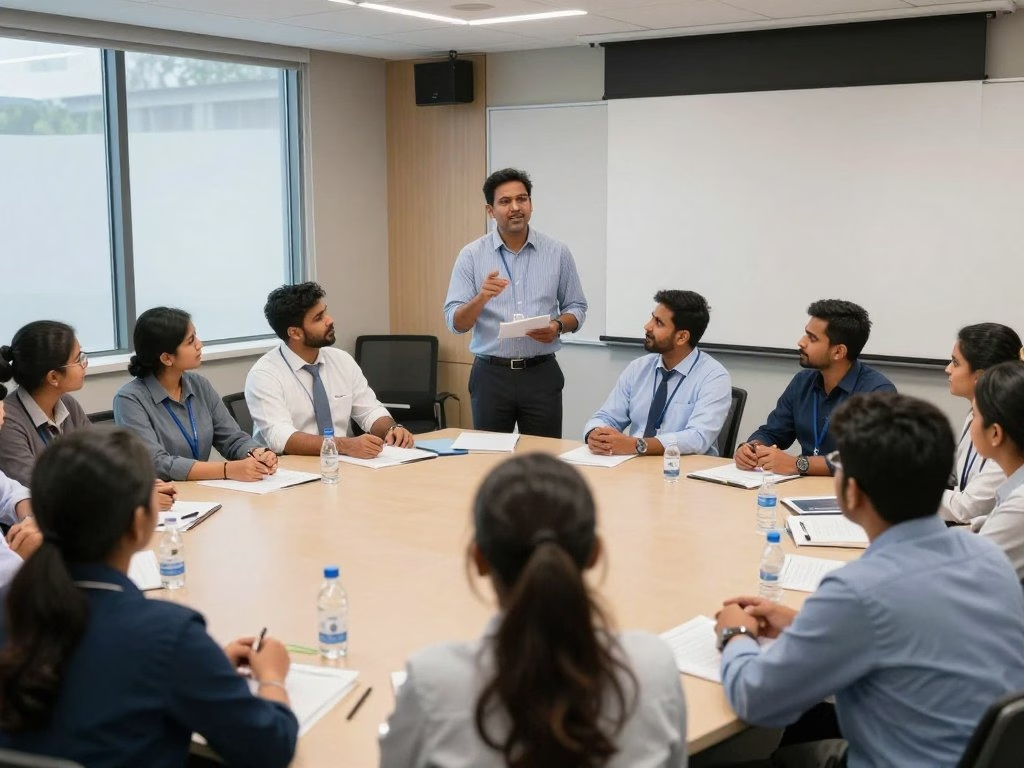
Building an effective team requires more than simply assembling talented individuals. High-performing teams share common characteristics: clear goals, defined roles, mutual accountability, and strong interpersonal connections. Team building activities create the foundation for these characteristics to develop and flourish.
When organisations invest in corporate team building programs, they address multiple dimensions of team effectiveness simultaneously. These programs help teams establish shared understanding of objectives, clarify individual responsibilities, develop efficient work processes, and build the trust necessary for open communication. Each element reinforces the others, creating a positive cycle of improvement.
Establishing Clear Team Objectives and Alignment
One primary benefit of team building lies in helping teams achieve alignment around common goals. Often, team members work in silos, focusing on individual tasks without understanding how their work contributes to broader objectives. This misalignment leads to duplicated efforts, conflicting priorities, and missed opportunities for collaboration.
Structured team building activities bring the entire team together to articulate shared objectives. Through facilitated discussions and goal-setting exercises, team members develop a common vision of success. They identify key priorities, discuss resource allocation, and agree on success metrics. This process transforms abstract company goals into concrete team commitments that every member understands and supports.
Moreover, team building creates space for honest conversations about obstacles and concerns. In the pressured environment of daily work, team members rarely have opportunities to step back and discuss systemic issues. Team building sessions provide this critical space, allowing teams to address underlying problems that impede effectiveness.
Defining Roles and Responsibilities Through Team Building
Role ambiguity represents another common challenge in corporate teams. When responsibilities overlap or remain undefined, conflicts arise and important tasks fall through cracks. Team building activities help teams clarify who does what, eliminating confusion and improving coordination.
Through mapping exercises and responsibility charting, teams visualise how work flows between members. They identify gaps in coverage, redundant efforts, and handoff points where miscommunication typically occurs. This clarity enables team members to work more efficiently and reduces friction caused by role confusion.
Additionally, team building exercises reveal hidden talents and interests. A team member might demonstrate facilitation skills during a group activity, suggesting potential for taking on coordination responsibilities. Another might show analytical strength that could be leveraged for problem-solving tasks. These discoveries allow teams to optimise how they deploy individual strengths.
Build High-Performance Teams with Expert Guidance
Discover how Bodhih’s customised team building workshops help organisations create aligned, effective teams. Our facilitator-led programs address your specific challenges and deliver measurable results.
Explore Our Team Building Programs
Developing Trust and Psychological Safety
Trust forms the bedrock of every effective team. Without trust, team members hesitate to share ideas, avoid asking for help, and withhold constructive feedback. This defensive behaviour stifles innovation and prevents teams from reaching their potential. Team building activities specifically designed to build trust create environments where vulnerability becomes acceptable.
Experiential team building exercises put team members in situations requiring mutual reliance. When a person must depend on colleagues to complete a challenge, they experience trust in action. These experiences translate into workplace confidence that team members will support each other when stakes are high.
Psychological safety—the belief that you can speak up without fear of punishment or humiliation—emerges from repeated positive interactions. Team building creates numerous opportunities for such interactions. As team members collaborate on activities, share personal stories, and support each other through challenges, they build the relationship foundation that makes psychological safety possible.
Improving Communication Patterns and Information Sharing
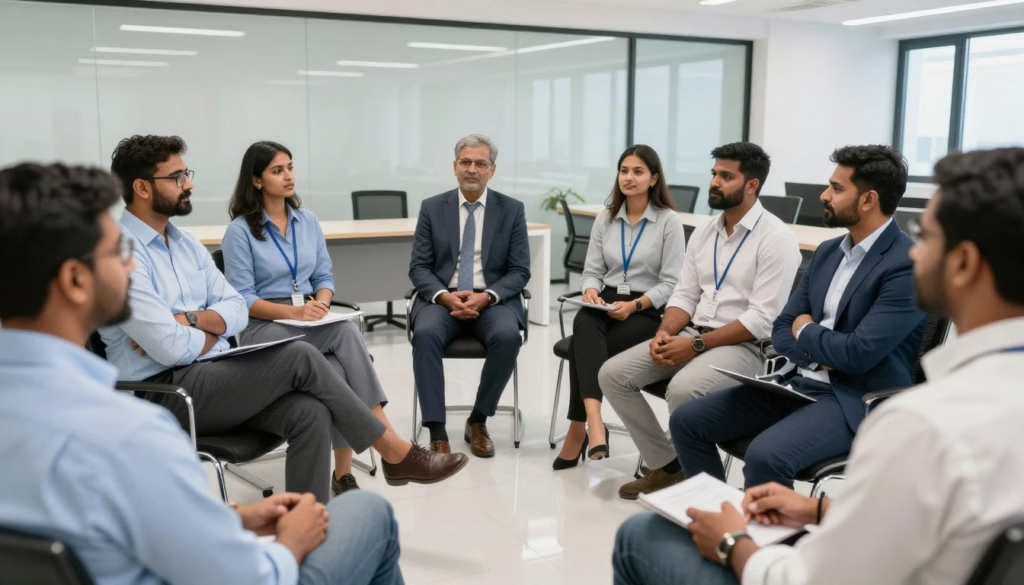
Communication breakdown ranks among the most frequently cited causes of team dysfunction. Messages get misinterpreted, important information fails to reach relevant people, and conflicts escalate due to misunderstanding. Corporate team building programs directly address these communication challenges through targeted activities.
Many team building games require precise communication under challenging conditions. For example, activities involving non-verbal communication force team members to find new ways to convey information. These exercises highlight how easily messages get distorted and teach strategies for ensuring clarity.
Following communication-focused activities, facilitators lead debriefs where teams analyse what worked and what didn’t. These reflections help team members recognise their own communication patterns and understand how others prefer to receive information. Armed with these insights, teams can establish communication protocols that work for everyone.
Creating Shared Team Culture and Values
Every team develops a culture—the unwritten rules about how things get done. Strong team cultures support productivity and satisfaction, while toxic cultures drive talented people away. Team building activities provide opportunities to consciously shape team culture rather than letting it form by accident.
During team building sessions, teams can articulate the values they want to guide their work. Through discussion and consensus-building exercises, they define what behaviours they will encourage and discourage. Creating this explicit social contract helps new team members integrate quickly and gives the entire team a reference point for holding each other accountable.
Furthermore, team building creates shared experiences that become part of team identity. The inside jokes, memorable moments, and collective accomplishments from team building events strengthen bonds between team members. These shared memories create a sense of belonging that makes people want to contribute their best efforts.
Goal Alignment
Team building clarifies shared objectives and ensures every team member understands how their work contributes to collective success.
- Shared vision development
- Priority setting exercises
- Success metric agreement
- Resource allocation discussions
Role Clarity
Activities help teams define responsibilities, eliminate overlap, and optimise how individual strengths contribute to team performance.
- Responsibility mapping
- Strength identification
- Workflow visualisation
- Handoff point definition
Trust Building
Experiential exercises create psychological safety where team members feel comfortable being vulnerable and taking risks together.
- Vulnerability exercises
- Mutual reliance activities
- Story sharing sessions
- Support demonstrations
Communication
Targeted activities improve how team members exchange information, listen actively, and ensure message clarity across the group.
- Active listening practice
- Clear expression exercises
- Feedback skill development
- Protocol establishment
Mastering Delegation and Accountability
Effective delegation represents a critical skill for team success, yet many managers struggle to delegate appropriately. They either micromanage, undermining team member confidence, or abdicate responsibility entirely, leaving teams directionless. Team building programs teach delegation as a collaborative process requiring clear communication and mutual trust.
Through simulation exercises, managers practise assigning tasks with proper context and support. They learn to identify which decisions to delegate and which to retain. Simultaneously, team members develop skills for accepting delegated work, asking clarifying questions, and providing progress updates. This two-way learning strengthens the entire delegation process.
Accountability naturally follows from effective delegation. When teams co-create their goals and commitments during team building sessions, they develop ownership over outcomes. This intrinsic motivation proves far more powerful than external pressure. Team members hold themselves and each other accountable because they genuinely care about delivering results they’ve committed to achieve.
Establishing Team Norms for Managing Conflict
Every team benefits from explicit agreements about how they will handle disagreements. Without such norms, teams default to the loudest voice or most senior person winning arguments. Team building sessions offer ideal opportunities to establish these agreements while relationships are strong and tensions are low.
During team building, facilitators guide teams through creating their conflict management protocols. These might include commitments like “We address conflicts directly with the involved parties before involving others” or “We assume positive intent until proven otherwise.” By creating these norms collectively, teams build buy-in and establish reference points for future situations.
Additionally, team building helps teams identify their early warning signs of destructive conflict. Just as individuals learn to recognise when they’re becoming defensive, teams can learn to spot patterns indicating escalating tension. Establishing these warning signs and agreeing on circuit-breaker strategies helps teams interrupt negative spirals before damage occurs.

Leveraging Personality Differences Productively
Much workplace conflict stems from misunderstanding different personality types and work styles. An extroverted team member who thinks out loud might overwhelm an introverted colleague who needs time to process before speaking. A detail-oriented person might frustrate a big-picture thinker focused on strategy rather than implementation specifics.
Corporate team building programs often incorporate personality assessments that help team members understand these differences. Tools like DISC and other personality and strengths profiles provide frameworks for recognising different approaches as valid rather than wrong. When teams understand that disagreements often reflect different cognitive styles rather than stubbornness, they approach conflicts more constructively.
More importantly, team building helps teams see how personality diversity strengthens outcomes. The detail person catches problems the big-picture thinker would miss. The questioner who challenges assumptions prevents groupthink. Rather than viewing different approaches as sources of conflict, teams learn to leverage diversity as a competitive advantage.
Transform Workplace Conflicts into Growth Opportunities
Bodhih’s conflict management workshops equip your team with proven techniques for navigating disagreements constructively. Learn how our customised programs can help your organisation build a culture of healthy conflict resolution.
Explore Conflict Resolution Training
Building Resilience Through Conflict Experience
Paradoxically, teams that successfully navigate conflicts together often emerge stronger than teams that never experience disagreement. Working through difficult situations builds trust and confidence in the team’s ability to handle challenges. Team building activities can simulate this process, creating controlled conflicts that teams work through together.
Challenge-based team building activities naturally generate frustration and tension. Teams must work through disagreements about strategy, cope with setbacks, and manage interpersonal friction while pursuing difficult goals. These experiences, combined with skilled facilitation, teach teams that they can disagree productively and recover from conflicts.
The key lies in proper debriefing after challenging activities. Facilitators help teams extract lessons from their experience, identifying what contributed to conflicts and what helped resolve them. These insights become part of team’s collective knowledge, preparing them to handle real workplace conflicts more effectively.
Strengthening Interpersonal Relationships Through Strategic Team Building
Strong interpersonal relationships form the connective tissue of high-performing teams. When team members genuinely know and care about each other, collaboration flows naturally. People communicate more openly, offer help proactively, and extend grace when mistakes occur. Team building for corporate teams creates the conditions for these relationships to develop and deepen.
In typical work environments, interactions remain largely transactional. People collaborate on tasks but rarely connect on personal levels. This surface-level familiarity limits trust and makes teams fragile when pressures increase. Strategic team building activities break down these barriers, creating opportunities for authentic connection that strengthens team resilience.
Creating Opportunities for Authentic Connection
The foundation of strong relationships is knowing someone beyond their job title and role. Team building activities provide structured opportunities for team members to share aspects of themselves they wouldn’t typically reveal at work. Through storytelling exercises, values clarification activities, and personal sharing sessions, colleagues become three-dimensional people rather than flat stereotypes.
These personal connections matter more than many organisations realise. Research shows that employees with a best friend at work are seven times more likely to be engaged in their jobs. While companies can’t force friendships, they can create environments where friendships naturally form. Team building provides the time, space, and structure for these bonds to develop.
Moreover, when team members understand each other’s backgrounds, motivations, and challenges, they develop empathy that improves daily interactions. A manager who knows a team member is caring for elderly parents might show more flexibility around schedule requests. Colleagues who understand someone’s career aspirations might create development opportunities. These small acts of consideration accumulate into strong relationships.
Building Trust Through Shared Experiences
Trust doesn’t develop through declarations or policies. It builds through repeated experiences of reliability and vulnerability. Team building creates concentrated opportunities for both. When team members successfully complete challenging activities together, they accumulate trust-building experiences that would take months to develop through normal work interactions.
Adventure-based team building activities particularly effective for building trust. Whether navigating an outdoor challenge course or solving a complex puzzle under time pressure, team members must rely on each other. These moments of vulnerability and interdependence accelerate relationship development. The person who spots your safety line during a high ropes course becomes someone you trust implicitly.
However, trust-building doesn’t require extreme activities. Simple exercises where team members share personal stories or admit fears build trust equally effectively. The key element is creating situations where people take small risks with vulnerability and experience positive responses. Each successful vulnerability cycle increases willingness to trust further.
Improving Everyday Workplace Interactions
Strong interpersonal relationships improve countless small interactions that comprise daily work life. Team members who know each other well communicate more efficiently, picking up on subtle cues and understanding context others might miss. They ask better questions because they understand colleagues’ thinking patterns. They give more helpful feedback because they know how individuals prefer to receive input.
Team building activities specifically designed around communication skills help teams develop these interaction patterns. Exercises focusing on active listening teach team members to truly hear what others say rather than waiting for their turn to speak. Non-verbal communication activities highlight how much information exchanges through tone, body language, and facial expressions.
Furthermore, when relationships are strong, team members extend benefit of the doubt during misunderstandings. Rather than immediately assuming malicious intent, they seek clarification. This grace makes teams more resilient to the inevitable miscommunications that occur in busy work environments. What might escalate to conflict in teams with weak relationships gets resolved quickly through simple conversation.
Fostering Collaboration and Mutual Support
In teams with strong interpersonal relationships, collaboration becomes natural rather than forced. Team members proactively share information, offer assistance without being asked, and celebrate each other’s successes genuinely. This organic collaboration proves far more effective than mandated teamwork imposed from above.
Team building activities that require genuine interdependence teach teams how to work together effectively. Unlike activities where individuals could succeed alone, well-designed team challenges demand coordination, communication, and shared effort. Teams learn to leverage individual strengths, compensate for weaknesses, and synchronise actions toward common goals.
The mutual support that develops through team building extends beyond project collaboration. Team members in strong relationships support each other through personal challenges, celebrate life milestones together, and maintain connection during stressful periods. This social support network increases job satisfaction and reduces burnout, contributing to retention and productivity.
Weak Relationship Indicators
- Minimal personal knowledge of colleagues
- Primarily transactional interactions
- Limited trust and psychological safety
- Reluctance to ask for help
- Assumptions of negative intent
- Celebrating only individual achievements
- Avoiding difficult conversations
- High turnover and low engagement
Strong Relationship Indicators
- Understanding colleagues’ backgrounds and motivations
- Regular personal check-ins and care
- High psychological safety and vulnerability
- Proactive offers of support and help
- Benefit of doubt during misunderstandings
- Genuine celebration of team successes
- Open, honest, and frequent communication
- Strong retention and high engagement
Bridging Generational and Cultural Differences
Modern Indian corporate teams often span multiple generations and cultural backgrounds. Baby boomers, Generation X, millennials, and Gen Z bring different expectations about communication, work-life balance, and leadership. Regional cultural differences add another layer of complexity. Team building activities help bridge these divides by focusing on shared human experiences.
Structured activities that require intergenerational or cross-cultural collaboration help team members appreciate different perspectives. A millennial might learn valuable lessons from a senior colleague’s experience navigating organisational politics. A team member from one region might share insights about customer preferences unknown to colleagues from other areas. These learning exchanges build mutual respect.
Moreover, team building creates opportunities to address stereotypes and assumptions directly. Through facilitated discussions, teams can explore generational differences without judgment, understanding that each generation’s values make sense given their formative experiences. This understanding replaces frustration with appreciation for diverse viewpoints.
Request a Customised Team Building Program
Share your team’s specific needs and challenges. Our experts will design a tailored program to strengthen your team’s interpersonal relationships and drive results.
Our team building experts will contact you within 24 hours to discuss your requirements.
Developing Empathy and Emotional Intelligence
Strong interpersonal relationships require emotional intelligence—the ability to recognise, understand, and manage emotions in yourself and others. Team building activities provide experiential learning opportunities for developing these crucial skills. Through exercises requiring emotional awareness and regulation, team members build competencies that improve all their workplace relationships.
Activities that involve giving and receiving feedback teach team members to deliver difficult messages with empathy while remaining honest. Role-playing exercises help people understand how their words and actions impact others emotionally. Reflection exercises build self-awareness about personal triggers and patterns that affect interactions.
As team members develop emotional intelligence through team building, workplace relationships naturally improve. People become more attuned to when colleagues are struggling and offer support appropriately. They manage their own emotional reactions more skilfully during stressful situations. They read room dynamics better and adapt their communication accordingly. These skills compound over time, continuously strengthening relationships.
Driving Organisational Growth Through Effective Team Building Programs
Organisational growth depends fundamentally on team capability. Companies scale successfully when they can build new teams quickly, integrate acquisitions smoothly, and continuously improve team performance across the organisation. Strategic team building for corporate teams directly supports these growth imperatives by developing the human capital that drives business results.
Forward-thinking organisations recognise team building not as a cost but as an investment with measurable returns. Companies that systematically invest in team development show higher revenue growth, better customer satisfaction, and stronger innovation pipelines compared to organisations that neglect team building. The connection between team effectiveness and business outcomes is clear and compelling.
Accelerating Team Formation and Integration
Growth often requires forming new teams rapidly. Whether launching new products, entering new markets, or scaling operations, organisations must quickly assemble groups of people who can work together effectively. Without intervention, newly formed teams typically require months to reach full productivity. Strategic team building activities compress this timeline dramatically.
When new teams participate in structured team building early in their formation, they establish working norms, build trust, and clarify roles much faster than teams left to develop organically. Activities designed for new team members help people understand individual strengths, working styles, and preferences quickly. This accelerated familiarity enables teams to begin performing productively within weeks rather than months.
Mergers and acquisitions present particular integration challenges. Combining teams from different organisational cultures requires careful attention to relationship building and cultural alignment. Team building activities specifically designed for integration help newly combined teams establish shared identity, address cultural differences constructively, and build the trust necessary for effective collaboration. This investment in integration significantly improves merger success rates.
Building Scalable Leadership Capability
Organisational growth demands leadership at all levels. As companies expand, they need more people capable of managing teams, coordinating across functions, and driving results through others. Corporate team building programs develop leadership skills throughout the organisation, creating the bench strength necessary for sustainable growth.
Many team building activities place different team members in leadership roles, providing low-stakes opportunities to practise leadership skills. Participants learn to delegate effectively, motivate others, make decisions under pressure, and manage group dynamics. The feedback and reflection built into quality team building programs help developing leaders identify areas for improvement.
Furthermore, team building exposes leadership potential that might otherwise remain hidden. Individual contributors who demonstrate facilitation skills, strategic thinking, or ability to inspire others during team building activities become visible as leadership candidates. This visibility helps organisations identify and develop internal talent, reducing reliance on external hiring as they grow.
Enhancing Innovation and Creative Problem-Solving
Growth requires innovation—finding new solutions to emerging challenges and creating offerings that attract customers. Innovation flourishes in environments where team members feel safe proposing unconventional ideas and building on each other’s thinking. Team building activities designed around creative thinking foster these innovative mindsets and collaborative behaviours.
Structured creativity exercises teach teams techniques for generating novel ideas and breaking free from conventional thinking patterns. Activities that require innovative problem-solving under constraints help teams develop resourcefulness and flexibility. Debriefs following these exercises extract lessons about what enables and inhibits creativity, which teams then apply to workplace innovation challenges.
Moreover, team building builds the psychological safety necessary for innovation. When team members trust each other and feel comfortable taking risks, they propose ideas they might otherwise keep to themselves. The diversity of thought that emerges from psychologically safe teams leads to more innovative solutions than any individual could generate alone.
Improving Cross-Functional Collaboration
Growth increases organisational complexity, requiring more coordination across functions. Marketing must align with sales, product development must coordinate with operations, and finance must support all functions effectively. Silos that impede cross-functional collaboration become major obstacles to growth. Team building activities that bring together people from different functions help break down these barriers.
Cross-functional team building creates relationships that facilitate future collaboration. When people from different departments know each other personally, they communicate more readily and resolve conflicts more easily. The finance person who participated in team building with marketing colleagues understands their challenges better and becomes more responsive partner.
Additionally, cross-functional team building activities highlight how different functions contribute to overall success. Each department gains appreciation for other areas’ expertise and constraints. This understanding reduces the blame and territorialism that often characterise cross-functional relationships, replacing it with collaborative problem-solving oriented toward shared organisational goals.
Scale Your Organisation with Team Building That Delivers Results
Bodhih has helped 500+ corporate teams across India accelerate growth through customised team building programs. Our proven methodologies develop the team capabilities your organisation needs to scale successfully.
Discover Our Growth-Focused Programs
Creating Agility and Adaptability
Growth brings constant change. Organisations must adapt strategies, modify processes, and respond to market shifts quickly. Teams that resist change become anchors holding organisations back. Team building activities that emphasise flexibility and adaptability help teams develop the mindsets and skills necessary for thriving amid change.
Challenge-based team building activities often require teams to adjust their approaches as situations evolve. Teams that succeed learn to monitor results continuously, recognise when strategies aren’t working, and pivot quickly to new approaches. These same capabilities prove invaluable when organisations face unexpected market changes or strategic shifts.
Moreover, team building helps teams develop resilience—the ability to recover quickly from setbacks. Growth journeys inevitably include failures and disappointments. Teams that have successfully worked through challenges during team building activities develop confidence in their ability to overcome obstacles. This resilience prevents teams from becoming paralysed when growth initiatives don’t proceed as planned.
Strengthening Customer Focus Through Team Alignment
Sustainable growth requires keeping customers at the centre of all decisions. However, as organisations grow, teams often become disconnected from customer needs. Internal processes and politics can overshadow the customer perspective. Team building activities that emphasise customer focus help teams maintain this crucial orientation.
Activities that require teams to adopt customer perspectives build empathy for customer challenges and priorities. Role-playing exercises where team members experience customer pain points firsthand create understanding that influences future decisions. Discussions about how team work impacts customer experience help employees see connections between their daily activities and customer satisfaction.
Furthermore, when entire teams align around customer success, they coordinate more effectively to deliver value. Marketing, sales, product, and support teams that share customer focus collaborate naturally to solve customer problems. This alignment, fostered through strategic team building, creates the seamless customer experience that drives growth through retention and referrals.
Measuring and Demonstrating ROI
Organisations investing in team building rightfully expect to see returns on that investment. Quality corporate team building programs include mechanisms for measuring impact and demonstrating value. These metrics might include team productivity measures, employee engagement scores, turnover rates, or customer satisfaction improvements.
Before team building interventions, best practices include establishing baseline measurements of current team performance. Following programs, organisations track the same metrics to identify improvements. Rigorous evaluation might include control groups, pre-and post-assessments, and longitudinal tracking to demonstrate sustained impact rather than temporary enthusiasm.
The most sophisticated organisations integrate team building into broader talent development strategies with clear connections to business objectives. They measure not only immediate team improvements but also longer-term outcomes like internal promotion rates, innovation metrics, and time-to-productivity for new teams. This comprehensive approach to measurement justifies continued investment and guides refinement of team building strategies.
Types of Team Building Activities for Corporate Teams
Team building activities come in many forms, each serving different objectives and appealing to different team preferences. Understanding the full spectrum of options helps organisations select activities that align with their specific goals, team characteristics, and organisational culture. The most effective team building programs combine multiple activity types to address different dimensions of team development.
Communication-Focused Team Building Games
Communication forms the foundation of team effectiveness. Activities designed to improve communication skills help team members express ideas clearly, listen actively, and ensure message understanding. These exercises reveal how easily communication breaks down and teach strategies for maintaining clarity even in challenging conditions.
One popular communication game involves team members working together to complete a task while facing restrictions on how they can communicate. For example, some team members might have information others need but cannot speak, requiring non-verbal communication. Other activities involve passing complex instructions through a chain of people, demonstrating how messages get distorted without careful attention to clarity.
The scavenger hunt represents another effective communication activity. Small groups receive clues they must interpret and communicate to locate items or complete challenges. Success requires clear expression, active listening, and confirmation of understanding. Teams learn quickly that assumptions lead to wasted time and missed objectives.
Following communication activities, skilled facilitators lead debriefs where teams analyse what communication strategies worked well and what caused breakdowns. These reflections help teams establish communication protocols they commit to using in actual work situations. The insights from a single communication-focused activity can improve team interactions for months afterward.
Problem-Solving and Strategy Activities
Many team building games centre on problem-solving challenges that require creative thinking and strategic planning. These activities help teams develop systematic approaches to complex problems while learning to leverage diverse perspectives. Problem-solving activities range from physical challenges to business simulations, all designed to build analytical and collaborative skills.
Escape room activities have become popular problem-solving exercises. Teams must work together to solve a series of interconnected puzzles within a time limit. These challenges require different types of thinking—logical reasoning, pattern recognition, spatial awareness—ensuring every team member can contribute meaningfully. The time pressure simulates workplace urgency without real consequences.
Business simulation activities provide problem-solving practice directly relevant to work contexts. Teams might receive a case study requiring them to analyse situations, generate options, evaluate alternatives, and recommend solutions. These simulations can be tailored to reflect actual challenges the organisation faces, making learning transfer straightforward.
Building challenges offer another problem-solving format. Teams receive limited materials and must construct something—a bridge, tower, or vehicle—that meets specific criteria. These activities teach resource optimisation, creative constraint management, and iterative improvement as teams test, learn, and refine their approaches.
Trust-Building and Vulnerability Exercises
Trust represents the foundation of psychological safety and team effectiveness. Activities specifically designed to build trust create situations requiring vulnerability and mutual reliance. While these activities can feel uncomfortable initially, they accelerate trust development dramatically when facilitated skillfully.
Trust fall exercises, despite their simplicity, powerfully demonstrate interdependence. When a person literally falls backward, trusting team members to catch them, they experience vulnerability and reliability in visceral ways. These physical experiences create emotional memories that strengthen trust more effectively than intellectual discussions about trust’s importance.
Personal storytelling activities build trust through vulnerability of a different kind. Structured sharing sessions where team members reveal personal experiences, challenges, or values help colleagues see each other as complete humans rather than just work roles. This deeper knowing forms the basis for genuine caring relationships that sustain teams through difficulties.
Peer feedback exercises, while initially uncomfortable, build trust through demonstrating that honest input can be delivered and received constructively. Teams that develop comfort with candid feedback operate more effectively because problems get addressed quickly rather than festering until they become crises.
Outdoor and Adventure-Based Team Building
Outdoor and adventure activities leverage physical challenges and novel environments to create memorable bonding experiences. These activities work particularly well for teams that spend most time in office environments, providing refreshing contrast and energy that indoor activities cannot match.
Ropes courses and challenge courses require teams to support each other through physically demanding activities. Whether navigating high elements that trigger fear of heights or completing low elements requiring coordination, team members must rely on each other. This interdependence builds trust and camaraderie that transfers back to workplace collaboration.
Orienteering and navigation challenges combine physical activity with problem-solving. Small groups must navigate unfamiliar terrain using maps and compasses, requiring both strategic thinking and teamwork. These activities teach teams to make decisions with incomplete information—a skill directly applicable to business contexts.
Service projects offer outdoor team building with community impact. Teams might spend a day building homes, cleaning parks, or supporting local organisations. These activities build team bonds while creating positive social impact, which many employees find particularly meaningful.
Communication Games
Activities designed to improve how team members exchange information, listen actively, and ensure message clarity.
- Non-verbal communication challenges
- Message relay exercises
- Scavenger hunts requiring coordination
- Instruction-following activities
- Presentation skill practice
Problem-Solving Activities
Challenges that develop strategic thinking, creativity, and systematic approaches to complex problems.
- Escape room experiences
- Business case simulations
- Building challenges with constraints
- Strategic planning games
- Innovation workshops
Trust-Building Exercises
Activities creating vulnerability and interdependence that accelerate trust development among team members.
- Trust fall activities
- Personal storytelling sessions
- Peer feedback circles
- Vulnerability exercises
- Mutual reliance challenges
Competitive Team Building Games
Competitive activities leverage humans’ natural drive to win, creating energy and engagement. When structured properly, competition between teams builds internal cohesion while maintaining friendly relations with other groups. However, facilitators must carefully manage competitive activities to ensure they unite rather than divide organisations.
Quiz competitions test teams’ knowledge while encouraging collaboration. Teams must decide quickly who has relevant expertise for each question, practising real-time delegation and trust in team member capabilities. Well-designed quizzes include questions requiring different knowledge types, ensuring all team members can contribute.
Innovation competitions challenge teams to develop solutions to real business problems within constrained timeframes. These “hackathon” style events generate actual business value while building team capability. The competitive element motivates teams to bring their best thinking, and recognition for winning solutions provides meaningful rewards.
Sports-based team building leverages familiar competitive formats. Whether cricket, football, or volleyball, sports activities require coordination, strategy, and mutual support. For teams with diverse athletic abilities, choose inclusive sports where different physical capabilities can contribute to success.
Implementing Effective Team Building Programs in Your Organisation
Understanding the value of team building represents only the first step. Translating that understanding into effective programs requires thoughtful planning, proper execution, and systematic follow-through. Organisations that approach team building strategically see dramatically better results than those treating it as occasional entertainment.
Assessing Team Development Needs
Effective team building begins with diagnosis. Rather than selecting activities based on what sounds fun or what other companies are doing, start by identifying your team’s specific development needs. Different teams face different challenges requiring different interventions.
Several assessment methods help identify team development priorities. Anonymous surveys asking team members to rate various aspects of team functioning reveal where improvement opportunities exist. Focus groups with team members provide deeper qualitative insights into challenges and dynamics. Observation of team meetings and work processes by external facilitators uncovers patterns team members might not recognise themselves.
Key areas to assess include communication effectiveness, trust levels, role clarity, conflict management capability, decision-making processes, and goal alignment. Understanding current state across these dimensions guides selection of activities that address actual needs rather than imagined ones.
Setting Clear Objectives for Team Building Initiatives
Every team building program should have explicit objectives that connect to business outcomes. Vague goals like “improve teamwork” provide insufficient direction for design or evaluation. Specific objectives like “reduce conflict escalation by 30%” or “improve cross-functional project delivery time by 20%” enable focused program design and meaningful measurement.
Objectives should be SMART: Specific, Measurable, Achievable, Relevant, and Time-bound. This discipline forces clarity about what success looks like and creates accountability for results. When team building objectives connect clearly to business priorities, securing leadership support and resources becomes much easier.
Additionally, involve team members in objective setting when possible. Teams that help define their own development goals show higher engagement in achieving them. This participation also ensures objectives address issues team members actually care about rather than problems only visible to leadership.
Selecting the Right Team Building Partner
While some organisations run team building internally, partnering with professional facilitators often delivers superior results. External facilitators bring objectivity, expertise, and dedicated focus that internal leaders cannot match. However, selecting the right partner requires careful evaluation.
Look for facilitators with relevant expertise and proven methodologies. Ask about their approach to customisation—quality partners design programs around your specific needs rather than delivering one-size-fits-all solutions. Request references from similar organisations and speak with past clients about results achieved.
Evaluate facilitators’ ability to connect team building experiences to workplace application. The best facilitators don’t just run activities; they help teams extract insights and commit to behaviour changes. This translation from activity to action creates lasting impact rather than temporary enthusiasm.
Consider facilitators’ understanding of your industry and cultural context. A partner familiar with Indian corporate culture and business norms will design more relevant and effective interventions than one applying generic Western approaches without adaptation.
+91 99000 11601Connect with Bodhih’s team building experts to discuss your specific needs
Designing Customised Team Building Experiences
Generic team building programs deliver generic results. Customisation based on team characteristics and objectives significantly enhances effectiveness. Several factors should influence program design decisions.
Team size impacts activity selection. Large teams require different formats than small groups. Some activities work well with small teams but become chaotic with large groups. Conversely, certain activities need sufficient participants to function properly. Design programs appropriate for your actual team size rather than forcing mismatched activities.
Team demographics matter. Age ranges, fitness levels, cultural backgrounds, and gender composition all influence which activities will resonate. Inclusive design ensures every team member can participate meaningfully rather than creating situations where some people cannot engage fully.
Existing team dynamics should shape program design. Newly formed teams need different interventions than long-established teams. Teams experiencing conflict require different approaches than teams simply seeking to enhance already-strong performance. Match program intensity and focus to current team state.
Timing and Frequency of Team Building Activities
Strategic timing enhances team building effectiveness. Rather than arbitrary scheduling, align team building with organisational cycles and team needs. Several timing considerations optimise impact.
New team formation presents an ideal opportunity for team building. Interventions during the “forming” stage help teams establish positive norms and accelerate movement to productive performance. This early investment prevents problems that would otherwise require later correction.
Following organisational changes—restructuring, mergers, leadership transitions—teams benefit from dedicated relationship rebuilding and goal realignment. Team building helps teams process change, address concerns, and recommit to moving forward together.
Regular cadence of team building activities maintains team health over time. Annual off-sites combined with quarterly mini-sessions create consistent focus on team development. This regularity prevents regression and enables continuous improvement rather than one-time fixes.
Integrating Team Building with Ongoing Development
Team building delivers maximum value when integrated into broader talent development strategies rather than existing as isolated events. Several integration approaches enhance effectiveness and sustainability.
Link team building to leadership development programs. Emerging leaders need opportunities to practise team management skills in safe environments. Team building activities provide these practice opportunities while simultaneously strengthening the teams these leaders will eventually manage.
Connect team building to performance management systems. Goals and commitments established during team building sessions should flow into individual development plans and team objectives. This connection ensures team building insights translate into accountable behaviour changes rather than remaining abstract intentions.
Incorporate team building principles into regular team meetings. Rather than limiting team development to special events, infuse team meetings with brief activities that reinforce team building lessons. This regular reinforcement keeps team development top of mind and prevents backsliding to old patterns.
Creating Accountability for Application
The gap between team building experiences and workplace application represents the biggest obstacle to lasting impact. Teams often return from engaging programs energised and committed, only to slip back into old patterns within days. Structured accountability mechanisms prevent this common failure.
Before team building programs end, teams should identify specific commitments they will implement. These might be new meeting protocols, communication practices, or conflict resolution approaches. Making commitments explicit and public increases follow-through significantly.
Schedule follow-up sessions several weeks after initial team building to review progress on commitments. These check-ins provide accountability while offering opportunities to troubleshoot implementation challenges. Teams that know they will be asked about progress show much higher follow-through rates.
Assign team champions responsible for keeping team building insights alive. These champions might share reminders, organise mini-refresher activities, or simply notice when teams revert to old patterns and suggest course corrections. This distributed leadership for team development creates sustainability.
Measuring Team Building Impact
Rigorous evaluation demonstrates team building value and guides program refinement. Multiple measurement approaches provide comprehensive understanding of impact.
Immediate post-program assessments gauge participant reactions and learning. While positive feedback alone doesn’t guarantee behaviour change, consistently negative reactions signal program problems requiring attention. Survey participants about relevance, engagement, and intended application to get read on program quality.
Behaviour observations weeks and months after team building reveal whether learning translates to action. Have managers note changes in team interactions, communication patterns, and collaboration quality. Compare team behaviours to pre-program baselines to identify improvements.
Business metrics provide ultimate validation of team building value. Track relevant outcomes like project delivery times, error rates, customer satisfaction scores, or employee engagement. Improvements in these metrics following team building programs demonstrate ROI that justifies continued investment.
Best Practices for Successful Team Building in Corporate Settings
Certain principles separate effective team building programs from those that waste time and money. Organisations following these best practices consistently achieve superior results while avoiding common pitfalls that undermine less thoughtful initiatives.
Secure Leadership Buy-In and Participation
Leadership engagement critically influences team building success. When senior leaders actively participate in and champion team building, it signals organisational priority. Conversely, when leaders skip team building or treat it as obligation, teams infer that development isn’t truly valued.
Leaders should not merely attend team building; they should engage fully as participants. This means participating in activities, sharing vulnerably, and demonstrating the behaviours they want to see. Leaders who actively engage model that team building matters and learning applies to everyone regardless of position.
Furthermore, leaders should regularly reference team building insights in subsequent communications and decisions. When a leader mentions applying a team building lesson to a real situation, it reinforces that the program wasn’t just entertainment but provided practical tools for better performance.
Prioritise Psychological Safety
Team building activities sometimes push people outside comfort zones, which can facilitate growth. However, there’s a critical distinction between productive discomfort and feeling unsafe. Effective team building creates environments where people feel secure enough to take interpersonal risks without fearing humiliation or negative consequences.
Establish clear ground rules at program starts. Commitments around confidentiality, respect, and non-judgment create containers where vulnerability becomes possible. Skilled facilitators continually monitor group dynamics and intervene if activities become threatening rather than merely challenging.
Offer options for different comfort levels. Not everyone must do every activity. Providing alternatives ensures people can participate meaningfully without being forced beyond boundaries they’re not ready to cross. Voluntary participation within a supportive environment maximises learning while protecting dignity.
Critical Success Factors for Team Building Programs
Leadership Engagement: Active participation and ongoing reinforcement from organisational leaders signals genuine commitment to team development and model desired behaviours.
Clear Objectives: Specific, measurable goals connected to business outcomes ensure programs address real needs and enable meaningful evaluation of results.
Professional Facilitation: Expert facilitators with proven methodologies deliver superior results through skilled activity management and powerful debriefs.
Customisation: Programs designed around specific team characteristics and challenges create relevance that generic activities cannot achieve.
Follow-Through: Structured accountability mechanisms and regular reinforcement translate temporary enthusiasm into sustained behaviour change.
Balance Challenge with Achievability
Effective team building activities hit a sweet spot between too easy and impossibly difficult. Activities that teams complete effortlessly provide little learning or sense of accomplishment. Conversely, activities so challenging that teams cannot succeed breed frustration and defeat rather than confidence.
The best activities require genuine effort and collaboration to complete successfully. Teams must stretch beyond current capabilities without facing insurmountable obstacles. This calibration requires experience and often adjustment based on real-time observation of how teams are progressing.
Quality facilitators continuously assess difficulty levels and modify activities as needed. They might add constraints to increase challenge if teams are breezing through, or provide hints and adjustments if teams are stuck. This dynamic facilitation ensures optimal learning conditions throughout programs.
Facilitate Meaningful Reflection and Debrief
The activity itself represents only half of team building’s value. The other half comes from structured reflection following activities. Without skilled debriefing, teams might have enjoyable experiences but extract limited learning applicable to work situations.
Effective debriefs use questions that prompt team members to analyse what happened, why it happened, and what it means for their work together. Rather than facilitators telling teams what they should have learned, skilled questions guide teams to generate their own insights, which creates deeper understanding and ownership.
Ensure Inclusivity and Accessibility
Team building should unite teams, not create division or exclusion. Designing inclusive programs requires thoughtful consideration of diverse team member needs and preferences. Several practices promote inclusivity.
Avoid activities requiring specific physical capabilities unless all team members possess those capabilities. If physical activities are important, offer meaningful alternative roles for those who cannot participate in the primary activity. Everyone should feel they’re contributing value rather than sitting on sidelines.
Accommodate neurodiversity in team building design. Some people process information differently or have sensory sensitivities that common environments trigger. Providing advance information about activities, offering quiet reflection time, and building in breaks helps everyone participate fully regardless of neurological differences.
Connect to Business Context and Real Challenges
Team building resonates most when clearly connected to actual work challenges. Abstract activities with no obvious workplace relevance feel like time away from important work rather than investments in capability. Several approaches strengthen business relevance.
Use real case studies from the organisation as basis for problem-solving activities. When teams work through actual challenges they face, learning transfer becomes immediate and obvious. This relevance also generates practical solutions to real problems, creating double value from the time invested.
Frame activities explicitly in terms of workplace applications. Before activities, set context about which work situations this activity prepares teams for. Following activities, have teams identify where they could apply lessons learned. This framing helps participants see connections they might otherwise miss.
Involve business leaders in explaining why specific team capabilities matter for organisational success. When a senior executive shares how team effectiveness impacts business results, it elevates team building from HR initiative to strategic priority in participants’ minds.
Create Opportunities for Continued Learning
Team development doesn’t end when formal team building programs conclude. The best organisations create ongoing learning opportunities that build on initial foundations. Several approaches extend team building impact over time.
Establish communities of practice where teams share learnings and challenges. Regular forums where teams discuss how they’re applying team building insights create peer learning and accountability. Teams learn from each other’s successes and challenges, accelerating improvement across the organisation.
Offer advanced programs for teams ready for deeper development. After mastering foundational team skills, teams can progress to more sophisticated topics like strategic team leadership, innovation management, or complex change navigation. This progression path maintains development momentum over years.
Why Bodhih Stands Out for Corporate Team Building in India
Selecting a team building partner represents a critical decision that significantly impacts program outcomes. While many providers offer team building activities, few deliver the comprehensive, results-oriented approach that creates lasting organisational impact. Bodhih has established itself as an Indian corporate team building provider through distinctive capabilities and proven results.
Customisation Based on Organisational Context
Unlike providers offering standardised programs regardless of client needs, Bodhih designs each intervention around specific organisational context and challenges. The customisation process begins with thorough needs assessment involving multiple stakeholders to understand team dynamics, business pressures, and development priorities.
Programs are then designed to address identified needs through appropriate combinations of activities, discussions, and skill-building exercises. A team struggling with conflict receives different interventions than one focused on innovation. This tailored approach ensures relevance and maximises the likelihood of achieving stated objectives.
Customisation extends to delivery methods as well. Bodhih offers classroom training, outdoor experiences, virtual programs, and blended approaches. The selection depends on what works best given team characteristics, objectives, and practical constraints. This flexibility ensures optimal program design regardless of specific circumstances.
Comprehensive Coverage of Team Development Needs
Bodhih offers extensive portfolio of programs addressing the full spectrum of team development needs. Whether organisations need foundational team building, advanced leadership development, conflict resolution training, or specialised interventions like stakeholder management, Bodhih provides appropriate solutions.
This comprehensive capability means organisations can partner with Bodhih for ongoing team development rather than coordinating multiple vendors. As teams progress and needs evolve, Bodhih offers next-level programs that build on previous foundations. This continuity enhances effectiveness and simplifies vendor management.
Focus on Measurable Business Outcomes
Bodhih approaches team building as business investment requiring demonstrable returns. Rather than focusing solely on participant enjoyment, programs target specific performance improvements aligned with organisational objectives. This outcomes orientation ensures team building delivers value beyond temporary enthusiasm.
Post-program evaluation tracks progress against established metrics, providing organisations with data demonstrating ROI. This measurement discipline both validates investment decisions and guides program refinements. Organisations gain confidence that team building budgets produce tangible returns rather than representing pure costs.
Understanding of Indian Corporate Culture
As an Indian organisation serving Indian clients, Bodhih possesses deep understanding of local corporate culture and business dynamics. Programs reflect this cultural intelligence through appropriate activity selection, relevant examples, and facilitator communication styles that resonate with Indian professionals.
Bodhih understands hierarchical dynamics common in Indian organisations and designs programs that honour respect for authority while encouraging open dialogue. Facilitators navigate cultural norms around directness, feedback, and conflict with sensitivity, ensuring programs feel comfortable rather than culturally jarring.
Additionally, Bodhih understands industry-specific challenges across sectors prominent in India—IT, manufacturing, pharmaceuticals, financial services, and others. This industry knowledge enables more relevant program customisation and examples that participants immediately recognise as applicable to their contexts.
Proven Track Record with Leading Organisations
Bodhih has delivered successful team building programs for over 500 corporate teams across diverse industries. This extensive experience base provides insights into what works across different contexts while maintaining the flexibility to customise for unique situations.
Client organisations include leading names in technology, finance, manufacturing, healthcare, and other sectors. These partnerships span one-time interventions to multi-year relationships where Bodhih serves as ongoing development partner. The repeat business and long-term relationships testify to consistent value delivery.
Client testimonials highlight specific improvements teams achieved—reduced conflict, faster project delivery, improved collaboration, higher engagement, and other concrete outcomes. These success stories provide prospective clients with confidence that Bodhih can deliver similar results for their organisations.
Transform Your Team with an Indian Team Building Experts
Join 500+ organisations that have strengthened their teams through Bodhih’s proven programs. Schedule a consultation to discuss how our customised solutions can address your specific team development needs and drive measurable business results.
+91 99000 11601Our team building specialists are available Monday-Friday, 9:00 AM – 6:00 PM IST
Sample training plan: 2-day hands-on design
This two-day offsite treats team building as strategy, not games. It is built for an intact team, such as a leadership team, a business unit or a cross-functional project group, that must work better together to deliver a specific result. The team starts from its own diagnostic data, explores working styles, rebuilds trust, learns to disagree productively, maps the hand-offs that fail between functions and runs a business simulation that exposes real habits. It ends with a signed team charter and a 90-day collaboration plan.
The team has agreed its real collaboration gaps, understood its mix of styles and rebuilt trust through honest conversation.
- 09:30–10:00Headlines from the futureEnergiser
- 10:00–11:00Our diagnostic, unfilteredDiagnostic
- 11:15–12:15Styles in the roomHands-on lab
- 12:15–13:00Trust in three storiesPeer coaching
- 13:45–14:30Expectations exchangeFeedback round
- 14:30–15:30The productive argumentDebate
- 15:45–16:45Our conflict normsBuild sprint
- 16:45–17:30What shifted todayReflection
The team can align on goals, fix broken hand-offs and has agreed a charter and 90-day collaboration plan.
- 09:30–10:00Pass the problemEnergiser
- 10:00–11:00One goal, many rolesGroup challenge
- 11:15–12:30Fix the broken hand-offCase clinic
- 12:30–13:00Responsibility chartHands-on lab
- 13:45–15:15Market launch simulationBusiness game
- 15:30–16:30Write the team charterBuild sprint
- 16:30–17:3090-day collaboration planAction planning
Every session’s activity, timings, outputs and materials, plus pre-work, a 90-day reinforcement plan and how impact is measured. Free, emailed to you instantly.
Recommended: a 2-day team offsite (09:30–17:30) at a venue away from the office, with a pre-program team diagnostic and a 90-day follow-up on the team charter. A sample design: every Bodhih program is customised after a short needs analysis.
How long is strategic team building for corporate teams?
The recommended design is a two-day offsite, from 09:30 to 17:30, with a team diagnostic before and a 90-day follow-up on the team charter. A one-day version is possible, and distributed teams can take part through four live virtual sessions of three hours.
What activities are included in strategic team building for corporate teams?
The team reviews its own diagnostic data, maps working styles on a floor grid, shares trust stories in trios, debates a live business question under clear rules, redesigns broken hand-offs between functions, runs a four-quarter market launch simulation and signs a one-page team charter.
Frequently asked questions
What is corporate team building?
Who is the Team Building for Corporate Teams program for?
Organisations planning learning programs for their teams. Bodhih tailors the examples, case studies and depth to your industry, culture and team level.
How long is the Team Building for Corporate Teams program?
Bodhih recommends a 2-day team offsite (09:30–17:30) at a venue away from the office, with a pre-program team diagnostic and a 90-day follow-up on the team charter. The length can be shortened or extended after a needs analysis.
How is the impact of Team Building for Corporate Teams measured?
Success measures for Team Building for Corporate Teams are agreed with you before design, as part of the ADDIE model. Bodhih can add pre- and post-program assessments on AssessAll and manager check-ins to track behaviour change.