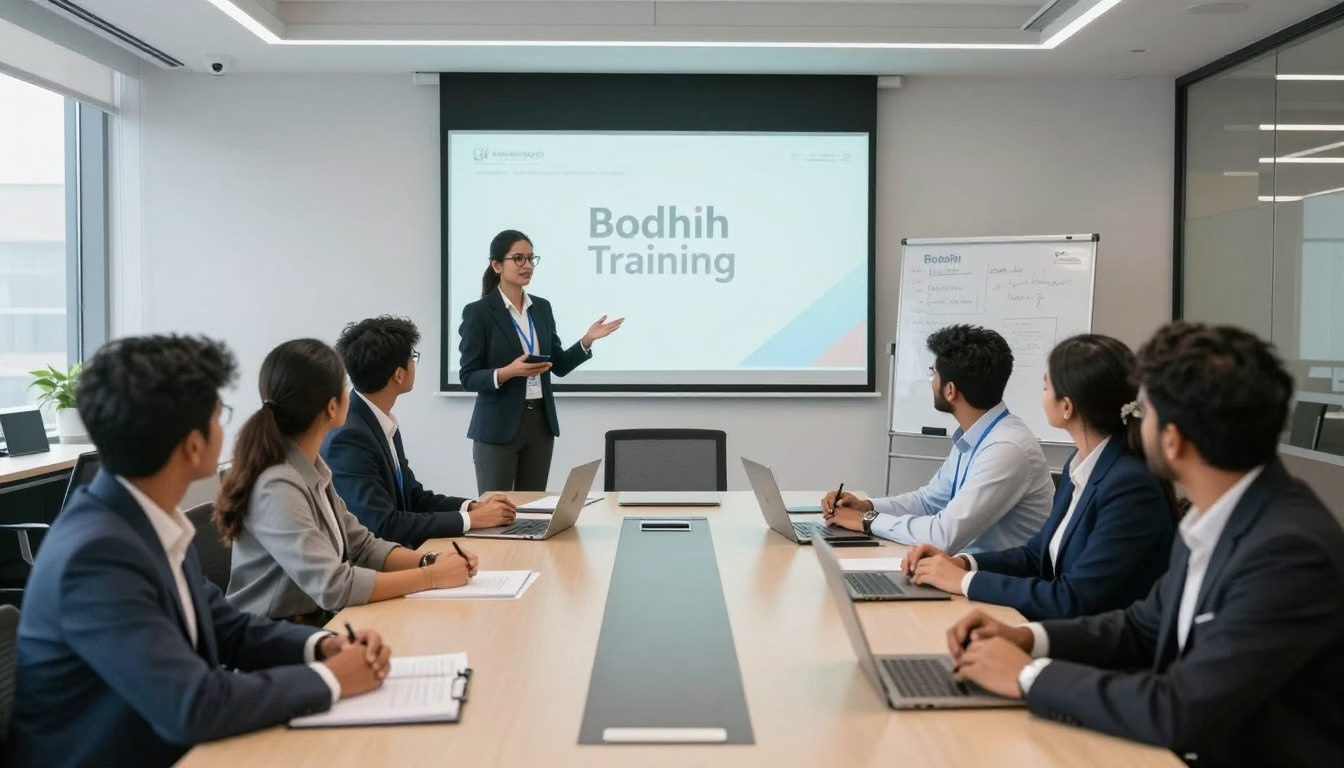
Choose a corporate training company in India by first defining your learning objectives, then checking whether the provider can meet them. Assess its industry and domain experience, scalability across locations, teaching approach, trainer credentials and facilitation style, and use of technology in delivery. Prefer partners that customise workshops and measure results after training, not just deliver sessions.
Key takeaways
- Prioritise providers that align learning programmes with specific business objectives.
- Focus on long-term capability building rather than short-term fixes.
- Assess the track record of the partner in delivering measurable results.
- Ensure the methodology supports a culture of continuous professional development.
- Leverage strategic partnerships to navigate the evolving business landscape effectively.
Last updated · Bodhih Insights team · reviewed by Siddharthan VGJ, Founder

Selecting a high-calibre corporate training company in India is a transformative decision for any enterprise. It is not merely about workshops; it is about bridging the gap between current workforce skills and future market demands.
By choosing the right specialist, businesses can elevate internal capabilities and foster a culture of continuous improvement. This is where a strategic alliance with a bodhih training partner becomes essential for sustainable organisational growth.
The Evolving Landscape of Corporate Training in India
The rapid evolution of the Indian corporate sector necessitates a strategic rethink of how talent is nurtured and developed. Organisations are moving away from static, annual training sessions toward dynamic, continuous learning ecosystems. This shift is essential to maintain a competitive edge in a globalised market.
Shifting Demands in the Modern Workplace
Today’s workforce expects more than just basic skill acquisition; they seek holistic professional growth. Employees now prioritise roles that offer clear pathways for capability enhancement and personal development. Consequently, companies must adapt their internal cultures to foster a sense of purpose and long-term engagement.
The demand for soft skills, such as emotional intelligence and adaptive leadership, has reached an all-time high. Organisations that fail to address these human-centric needs often struggle with retention and employee satisfaction. Strategic alignment between individual aspirations and business objectives is now the hallmark of a successful enterprise.
“In an era of constant change, the ability to learn, unlearn, and relearn is the most valuable asset an organisation can possess.”
The Role of Digital Transformation in Skill Development
Digital transformation acts as the primary catalyst for modernising how Indian businesses approach skill development. By leveraging advanced learning management systems, companies can now provide personalised learning experiences that cater to individual pace and style. This shift ensures that training is not only accessible but also highly relevant to specific job functions.
Data-driven insights allow leadership teams to identify skill gaps with precision before they impact operational performance. This proactive approach transforms training from a reactive necessity into a strategic business driver. The following table highlights the transition from traditional methods to modern, technology-enabled learning.
Feature
Traditional Training
Modern Digital Training
Delivery Method
In-person classroom only
Blended and remote access
Content Style
Static, one-size-fits-all
Customised and modular
Measurement
Attendance-based
Performance and ROI-based
Accessibility
Limited by geography
Available on-demand
Integrating these digital tools empowers teams to remain agile in a volatile market. As organisations continue to embrace these advancements, they build a resilient workforce capable of navigating future challenges with confidence. Continuous capability building remains the cornerstone of sustainable success in the Indian corporate landscape.
Key Criteria for Selecting a Corporate Training Company in India
Identifying a high-quality corporate training company in India demands a clear understanding of your business needs. The process of choosing a partner is a critical step in elevating your organisational capabilities and ensuring long-term growth.
Defining Your Organisational Learning Objectives
Before engaging with any provider, leadership must clearly define the specific outcomes they wish to achieve. Precision in goal setting allows you to filter out generic programmes that fail to address your unique challenges.
Effective training initiatives should bridge the gap between current performance and future aspirations. By mapping learning objectives to key performance indicators, you ensure that every session contributes directly to the strategic success of the organisation.
Assessing Industry Experience and Domain Expertise
A reputable corporate training company in India will demonstrate a deep understanding of the local market dynamics. It is essential to verify that the provider has a proven track record within your specific sector.
Look for partners who possess specialised domain expertise rather than those offering one-size-fits-all content. Their ability to speak the language of your industry is what transforms standard workshops into high-impact learning experiences.
Evaluating the Scalability of Training Solutions
As your organisation grows, your requirements for professional development will naturally evolve. You need training solutions that can adapt to the changing size and complexity of your workforce across various departments.
A scalable partner provides the flexibility to roll out programmes across multiple locations without compromising on quality. This consistency is vital for maintaining high standards as you scale your operations and empower your teams to reach their full potential.
Assessing the Expertise and Methodology of L&D Vendors
The effectiveness of any corporate training programme hinges on the expertise and methodology of the chosen L&D vendor. Organisations must look beyond standard course catalogues to identify partners who prioritise measurable skill acquisition. A rigorous approach ensures that training solutions align with specific business goals and long-term growth strategies.
The Importance of Pedagogical Approaches
A high-quality L&D vendor employs evidence-based learning science to drive knowledge retention. These pedagogical frameworks move away from passive listening toward active, experiential learning. By focusing on how adults process information, trainers can create environments that foster genuine behavioural change.
Analysing Trainer Credentials and Facilitation Styles
The calibre of the facilitator is a critical indicator of programme success. Professional organisations often look for global benchmarks, such as the German AEVO standards, which provide a gold standard for trainer certification. These credentials ensure that the facilitator possesses the necessary pedagogical skills to manage diverse learning groups effectively.
Beyond formal qualifications, the facilitation style must resonate with the organisational culture. A skilled trainer adapts their delivery to suit the unique needs of the participants. This flexibility is essential when implementing bespoke training solutions across different departments.
Technology Integration in Training Delivery
Modern workforces require flexible and accessible learning platforms. A forward-thinking L&D vendor integrates digital tools to enhance the overall experience. This includes the use of learning management systems, interactive simulations, and virtual collaboration spaces.
Methodology Feature
Traditional Approach
Modern L&D Standard
Learning Focus
Content Delivery
Skill Application
Trainer Role
Lecturer
Facilitator/Coach
Delivery Mode
In-person Only
Blended/Digital
Assessment
Attendance
Behavioural Change
Why Organisations Partner with Bodhih for Training Solutions
Organisations across India increasingly turn to expert providers to bridge the gap between current performance and future potential. Selecting the right collaborator is essential for any business aiming to elevate its internal capabilities through effective training solutions.
Bodhih’s Unique Value Proposition in the Indian Market
Bodhih differentiates itself as a corporate training company in India by focusing on deep organisational transformation. They provide bespoke learning paths that align perfectly with specific business objectives.
By leveraging extensive industry knowledge, they ensure that every intervention delivers tangible results. This strategic focus makes them a preferred choice for companies seeking to scale their human capital effectively.
Commitment to Quality and Learner Engagement
A steadfast commitment to quality serves as the cornerstone of every programme delivered by this bodhih training partner. They prioritise active participation to ensure that learning is not just theoretical but highly practical.
High levels of learner engagement drive better retention and application of new skills. This dedication to excellence ensures that participants remain motivated throughout their development journey.
How to Connect with the Bodhih Team
Engaging with the team is a straightforward process designed to help leaders identify their specific requirements. A consultative approach ensures that the proposed programmes address the unique challenges faced by the organisation.
Contacting Bodhih for Consultations
Interested parties are encouraged to reach out to discuss their organisational needs and explore potential collaborations. You may call +91 99000 11601/602/603 to speak with a consultant today. Taking this step is the first move toward elevating your team’s performance to new heights.
The Power of Customised Workshops in Driving Business Results
The shift toward bespoke learning interventions is redefining how Indian businesses approach professional development. Organisations that prioritise customised workshops often see a significant improvement in employee performance and operational efficiency. By moving away from generic models, companies can ensure that every hour spent in training directly supports their broader strategic vision.
Moving Beyond Off-the-Shelf Training Modules
Standard training programmes often fail to address the unique nuances of a specific corporate culture. While off-the-shelf modules provide a baseline of knowledge, they frequently lack the contextual relevance required to solve complex internal problems. Relying solely on pre-packaged content can lead to a disconnect between the skills taught and the actual requirements of the workplace.
By choosing customised workshops, leadership teams can bypass irrelevant theory. This approach ensures that the learning material resonates with the specific roles and responsibilities of the participants. It transforms training from a routine activity into a strategic asset for the organisation.
Tailoring Content to Specific Organisational Challenges
Every business faces distinct hurdles, whether they relate to market volatility, internal communication, or leadership transitions. Tailoring content allows facilitators to integrate real-world scenarios that mirror the daily challenges faced by employees. This bespoke methodology ensures that the training is not just theoretical but highly practical.
When content is mapped to specific organisational objectives, employees are more likely to apply their new skills immediately. This alignment fosters a culture of continuous improvement and agility. It empowers teams to navigate change with greater confidence and precision.
Measuring the Impact of Bespoke Learning Interventions
The true value of customised workshops lies in their ability to produce measurable outcomes. Unlike generic training, these interventions are designed with clear performance indicators in mind. Organisations can track improvements in productivity, employee engagement, and specific skill acquisition through targeted assessments.
By establishing a feedback loop, businesses can refine their learning strategies over time. This data-driven approach ensures that the investment in human capital yields a tangible return on investment. Ultimately, bespoke learning serves as a catalyst for long-term growth and sustained competitive advantage in the Indian market.
Evaluating the Track Record and Client Success Stories
Objective evidence remains the most reliable indicator of future success when vetting a training provider. Organisations must look beyond marketing promises to uncover the real-world results delivered by a potential L&D vendor. A transparent history of performance provides the confidence needed to invest in human capital development.
Analysing Case Studies and Performance Metrics
Case studies serve as a window into the methodology and problem-solving capabilities of a training firm. By reviewing specific examples, decision-makers can assess how a provider addresses unique business challenges. Quantifiable performance metrics are equally vital, as they offer a clear view of the return on investment achieved through previous interventions.
When reviewing these documents, focus on the alignment between the training objectives and the final business outcomes. A reputable L&D vendor will readily provide data that demonstrates improvements in employee productivity, skill acquisition, and behavioural shifts. This level of transparency is a hallmark of a professional organisation committed to measurable growth.
The Value of Long-Term Partnerships in L&D
True transformation rarely happens in a single workshop or a short-term project. Establishing a long-term partnership with an L&D vendor allows for a deeper understanding of your organisational culture and specific needs. This ongoing relationship fosters continuous improvement and ensures that training programmes evolve alongside your business goals.
Strategic partners act as an extension of your internal team, providing consistent support and iterative learning solutions. This collaborative approach helps in sustaining momentum and embedding new skills into the daily workflow of your employees. The following table outlines the key differences between transactional and strategic partnerships.
Evaluation Criteria
Transactional Approach
Strategic Partnership
Focus
Single project delivery
Long-term capability building
Engagement
Limited to training days
Continuous support and feedback
Outcome Measurement
Basic attendance tracking
Comprehensive ROI and behavioural analysis
Vendor Role
Service provider
Trusted L&D vendor partner
Aligning Training Programmes with Organisational Objectives
Strategic alignment is the cornerstone of any successful corporate training initiative in the modern Indian business environment. When learning programmes are disconnected from the broader vision, they often fail to deliver the desired return on investment. Organisations must ensure that every training hour contributes directly to the achievement of core business milestones.
Bridging the Gap Between Skill Gaps and Business Goals
Identifying the precise delta between current employee capabilities and future requirements is a complex task. A professional bodhih training partner excels at mapping these specific skill gaps against the long-term trajectory of the firm. By focusing on high-impact areas, companies can transform their workforce into a competitive advantage.
This process involves a deep analysis of operational bottlenecks that hinder growth. Once these areas are identified, the training focus shifts toward practical solutions that solve real-world problems. This methodical approach ensures that learning is not just an academic exercise but a catalyst for tangible business progress.
Ensuring Stakeholder Buy-in for Training Initiatives
Securing the commitment of senior leadership is vital for the success of any development programme. Decision-makers are more likely to support initiatives that demonstrate a clear link to profitability and operational efficiency. Through the implementation of customised workshops, organisations can present a tailored roadmap that addresses the unique concerns of every stakeholder.
These sessions provide a platform to showcase how specific learning outcomes will improve performance metrics. When leaders see the direct correlation between training and their own departmental goals, they become active champions of the initiative. This unified vision fosters a culture of continuous improvement across the entire organisation.
Feature
Traditional Training
Strategic Alignment
Focus
General Skill Acquisition
Business Objective Achievement
Content
Standardised Modules
Customised Workshops
Outcome
Knowledge Gain
Measurable Performance Growth
Stakeholder Role
Passive Approval
Active Engagement
By choosing a bodhih training partner, firms gain access to expertise that prioritises these strategic connections. The use of customised workshops ensures that the content remains relevant to the evolving needs of the Indian market. This commitment to alignment ultimately secures the long-term success of the organisation.
The Importance of Post-Training Support and Measurement
Bridging the gap between classroom learning and workplace application is the hallmark of a successful L&D vendor. Many organisations mistakenly view training as a singular event rather than a continuous journey of growth. To ensure that new capabilities truly take root, businesses must prioritise structured support systems that extend well beyond the final day of a workshop.
Reinforcement Strategies for Long-Term Retention
Learning retention often fades without consistent practice and reflection. Organisations that implement robust reinforcement strategies see a significant improvement in how employees apply new skills to their daily tasks. Consistency is the key to transforming theoretical knowledge into habitual professional excellence.
Effective reinforcement methods often include the following approaches:
- Micro-learning modules that provide quick, accessible reminders of core concepts.
- Peer-coaching circles where colleagues support each other in applying new techniques.
- Manager-led debriefs to align individual progress with broader team objectives.
- Digital resource libraries that offer on-demand access to training materials.
Analysing ROI and Behavioural Changes
Measuring the success of a programme requires a shift from tracking attendance to evaluating tangible business outcomes. By analysing behavioural changes, leaders can determine if the training has effectively shifted the organisational culture. This data-driven approach is essential for calculating a clear return on investment.
To accurately assess the impact of your initiatives, consider these critical performance indicators:
- Skill application rates observed during live project workflows.
- Performance metric shifts directly linked to the training objectives.
- Qualitative feedback from stakeholders regarding team efficiency.
A professional L&D vendor provides the analytical tools necessary to track these metrics with precision. If your organisation requires expert guidance on implementing these measurement frameworks, please call +91 99000 11601/602/603 to consult with our specialists. We are ready to help you elevate your training outcomes and ensure your investments deliver lasting value. You may call +91 99000 11601/602/603 today to begin your journey toward measurable growth.
Conclusion
Selecting the right partner for corporate learning marks a pivotal shift in how businesses navigate the competitive Indian market. Organisations that prioritise strategic skill development gain a distinct advantage in an era defined by rapid change.
Bodhih provides the expertise required to transform workforce potential into measurable business outcomes. By choosing customised workshops, leadership teams ensure that every learning intervention aligns perfectly with specific operational goals and cultural nuances.
This commitment to excellence fosters a culture of continuous improvement and agility. Businesses that invest in high-quality training programmes secure their position as industry leaders while empowering their people to excel.
The path to sustained growth begins with a clear vision and the right support system. To explore how bespoke learning solutions can drive your success, call +91 99000 11601/602/603 to initiate a collaborative partnership today.
FAQ
Why should an organisation choose Bodhih as its corporate training company in India?
Choosing Bodhih as your corporate training company in India ensures a strategic alignment between learning interventions and business objectives. As a bodhih training partner, the organisation focuses on capability enhancement through customised workshops that address specific operational gaps. This bespoke approach allows for a transformative learning experience that generic, off-the-shelf modules cannot provide. To explore tailored training solutions, decision-makers can call +91 99000 11601/602/603.
How does digital transformation influence the training solutions provided by an L&D vendor?
Digital transformation is fundamentally altering the corporate landscape, requiring a shift toward continuous learning and knowledge elevation. A sophisticated L&D vendor like Bodhih integrates technology to enhance the accessibility and delivery of training solutions. By leveraging digital tools, organisations can ensure their workforces remain competitive and agile amidst rapid industry shifts, focusing on skill development that meets modern workplace demands.
What criteria are essential when selecting a corporate training company in India?
When vetting a corporate training company in India, organisations should evaluate industry experience, domain expertise, and the scalability of the proposed training solutions. It is vital to assess whether the L&D vendor can align its pedagogical approaches with the organisation’s long-term objectives. Bodhih excels in this regard by providing customised workshops that bridge the gap between current skill gaps and desired business goals.
How does Bodhih ensure the quality and effectiveness of its trainers?
A: Bodhih maintains a steadfast commitment to quality by ensuring facilitators meet rigorous global benchmarks, such as the German AEVO standards. This focus on trainer credentials and facilitation styles guarantees high-level knowledge transfer and learner engagement. By employing professional methodologies, Bodhih ensures that every training partner interaction results in tangible capability enhancement and effective management.
In what ways do customised workshops drive measurable business results?
Unlike generic programmes, customised workshops are designed to address the unique operational challenges faced by an organisation. By tailoring content to specific internal needs, Bodhih ensures that training solutions directly contribute to performance improvement. This targeted approach allows for a more precise analysis of ROI and ensures that the learning interventions foster sustained organisational growth.
How can organisations measure the ROI of their engagement with an L&D vendor?
Measuring the success of an L&D vendor involves analysing both performance metrics and behavioural changes post-intervention. Bodhih emphasizes reinforcement strategies to ensure long-term retention of skills. By examining case studies and success stories, organisations can objectively verify the impact of their training solutions. For expert guidance on implementing measurement frameworks, organisations may call +91 99000 11601/602/603.
What is the importance of post-training support in achieving organisational capabilities?
Post-training support is critical for the longevity of learning outcomes. Bodhih provides reinforcement mechanisms that help professionals apply new capabilities within their specific work landscape. This ensures that the initial training solutions evolve into permanent operational excellence. Establishing a long-term partnership with Bodhih as a training partner allows for continuous capability building and the consistent achievement of business objectives.