
DISC assessments improve team communication by showing each person's behavioural style: Dominance, Influence, Steadiness or Conscientiousness. The profile takes 15 to 20 minutes online and focuses on observable behaviour, so teams can adapt how they speak, decide and handle conflict. Bodhih pairs it with a one-day team workshop and check-ins at 30 and 90 days.
- Delivered in person at your location or as live virtual sessions
- Designed with the ADDIE model and evaluated for behaviour change
- Available on AssessAll: 250+ AI-graded assessments across 40+ competencies
- Offered by Bodhih since 2008 to 2,000+ organisations across 7 regions
Last reviewed by Siddharthan VGJ, Founder · Bodhih Training, Bengaluru
DISC assessments provide that crucial insight. This proven personality framework helps teams understand communication preferences and behavioral styles. When people recognize how others prefer to work and interact, friction decreases while productivity soars.
Organizations across India are discovering how DISC transforms workplace dynamics. From startups in Bangalore to established enterprises in Mumbai, leaders use these insights to create cohesive teams. The assessment reveals patterns that explain workplace tension and provides actionable strategies for improvement.
Start Improving Team Communication Today
Download our free guide on implementing DISC assessments in your organization
Understanding DISC Assessments: The Foundation of Team Clarity
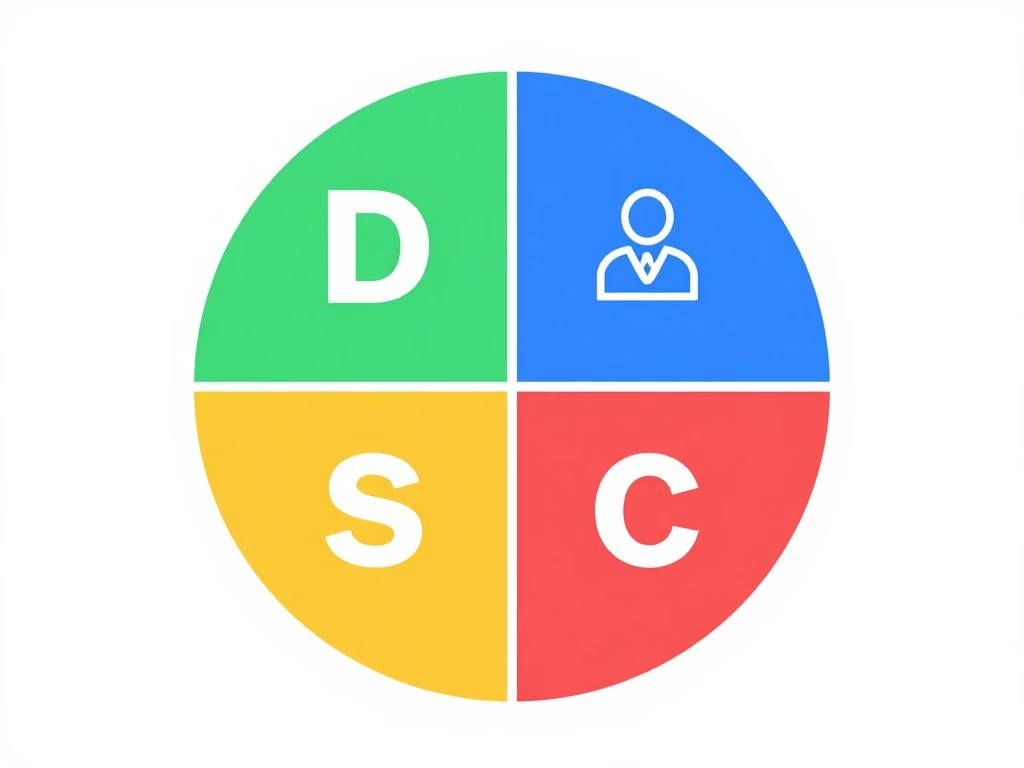
DISC assessments measure four primary behavioral dimensions that shape how people communicate and work. This model emerged from psychological research conducted by William Marston in the 1920s. Today, millions of professionals worldwide use DISC to improve workplace relationships and team performance.
The assessment process takes approximately 15-20 minutes to complete. Participants answer questions about their preferences and natural tendencies. The results generate a detailed profile showing their dominant personality style and secondary traits.
Unlike other personality tests, DISC focuses specifically on observable behaviors rather than internal motivations. This practical approach makes the insights immediately applicable in workplace settings. Teams can implement changes based on DISC results within days rather than weeks.
What Makes DISC Different from Other Assessments
DISC stands out among personality assessments for its workplace relevance and ease of understanding. The model uses straightforward language that everyone grasps quickly. Other assessments require extensive interpretation or psychological training to apply effectively.
The DISC framework focuses on adaptable behaviors rather than fixed traits. People can adjust their communication style based on situations and team needs. This flexibility empowers individuals to improve relationships without changing their core personality.
Organizations value DISC for its immediate practical application. Managers receive clear guidance on how to motivate different team members. Employees learn specific strategies for collaborating with colleagues who have different styles.
The Science Behind DISC Personality Profiling
Research validates the DISC model across diverse cultures and industries. Studies show consistent patterns in how personality styles correlate with workplace behaviors. The assessment demonstrates strong reliability when individuals retake the test over time.
Modern DISC assessments incorporate advances in psychometric testing and data analysis. Sophisticated algorithms ensure accurate profile generation from participant responses. Organizations can trust the results to guide important team development decisions.
The scientific foundation of DISC continues to evolve with ongoing research. New studies explore how DISC profiles relate to leadership effectiveness and team performance metrics. This evidence-based approach strengthens confidence in using DISC for organizational development.
The Four DISC Personality Styles: A Comprehensive Breakdown
Each DISC style brings unique strengths and preferences to the workplace. Understanding these differences helps teams leverage individual talents effectively. Leaders who recognize these patterns can assign tasks that align with natural abilities and communication preferences.
Dominance (D): Results-Driven Achievers
High D individuals focus intensely on results and bottom-line outcomes. They prefer direct communication without unnecessary details or social pleasantries. These team members thrive in competitive environments and embrace challenging goals that others might find intimidating.
People with Dominance traits make decisions quickly and confidently. They value efficiency and become frustrated with slow processes or excessive meetings. D-style individuals often gravitate toward leadership roles where they can drive change and overcome obstacles.
Working with D personalities requires understanding their need for autonomy and control. They respond well to challenges and opportunities to prove their capabilities. Give them clear objectives and freedom to determine the best path forward.
D-Style Strengths in Teams
- Takes charge in crisis situations
- Drives projects to completion
- Makes tough decisions without hesitation
- Challenges status quo effectively
- Maintains focus on goals
Communication Tips for D-Types
- Be direct and brief
- Focus on results and outcomes
- Avoid emotional appeals
- Provide options rather than directives
- Respect their time constraints
Influence (I): Enthusiastic Team Connectors
High I individuals energize teams with their enthusiasm and optimism. They excel at building relationships and creating positive workplace culture. These personalities naturally network and connect people across organizational boundaries.
Influence-style team members communicate expressively and persuasively. They prefer collaborative environments where they can brainstorm ideas with others. I personalities often serve as team morale boosters during challenging projects or organizational changes.
People with high I traits sometimes struggle with detail-oriented tasks or long-term follow-through. They benefit from systems and support that help them track commitments. Pairing I personalities with more analytical team members creates balanced project teams.
Steadiness (S): Reliable Team Stabilizers
High S individuals provide stability and consistency that teams depend on. They excel at creating harmonious work environments where everyone feels valued. S-style personalities demonstrate exceptional patience when training others or managing complex processes.
Steadiness types prefer predictable routines and resist sudden changes without clear justification. They value long-term relationships and demonstrate remarkable loyalty to their teams. These individuals often serve as the glue that holds teams together during turbulent periods.
Working with S personalities requires patience and clear communication about changes. They need time to adjust to new processes or team structures. Provide reassurance and support when introducing organizational shifts or new responsibilities.
Conscientiousness (C): Detail-Oriented Perfectionists
High C individuals bring analytical rigor and attention to detail that ensures quality outcomes. They prefer working with data and facts rather than opinions or assumptions. C-style team members excel at identifying potential problems before they impact project success.
Conscientiousness personalities value accuracy and thorough research in decision-making. They may appear reserved or cautious, especially when rushed to make quick choices. These individuals produce exceptional work when given adequate time and resources to meet high standards.
People with C traits sometimes struggle in ambiguous situations without clear guidelines. They appreciate structured environments with defined expectations and quality standards. Providing detailed briefs and objective evaluation criteria helps C personalities perform at their best.
Discover Your Team’s DISC Profile
Schedule a free consultation with our DISC specialists to assess your team’s communication dynamics
How DISC Brings Clarity to Team Communication
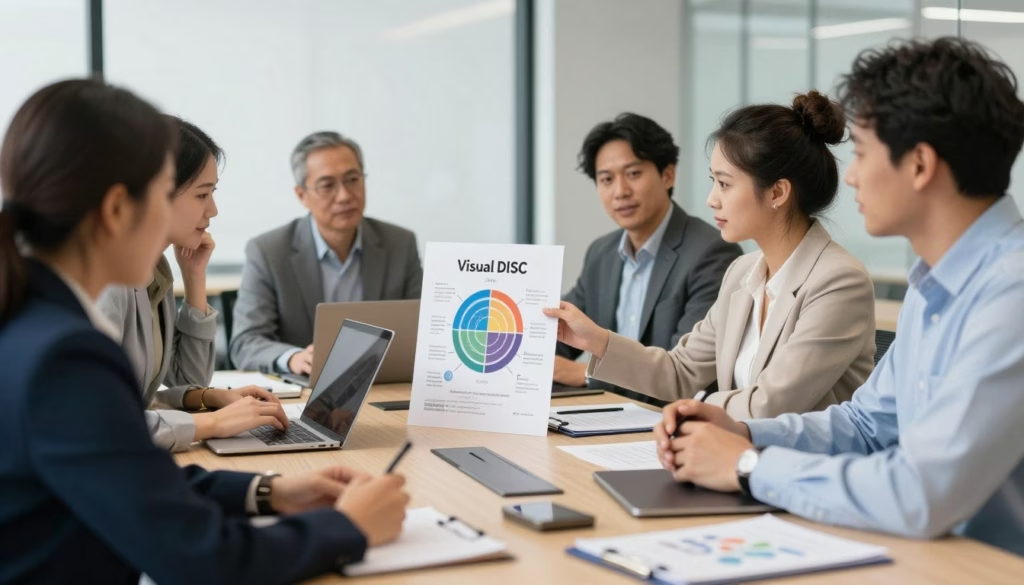
Communication breakdowns occur when people assume others share their preferences and communication style. DISC assessments reveal these hidden differences that cause misunderstandings. Teams gain a shared language for discussing how they prefer to receive information and provide feedback.
Understanding DISC profiles helps team members adjust their communication approach for different colleagues. A D-style manager learns to provide more context when speaking with C-style employees who need detailed information. I-style team members recognize when to tone down enthusiasm for S-style colleagues who prefer calm interactions.
Organizations report dramatic improvements in meeting effectiveness after implementing DISC awareness. People recognize when conflicts arise from style differences rather than substantive disagreements. This awareness transforms potential conflicts into productive discussions about working preferences.
Reducing Workplace Conflict Through Style Awareness
Most workplace conflict stems from misunderstood communication rather than genuine disagreement. A D-style employee may perceive an S-style colleague as indecisive or slow. Meanwhile, the S-style person views the D individual as aggressive or insensitive to team feelings.
DISC training helps people reframe these perceptions as style differences rather than personal flaws. Teams develop empathy when they understand that colleagues communicate differently because they process information differently. This shift in perspective dramatically reduces tension and improves collaboration.
Leaders use DISC insights to mediate conflicts more effectively by recognizing the style dynamics at play. They can explain how different approaches serve valid purposes and help team members find middle ground. Conflict resolution becomes faster and more productive with this framework.
Benefits of DISC for Communication
- Creates shared language for discussing preferences
- Reduces misunderstandings and tension
- Improves meeting effectiveness
- Accelerates relationship building
- Enhances feedback reception
- Strengthens cross-functional collaboration
Common Implementation Challenges
- Requires initial time investment for training
- Risk of stereotyping if misapplied
- Needs ongoing reinforcement
- May oversimplify complex personalities
- Effectiveness depends on team buy-in
Adapting Your Communication Style for Different DISC Types
Effective communicators adjust their approach based on their audience’s DISC profile. This flexibility demonstrates emotional intelligence and respect for others’ preferences. Small adjustments in communication style yield significant improvements in message reception and relationship quality.
When communicating with D-style individuals, get to the point quickly and focus on results. With I-style people, allow time for relationship building and enthusiastic discussion. S-style colleagues appreciate patient explanation and reassurance about changes. C-style team members need data, documentation, and time to analyze information.
Teams that master style adaptation experience smoother project execution and fewer communication-related delays. People feel heard and understood when colleagues communicate in their preferred style. This mutual respect creates a foundation for exceptional teamwork and collaboration.
Practical Ways Leaders Use DISC to Improve Team Collaboration
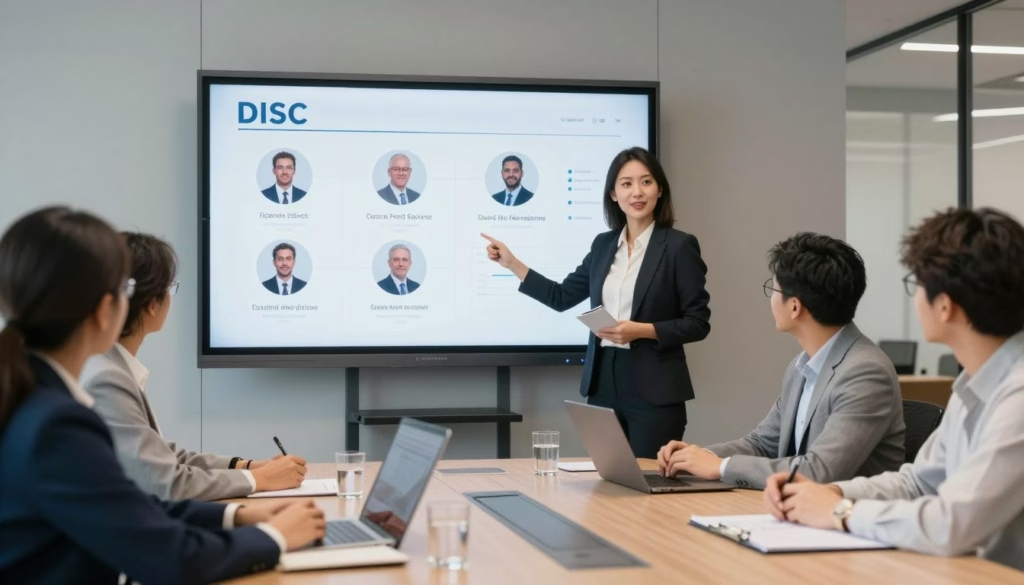
Leaders who understand DISC can deploy team members more strategically based on their natural strengths. This alignment between individual preferences and job requirements increases both satisfaction and performance. Smart task assignment based on DISC profiles maximizes team productivity while minimizing stress.
Project managers use DISC insights to build balanced teams with complementary styles. A team dominated by D and I personalities might need C-style members to ensure quality control. Teams with too many C and S styles may benefit from adding D or I individuals to drive innovation and speed.
Performance management improves when leaders tailor their approach to each employee’s DISC profile. Recognition strategies that motivate D-style employees differ from what energizes S-style team members. Personalized management increases engagement and reduces turnover across the organization.
Building Cross-Functional Teams with DISC Insights
Cross-functional projects often struggle because team members from different departments have different communication norms. DISC provides a common framework that transcends departmental boundaries. Marketing teams learn to communicate effectively with engineering groups despite different organizational cultures.
Leaders of cross-functional initiatives use DISC profiles to anticipate potential friction points. They can proactively address style differences before conflicts emerge. This preventive approach saves countless hours otherwise spent resolving misunderstandings and rebuilding working relationships.
Organizations report faster project completion times when cross-functional teams receive DISC training. Team members develop shortcuts for effective communication that accelerate decision-making. The shared framework creates efficiency gains that compound over the project lifecycle.
Strategic Team Composition
Leaders analyze DISC profiles to create balanced teams for specific projects. Innovation projects benefit from high-D and high-I team members who generate ideas and drive change. Quality assurance projects require high-C individuals who catch errors and maintain standards.
Customer-facing teams need strong I and S profiles to build relationships and provide consistent service. Internal operations benefit from S and C styles that maintain systems and ensure accuracy. Strategic composition based on DISC creates teams optimized for their specific objectives.
Conflict Prevention Strategies
Managers establish team norms that accommodate different DISC styles from the project outset. They set expectations for communication frequency, meeting structures, and decision-making processes. These proactive agreements prevent common sources of team friction.
Regular check-ins allow leaders to surface style-related tensions before they escalate. Team members feel comfortable discussing communication preferences when DISC provides neutral language. Early intervention keeps minor irritations from becoming major conflicts.
Coaching and Development Through DISC Lens
Managers who understand DISC profiles can provide more effective coaching to their team members. Development plans tailored to individual styles accelerate skill acquisition and career growth. Employees appreciate leaders who recognize their unique strengths and communication preferences.
Feedback delivery improves dramatically when managers adapt their approach to each employee’s DISC style. D-style employees prefer direct feedback focused on results impact. I-style individuals respond well to feedback delivered in positive, encouraging conversations. S-style team members need supportive, patient feedback sessions. C-style employees want specific, data-based feedback on performance metrics.
Career pathing becomes more strategic when leaders consider DISC profiles alongside skills and interests. They can guide employees toward roles that align with their natural behavioral preferences. This alignment increases long-term job satisfaction and reduces costly turnover.
Transform Your Leadership Approach
Experience a sample DISC assessment and discover how it can enhance your team management effectiveness
How DISC Assessments Contribute to Building High-Performance Teams
High-performance teams share common characteristics that DISC assessments help cultivate. They demonstrate psychological safety where members feel comfortable expressing different viewpoints. DISC creates this safety by normalizing behavioral differences and providing language to discuss them productively.
Trust develops faster in teams that understand each other’s DISC profiles and working preferences. Members predict how colleagues will respond to situations and adjust accordingly. This mutual understanding eliminates surprises and builds confidence in team reliability.
Performance metrics improve measurably after DISC implementation in organizations across industries. Teams complete projects faster with fewer revisions and misunderstandings. Employee satisfaction scores increase as people experience better collaboration and reduced workplace friction.
Creating Psychological Safety with DISC Framework
Psychological safety allows team members to take interpersonal risks without fear of embarrassment. DISC contributes to this safety by depersonalizing communication differences. Instead of attributing conflict to character flaws, teams recognize style differences as neutral variations.
Leaders foster psychological safety by openly discussing their own DISC profiles and preferences. This vulnerability encourages team members to share their profiles without judgment. Organizations create cultures where diversity of thought and approach becomes valued rather than merely tolerated.
Teams with high psychological safety innovate more effectively and solve problems faster. People contribute ideas without self-censoring due to fear of negative reactions. DISC assessment creates the foundation for this open communication culture that drives performance excellence.
Optimizing Team Performance Metrics Through DISC
Organizations track specific metrics to measure DISC impact on team performance. Project completion rates increase as teams eliminate communication-related delays. Quality metrics improve when C-style team members feel empowered to voice concerns without being perceived as obstructionist.
Employee engagement scores rise following DISC training as people feel better understood by colleagues and managers. Retention improves because employees experience less interpersonal stress and conflict. Customer satisfaction increases when teams collaborate more effectively to deliver seamless service.
The return on investment for DISC assessments becomes evident within months of implementation. Reduced conflict saves management time otherwise spent mediating disputes. Improved collaboration accelerates project timelines and reduces costly errors from miscommunication.
Performance Metric
Before DISC
After DISC
Improvement
Project Completion Time
12 weeks average
9 weeks average
25% faster
Team Conflict Incidents
8 per quarter
2 per quarter
75% reduction
Employee Satisfaction
6.2 out of 10
8.4 out of 10
35% increase
Meeting Effectiveness
5.8 out of 10
8.1 out of 10
40% increase
Team Collaboration Score
65%
87%
22 points
Sustaining High Performance Through Continuous DISC Application
One-time DISC training delivers initial improvements, but sustained excellence requires ongoing application. Organizations integrate DISC into regular team meetings and planning sessions. Leaders reference profiles when assigning projects or forming new teams to maintain optimal dynamics.
High-performing teams revisit DISC concepts periodically to reinforce learning and application. They discuss how style dynamics affected recent projects and identify opportunities for improvement. This continuous learning cycle embeds DISC principles deeply into organizational culture.
New team members receive DISC assessments and training during onboarding to accelerate integration. Existing team members learn about new colleagues’ profiles to facilitate faster relationship building. This systematic approach maintains high performance as team composition evolves.
Tips for Implementing DISC in the Workplace Effectively
Successful DISC implementation requires thoughtful planning and executive support. Organizations achieve best results when leadership champions the initiative and participates actively. Top-down buy-in signals that DISC represents a strategic priority rather than a passing HR trend.
Start with pilot programs in one or two teams before rolling out organization-wide. Gather feedback and refine the approach based on early experiences. Document success stories and lessons learned to guide broader implementation phases.
Budget adequate time for both initial training and ongoing reinforcement activities. Surface-level DISC awareness delivers limited value compared to deep integration into daily practices. Organizations that commit to comprehensive implementation realize transformative results across their teams.
Selecting the Right DISC Assessment Platform
Multiple vendors offer DISC assessments with varying features, accuracy, and price points. Evaluate platforms based on report quality, user experience, and integration capabilities with existing HR systems. Consider whether you need basic profiles or advanced features like team reports and coaching modules.
Look for platforms that provide ongoing support and training resources beyond the initial assessment. The best vendors offer facilitator training, implementation guides, and continuous learning materials. These resources prove invaluable as you expand DISC usage across your organization.
Read reviews and request demonstrations from multiple providers before committing. Test the assessment experience yourself to evaluate user-friendliness and report clarity. Choose a platform that aligns with your organizational needs and budget while delivering scientifically valid results.
Phase 1: Foundation Building
Establish executive sponsorship and clear objectives for DISC implementation. Define success metrics and timeline for rollout phases.
- Secure leadership commitment and budget
- Select assessment platform and vendor
- Identify pilot teams for initial rollout
- Develop communication plan for organization
Phase 2: Pilot Program
Launch DISC with selected teams while gathering feedback and documenting outcomes. Refine approach based on pilot experiences.
- Conduct assessments for pilot participants
- Deliver comprehensive training workshops
- Facilitate team sessions on applying insights
- Collect feedback and success metrics
Phase 3: Organization Rollout
Expand DISC to broader organization using lessons from pilot. Scale training and resources systematically across teams.
- Train internal facilitators and coaches
- Schedule assessment and training sessions
- Create resource library and job aids
- Integrate DISC into HR processes
Phase 4: Sustainability
Embed DISC into organizational culture through continuous reinforcement and application in daily operations.
- Include DISC in onboarding processes
- Conduct refresher training sessions
- Measure long-term impact metrics
- Share success stories across organization
Training Your Team on DISC Application
Effective training goes beyond explaining the four styles to demonstrating practical application. Use real workplace scenarios to illustrate how DISC insights solve common challenges. Interactive exercises help participants practice adapting their communication style for different profiles.
Encourage teams to share their DISC profiles openly and discuss what they need from colleagues. Facilitate conversations about communication preferences, meeting structures, and feedback approaches. This dialogue transforms abstract concepts into concrete changes in daily interactions.
Provide ongoing resources like quick reference cards, email templates, and meeting guides that incorporate DISC principles. Make it easy for employees to apply learning when returning to their regular work. Reinforcement tools increase the likelihood that training translates into sustained behavior change.
Common Pitfalls to Avoid During Implementation
Organizations sometimes treat DISC as a one-time event rather than an ongoing practice. This approach delivers minimal lasting value as people forget concepts without reinforcement. Build DISC into regular rhythms like team meetings, project kickoffs, and performance reviews.
Avoid using DISC profiles as excuses for poor behavior or inflexibility. The framework should promote adaptation and empathy, not justify communication failures. Leaders must model style flexibility rather than hiding behind their dominant DISC type.
Resist the temptation to pigeonhole people based solely on their DISC profile. Remember that individuals demonstrate all four styles in varying degrees depending on context. Use DISC as one lens among many for understanding team dynamics and individual preferences.
Expert Tip: Schedule DISC refresher sessions every 6-12 months to maintain awareness and deepen application. Teams benefit from revisiting concepts as they encounter new challenges and projects. Continuous learning maximizes the return on your DISC assessment investment.
Measuring DISC Impact on Your Organization
Establish baseline metrics before implementing DISC to measure improvement over time. Track both quantitative measures like project completion times and qualitative indicators like employee feedback. Regular measurement demonstrates value and identifies areas needing additional support.
Survey employees periodically about team communication quality and collaboration effectiveness. Compare results to pre-DISC baselines to quantify improvements. Share positive results broadly to reinforce the value of applying DISC principles in daily work.
Monitor indirect indicators like turnover rates, internal mobility, and promotion rates across the organization. Teams with strong DISC cultures often retain talent better and develop leaders more effectively. These long-term metrics reveal the strategic impact of sustained DISC implementation.
Ready to Build Your High-Performance Team?
Connect with our DISC experts to develop a customized implementation plan for your organization
How long does a DISC assessment take to complete?
Most DISC assessments require 15 to 20 minutes to complete. The questionnaire contains approximately 25 to 30 questions about behavioral preferences and working styles. Participants should answer honestly based on their natural tendencies rather than how they think they should respond. Results are typically generated immediately upon completion.
Can DISC profiles change over time?
Core DISC profiles remain relatively stable throughout adulthood, though people can develop flexibility in expressing different styles. Major life changes or significant personal development work may shift profile results slightly. Most individuals maintain their dominant style while becoming more adaptable in how they communicate. Organizations recommend reassessing every few years to capture any meaningful changes.
Is DISC assessment suitable for all industries and job roles?
Yes, DISC assessments apply across all industries and organizational levels. The framework focuses on universal behavioral patterns rather than role-specific competencies. Teams in healthcare, technology, manufacturing, education, and financial services all benefit from DISC insights. Individual contributors, managers, and executives find value in understanding their communication style and adapting to others.
How much does implementing DISC cost for an organization?
DISC implementation costs vary based on organization size and chosen platform. Individual assessments typically range from five hundred to two thousand rupees per person. Enterprise platforms with advanced features and team reports may require annual licensing fees. Factor in training costs, facilitator certification, and ongoing support when budgeting. Most organizations see positive ROI within the first year through improved productivity and reduced conflict.
What’s the difference between DISC and other personality assessments?
DISC focuses specifically on observable workplace behaviors rather than deep psychological traits. Unlike assessments that explore values, motivations, or cognitive preferences, DISC examines communication style and work approach. The framework is simpler to understand and apply than more complex personality models. DISC complements rather than replaces other assessments, providing practical insights for daily workplace interactions.
Can DISC be used for hiring and recruitment decisions?
DISC can inform hiring decisions but should never serve as the sole criterion. Use profiles to assess cultural fit and team composition rather than individual capability. No DISC style predicts job performance better than others across all roles. Some positions may benefit from certain style characteristics, but skills, experience, and values matter more. Many organizations use DISC during onboarding rather than screening to facilitate team integration.
How do I get my team started with DISC assessments?
Begin by researching reputable DISC assessment providers and requesting demonstrations. Select a platform that fits your budget and feature requirements. Start with a pilot program involving one or two teams before organization-wide rollout. Provide comprehensive training beyond just assessment completion to ensure practical application. Schedule follow-up sessions to reinforce learning and address implementation challenges. Consider certifying internal facilitators for long-term sustainability.
Real-World Success Stories: DISC in Action
A technology startup in Bangalore struggled with frequent conflicts between their engineering and sales teams. After implementing DISC assessments, they discovered that their engineering team consisted primarily of C and S styles while sales was dominated by D and I personalities. This insight explained the communication breakdowns that had plagued joint planning sessions.
The company restructured their cross-functional meetings to accommodate different styles. They provided engineers with detailed agendas and pre-reading materials that C-types needed. Sales teams learned to present data-driven rationales that resonated with engineering. Within three months, project delivery improved by forty percent.
A Mumbai-based financial services firm used DISC to reduce turnover in their customer service department. They identified that high-D managers were unconsciously favoring aggressive communication styles. Training helped managers adapt their approach for S and C employees who comprised most of the service team. Employee satisfaction increased and turnover dropped by thirty-five percent within one year.
Industry-Specific Applications of DISC
Healthcare organizations use DISC to improve patient care coordination among diverse clinical teams. Doctors, nurses, and administrative staff often have different dominant styles that can create friction. DISC training helps medical teams communicate more effectively during critical situations.
Manufacturing companies apply DISC insights to optimize shift handoffs and quality control processes. Floor managers learn to deliver instructions differently based on worker profiles. This adaptation reduces errors and improves safety compliance across operations.
Educational institutions implement DISC to strengthen faculty collaboration and improve student outcomes. Teachers with different styles learn to co-teach more effectively. Administrators use DISC to build balanced committees that leverage diverse perspectives for better decision-making.
Advanced DISC Concepts for Organizational Excellence
Beyond individual profiles, advanced DISC analysis examines team composition and organizational culture patterns. Leaders can map entire departments to identify potential blind spots or strengths. Teams lacking certain styles may struggle with specific types of challenges.
Natural and adapted behavior patterns reveal how individuals modify their style in work contexts. Some people demonstrate significant differences between their natural preferences and workplace behaviors. This gap can indicate stress or misalignment between role requirements and personality.
Understanding intensity levels within each DISC dimension provides nuanced insights beyond basic style categories. Two people with the same dominant D profile may differ significantly in intensity. These subtleties matter when building teams or assigning leadership responsibilities.
Integrating DISC with Other HR Initiatives
Organizations achieve maximum value by connecting DISC with existing talent management programs. Use profiles to inform succession planning and leadership development pipelines. Identify high-potential employees whose DISC profiles match requirements for critical roles.
Incorporate DISC into performance management systems to enable more personalized feedback and development. Managers reference profiles when setting goals and coaching employees. This integration makes DISC a living tool rather than a dusty report filed after training.
Recruitment strategies improve when hiring managers understand team DISC composition. They can identify gaps and actively seek candidates who bring needed styles. This strategic approach to team building creates balanced groups capable of handling diverse challenges.
Cultural Considerations for DISC in Indian Workplaces
Indian workplace culture emphasizes hierarchy and relationship-building more than some Western contexts. DISC implementation must respect these cultural norms while promoting open communication. Leaders can use DISC to bridge generational differences as younger employees bring different expectations to the workplace.
Regional diversity within India affects how DISC profiles manifest in different offices. Teams in different cities may demonstrate varying comfort levels with direct communication or feedback. Successful implementation accounts for these cultural nuances rather than applying one-size-fits-all approaches.
Family-owned businesses benefit particularly from DISC insights as they navigate succession planning and professionalization. Understanding style differences among family members and professional managers reduces conflict during organizational transitions. DISC provides neutral language for discussing sensitive leadership dynamics.
The Future of DISC Assessments and Team Development
Technology continues to enhance how organizations deploy and utilize DISC assessments. Mobile applications enable real-time access to profile information during meetings and interactions. Digital platforms provide instant team composition analysis and communication recommendations.
Artificial intelligence is beginning to augment DISC insights with predictive analytics about team performance. Machine learning algorithms identify patterns across thousands of teams to recommend optimal compositions. These tools help leaders make data-driven decisions about team formation and development.
Virtual and hybrid work environments create new applications for DISC principles. Remote teams benefit even more from explicit understanding of communication preferences. Organizations are developing DISC-informed best practices for digital collaboration and virtual team management.
Emerging Research in Personality Assessment
Ongoing research continues to validate and refine the DISC model for modern workplaces. Studies explore how DISC profiles correlate with remote work effectiveness and digital communication preferences. This research ensures the framework remains relevant as work evolves.
Neuroscience provides new insights into the biological basis of DISC styles and behavioral preferences. Understanding the neurological foundations strengthens confidence in assessment validity. These discoveries may lead to enhanced assessment techniques in coming years.
Cross-cultural research expands DISC applicability across global organizations operating in diverse markets. Studies examine how personality expression varies across cultures while maintaining core DISC principles. This work enables more effective multinational team development and leadership.
Conclusion: Unlocking Team Potential Through DISC Assessments
DISC assessments provide practical tools that transform team communication and performance. Organizations across India are discovering how this framework reduces conflict while accelerating collaboration. The investment in DISC delivers measurable returns through improved productivity and employee satisfaction.
Leaders who embrace DISC principles can build high-performance teams systematically rather than hoping for chemistry to develop naturally. Understanding personality styles enables strategic decisions about team composition, task assignment, and development opportunities. This scientific approach to team building produces consistent results.
The future of work demands effective collaboration across diverse teams and virtual environments. DISC assessments equip organizations with insights needed to thrive in this evolving landscape. Teams that master these principles will maintain competitive advantages through superior communication and cooperation.
Start your DISC journey today to unlock your team’s full potential. The clarity and understanding these assessments provide create foundations for sustained excellence. Your organization can achieve breakthrough performance by implementing the strategies and practices outlined in this guide.
Begin Your Team Transformation Journey
Take the first step toward building a high-performance team with our comprehensive DISC assessment program
Frequently Asked Questions About DISC Assessments
Sample implementation plan
This plan takes one intact team from individual DISC profiles to better daily communication. Every member completes a DISC profile online a week before. The one-day workshop is built on the team's real friction points: members read their own profile, stand in style corners, build a team style map, practise adapting messages for each style, replay one real clash and redesign how the team runs meetings and hand-offs. The team leaves with a one-page working agreement that it reviews at 30 and 90 days.
The team can use DISC as a shared language to adapt communication and has agreed working norms it will review.
- 09:30–10:00Build the towerEnergiser
- 10:00–11:00My profile, my wayDiagnostic
- 11:15–12:00Style cornersGroup challenge
- 12:00–13:00Team style mapHands-on lab
- 13:45–14:45Same message, four waysSkill drill
- 14:45–15:30Replay the clashReal-play
- 15:45–16:45Our working agreementBuild sprint
- 16:45–17:30One thing I will adaptAction planning
Every session’s activity, timings, outputs and materials, plus pre-work, a 90-day reinforcement plan and how impact is measured. Free, emailed to you instantly.
Indicative: DISC profiles completed online in 15 to 20 minutes in week 1, a one-day intact-team workshop (09:30–17:30) in week 2, and a 60-minute team check-in at 30 and 90 days. A sample design: every Bodhih program is customised after a short needs analysis.
How long does a DISC team workshop take?
Each team member completes the DISC profile online in about 15 to 20 minutes. The recommended team workshop is one full day, from 09:30 to 17:30, or two live virtual sessions of three hours. Short check-ins at 30 and 90 days help the team keep its working agreement alive.
What activities are included in a DISC team workshop?
The team reads their profiles, stands in style corners, builds a team style map, rewrites a real team message four ways for the four styles, replays one recurring clash with a better approach and agrees a one-page working agreement for meetings, decisions and hand-offs.
Frequently asked questions
How does DISC reduce conflict in teams?
DISC gives team members a shared language for behavioural differences. When people see that a colleague prefers fast, direct decisions or careful, detailed analysis, they stop reading friction as personal and adapt their style instead. Teams then agree working norms in a workshop and review them at 30 and 90 days.
Ready to Build Your High-Performance Team?
Connect with our DISC experts to develop a customized implementation plan for your organization Get Your Custom Plan Call: +91 99000 11601 / 602 / 603
How long does a DISC assessment take to complete?
Most DISC assessments require 15 to 20 minutes to complete. The questionnaire contains approximately 25 to 30 questions about behavioral preferences and working styles. Participants should answer honestly based on their natural tendencies rather than how they think they should respond. Results are typically generated immediately upon completion.
Can DISC profiles change over time?
Core DISC profiles remain relatively stable throughout adulthood, though people can develop flexibility in expressing different styles. Major life changes or significant personal development work may shift profile results slightly. Most individuals maintain their dominant style while becoming more adaptable in how they communicate. Organizations recommend reassessing every few years to capture any meaningful changes.
Is DISC assessment suitable for all industries and job roles?
Yes, DISC assessments apply across all industries and organizational levels. The framework focuses on universal behavioral patterns rather than role-specific competencies. Teams in healthcare, technology, manufacturing, education, and financial services all benefit from DISC insights. Individual contributors, managers, and executives find value in understanding their communication style and adapting to others.
How much does implementing DISC cost for an organization?
DISC implementation costs vary based on organization size and chosen platform. Individual assessments typically range from five hundred to two thousand rupees per person. Enterprise platforms with advanced features and team reports may require annual licensing fees. Factor in training costs, facilitator certification, and ongoing support when budgeting. Most organizations see positive ROI within the first year through improved productivity and reduced conflict.
What’s the difference between DISC and other personality assessments?
DISC focuses specifically on observable workplace behaviors rather than deep psychological traits. Unlike assessments that explore values, motivations, or cognitive preferences, DISC examines communication style and work approach. The framework is simpler to understand and apply than more complex personality models. DISC complements rather than replaces other assessments, providing practical insights for daily workplace interactions.
Can DISC be used for hiring and recruitment decisions?
DISC can inform hiring decisions but should never serve as the sole criterion. Use profiles to assess cultural fit and team composition rather than individual capability. No DISC style predicts job performance better than others across all roles. Some positions may benefit from certain style characteristics, but skills, experience, and values matter more. Many organizations use DISC during onboarding rather than screening to facilitate team integration.
How do I get my team started with DISC assessments?
Begin by researching reputable DISC assessment providers and requesting demonstrations. Select a platform that fits your budget and feature requirements. Start with a pilot program involving one or two teams before organization-wide rollout. Provide comprehensive training beyond just assessment completion to ensure practical application. Schedule follow-up sessions to reinforce learning and address implementation challenges. Consider certifying internal facilitators for long-term sustainability.
What is AssessAll?
AssessAll is Bodhih’s in-house AI assessment platform with 250+ AI-graded assessments across 40+ competencies, AI proctoring and pay-as-you-go pricing from ₹30 per credit.