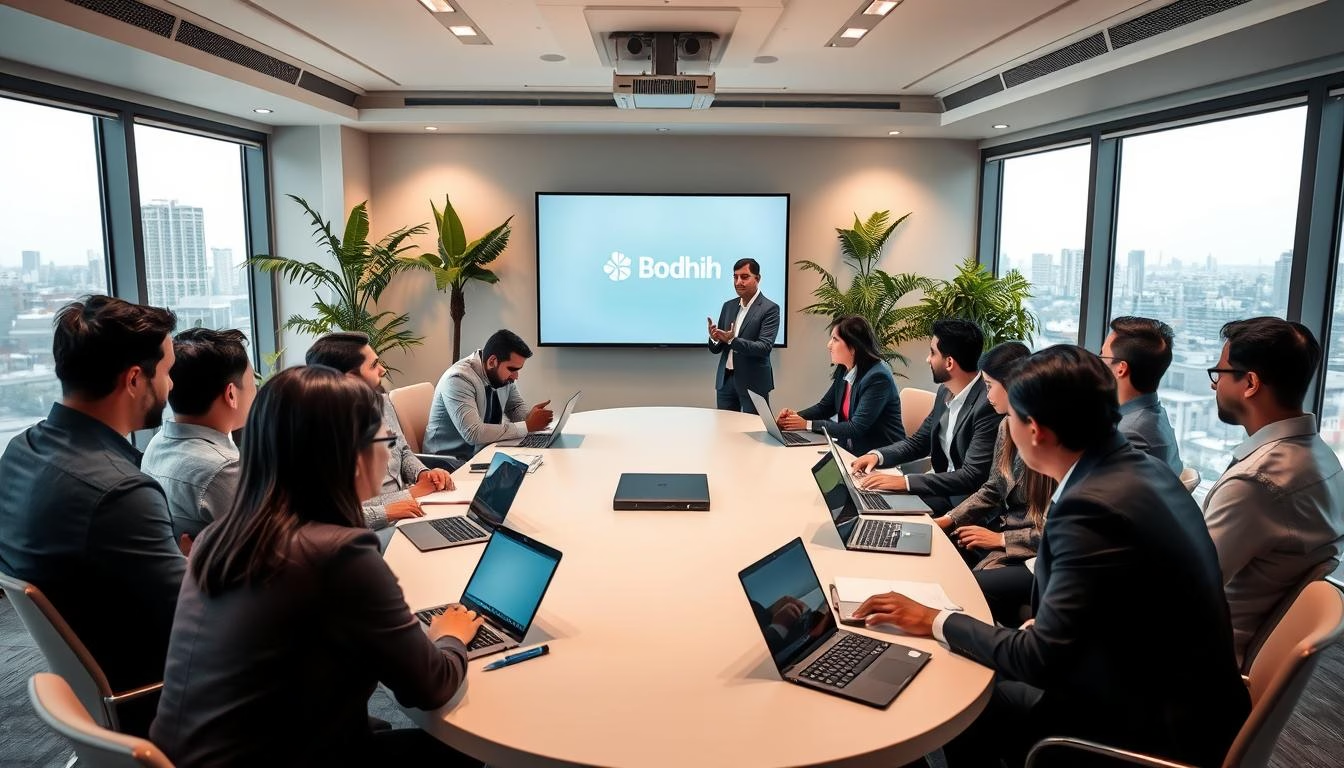
Corporate communication skills training builds the verbal, non-verbal, listening and digital communication habits employees need to turn strategy into execution. Bodhih's programs cover active listening and empathy, cross-cultural communication in Indian teams, leadership communication, difficult conversations, and virtual meeting and email etiquette, using role-plays and real-world simulations customised to each industry.
Key takeaways
- Effective dialogue is essential for minimising costly operational errors.
- Clarity in messaging directly supports the achievement of business objectives.
- Bodhih focuses on transforming interpersonal interactions into strategic assets.
- Professional development programmes help organisations maintain a competitive edge.
- Refining how teams exchange information fosters a culture of excellence.
Last updated · Bodhih Insights team · reviewed by Siddharthan VGJ, Founder

Organisations often struggle to align their internal messaging with broader strategic goals. This disconnect creates friction, slows down progress, and hinders overall growth. True professional success relies on the clarity of every interaction.
Bodhih addresses these challenges by refining how teams connect and collaborate. Through specialised corporate communication skills training, the firm empowers individuals to bridge gaps in understanding. This methodology ensures that every dialogue serves a clear purpose, ultimately elevating operational standards across the board.
The Critical Role of Effective Communication in Modern Indian Organisations
In the rapidly evolving Indian corporate landscape, clear communication serves as the bedrock of organisational success. As businesses scale and diversify, the ability to convey vision and operational requirements becomes paramount. Corporate communication training provides the essential framework for leaders to articulate objectives with precision and purpose.
Bridging the Gap Between Strategy and Execution
Many organisations struggle when high-level strategic intent fails to translate into daily operational tasks. This disconnect often stems from a lack of clarity in how goals are cascaded down to individual contributors. By investing in corporate communication training, firms ensure that every team member understands their specific role in achieving broader business milestones.
Effective dialogue acts as a vital bridge, connecting the boardroom vision to the frontline execution. When leaders master the art of transparent messaging, they foster an environment where strategy is not just understood but actively implemented. This alignment is crucial for maintaining agility in a competitive market.
The Impact of Poor Communication on Workplace Productivity
Misaligned messaging often acts as a silent drain on organisational resources. When instructions are ambiguous or feedback loops are broken, teams experience significant delays and systemic inefficiencies. Such friction directly hinders productivity and can lead to a decline in overall employee morale.
Organisations that prioritise corporate communication training can mitigate these risks by establishing clear channels for information flow. Addressing these gaps early allows companies to build a culture of transparency that supports long-term stability. The following table illustrates the contrast between effective and ineffective communication environments.
Feature
Effective Communication
Ineffective Communication
Strategic Alignment
High clarity on goals
Confusion and ambiguity
Operational Speed
Rapid execution
Frequent bottlenecks
Team Morale
High engagement
Disconnection and silos
Resource Usage
Optimised efficiency
Wasted effort and time
Understanding the Core Philosophy of Bodhih Training
Bodhih transforms workplace dynamics by grounding every training initiative in a robust, learner-centric pedagogical framework. This approach ensures that professional development is not merely a box-ticking exercise but a meaningful evolution of individual capabilities. By focusing on the “why” behind every skill, the organisation fosters a culture of genuine engagement and long-term growth.
Learner-Centric Approaches to Skill Development
A significant barrier to professional growth is the lack of trust employees feel toward feedback mechanisms. When staff members do not understand the purpose of guidance, they often ignore it entirely. Bodhih prioritises transparency to ensure that every participant feels valued and understands the practical application of their new skills.
By placing the learner at the heart of the process, the training addresses psychological resistance directly. This method encourages participants to take ownership of their development journey. Effective corporate communication training relies on this foundation of trust to create lasting behavioural change.
Aligning Communication Training with Business Objectives
Individual growth must serve the broader vision of the organisation to be truly impactful. When employees align their personal communication style with company goals, the entire business benefits from increased clarity and efficiency. This strategic alignment ensures that every session contributes to the achievement of overarching business objectives.
The following table highlights the shift from traditional methods to the Bodhih approach:
Feature
Traditional Training
Bodhih Approach
Focus
Content delivery
Learner transformation
Feedback
Often ignored
Trust-based adoption
Outcome
Short-term knowledge
Strategic alignment
Methodology
Passive instruction
Experiential learning
By integrating these principles, organisations can ensure that their investment in corporate communication training yields measurable results. This philosophy transforms communication from a simple task into a powerful tool for success. It empowers teams to navigate complex challenges with confidence and professional grace.
Key Components of Corporate Communication Skills Training
Corporate communication skills training provides the framework for professional excellence. By dissecting the essential elements of interaction, organisations can ensure that every message carries the intended weight and clarity. This process involves a deep dive into both the spoken word and the subtle cues that define workplace dynamics.
Mastering Verbal and Non-Verbal Communication
The ability to convey authority and intent rests on the synergy between verbal and non-verbal signals. Professionals must learn to align their tone, pace, and vocabulary with their core message to avoid ambiguity. Non-verbal cues, such as body language and eye contact, often speak louder than the words themselves in high-stakes meetings.
When these elements are synchronised, the speaker projects confidence and reliability. Mastering these components allows individuals to navigate complex corporate landscapes with greater ease. It ensures that the message is not only heard but also understood in the correct context.
Developing Active Listening and Empathy in Professional Settings
True communication is a two-way process that requires more than just speaking. Developing active listening skills is a vital part of corporate communication skills training, as it fosters a culture of mutual respect. By focusing entirely on the speaker, professionals can identify underlying concerns and respond with genuine insight.
Empathy serves as the bridge that connects colleagues and builds lasting trust. When team members feel heard and understood, their commitment to shared objectives increases significantly. This emotional intelligence is a critical capability for anyone looking to influence others and drive positive change within an organisation.
Communication Element
Primary Objective
Impact on Workplace
Verbal Clarity
Precision in messaging
Reduces operational errors
Non-Verbal Cues
Building authority
Enhances professional presence
Active Listening
Deepening understanding
Strengthens team cohesion
Empathy
Fostering trust
Improves employee retention
The Bodhih Methodology: From Classroom to Workplace Application
The Bodhih methodology ensures that learning translates directly into measurable professional growth. By moving beyond passive instruction, the organisation bridges the gap between theoretical concepts and daily workplace performance. Every communication skills workshop is designed to foster an environment where knowledge becomes an active tool for success.
Experiential Learning Techniques for Lasting Change
True transformation occurs when participants engage with content through experiential learning. Much like intensive training programmes for sales professionals, this approach demonstrates that shifting frequency and mindset is essential for high-level performance. Participants learn to adjust their professional presence to meet the demands of complex business environments.
This methodology focuses on internalising new behaviours rather than simply memorising information. By prioritising practical application, the training ensures that professionals can navigate challenges with confidence. This shift in perspective is vital for long-term career development and organisational success.
Utilising Role-Plays and Real-World Simulations
Role-plays and real-world simulations serve as the cornerstone of a high-impact communication skills workshop. These exercises provide a controlled environment where individuals can test new strategies without risk. This safe space allows for immediate feedback and refinement of interpersonal techniques.
The following table highlights the distinct advantages of the Bodhih experiential approach compared to traditional lecture-based training methods:
Feature
Traditional Training
Bodhih Methodology
Primary Focus
Theoretical Knowledge
Practical Application
Participant Role
Passive Listener
Active Contributor
Skill Retention
Short-term Recall
Long-term Behavioural Change
Environment
Academic Setting
Real-world Simulation
By integrating these simulations, the communication skills workshop ensures that participants leave with actionable insights. These skills are immediately applicable to daily business challenges, enabling professionals to influence outcomes effectively. This commitment to practical excellence defines the Bodhih experience.
Enhancing Leadership Communication and Influence
Strategic influence requires a refined approach to business communication that resonates across all levels of an organisation. Leaders who cultivate strong networks and engage with their professional communities gain a distinct advantage in driving change. These connections serve as vital assets, allowing visionaries to articulate their goals with greater authority and clarity.
Communicating Vision and Strategy to Stakeholders
A leader’s primary responsibility involves translating complex strategic objectives into a compelling narrative. When stakeholders understand the why behind a decision, they are more likely to offer their full support. Clear, consistent messaging ensures that every team member remains aligned with the broader organisational mission.
Effective business communication acts as the bridge between high-level strategy and daily execution. By maintaining transparency, leaders foster a culture of trust and accountability. This approach empowers stakeholders to contribute meaningfully to the long-term success of the enterprise.
Managing Difficult Conversations with Professionalism
Navigating challenging dialogues is an inevitable part of the leadership journey. The ability to handle these moments with emotional intelligence and composure is what separates exceptional managers from the rest. Professionalism during tense situations preserves team morale and keeps the focus on constructive outcomes.
Leaders must approach these interactions with empathy while remaining firm on core objectives. Mastering this aspect of business communication allows for the resolution of conflicts without damaging professional relationships. Ultimately, these skills ensure that even the most difficult conversations lead to growth and improved organisational performance.
Digital Communication Etiquette in a Hybrid Work Environment
Modern organisations must now navigate the complexities of maintaining high standards of business communication across virtual channels. As teams split their time between home and the office, the reliance on digital tools has reached an all-time high. Establishing clear protocols ensures that collaboration remains seamless and effective regardless of physical location.
Optimising Virtual Meetings and Email Correspondence
Virtual meetings require a structured approach to ensure that time is used efficiently. Participants should always prepare an agenda in advance to keep discussions focused and productive. Clarity is the primary goal when managing these interactions, as it prevents misunderstandings that often arise in remote settings.
Email correspondence also demands a high level of precision to support effective business communication. Concise subject lines and clear calls to action help recipients process information quickly. By standardising these practices, teams can reduce digital clutter and improve overall response times.
Maintaining Professionalism Across Digital Platforms
Professionalism must remain consistent whether an employee is working from a corporate office or a remote workspace. Digital platforms serve as the primary interface for organisational culture, making tone and etiquette vital components of daily operations. Maintaining a respectful and professional demeanour in every message reinforces trust among colleagues.
Organisations that prioritise these standards foster a more inclusive and collaborative environment. Consistent business communication practices ensure that every team member feels valued and informed. By adopting these digital etiquette habits, companies can sustain high performance and long-term growth in a hybrid landscape.
Measuring the Return on Investment of Communication Training
Evaluating the success of professional development requires a clear look at tangible business outcomes. Organisations often seek to understand the true value generated by their investment in human capital. High-quality bodhih training provides the clarity needed for strategic decision-making and long-term growth.
Assessing Behavioural Changes and Performance Metrics
The effectiveness of any learning initiative is best observed through shifts in daily workplace interactions. Leaders should track specific key performance indicators to identify improvements in team collaboration and project delivery. By monitoring these metrics, companies can validate the direct impact of bodhih training on operational efficiency.
Quantitative data, such as reduced email response times or increased clarity in project briefs, serves as a strong indicator of success. Qualitative assessments, including peer feedback and manager observations, further clarify how new communication styles are being applied. This dual approach ensures that training translates into measurable professional growth.
Long-Term Benefits for Organisational Culture
Beyond immediate performance gains, effective communication fosters a more inclusive and engaged workplace. When employees feel heard and understood, their commitment to the organisation strengthens significantly. This cultural shift is a vital component of the long-term value provided by bodhih training.
Improved retention rates often follow when communication barriers are removed and transparency becomes the norm. A culture built on thoughtful dialogue attracts top talent and encourages internal collaboration. Ultimately, investing in these capabilities is a strategic necessity for any organisation aiming to thrive in a competitive landscape.
How to Partner with Bodhih for Your Training Needs
Transforming workplace dynamics begins with a strategic decision to engage in professional development programmes tailored to your unique needs. Organisations that prioritise clear communication often see a significant shift in their operational efficiency and team cohesion. By choosing a structured approach, leaders can ensure that every training initiative supports their broader business objectives.
Customising Programmes for Specific Industry Requirements
Every sector faces distinct challenges that require bespoke solutions rather than generic advice. Bodhih training focuses on deep analysis of your industry landscape to ensure that the curriculum addresses your specific pain points. This level of customisation guarantees that participants gain relevant skills that they can apply immediately to their daily tasks.
The following table outlines how different engagement models can be structured to meet your specific organisational requirements:
Engagement Model
Primary Focus
Expected Outcome
Industry-Specific
Sector-based challenges
Targeted skill growth
Leadership Focused
Strategic communication
Enhanced influence
Team Dynamics
Collaborative dialogue
Improved productivity
Contacting the Bodhih Team for Consultations
Engaging with our experts is a straightforward process designed to align our services with your vision. We encourage stakeholders to schedule a consultation to discuss their specific capability enhancement goals in detail. Our team works closely with you to map out a development journey that delivers measurable results and long-term value.
Reaching Out via Phone and Digital Channels
For immediate assistance or to begin the partnership process, you can connect with our representatives directly. Please call +91 99000 11601/602/603 to speak with a consultant who can guide you through our service offerings. Whether you prefer a digital enquiry or a direct conversation, we are ready to support your growth through high-quality bodhih training. You may also reach out via our official digital channels to schedule a meeting at your convenience. Simply call +91 99000 11601/602/603 to start your transformation today.
Conclusion
Investing in corporate communication capabilities serves as a catalyst for long-term business success. Clear dialogue acts as the foundation for effective management and the realisation of strategic goals.
Bodhih provides the expertise required to refine these essential interactions. Organisations that prioritise these skills cultivate a culture of continuous growth and professional development.
The path toward excellence begins with a firm commitment to how teams connect and lead. Leaders who master the art of communication inspire confidence across every level of the enterprise.
Engage with the Bodhih team to start this transformation today. Elevate your internal standards and secure a competitive advantage in the modern Indian business landscape.
FAQ
Why is corporate communication training essential for modern Indian organisations?
In the current commercial landscape, corporate communication training serves as the vital link between strategic vision and operational execution. By enhancing how teams interact, Bodhih helps eliminate misunderstandings that lead to lost productivity, ensuring that every professional is aligned with the broader business objectives.
How does Bodhih training address resistance to feedback within a team?
The Bodhih training framework focuses on the psychological barriers that cause employees to ignore guidance. By utilising learner-centric methodologies, the programme establishes trust and clarifies the underlying purpose of development, allowing participants to see feedback as a tool for personal and organisational growth.
What makes a Bodhih communication skills workshop different from theoretical seminars?
The distinction lies in the transition from theory to practice. Every communication skills workshop delivered by Bodhih prioritises experiential learning. Through role-plays and real-world simulations, participants practise new behaviours in a controlled setting, ensuring the transition to the workplace is seamless and effective.
How can leadership communication impact stakeholder influence?
Effective leadership requires more than technical expertise; it demands the ability to communicate vision with authority. Bodhih empowers leaders to manage difficult conversations and engage with communities through enhanced emotional intelligence and active listening, which are critical for driving organisational change.
Does the curriculum account for cross-cultural communication challenges?
Yes. Navigating the diverse cultural landscape of India requires a nuanced approach. The training provides strategies for adapting communication styles to suit diverse teams, fostering an environment of inclusivity and thoughtful dialogue that respects varied perspectives.
How does the programme address professionalism in a hybrid or digital work environment?
Business communication now extends far beyond the physical office. Bodhih provides specific modules on digital communication etiquette, helping professionals optimise virtual meetings and email correspondence to maintain high standards of professionalism across digital platforms.
Can the training programmes be tailored to specific industry needs?
Absolute customisation is a hallmark of the Bodhih approach. We partner with organisations to adapt our modules to meet unique industry requirements, ensuring that the capability enhancement provided is relevant to the specific challenges faced by your workforce.
How is the return on investment (ROI) measured for these training sessions?
Success is measured through tangible behavioural changes and performance metrics. By assessing the long-term impact on organisational culture and the achievement of specific benchmarks, businesses can see a clear correlation between the training and enhanced operational efficiency.
How can I initiate a partnership with Bodhih for my organisation?
To begin the journey of elevating your organisational capabilities, you may reach out to our specialist consultants. For a comprehensive consultation on our corporate communication training solutions, please call +91 99000 11601/602/603.
Quick answers
What does corporate communication skills training cover?
It typically covers verbal and non-verbal communication, active listening and empathy, adapting styles for diverse and cross-cultural teams, communicating vision to stakeholders, handling difficult conversations professionally, and etiquette for virtual meetings and email in hybrid work. Role-plays and simulations help skills transfer from the classroom to daily work.