Interactive workshops are more effective than lectures because participants practise skills, share ideas and get feedback instead of listening to one-way talk. In a lively workshop the trainer asks questions, participants perform activities and learn from each other, and the trainer demonstrates. Good workshops also cater to different learning styles, so learning lasts longer.
Last updated · Bodhih Insights team · reviewed by Siddharthan VGJ, Founder
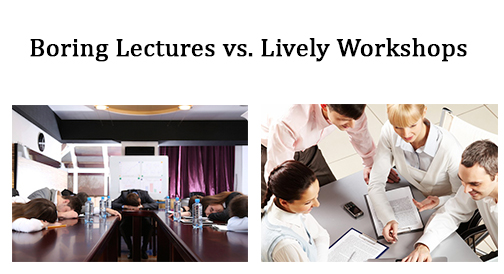
Lectures are often characterized by being boring, lengthy and include no feedback with the trainees. There is a one way communication flow where the trainer speaks all or most of the time. Lively workshops bring life to the program as the learning involves fun and are enjoyed by the participants. The sessions are interactive where the trainer asks questions and the participants give their views, ideas and best practices. Activities that involve the required skills, behaviour and knowledge are performed by participants where they learn from each other initially and realize the areas of improvement and shortcomings when they observe the trainer perform the activities. Learning is more permanent where the participants learn enormous amount of knowledge and skills at a fast pace.
A lively and effective workshop will also consider a variety of preferred learning styles. By catering for the diversity of learning styles by which participants learn best, the trainer can accommodate their varying needs.
Quick answers
What makes a training workshop lively and effective?
A lively workshop is interactive: the trainer asks questions, participants share views and best practices, and everyone performs activities that use the target skills. Participants learn from each other, then compare their attempts with the trainer's demonstration. Catering to different learning styles keeps the whole group involved and makes the learning more permanent.