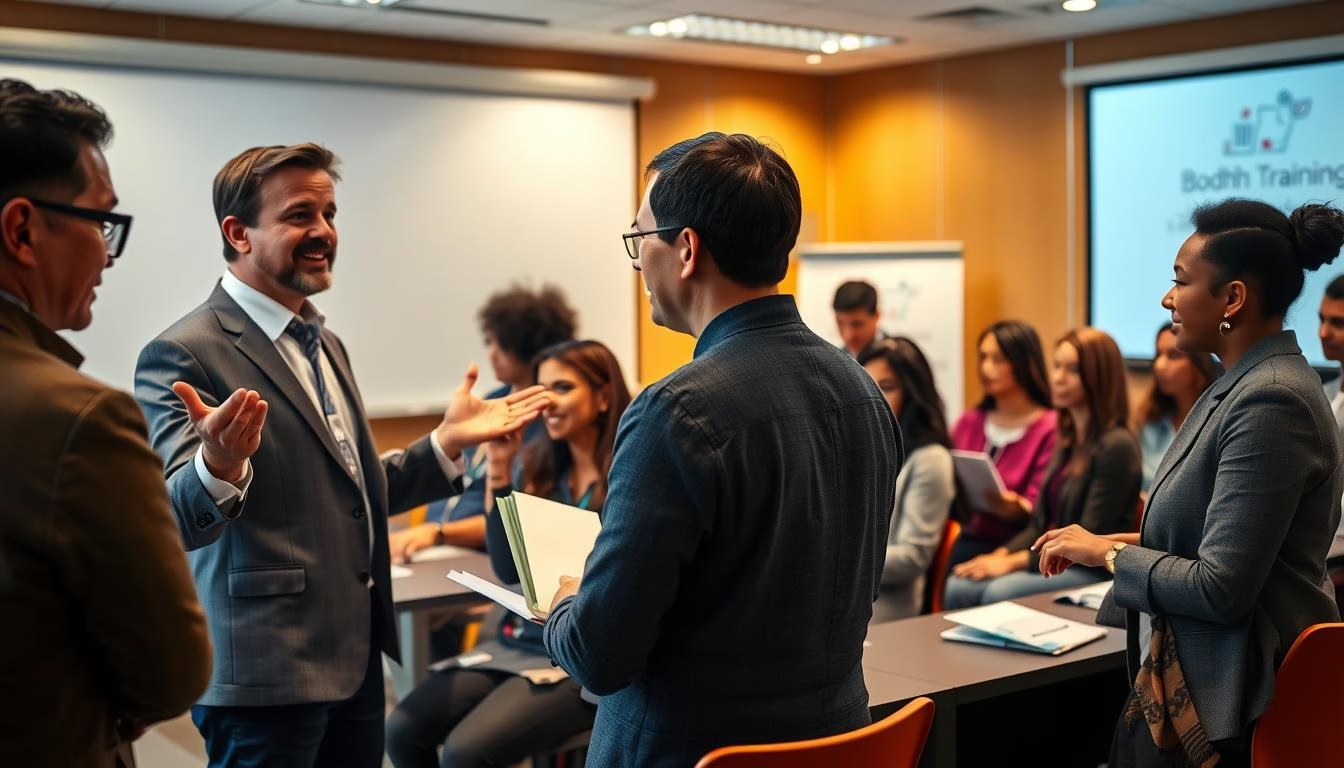
A Train the Trainer program for HR helps HR and L&D teams build internal training capability by turning in-house experts into capable facilitators. Bodhih's program covers adult learning principles, experiential techniques, facilitation and feedback and assessment, customised for corporate settings. It suits HR professionals and L&D managers and includes post-training mentorship and resources.
Key takeaways
- Internal capability building is essential for modern organisational agility.
- Developing in-house expertise helps firms realise their strategic objectives.
- Bodhih provides structured solutions to optimise professional development.
- Effective leadership training fosters a culture of continuous improvement.
- Investing in human capital drives sustainable business transformation.
Last updated · Bodhih Insights team · reviewed by Siddharthan VGJ, Founder
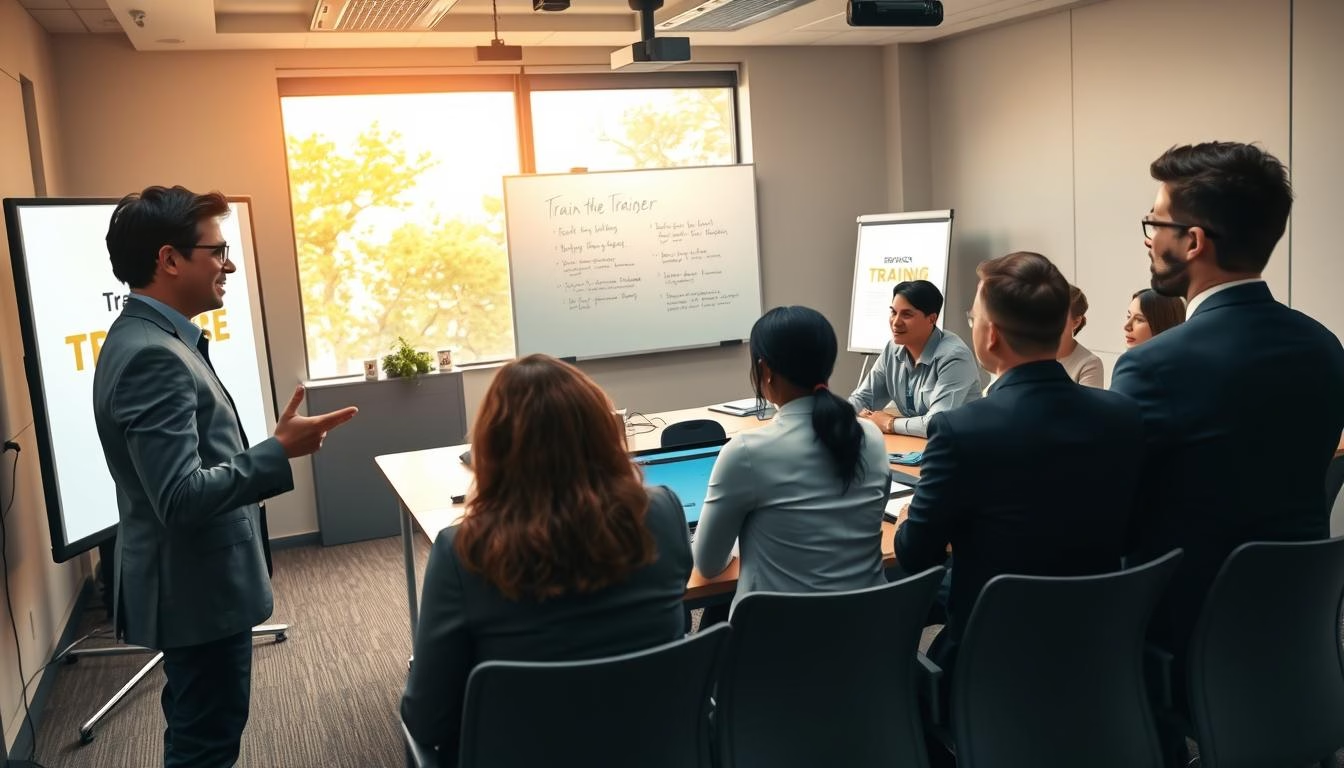
Cultivating expertise in-house allows firms to respond swiftly to changing objectives. This strategic shift empowers teams to drive meaningful growth from within.
The Bodhih train the trainer program for HR serves as a vital catalyst for this transformation. It provides leaders with the structured tools needed to elevate professional standards across the entire enterprise.
By fostering a culture of knowledge elevation, companies can ensure long-term success. Investing in internal capability building is not merely an operational choice; it is a commitment to organisational excellence.
The Strategic Importance of Internal Training Capability
Organisations today are increasingly recognising that the key to sustainable growth lies in building a strong internal training capability. By moving beyond ad-hoc learning sessions, companies can create a structured environment where knowledge flows freely. This approach ensures that professional development remains a core pillar of the business strategy rather than an afterthought.
Aligning L&D with Organisational Goals
Effective learning and development initiatives must mirror the broader objectives of the enterprise. When training programmes are tightly integrated with business goals, they become powerful tools for driving performance and innovation. Strategic alignment ensures that every skill acquired by an employee directly contributes to the company’s long-term success.
This alignment transforms the training department from a cost centre into a value-generating engine. Leaders who prioritise this connection see higher levels of engagement and improved operational efficiency. It is the foundation upon which a resilient and adaptable workforce is built.
The Shift Towards In-House Expertise
There is a noticeable trend where organisations favour in-house expertise to maintain control over quality and cultural relevance. Relying on external providers can sometimes lead to generic content that fails to address specific organisational nuances. By fostering an internal training capability, companies develop a self-sustaining ecosystem of knowledge that is unique to their operational needs.
This shift allows for greater agility when responding to market changes or internal skill gaps. Cultivating internal experts ensures that institutional knowledge is preserved and passed down effectively. The following table highlights the strategic differences between relying on external versus internal training models.
| Feature | External Training | Internal Training Capability |
|---|---|---|
| Cultural Alignment | Low | High |
| Cost Efficiency | Variable | High (Long-term) |
| Knowledge Retention | Moderate | Excellent |
| Customisation | Limited | Extensive |
Ultimately, investing in an internal training capability empowers teams to take ownership of their professional growth. This autonomy fosters a culture of continuous improvement that is essential for navigating the complexities of the modern business landscape.
Understanding the Bodhih Train the Trainer Program for HR
The Bodhih approach to professional development represents a significant shift in how organisations cultivate internal expertise. By focusing on the elevation of facilitation skills, this methodology ensures that learning becomes a transformative experience for every participant.
Overview of the Bodhih Philosophy
At its core, the Bodhih philosophy is built upon the principle of enlightenment through structured capability building. It moves beyond traditional instruction to foster an environment where trainers act as catalysts for growth.
This train the trainer program for HR emphasises the importance of deep understanding and practical application. By mastering these techniques, facilitators can create learning spaces that are both engaging and highly effective for diverse corporate audiences.
Why HR Leaders Prioritise This Certification
HR leaders increasingly choose this specific train the trainer for HR certification to bridge the persistent gap between theoretical knowledge and real-world execution. The program provides the necessary tools to navigate complex organisational landscapes with confidence and precision.
Organisations that adopt this framework often report significant improvements in their internal training outcomes. Key reasons why leaders prioritise this path include:
- Enhanced Facilitation Confidence: Trainers gain the ability to manage group dynamics and diverse learning styles effectively.
- Future-Ready Skill Sets: The curriculum is designed to adapt to the evolving needs of the modern workplace.
- Practical Application: Participants learn to translate abstract concepts into actionable strategies that drive business results.
By investing in a robust train the trainer for HR solution, companies ensure their internal teams remain agile. This commitment to excellence helps build a sustainable culture of continuous improvement and professional development.
Core Features of the Bodhih Certification
Bodhih provides a sophisticated architecture for professional development that transforms how organisations approach internal learning. The certification is built upon a foundation of structural integrity and pedagogical depth, ensuring that every participant gains a clear roadmap for success. By focusing on both the science and the art of facilitation, the program creates a professional framework that supports the development of highly effective internal trainers.
Comprehensive Training Modules
The curriculum is meticulously designed to cover the full spectrum of modern training requirements. Each module serves as a building block, moving from foundational adult learning theories to advanced delivery techniques. This systematic approach ensures that participants acquire a deep understanding of how to design, deliver, and evaluate training programs that align with broader business objectives.
Participants engage with content that is both broad in scope and deep in technical detail. The modules are structured to provide actionable insights that can be applied immediately within a corporate environment. By mastering these components, trainers gain the confidence to manage diverse learning needs and complex organisational challenges.
Interactive Learning Components
Engagement remains a central pillar of the Bodhih philosophy. The program integrates various interactive elements to ensure that participants remain active throughout the transformation process. These components are designed to move beyond passive listening, encouraging collaborative problem-solving and real-time skill application.
Through these interactive sessions, learners test their capabilities in a safe, supportive environment. This methodology fosters a deeper connection to the material and promotes long-term retention of critical facilitation skills. The following table outlines the core balance of the certification structure:
| Feature Category | Primary Focus | Expected Outcome |
|---|---|---|
| Theoretical Foundation | Adult Learning Principles | Conceptual Mastery |
| Practical Application | Facilitation Techniques | Operational Readiness |
| Interactive Engagement | Peer Feedback Loops | Continuous Improvement |
| Strategic Alignment | Business Goal Integration | Organisational Impact |
Analysing the Curriculum Design for People Development Leaders
Modern corporate training demands a sophisticated approach to curriculum design for people development leaders. The framework must balance theoretical depth with practical application to ensure long-term success. By prioritising high-level pedagogical standards, the program creates a pathway for professionals to refine their facilitation expertise.
Focus on Adult Learning Principles
The curriculum is built upon the foundation of andragogy, which acknowledges that adults learn differently than children. It respects the professional maturity and extensive experience that participants bring to the classroom. This approach ensures that training remains relevant, self-directed, and immediately applicable to real-world challenges.
By leveraging these principles, people development leaders can foster an environment where knowledge transfer is both efficient and impactful. The methodology encourages critical thinking and collaborative problem-solving. This shift from passive listening to active engagement is essential for driving meaningful organisational change.
Customisation for Corporate Environments
A rigid training model rarely succeeds in the fast-paced world of modern business. Therefore, the curriculum design emphasises flexibility and modularity to meet specific organisational objectives. This allows people development leaders to tailor their training solutions to the unique culture and operational requirements of their respective companies.
Customisation ensures that every session addresses the specific pain points and strategic goals of the workforce. By aligning content with internal processes, the training becomes a powerful tool for business transformation. This bespoke approach guarantees that participants gain skills that are not only theoretical but also highly functional within their daily roles.
Methodology and Pedagogical Approach
Bodhih employs a sophisticated pedagogical framework designed to transform passive learners into active architects of knowledge. This approach moves beyond traditional lecture-based models to ensure that participants gain tangible capabilities that translate directly into workplace success. By focusing on the intersection of theory and practice, the programme ensures that every participant is prepared to lead with confidence.
Experiential Learning Techniques
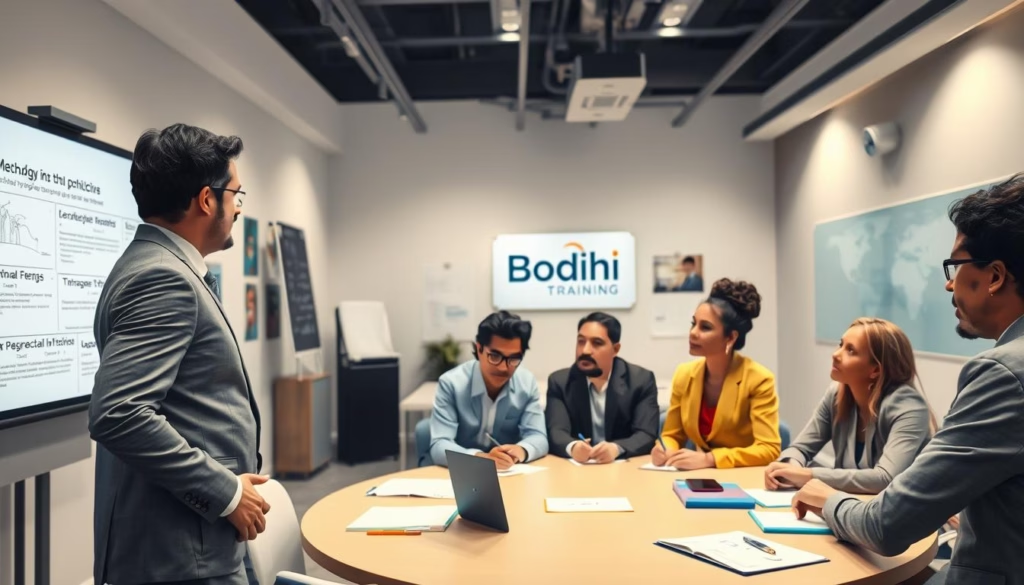
The core of the Bodhih experience lies in a rigorous methodology that prioritises experiential learning. Participants engage in simulated training environments that mirror the complexities of their daily corporate responsibilities. This hands-on immersion allows individuals to test new strategies in a safe space, effectively cementing their skills through direct application.
By actively participating in these scenarios, learners develop a deeper understanding of how to manage diverse groups and complex training objectives. This practical acquisition of skills ensures that the transition from the classroom to the boardroom is seamless. It empowers HR leaders to move from being observers to becoming dynamic facilitators of organisational growth.
Feedback Loops and Assessment Strategies
Robust feedback loops serve as the foundation for continuous improvement throughout the programme. Participants receive detailed, constructive insights from expert facilitators, allowing them to refine their performance in real-time. These cycles of evaluation are essential for identifying strengths and addressing areas that require further development.
Assessment strategies are carefully integrated to measure progress against specific learning outcomes. By utilising data-driven insights, the programme ensures that every participant achieves a high standard of competency. This systematic approach guarantees that the training remains relevant, impactful, and perfectly aligned with the evolving needs of modern organisations.
Evaluating the Impact on Corporate Training ROI
Maximising corporate training ROI requires a shift in how organisations view their internal development budgets. Rather than treating training as a sunk cost, forward-thinking leaders recognise it as a strategic asset that drives long-term value. By building internal capabilities, companies can foster a culture of continuous improvement that pays dividends over time.
Measuring Long-Term Skill Retention
Effective measurement of skill retention is the cornerstone of any successful development initiative. Organisations must move beyond simple attendance tracking to evaluate how new competencies are applied in daily workflows. This involves setting clear performance benchmarks before training begins to track tangible improvements in output.
Utilising longitudinal assessments allows HR teams to observe how knowledge translates into sustained behavioural change. When employees consistently apply new techniques, the organisation experiences a measurable increase in operational efficiency. This data-driven approach ensures that the corporate training ROI remains positive and visible to stakeholders.
“The true measure of a training programme is not how much information is delivered, but how much is retained and applied to solve real-world business challenges.”
— Industry Expert
Cost-Benefit Analysis of Internal Training
A thorough cost-benefit analysis reveals the financial advantages of developing internal trainers. While initial investments in certification programmes may seem significant, they eliminate the recurring fees associated with external consultants. This transition allows for greater control over the quality and relevance of the training content provided to staff.
The following table illustrates the comparative financial impact of internal versus external training models over a three-year period.
| Metric | External Consultants | Internal Training Capability |
|---|---|---|
| Initial Setup Cost | Low | High |
| Recurring Fees | High | Minimal |
| Content Customisation | Limited | High |
| Long-term ROI | Moderate | Excellent |
By reducing dependency on third-party providers, firms can reallocate funds toward other critical growth areas. This strategic shift not only improves the corporate training ROI but also empowers internal teams to lead their own professional evolution. Ultimately, the ability to cultivate expertise in-house serves as a powerful catalyst for long-term organisational success.
Pros of Choosing Bodhih for HR Upskilling
The decision to partner with Bodhih provides distinct advantages for modern HR departments. By focusing on HR upskilling, organisations can bridge the gap between current performance and future strategic requirements. This approach ensures that internal teams remain agile in a rapidly changing corporate environment.
Expert Facilitator Guidance
Participants benefit from the deep industry knowledge provided by seasoned facilitators. These experts help leaders navigate complex learning landscapes with clarity and precision. By addressing professional hurdles directly, facilitators ensure that every participant gains a nuanced understanding of effective training delivery.
This guidance is not merely theoretical; it is rooted in years of corporate experience. Mentors provide the necessary support to refine leadership styles and improve communication strategies. Such high-level mentorship is a cornerstone of the Bodhih experience.
Practical Skill Acquisition
The curriculum prioritises practical skill acquisition that yields immediate results. Rather than relying on abstract concepts, the programme focuses on tools that are directly transferable to daily responsibilities. This ensures that HR professionals can implement new strategies as soon as they return to their desks.
The following table outlines the core advantages of choosing this path for your team:
| Feature | Traditional Training | Bodhih HR Upskilling |
|---|---|---|
| Skill Application | Delayed/Theoretical | Immediate/Practical |
| Facilitator Role | Instructor-led | Expert Mentor |
| Strategic Focus | Generalised | Customised/Targeted |
| Outcome | Knowledge Gain | Capability Transformation |
Cons and Considerations for Potential Participants
Effective HR upskilling demands both dedication and a strategic approach to time management. While the rewards of professional development are significant, prospective participants must carefully evaluate the requirements of the programme before enrolment. Understanding these factors ensures that the learning experience remains productive and aligned with individual career goals.
Time Commitment Requirements
The journey toward becoming a proficient facilitator is intensive. Participants should anticipate a substantial investment of time, covering both live sessions and independent study modules. Consistency is essential to mastering the complex pedagogical techniques taught throughout the curriculum.
Organisations often find that balancing daily operational duties with this level of study requires careful planning. It is recommended that candidates clear their schedules of non-essential tasks to fully engage with the material. This focus allows for a deeper absorption of the core concepts presented in the training.
Prerequisites for Success
Success in this programme is not merely about attendance; it requires a foundational understanding of human resources and adult learning principles. Candidates who possess prior experience in talent development or team management typically find the transition into the programme more seamless. A proactive mindset and a willingness to embrace experiential learning are vital for those seeking to maximise their results.
The following table outlines the key considerations for participants to ensure they are prepared for the rigours of this HR upskilling journey.
| Consideration | Requirement Level | Expected Outcome |
|---|---|---|
| Weekly Study Time | High | Skill Mastery |
| Prior HR Experience | Moderate | Contextual Application |
| Facilitation Interest | Essential | Increased Confidence |
| Resource Allocation | High | Strategic Growth |
Who Should Enrol in This Employee Development Program
This employee development program is designed for those who shape the future of corporate talent. It serves as a catalyst for professionals tasked with fostering growth and driving organisational change through structured learning.
Ideal Profiles for HR Professionals
The curriculum is tailored for people development leaders who seek to move beyond traditional training methods. It is particularly effective for Human Resources Business Partners (HRBPs) who need to facilitate workshops that align with business objectives.
Experienced trainers looking to refine their delivery style will also find immense value here. By mastering advanced pedagogical techniques, these professionals can ensure that their sessions are both engaging and impactful for diverse audiences.
Benefits for L&D Managers
For L&D managers, this initiative provides the tools to elevate their department’s strategic influence. It allows them to build a robust internal training ecosystem that reduces reliance on external consultants while maintaining high standards of quality.
Managers gain the ability to measure training outcomes with greater precision. This employee development program empowers them to demonstrate clear value to senior stakeholders, ensuring that learning initiatives are viewed as essential investments rather than overhead costs.
| Professional Role | Primary Focus | Key Benefit |
|---|---|---|
| HR Business Partner | Strategic Alignment | Enhanced Facilitation |
| L&D Manager | Departmental ROI | Scalable Training |
| Corporate Trainer | Skill Delivery | Advanced Pedagogy |
| Talent Specialist | Employee Growth | Retention Strategies |
Comparing Bodhih Against Standard L&D Certification Options
Selecting the right L&D certification involves looking beyond the syllabus to the actual outcomes for the business. While many programmes offer theoretical knowledge, few focus on the practical application required to drive real organisational change.
Organisations often find themselves choosing between academic credentials and hands-on, capability-building frameworks. Bodhih stands apart by prioritising the latter, ensuring that participants do not just learn concepts but master the art of facilitation.
Differentiators in the Market
The primary distinction lies in the shift from passive learning to transformative capability building. Standard programmes frequently rely on lecture-based delivery, whereas this approach emphasises experiential techniques that mirror real-world corporate challenges.
Key differences include:
- Practical Application: Focus on real-time feedback loops rather than just exams.
- Customisation: Tailoring content to specific organisational culture and goals.
- Mentorship: Ongoing support that extends well beyond the initial training period.
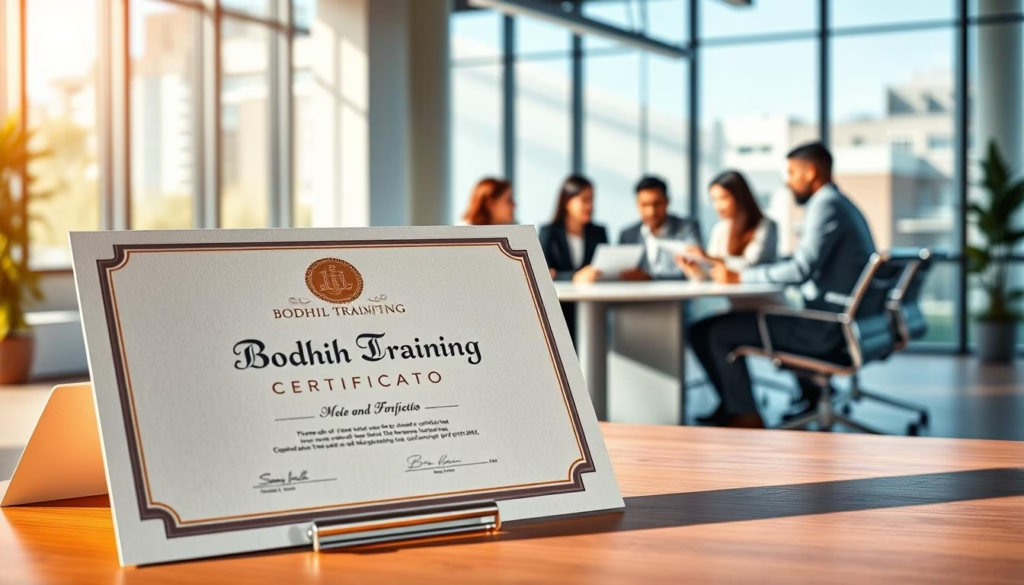
Value Proposition Analysis
When evaluating the return on investment, the value of a robust L&D certification becomes clear. It is not merely about the cost of the programme, but the long-term excellence it brings to internal training delivery.
“True professional development is measured not by the certificate on the wall, but by the tangible improvement in team performance and knowledge retention.”
The following table highlights how this programme compares to standard industry offerings:
| Feature | Standard Certification | Bodhih Programme |
|---|---|---|
| Primary Focus | Theoretical Knowledge | Practical Capability |
| Learning Style | Passive/Lecture | Experiential/Active |
| Outcome | Academic Recognition | Operational Excellence |
By choosing a path that emphasises long-term growth, organisations secure a competitive advantage. This L&D certification serves as a catalyst for building a sustainable internal training culture that evolves with the business.
The Role of Facilitation Skills in Modern HR
Developing high-level facilitation skills transforms HR practitioners into influential catalysts for learning and development. By mastering the art of guiding group dynamics, professionals can ensure that every session delivers maximum value. A robust train the trainer for HR approach provides the necessary framework to turn standard presentations into engaging, transformative experiences.
Building Confidence in Internal Trainers
Confidence is the bedrock of effective leadership within a training environment. When HR leaders possess the right tools, they command the room with authority and clarity. This sense of assurance allows them to navigate complex discussions while keeping the primary objectives in sharp focus.
The train the trainer for HR methodology empowers individuals to overcome common anxieties associated with public speaking. By refining their delivery techniques, trainers can foster a more collaborative atmosphere. This shift in capability ensures that internal trainers feel prepared to handle any challenge that arises during a workshop.
“True facilitation is not about being the smartest person in the room; it is about creating the space where the collective intelligence of the group can flourish.”
— Industry Expert on Corporate Learning
Managing Diverse Learning Styles
Modern workplaces are composed of individuals with unique cognitive preferences and professional backgrounds. To be truly effective, HR professionals must adapt their delivery to accommodate these varied needs. Implementing a train the trainer for HR strategy helps facilitators identify and support different learning modalities, from visual learners to those who prefer hands-on practice.
Inclusive training ensures that no employee is left behind during the development process. By diversifying instructional methods, trainers can significantly improve knowledge retention across the entire organisation. The following table outlines how different facilitation styles cater to specific audience needs:
| Facilitation Style | Primary Focus | Best For |
|---|---|---|
| Direct Instruction | Structured Content | Technical Compliance |
| Experiential Learning | Practical Application | Soft Skills Development |
| Collaborative Inquiry | Group Problem Solving | Strategic Planning |
| Reflective Practice | Individual Growth | Leadership Coaching |
Ultimately, the ability to manage diverse learning styles is what separates good trainers from exceptional ones. By integrating these advanced techniques, HR departments can build a culture of continuous improvement. This commitment to excellence remains a vital component of any successful train the trainer for HR initiative.
Practical Application and Real-World Training Scenarios
Real-world application transforms abstract training concepts into tangible organisational growth. When HR leaders move beyond textbooks, they unlock the true potential of their workforce. This transition is vital for building a robust internal training capability that sustains long-term success.
Case Studies in Corporate Settings
Many global firms have successfully utilised structured programmes to refine their internal processes. For instance, a leading technology firm recently implemented peer-led workshops to address technical skill gaps. By empowering subject matter experts to facilitate sessions, they saw a 40% increase in project delivery speed.
Another example involves a retail giant that shifted its focus toward experiential learning. Instead of traditional lectures, they introduced role-playing scenarios that mirrored high-pressure customer interactions. This approach allowed staff to build confidence in a safe environment, directly improving service quality metrics.
“The true measure of a training programme is not how much information is delivered, but how much is effectively applied to solve real business problems.”
— Industry Leadership Insight
Overcoming Common Training Challenges
Resistance to change remains a significant hurdle for many L&D departments. Employees often view new training as an interruption to their daily tasks rather than an opportunity for growth. To counter this, leaders must clearly communicate the strategic value of each initiative.
Lack of engagement is another frequent obstacle that requires proactive management. By incorporating interactive elements and feedback loops, organisations can ensure that their internal training capability remains dynamic and relevant. The following table outlines how to address these common barriers effectively.
| Challenge | Primary Cause | Strategic Solution |
|---|---|---|
| Resistance to Change | Fear of the unknown | Transparent communication |
| Low Engagement | Irrelevant content | Customised learning paths |
| Skill Decay | Lack of practice | Ongoing reinforcement |
| Resource Constraints | Budget limitations | Internal knowledge sharing |
By addressing these challenges head-on, organisations foster a culture of continuous improvement. Strengthening your internal training capability ensures that your team is always prepared for the evolving demands of the modern corporate landscape.
Support Systems and Post-Training Mentorship
The journey toward becoming an expert trainer extends well beyond the completion of an L&D certification. True professional transformation requires a dedicated ecosystem that nurtures talent long after the initial programme concludes.
Ongoing Professional Development
Participants benefit from structured mentorship programmes designed to refine their facilitation techniques in real-world settings. These initiatives ensure that the high standards established during the programme are consistently maintained and elevated over time.
“Continuous improvement is better than delayed perfection.”
Mark Twain
Mentors provide constructive feedback and strategic guidance to help trainers navigate complex corporate challenges. This ongoing engagement fosters a culture of excellence, allowing internal leaders to adapt their methods to evolving organisational needs.
Access to Training Resources
Graduates gain exclusive entry to a comprehensive library of digital assets and pedagogical tools. These resources are essential for maintaining the momentum gained during their L&D certification and ensuring long-term instructional success.
From updated slide decks to advanced facilitation frameworks, these materials empower trainers to deliver impactful sessions with confidence. By leveraging these assets, organisations can ensure that their internal training capabilities remain both relevant and highly effective in a competitive landscape.
Registration and Enrolment Process
Taking the next step in your career requires a clear and efficient path to enrolment. We ensure that every participant experiences a seamless transition into this employee development program, allowing you to focus entirely on your professional growth.
How to Secure Your Spot
Securing your place is a straightforward process designed for busy professionals. First, we invite you to review the upcoming cohort dates to find a schedule that aligns with your current commitments.
Once you have identified your preferred session, our team will guide you through the initial assessment. This step ensures that the curriculum meets your specific learning objectives and career aspirations.
After the assessment, you will receive a formal confirmation package. This document contains all necessary details to prepare you for the start of your employee development program journey.
| Stage | Action Required | Expected Outcome |
|---|---|---|
| Inquiry | Submit interest form | Consultation call |
| Assessment | Review requirements | Programme alignment |
| Confirmation | Finalise payment | Enrolment status |
Contact Information for Inquiries
We understand that you may have unique questions regarding the curriculum or the logistics of the training. Our dedicated support team is available to provide clarity and assist with your specific requirements.
For registration inquiries, please contact us at +91 99000 11603.
Whether you are an individual practitioner or representing an organisation, we are here to facilitate your entry into this employee development program. Reach out today to begin your transformation.
Recommendations for HR Departments
Transforming your organisation requires a deliberate strategy for embedding professional development programmes. By choosing to internalise training capabilities, HR leaders can ensure that knowledge transfer remains consistent and aligned with core business objectives. This shift fosters a culture of continuous improvement that directly impacts corporate training ROI.
Integrating Bodhih into Your L&D Strategy
To successfully integrate these methodologies, HR departments should map specific training modules to existing competency frameworks. This alignment ensures that every session contributes to the broader organisational mission. Strategic integration transforms training from a standalone event into a continuous cycle of growth.
Leadership support is vital during this transition phase. When executives champion the adoption of these programmes, it signals to the workforce that skill development is a top priority. This commitment helps maintain momentum and ensures that the investment yields measurable results over time.
Best Practices for Implementation
Effective implementation requires a phased approach that prioritises both quality and scalability. Start by identifying internal champions who can act as facilitators to drive engagement across different departments. Providing these individuals with the right resources is essential for maintaining high standards of delivery.
Monitoring progress through regular feedback loops allows for real-time adjustments to the training curriculum. By tracking key performance indicators, organisations can clearly demonstrate the corporate training ROI to stakeholders. This data-driven approach ensures that the programme remains relevant and effective in a changing market.
| Implementation Phase | Primary Focus | Expected Outcome |
|---|---|---|
| Planning | Goal Alignment | Clear Strategic Roadmap |
| Execution | Facilitator Training | Enhanced Internal Capability |
| Evaluation | Corporate Training ROI | Optimised Resource Allocation |
Conclusion
Building internal training capability represents a vital shift for modern organisations. By choosing the Bodhih Train the Trainer program, HR leaders secure a sustainable path toward operational excellence. This investment transforms individual potential into collective strength.
The competitive landscape demands agility and deep expertise. Companies that prioritise high-quality development initiatives gain a distinct advantage in talent retention and performance. Aligning these efforts with core business objectives ensures that every learning outcome drives measurable growth.
The journey toward professional mastery requires commitment and the right partnerships. Bodhih provides the framework necessary to elevate your team to new heights of productivity. Leaders who embrace these proven solutions position their organisations for long-term success in an evolving market.
Take the next step in your professional development journey today. Contact the team at Bodhih to discuss how these tailored training solutions can reshape your corporate culture. Your commitment to excellence starts with the decision to empower your people.
FAQ
Why is building an internal training capability essential for modern organisations?
Developing a robust internal training capability allows organisations to maintain absolute control over the quality and cultural relevance of their learning initiatives. By fostering in-house expertise, companies create a self-sustaining ecosystem of knowledge that aligns directly with business objectives, ensuring that professional growth remains a permanent driver of long-term performance.
What makes Bodhih’s train the trainer for HR certification unique in the market?
Unlike standard offerings, the train the trainer for HR programme by Bodhih focuses on the transformative power of enlightenment and professional facilitation. It bridges the gap between theoretical pedagogy and practical application, empowering participants to become active creators of knowledge rather than passive conduits of information.
How do people development leaders benefit from this L&D certification?
For people development leaders, this L&D certification provides the high-level strategic framework necessary to elevate an entire department’s influence. It equips them with advanced facilitation skills and the ability to manage diverse learning styles, ensuring that every internal training intervention is inclusive, authoritative, and effective.
In what ways does the programme improve corporate training ROI?
The programme enhances corporate training ROI by significantly reducing the reliance on external consultants and ensuring high levels of long-term skill retention. By investing in HR upskilling, organisations benefit from a favourable cost-benefit ratio, where the initial capital spent on capability building yields measurable, sustainable improvements in workforce productivity.
What core principles define the curriculum of this employee development program?
This employee development program is built upon rigorous adult learning principles that respect the professional maturity of participants. The curriculum combines experiential learning techniques with customisable modules designed for diverse corporate environments, ensuring that the skills acquired are immediately transferable to real-world scenarios.
What are the prerequisites for success in this HR upskilling journey?
Success in HR upskilling with Bodhih requires a commitment to professional transformation and the dedication of time to engage with intensive content. Potential participants should possess a foundational understanding of the human resources landscape and a drive to elevate their individual and organisational capabilities to meet future-ready standards.
How does Bodhih support participants after the training is complete?
Bodhih provides a comprehensive support system that includes post-training mentorship and ongoing professional development opportunities. Participants gain exclusive access to a wealth of training resources, ensuring they remain at the forefront of the industry and continue to deliver excellence as internal facilitators within their respective organisations.
How can professionals secure a spot in the upcoming certification?
To begin the journey of organisational transformation and secure a place in this prestigious programme, prospective candidates should follow the streamlined registration process. For detailed enrolment inquiries and to speak with a representative regarding specific requirements, please contact Bodhih directly at +91 99000 11603.