
Sales training programs help Indian teams close more deals by replacing transactional pitching with relationship-based, consultative selling. Effective programs build discovery skills, objection handling through real-time simulations, pipeline management and techniques for shortening the sales cycle. Bodhih customises content for B2B or B2C settings and regional communication styles, then tracks behaviour change against sales KPIs.
Key takeaways
- Structured development significantly boosts revenue per employee.
- Professional growth serves as a vital pillar for modern organisational success.
- Bodhih provides bespoke solutions to elevate team performance and capabilities.
- Aligning individual skills with business goals ensures sustainable growth.
- Specialised coaching helps teams overcome complex market obstacles effectively.
Last updated · Bodhih Insights team · reviewed by Siddharthan VGJ, Founder
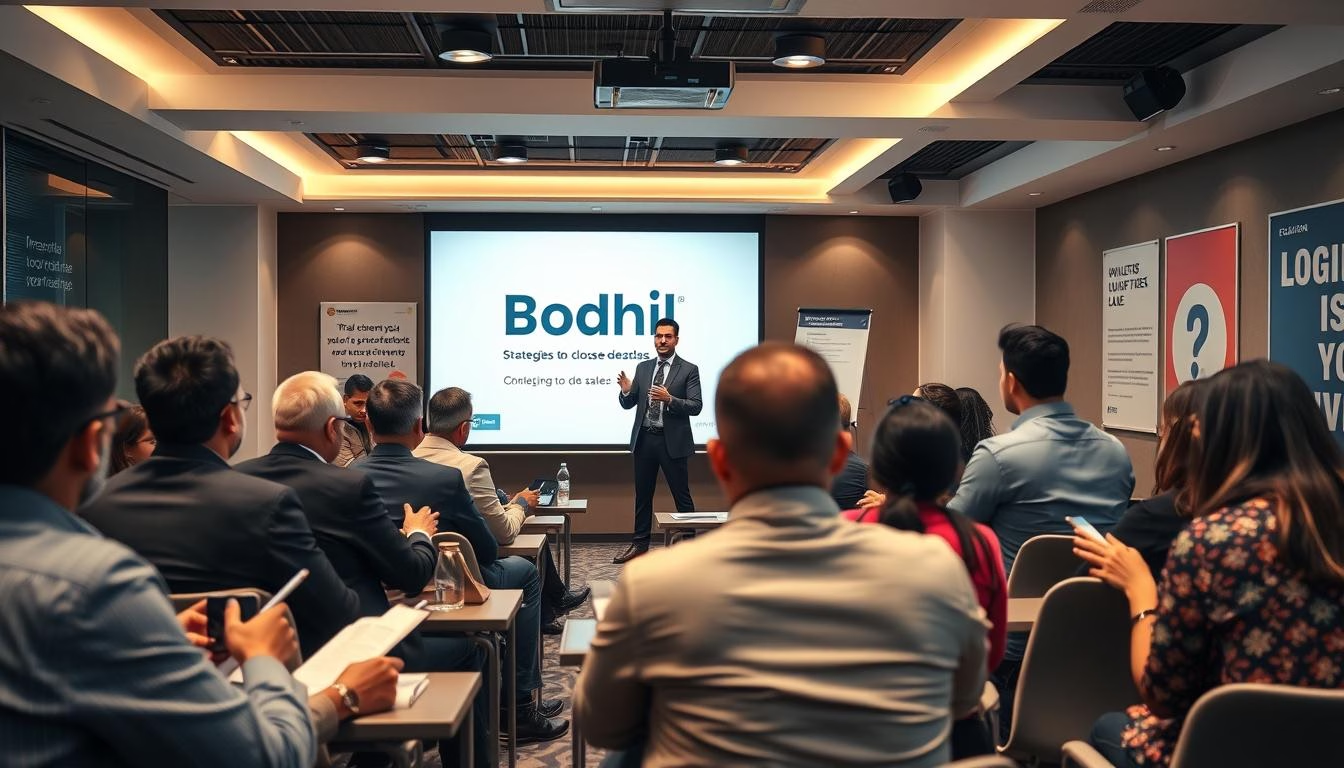
Professional growth is no longer a luxury but a strategic necessity for firms aiming to scale effectively. By adopting rigorous methodologies, businesses can unlock hidden potential and drive consistent results.
Bodhih facilitates this transformation by offering specialised guidance that aligns individual expertise with broader corporate objectives. Through focused capability enhancement, teams gain the confidence to navigate complex market challenges and secure long-term success.
The Current Landscape of Sales Training Programs in India
Sales training programs in India are evolving to meet the demands of a sophisticated consumer base. As the market becomes increasingly competitive, organisations must refine their internal capabilities to remain relevant. This shift requires a deep understanding of how modern buyers interact with brands.
Adapting to the Evolving Indian Consumer Behaviour
The modern Indian consumer is more informed and digitally connected than ever before. They expect personalised experiences and immediate value from every interaction. Consequently, businesses that rely on legacy methods often find themselves struggling to capture attention.
To succeed, teams must leverage data-driven insights to anticipate customer needs. Effective sales training programs in India now prioritise the ability to interpret digital signals and buyer intent. This proactive approach ensures that sales professionals remain one step ahead of market trends.
The Shift from Transactional to Relationship-Based Selling
Moving away from simple, one-off transactions is essential for long-term growth. Today, the focus has shifted toward building strategic partnerships that foster mutual success. This transition requires a fundamental change in how sales teams perceive their role within the organisation.
By prioritising trust and long-term value, companies can secure sustainable revenue streams. High-quality sales training programs in India provide the necessary framework to cultivate these deep connections. The following table highlights the core differences between these two distinct methodologies.
Feature
Transactional Selling
Relationship-Based Selling
Primary Goal
Closing the deal
Building long-term value
Interaction Style
Short-term, price-focused
Consultative, trust-focused
Customer Loyalty
Low, price-sensitive
High, brand-advocacy
Success Metric
Volume of sales
Customer lifetime value
Why Modern Sales Teams Require Specialised Skill Development
The modern Indian marketplace demands a higher standard of professional capability than ever before. As buyers become more informed and discerning, organisations must pivot towards comprehensive sales skills training to maintain a competitive edge. This evolution ensures that teams are not merely reactive but are strategically positioned to drive sustainable growth.
Identifying Common Skill Gaps in Indian Sales Forces
Many businesses across India struggle with performance plateaus caused by outdated methodologies. A rigorous assessment often reveals that teams possess strong product knowledge but lack the nuanced communication required to close high-value deals. Targeted sales skills training helps bridge these critical gaps effectively.
Common areas where professional development is frequently required include:
- Active listening to uncover hidden client pain points.
- Advanced negotiation techniques that move beyond price-based discussions.
- Data-driven pipeline management to ensure consistent lead conversion.
- Strategic questioning to align solutions with specific business objectives.
The Role of Emotional Intelligence in Modern Sales
Technical proficiency is only one half of the equation in today’s complex negotiation environments. Emotional intelligence serves as a vital differentiator for professionals who must build genuine trust with stakeholders. By mastering the ability to read social cues and manage interpersonal dynamics, sales representatives can navigate difficult conversations with greater confidence.
Integrating emotional intelligence into sales skills training allows teams to foster deeper, long-term relationships. This approach transforms the sales process from a simple transaction into a strategic partnership. When professionals understand the emotional drivers behind a client’s decision, they become far more effective at delivering value that resonates on a personal and professional level.
Core Pillars of Bodhih Corporate Training Methodologies
The foundation of effective professional development lies in the core pillars of bodhih corporate training methodologies. These frameworks are designed to move beyond traditional classroom instruction, focusing instead on deep capability enhancement. By prioritising active engagement, organisations can ensure that their teams are prepared to meet complex business objectives.
Experiential Learning Techniques for Better Retention
Retention of new knowledge is significantly higher when participants actively engage with the material. Bodhih utilises experiential learning to transform abstract concepts into tangible professional assets. This approach ensures that teams do not merely memorise information but internalise the core principles of effective communication.
“Learning is not attained by chance; it must be sought for with ardour and attended to with diligence.”
By standardising these training processes, companies can maintain consistent quality across diverse departments. This consistency is vital for organisations looking to scale their sales skills training initiatives effectively. The methodology focuses on three primary outcomes:
- Increased confidence in handling complex client interactions.
- Improved ability to articulate value propositions clearly.
- Enhanced capacity for long-term relationship management.
Integrating Real-World Scenarios into Training Modules
Theoretical knowledge remains limited until it is applied within a practical context. Bodhih integrates real-world scenarios, such as those found in the NSP-001 Negotiation Skills kit, to bridge this gap. These fully scripted modules allow participants to practice high-stakes conversations in a safe, controlled environment.
The use of professional toolkits ensures that every team member receives a uniform experience. This structured application of bodhih corporate training allows for immediate feedback and refinement of techniques. Consequently, participants leave the sessions with actionable capabilities that drive measurable business results in the competitive Indian market.
Mastering Consultative Selling for High-Value Transactions
Mastering consultative selling is the cornerstone of success for modern Indian sales teams. In an era where buyers are better informed than ever, the ability to guide a client through complex decision-making processes is essential. This approach moves the interaction away from aggressive persuasion and towards a collaborative partnership.
Developing Deep Discovery Skills
The foundation of any high-value transaction lies in the quality of the discovery phase. Sales professionals must learn to ask probing, open-ended questions that reveal the underlying pain points of a business. It is not enough to identify a surface-level requirement; one must understand the strategic objectives driving the client.
By listening more than speaking, representatives can uncover hidden challenges that the client may not have articulated. This level of insight allows for a more tailored approach to problem-solving. When a salesperson demonstrates a genuine understanding of the client’s world, they build immediate credibility.
Positioning Solutions as Strategic Value Propositions
Once the needs are clearly defined, the focus must shift to presenting the offering as a strategic value proposition. Rather than listing features, the conversation should centre on how the solution enables the client to achieve their long-term goals. This transition is what separates a standard vendor from a trusted advisor.
“The goal of consultative selling is not to close a deal, but to open a relationship that creates mutual value for both parties involved in the transaction.”
— Industry Expert
Organisations that adopt this methodology often see a significant improvement in their win rates. The following table highlights the core differences between traditional sales methods and the consultative approach.
Feature
Traditional Selling
Consultative Selling
Primary Focus
Product Features
Client Objectives
Communication
Pitching
Active Listening
Outcome
Transaction
Strategic Partnership
Value Driver
Price
Business Impact
By consistently applying these principles, teams can navigate the complexities of the Indian market with greater confidence. Elevating the sales process through consultative selling ensures that every interaction adds tangible value to the client’s business journey.
The Impact of Interactive Sales Workshops on Team Performance
Elevating team cohesion requires more than just theory; it demands the practical application found in high-impact sales workshops. By moving away from passive learning, organisations can create a dynamic environment where professionals actively refine their sales skills training. This approach ensures that every team member contributes to a unified, high-performing culture.
Fostering Collaboration Through Group Exercises
Group exercises act as a bridge between individual talent and collective success. When team members engage in structured problem-solving, they share unique insights that strengthen the entire group. This collaborative spirit is essential for navigating the complexities of the Indian market.
“Coming together is a beginning, staying together is progress, and working together is success.”
Henry Ford
These sessions encourage open communication and the exchange of best practices. By working through challenges together, teams build a shared language of success that improves overall efficiency. The following table illustrates the shift from individual to collective performance metrics:
Metric
Individual Focus
Collaborative Focus
Knowledge Sharing
Limited
High
Problem Solving
Isolated
Synergistic
Goal Alignment
Personal
Organisational
Overcoming Objections in Real-Time Simulations
Real-time simulations provide a controlled, supportive environment for testing new strategies. Participants can practice handling difficult client queries without the pressure of a live deal. This repetition builds the confidence necessary to manage high-value transactions effectively.
Through these interactive sales workshops, teams learn to pivot their approach based on immediate feedback. Mastering these sales skills training techniques ensures that objections are viewed as opportunities rather than roadblocks. Ultimately, this preparation transforms potential into consistent, measurable results for the entire organisation.
Customising Training Solutions for Diverse Indian Market Sectors
India’s diverse market landscape demands a highly nuanced approach to professional sales development. Generic modules often fail to address the specific challenges faced by teams operating in different industries. By implementing bespoke sales training programs in India, organisations can ensure their teams remain competitive and agile.
Tailoring Content for B2B versus B2C Environments
The requirements for business-to-business (B2B) sales differ significantly from business-to-consumer (B2C) interactions. B2B engagements typically involve longer sales cycles, multiple stakeholders, and complex decision-making processes. Training for these teams must focus on consultative selling and long-term relationship management.
Conversely, B2C environments often prioritise speed, emotional connection, and high-volume transactions. Teams in this sector benefit from training that emphasises rapid rapport building and effective objection handling. Customising sales training programs in India allows companies to align their internal capabilities with these distinct market realities.
Feature
B2B Focus
B2C Focus
Sales Cycle
Long and Strategic
Short and Transactional
Decision Makers
Multiple Stakeholders
Individual Consumer
Primary Goal
Relationship Value
Immediate Conversion
Addressing Regional Nuances in Communication Styles
India is a country defined by its rich cultural and linguistic diversity. A communication style that resonates in a metropolitan hub like Mumbai may require adjustments when engaging clients in regional centres. Authentic connections are built when sales professionals adapt their tone and approach to respect local customs.
Effective training must incorporate these regional nuances to ensure messages are received with clarity and trust. When teams master the art of local engagement, they significantly improve their conversion rates. Investing in high-quality sales training programs in India ensures that every interaction is both professional and culturally relevant.
Bridging the Gap Between Lead Generation and Deal Closure
Bridging the gap between lead generation and deal closure is the hallmark of a high-performing sales force. Many organisations generate a steady stream of interest but often lose momentum before the final agreement is signed. Success requires a structured approach that ensures every prospect receives the right attention at the right time.
By adopting consultative selling, teams can better understand the unique challenges of their clients. This methodology transforms the sales process from a simple transaction into a strategic partnership. It ensures that the value proposition remains clear throughout the entire journey.
Effective Pipeline Management Strategies
A healthy pipeline is the lifeblood of any growing business. Teams must maintain clear visibility over every stage of the process to identify potential bottlenecks early. Regular audits of the pipeline allow managers to reallocate resources where they are needed most.
Qualification is another critical component of effective management. By focusing on high-potential leads, sales professionals avoid wasting time on prospects who are not ready to commit. This disciplined focus keeps the team motivated and ensures that energy is directed toward high-value outcomes.
Techniques for Shortening the Sales Cycle
Reducing the time taken to close a deal is essential for improving overall efficiency. One of the most effective ways to achieve this is by streamlining communication and decision-making processes. When teams use consultative selling, they address concerns proactively, which prevents unnecessary delays during negotiations.
Providing clear, concise information helps prospects make faster decisions. Organisations that implement these strategies often see a significant improvement in their revenue predictability. The following table highlights the differences between reactive and proactive pipeline management.
Strategy Feature
Reactive Approach
Proactive Approach
Lead Qualification
Low focus
High precision
Communication
Ad-hoc updates
Structured engagement
Cycle Speed
Slow and unpredictable
Optimised and consistent
Outcome Focus
Transactional
Strategic value
Measuring the Return on Investment for Sales Training Initiatives
Evaluating the success of training initiatives requires a robust analytical framework. Organisations must move beyond anecdotal evidence to quantify the tangible benefits of their development programmes. By establishing clear metrics, decision-makers can justify their investment and refine future strategies for maximum impact.
The effectiveness of sales workshops is often reflected in the immediate shift in team performance. When teams engage in structured learning, the resulting improvements in output become clear through specific data points. This analytical approach provides the clarity needed to sustain growth in a competitive market.
Key Performance Indicators for Sales Success
To measure success, organisations should focus on metrics that directly correlate with revenue generation. Tracking conversion rates at each stage of the pipeline offers a clear view of how effectively teams apply their new skills. Furthermore, monitoring the reduction in the average sales cycle length serves as a strong indicator of increased efficiency.
“Investment in human capital is the most reliable path to sustainable competitive advantage in the modern business landscape.”
Implementing consultative selling techniques often leads to higher deal values and improved client retention. By tracking the average deal size alongside win rates, companies can validate the financial contribution of their training efforts. These indicators provide a factual basis for assessing the overall health of the sales function.
Long-Term Tracking of Behavioural Changes
While immediate results are important, the true value of training lies in sustained behavioural shifts. Organisations should conduct periodic assessments to ensure that the skills acquired during training remain embedded in daily operations. This long-term perspective is essential for fostering a culture of continuous improvement.
Managers play a critical role in observing and coaching team members to reinforce positive habits. By documenting these changes over time, businesses can identify which methodologies yield the most consistent results. Consistent application of learned techniques is the ultimate measure of a successful training initiative.
How to Partner with Bodhih for Your Sales Transformation
Embarking on a journey of sales transformation requires a strategic partner who understands the unique nuances of the Indian market. Bodhih corporate training provides the expertise necessary to elevate your team’s performance through structured and scalable development programmes.
Consultation and Needs Assessment Process
The path to success begins with a thorough discovery phase where experts analyse your current organisational objectives. By identifying specific growth opportunities and operational challenges, the team ensures that every intervention is perfectly aligned with your business goals.
This collaborative approach allows for the creation of bespoke sales workshops that address the exact requirements of your workforce. Every module is designed to foster long-term behavioural change rather than providing temporary fixes.
Contacting the Team at +91 99000 11601/602/603
Organisations ready to initiate this transformation are encouraged to reach out for a professional discussion. You can call +91 99000 11601/602/603 to speak with our consultants about your specific training needs.
Taking this step ensures that your investment in human capital yields measurable results. Please call +91 99000 11601/602/603 today to begin designing your path toward excellence with our specialised bodhih corporate training and interactive sales workshops.
Conclusion
Investing in professional development remains the most effective way to elevate organisational capabilities in a competitive market. Modern businesses require a shift toward consultative methodologies to navigate the complexities of the Indian business landscape. This commitment to growth ensures that teams remain agile and focused on long-term objectives.
Choosing the right partner for your journey is vital for achieving measurable results. Through bodhih corporate training, organisations gain access to proven frameworks that turn potential into performance. These programmes provide the necessary tools to refine communication and strengthen client relationships across diverse sectors.
Sales excellence is a continuous process rather than a single event. By prioritising skill development, companies build a resilient workforce capable of adapting to shifting consumer demands. Engaging with bodhih corporate training empowers your team to master the art of the deal while maintaining a strategic focus on value creation.
The path to market leadership starts with a clear vision for capability enhancement. Reach out to the experts to begin your transformation today. Your organisation possesses the potential to redefine its success through dedicated learning and refined sales strategies.
FAQ
What distinguishes Bodhih corporate training from other sales training programs in India?
Unlike generic offerings, Bodhih corporate training prioritises experiential learning and the use of professional toolkits, such as the NSP-001 Negotiation Skills kit. This approach ensures that sales skills training is not merely theoretical but translates into practical, actionable capabilities that standardise quality across diverse teams.
How does consultative selling improve the performance of modern sales teams?
Consultative selling shifts the focus from transactional interactions to relationship-based partnerships. By developing deep discovery skills, sales professionals can position their solutions as strategic value propositions, which is essential for navigating the complex landscape of high-value transactions in the Indian market.
What can participants expect to achieve through interactive sales workshops?
These sales workshops are designed to foster collaboration through group exercises and real-time simulations. Participants learn to overcome objections and refine their communication styles, effectively bridging the gap between lead generation and final deal closure.
Are the sales training programs in India customisable for specific industry sectors?
Yes, Bodhih specialises in tailoring content for both B2B and B2C environments. The modules address specific regional nuances and sector-specific challenges, ensuring that the capabilities developed are directly relevant to the organisation’s unique market objectives.
How is the ROI of a sales skills training initiative measured?
Success is tracked through specific Key Performance Indicators (KPIs), including shortened sales cycles, improved pipeline management, and the long-term observation of behavioural changes. This ensures that the investment in training delivers a measurable impact on business results.
How can an organisation begin the process of a sales transformation with Bodhih?
The process begins with a thorough consultation and needs assessment to align training with organisational goals. To initiate this professional discussion and explore bespoke solutions, organisations can call +91 99000 11601/602/603 to speak with a consultant.
Quick answers
Which skills help sales teams close more deals?
Deep discovery questioning, positioning solutions as strategic value propositions, handling objections calmly, managing the pipeline and shortening the sales cycle all help close deals. Emotional intelligence also matters, because buyers respond to sellers who understand their concerns. Interactive workshops with simulations let teams practise these skills before using them with real customers.