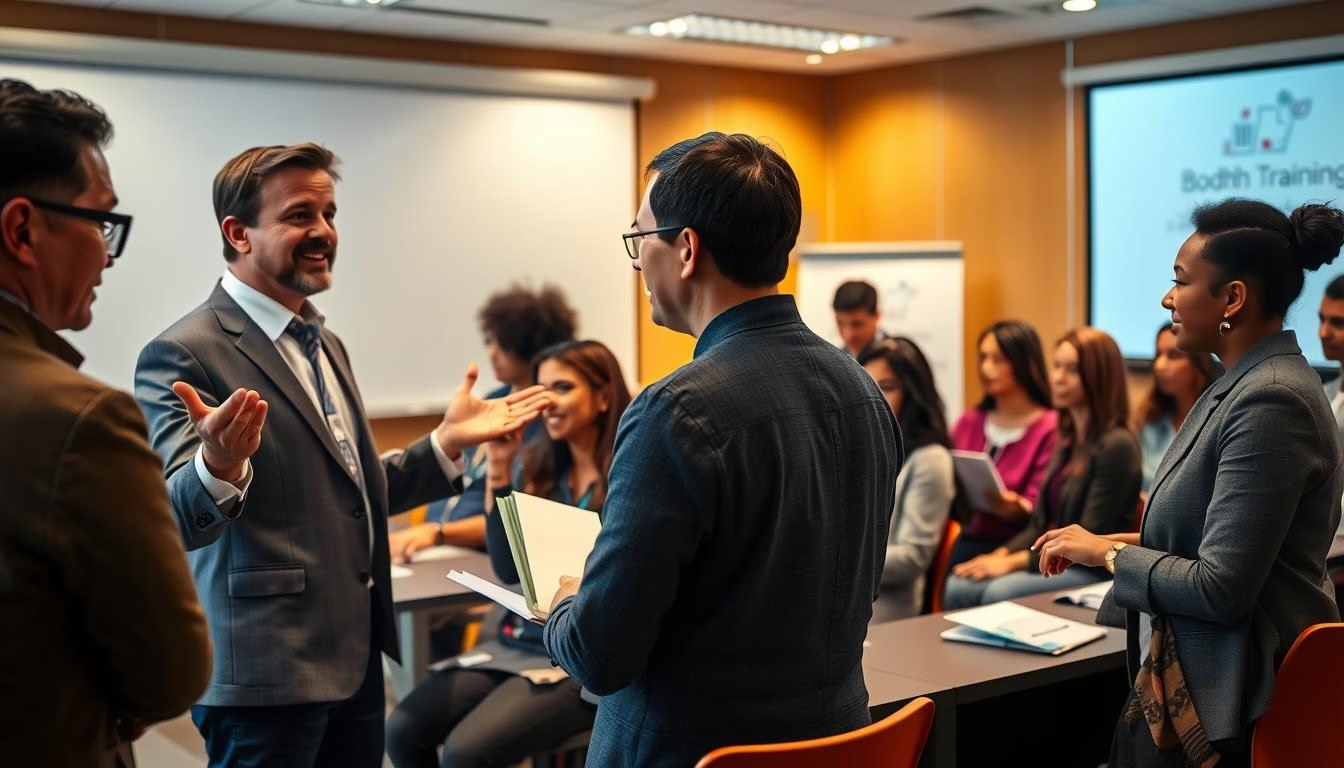
Facilitation skills for trainers are the abilities that let a trainer guide a group to discover and apply learning, rather than lecture at it. They include active listening, non-verbal communication, strategic open-ended questioning, managing energy and group dynamics, handling disruptive behaviour and keeping virtual sessions engaging. Bodhih builds these skills through its trainer certification programs.
Key takeaways
- Mastering group guidance is essential for modern corporate success.
- Great leadership balances both scientific methods and creative artistry.
- Refining your approach leads to more effective learning outcomes.
- Strong guidance creates an inclusive space for all participants.
- Continuous improvement is vital for long-term professional development.
Last updated · Bodhih Insights team · reviewed by Siddharthan VGJ, Founder
Effective guidance determines the success of any workshop or seminar. It is both a science and an art form that requires constant practice and refinement. By creating an environment where ideas flow freely, you ensure that your message resonates deeply with your audience.
Understanding these core abilities is the cornerstone of professional growth. Whether you are leading a small team or a large corporate event, your approach defines the outcome. Let’s explore how you can elevate your performance and become a more impactful leader in your field.
Defining the Role of a Modern Facilitator
Moving beyond the podium, the modern facilitator acts as a catalyst for group discovery. Rather than simply delivering information as a lecturer, today’s trainer serves as a guide who navigates the complexities of the learning process. This shift requires a deep understanding of facilitation skills to ensure that every participant feels heard and valued.
Traditional instruction often relies on a one-way flow of information from the expert to the audience. In contrast, the modern approach prioritizes collaborative environments where participants learn from one another. By fostering this peer-to-peer exchange, trainers can unlock deeper insights that a standard lecture might miss.
Mastering these essential facilitation skills allows trainers to better manage the nuances of adult learning. When you stop being the sole source of knowledge, you empower your audience to take ownership of their growth. This transition is vital for any professional looking to become a more effective agent of change within their organization.
Essential Facilitation Skills for Trainers to Master
Mastering the room is an art form that relies on specific, teachable facilitation skills for trainers. While subject matter expertise is vital, the ability to guide a group through a learning journey determines your true effectiveness. By refining these core competencies, you can transform standard presentations into impactful learning experiences.
Active Listening and Empathetic Engagement
Active listening goes beyond simply hearing words; it involves processing the intent and emotion behind participant feedback. When you practice empathetic engagement, you validate the learner’s experience, which builds immediate trust. This connection allows you to pivot your delivery based on the real-time needs of the group.
Mastering Non-Verbal Communication
Your body language often speaks louder than your prepared slides. A trainer who maintains open posture and consistent eye contact projects confidence and accessibility. These subtle cues help you manage the energy of the room without saying a single word.
The Power of Strategic Questioning
Strategic questioning is a powerful tool used to spark critical thinking and deeper reflection. Instead of providing all the answers, effective facilitation skills for trainers involve asking open-ended questions that challenge participants to solve problems. This approach shifts the focus from passive listening to active discovery.
| Skill Category | Primary Benefit | Trainer Outcome |
|---|---|---|
| Active Listening | Builds deep trust | Higher learner retention |
| Non-Verbal Cues | Enhances presence | Better group control |
| Strategic Inquiry | Promotes analysis | Increased engagement |
By integrating these techniques, you ensure that your sessions remain dynamic and participant-centered. Consistent practice of these foundational habits will distinguish you as a leader in the training industry.
Cultivating a Dynamic Trainer Presence
Mastering the art of facilitation requires more than technical knowledge; it demands a magnetic trainer presence. While your curriculum provides the roadmap, your personal energy acts as the engine that drives the learning experience forward. Developing these intangible qualities allows you to transform a standard presentation into a truly transformative event.
Building Rapport with Diverse Audiences
Connecting with a room full of unique individuals is a cornerstone of effective facilitation skills. When you acknowledge the diverse backgrounds of your participants, you create a safe environment where everyone feels valued. This psychological safety encourages open communication and fosters a culture of shared learning.
- Use inclusive language that resonates with various professional levels.
- Acknowledge different perspectives to validate participant contributions.
- Create icebreakers that allow for genuine human interaction.
Managing Energy Levels in the Room
Even the most compelling content can fall flat if the room’s energy dips too low. A skilled facilitator acts as a thermostat, constantly reading the mood and adjusting the pace to keep participants focused. You must learn to recognize the signs of fatigue and intervene before engagement wanes.
Try incorporating short, high-energy activities when you notice a slump in attention. Strategic movement or quick group discussions can revitalize the atmosphere. By proactively managing these ebbs and flows, you ensure that your audience remains motivated throughout the entire session.
Authenticity as a Tool for Connection
Perhaps the most powerful asset in your toolkit is your own authenticity. Participants are quick to spot a rehearsed or robotic delivery, which often creates a barrier to genuine connection. When you show up as your true self, you invite others to do the same.
Being authentic does not mean abandoning professionalism; rather, it means sharing relevant experiences and showing genuine passion for your subject. This vulnerability builds trust and makes your facilitation skills feel more relatable. Ultimately, people learn best from those they perceive as real, honest, and deeply invested in their success.
Designing Engaging Learning Experiences
Great training delivery is built on a foundation of intentional design and active participation. When facilitators move away from passive lectures, they create an environment where knowledge truly sticks. By focusing on the learner’s journey, you can transform standard presentations into high-impact sessions.
Structuring Content for Maximum Retention
Information overload is the enemy of effective learning. To combat this, break your material into small, logical segments that build upon one another. This chunking method allows the brain to process and store new concepts more efficiently.
Start each session with a clear roadmap so participants know exactly what to expect. When learners understand the flow of the day, they feel more secure and ready to engage with the material. Consistency in your structure helps maintain focus throughout the entire program.
Incorporating Interactive Elements
The most successful sessions rely on active participation rather than just listening. Engaging learners requires a variety of tools that invite them to contribute their own experiences. Consider using these methods to keep energy high:
- Live polls to gauge understanding in real-time.
- Small breakout groups for collaborative problem-solving.
- Gamified quizzes that reward quick thinking and participation.
These interactive touchpoints prevent mental fatigue and foster a sense of community. When participants feel like active contributors, their commitment to the learning process increases significantly.
Balancing Theory with Practical Application
Theory provides the “why,” but practice provides the “how.” A balanced training delivery model ensures that participants leave with actionable skills they can apply immediately. Aim for a ratio where at least half of your time is dedicated to hands-on exercises.
By grounding abstract concepts in real-world scenarios, you bridge the gap between the classroom and the workplace. This practical approach is essential for engaging learners who want to see the direct value of their time. Ultimately, your goal is to ensure that every participant feels confident in their ability to use what they have learned.
The Role of Technology in Virtual Facilitation
Technology serves as the bridge between trainers and remote learners in today’s digital landscape. While the physical classroom offers natural cues, virtual spaces require intentional design to ensure engaging learners remains a top priority. Trainers must adapt their delivery methods to overcome the distance and keep remote participants fully involved.
Selecting the Right Digital Tools
Choosing the correct software is the foundation of a successful virtual session. You should evaluate tools based on your specific learning objectives rather than just picking the most popular platform. Reliability and ease of use are critical factors that prevent technical frustration during your presentation.
Consider the technical requirements of your audience before finalizing your toolkit. A platform that works seamlessly on a desktop might struggle on a mobile device. Always test your setup to ensure that your chosen technology supports your goals without creating unnecessary barriers.
Maintaining Engagement Through Screens
Keeping an audience focused through a screen requires a different set of strategies than in-person training. You must create frequent opportunities for interaction to prevent passive listening. Engaging learners effectively often involves using polls, breakout rooms, and collaborative whiteboards to break up long lectures.
Your energy levels must be higher than usual to compensate for the lack of physical presence. Use your voice and body language to convey enthusiasm and maintain a dynamic atmosphere throughout the session. When you actively involve participants, you bridge the physical gap and foster a sense of community.
| Tool Category | Primary Benefit | Best Use Case |
|---|---|---|
| Interactive Polling | Real-time feedback | Checking knowledge retention |
| Breakout Rooms | Peer collaboration | Small group problem solving |
| Digital Whiteboards | Visual brainstorming | Creative strategy sessions |
| Chat Functions | Immediate Q&A | Managing audience inquiries |
Adapting Training Delivery to Different Learning Styles
Great trainers understand that one size rarely fits all when it comes to effective instruction. By recognizing that each participant absorbs information differently, you can refine your training delivery to ensure maximum impact. This flexibility is the key to engaging learners who might otherwise feel left behind by a rigid, lecture-only format.
Visual, Auditory, and Kinesthetic Approaches
To reach a diverse audience, you should incorporate a mix of sensory-based activities. Visual learners benefit from charts, diagrams, and color-coded slides that map out complex ideas. Auditory learners thrive during group discussions, storytelling, and verbal explanations that clarify key concepts.
Kinesthetic learners need to move and interact with the material to truly understand it. You can support these individuals by including hands-on exercises, role-playing scenarios, or physical problem-solving tasks. By balancing these three styles, you create a dynamic environment where everyone feels included.
- Visual: Use infographics and whiteboards to illustrate workflows.
- Auditory: Encourage peer-to-peer teaching and open Q&A sessions.
- Kinesthetic: Implement breakout sessions that require building or testing solutions.
Customizing Content for Corporate Environments
Beyond individual preferences, you must tailor your content to the specific culture of the organization. A startup environment might require a fast-paced, informal approach, while a traditional firm may prefer structured, data-heavy presentations. Customizing content ensures that your message resonates with the professional values of the company.
Always research the company’s internal language and current challenges before you begin. When your examples mirror the daily reality of your participants, you become more relatable and credible. This level of preparation is essential for engaging learners and maintaining high levels of interest throughout your training delivery.
The Importance of Continuous Professional Development
True excellence in training is not a static achievement but a dynamic cycle of constant refinement. The most effective educators recognize that their skills must evolve alongside the changing needs of their audience. By embracing a mindset of lifelong learning, you ensure that your methods remain relevant and impactful.
Seeking Feedback for Growth
One of the most effective ways to identify your blind spots is to invite honest input from those you serve. Participants often provide the most valuable insights into what resonated with them and what fell flat. Actively seeking feedback transforms a standard training session into a collaborative learning experience for everyone involved.
Consider implementing these strategies to gather actionable data:
- Distribute anonymous surveys immediately following your sessions.
- Ask a trusted peer to observe your delivery and provide constructive critique.
- Review video recordings to identify specific areas where your trainer presence could be more engaging.
Reflective Practice for Trainers
Beyond external input, you must cultivate the habit of looking inward to analyze your own performance. Reflective practice involves setting aside time after each session to evaluate your choices and outcomes. This quiet introspection allows you to refine your techniques and adjust your approach for future groups.
When you engage in this process, focus on the moments where you felt most connected to your audience. Ask yourself how your trainer presence influenced the energy in the room during challenging segments. By documenting these reflections, you create a personal roadmap for professional growth that separates good trainers from truly exceptional ones.
Leveraging Professional Certification Programs
Earning a professional credential is a powerful way to distinguish yourself in a crowded training market. While experience is vital, formal recognition provides the objective proof that your methods align with global industry standards. By pursuing structured programs, you signal to employers and clients that you prioritize excellence in every session you lead.
Why Bodhih Certification Matters
Obtaining a Bodhih certification offers a significant competitive edge for trainers who want to stand out. This program focuses on evidence-based techniques that transform how you manage group dynamics and deliver complex information. It ensures that your facilitation style is not just intuitive, but grounded in proven pedagogical frameworks.
When you hold this credential, you gain access to a network of professionals who value high-quality learning experiences. It serves as a trusted benchmark for organizations looking to hire trainers who can deliver measurable results. This validation helps you secure better opportunities and command higher fees in the professional training sector.
Investing in Your Facilitation Career
Choosing to invest in your career through a recognized program demonstrates a deep commitment to professional growth. It is an acknowledgment that the field of training is constantly evolving and requires ongoing refinement of your craft. By dedicating time to earn a Bodhih certification, you are actively building a foundation for long-term success.
This investment pays dividends by expanding your toolkit and sharpening your ability to adapt to diverse learning environments. You will find that the structured feedback and peer interaction inherent in these programs accelerate your development far faster than self-study alone. Ultimately, this path empowers you to become a more confident and effective leader in any corporate setting.
Overcoming Common Facilitation Challenges
Even the most prepared trainers encounter unexpected hurdles during a live session. Developing strong facilitation skills for trainers means learning how to pivot when the environment changes suddenly. Staying composed allows you to maintain authority and keep your participants focused on the learning goals.
Handling Unexpected Technical Glitches
Technology often behaves unpredictably, regardless of how much you test your equipment beforehand. When a screen freezes or a video fails to load, the most important step is to remain calm. Your audience will mirror your energy, so a steady demeanor prevents unnecessary panic.
To minimize disruptions, consider these proactive strategies:
- Always have a backup plan, such as printed handouts or a secondary device ready to go.
- Keep the conversation flowing by asking a thought-provoking question while you troubleshoot.
- Do not apologize excessively; simply acknowledge the issue and move forward with confidence.
Managing Time Constraints Effectively
Effective training delivery requires a delicate balance between covering your material and respecting the schedule. It is common to find yourself running behind, especially when group discussions become particularly lively. Prioritizing your core learning objectives ensures that participants walk away with the most critical information.
If you notice time slipping away, try these techniques to regain control:
- Identify which activities are essential and which can be shortened or removed if necessary.
- Use a visible timer to help both you and the participants stay aware of the remaining time.
- Encourage participants to take “parking lot” questions offline to keep the main session on track.
Remember that flexibility is a hallmark of a great facilitator. By preparing for these common obstacles, you ensure that your sessions remain impactful and professional, no matter what challenges arise.
Conclusion
Becoming a standout trainer is a journey that evolves with every session you lead. You now possess a clear roadmap to refine your facilitation skills and elevate your impact in any corporate environment.
True growth stems from your willingness to embrace new methods and adapt to the unique needs of your participants. Consistent practice turns these concepts into second nature, allowing you to guide groups with confidence and clarity.
Your dedication to honing these facilitation skills will set you apart as a leader in the learning and development field. Seek out opportunities to apply these strategies during your next workshop or team meeting.
Start small by testing one new technique this week. Observe how your audience responds and adjust your approach to maximize their engagement. Your commitment to this craft creates lasting value for every person you train.
The world of professional development relies on passionate individuals who prioritize growth. Keep pushing your boundaries and refining your craft to ensure your training programs remain effective and inspiring for years to come.
FAQ
Why are facilitation skills considered the “science and art” of modern training?
Facilitation is a science because it involves structured methodologies and adult learning principles, but it is an art because it requires intuition and trainer presence to read the room. Mastering facilitation skills allows you to move beyond simple lecturing, helping you guide groups through complex challenges and ensuring that the learning objectives are met with precision and creativity.
How does the role of a modern facilitator differ from a traditional lecturer?
Unlike a traditional lecturer who acts as a “sage on the stage,” a modern facilitator serves as a guide. The focus shifts from simply delivering information to engaging learners in a collaborative environment. By fostering a space where participants learn from one another, the facilitator becomes a catalyst for meaningful organizational change.
What are the most important technical abilities for a trainer to master?
To lead with confidence, trainers must excel in active listening, empathetic engagement, and non-verbal communication. Additionally, the power of strategic questioning is vital; it encourages participants to think critically and dive deeper into the subject matter, making the training delivery much more impactful.
How can I maintain high energy levels and rapport during a long workshop?
Building rapport starts with authenticity. When you bring your true self to the front of the room, you build a genuine connection with your audience. To manage energy, vary your training delivery methods, use movement, and incorporate frequent interactive elements that prevent fatigue and keep participants motivated from start to finish.
What is the secret to designing training content that participants actually remember?
The key is structuring content for maximum retention by balancing theory with practical application. Rather than overloading learners with data, focus on interactive elements that allow them to practice new skills in real-time. This ensures that the knowledge isn’t just understood, but is ready to be used in a professional corporate environment.
How should a trainer handle disruptive behaviors or conflict within a group?
Conflict doesn’t have to be negative. Great facilitators identify disruptive behaviors early and pivot the energy into a constructive dialogue. By ensuring inclusivity and setting clear ground rules, you can transform a difficult situation into a powerful learning moment for everyone involved.
What are the best practices for engaging learners in a virtual environment?
A: Virtual facilitation requires the right digital tools, such as Zoom breakout rooms or Mural boards, to bridge the physical gap. To keep participants from tuning out, increase the frequency of interactions and use visual and auditory cues to maintain interest through the screen.
Why should I consider a Bodhih certification for my facilitation career?
A Bodhih certification is a globally recognized mark of excellence that provides you with a competitive edge in the professional market. Investing in this type of formal recognition demonstrates your dedication to high-quality standards and prepares you to deliver world-class results for major brands like Amazon or Deloitte.
How do I handle unexpected technical glitches without losing my audience?
The key is to remain composed and have a backup plan ready. Use your facilitation skills to keep the conversation going or initiate a brief “table talk” exercise while you resolve the issue. Transparency and a friendly, calm demeanor will help you maintain your authority and keep the session on track despite the hiccup.
How does reflective practice contribute to my growth as a trainer?
A: Continuous professional development isn’t just about taking new courses; it’s about reflective practice. By seeking honest feedback and analyzing your own performance after every session, you can identify specific areas for improvement, ensuring you evolve from a good trainer into an exceptional one.
Quick answers
What are facilitation skills in training?
Facilitation skills are the techniques a trainer uses to guide a group through a learning process instead of delivering one-way instruction. They include active listening, reading non-verbal cues, asking open-ended questions, structuring content for retention, adding interactive activities, managing conflict and adapting delivery to virtual and in-person groups so participants learn from each other.