

Recent research reveals that professional teams lose nearly seventy per cent of knowledge within one day of traditional workshops. This surprising statistic highlights the vital need for active engagement in the modern workplace. Traditional methods often fail to bridge the gap between theory and practical application.
Outlife operates as a leading specialist in transformative corporate solutions. By delivering experiential learning India, the organisation helps teams reach their full potential. These programmes focus on building trust and improving communication through direct interaction.
Elevate your business capabilities today by calling our team at +91 99000 11601, +91 99000 11602, or +91 99000 11603. You can also send an email to [email protected] to align your organisational objectives with our expert training services.
Our bespoke approach ensures that every activity serves a clear strategic purpose. We focus on enhancing employee engagement to drive long-term growth and management efficiency. This method creates a lasting impact that traditional classroom settings simply cannot match.
Key Takeaways
- Customised outbound training programmes designed for modern corporate needs.
- Practical application of skills to ensure maximum knowledge retention.
- Enhanced employee engagement through immersive team-building activities.
- Focus on organisational transformation and workforce capability building.
- Effective management solutions that align with specific business objectives.
- Strengthening professional relationships through collaborative problem-solving.
Transforming Corporate Learning Through Real-World Experience
Outbound training programmes are transforming the corporate learning landscape by immersing participants in real-life scenarios. This approach to learning combines experiential activities, team simulations, and facilitated workshops, providing a holistic development experience.
Outlife’s learning approach is designed to simulate workplace challenges, enabling participants to develop critical skills in a practical and engaging manner. By leveraging real-world experiences, organisations can enhance employee capabilities and drive business growth.
The benefits of outbound training are multifaceted, including improved team collaboration, enhanced leadership skills, and increased employee engagement. The following table highlights some key advantages of incorporating outbound training into corporate learning programmes:
| Benefits | Description | Impact |
|---|---|---|
| Improved Team Collaboration | Team-building activities foster a sense of unity and cooperation among employees. | Enhanced teamwork and communication |
| Enhanced Leadership Skills | Leadership development programmes help identify and nurture future leaders. | Better decision-making and strategic thinking |
| Increased Employee Engagement | Engaging and interactive training programmes boost employee motivation and participation. | Improved productivity and job satisfaction |
By adopting outbound training and experiential learning methodologies, organisations in India can create a more dynamic and effective corporate learning environment. This, in turn, can lead to significant improvements in employee performance and overall business success.
Understanding Experiential Learning India: A Complete Overview
Experiential learning in India has emerged as a transformative approach to corporate training, revolutionizing the way organisations develop their workforce. As a methodology, it is grounded in the idea that experience is a fundamental component of learning and development.
Sieger Group, recognized as a trusted corporate training partner in India, has been at the forefront of delivering team building, outbound training, and leadership development programs that embody the principles of experiential learning.
The Science and Philosophy Behind Experiential Learning
Experiential learning is rooted in the works of David Kolb, who proposed that learning is a cyclical process involving concrete experience, reflective observation, abstract conceptualization, and active experimentation. This approach enables participants to grasp and transform their experiences into meaningful learning.
The philosophy behind experiential learning emphasizes the importance of direct experience and hands-on activities in the learning process. It encourages learners to take an active role, fostering a deeper understanding and retention of concepts.
How Experiential Methods Differ from Traditional Corporate Training
Unlike traditional corporate training methods that often rely on lectures and theoretical knowledge, experiential learning engages participants through real-world experiences and simulations. This approach not only enhances engagement but also develops critical skills such as problem-solving, teamwork, and leadership.
- Interactive and Immersive: Experiential learning involves activities that are interactive and immersive, making the learning experience more impactful.
- Practical Application: It focuses on the practical application of skills and knowledge, rather than just theoretical understanding.
- Personalized Learning: Experiential learning allows for a more personalized learning experience, as participants reflect on their own experiences and outcomes.
The Growing Adoption Across Indian Organisations
The adoption of experiential learning in India is on the rise, driven by the need for more effective and engaging training methodologies. Indian organisations are increasingly recognizing the value of experiential learning in developing a skilled and adaptable workforce.
Key factors contributing to this growth include:
- The need for innovative training solutions that can address the diverse needs of a modern workforce.
- The recognition of experiential learning’s potential to enhance employee engagement and retention.
- The growing demand for leadership development programs that focus on practical skills and real-world experience.
As organisations in India continue to embrace experiential learning, it is clear that this approach will play a significant role in shaping the future of corporate training and development.
Proven Benefits of Experiential Learning for Your Organisation
Experiential learning offers a plethora of benefits for organisations, from enhanced employee engagement to improved business performance. By adopting experiential learning in India, companies can leverage a unique approach to corporate training that focuses on real-world experiences and practical applications.
Enhanced Employee Engagement and Knowledge Retention
One of the primary advantages of experiential learning is its ability to boost employee engagement. By involving participants in hands-on activities and real-world challenges, organisations can increase knowledge retention and encourage active learning. Empower Activity Camps offers customized corporate outbound training programs that cater to the specific needs and goals of organisations, fostering teamwork and improving communication.
The immersive nature of experiential learning helps employees connect theoretical concepts to practical applications, leading to a deeper understanding and better retention of the material.
Development of Critical Leadership and Soft Skills
Experiential learning is particularly effective in developing critical leadership and soft skills among employees. Through activities designed to challenge and engage participants, organisations can cultivate the skills necessary for effective leadership, such as problem-solving, decision-making, and strategic thinking.
- Improved communication and collaboration
- Enhanced problem-solving and critical thinking
- Developed leadership and strategic thinking
Improved Team Collaboration and Communication
Experiential learning activities are designed to promote team collaboration and communication. By working together to overcome challenges, employees build trust and develop a stronger sense of camaraderie, leading to more effective teamwork in the workplace.
“The biggest benefit of experiential learning is that it allows employees to learn from their experiences and apply those lessons to their work.”
Measurable Impact on Business Performance
The benefits of experiential learning extend beyond employee development to impact business performance directly. Organisations that adopt experiential learning methodologies often see improvements in productivity, employee satisfaction, and overall business outcomes.
By integrating experiential learning India into their training programs, organisations can achieve a measurable return on investment and drive long-term success.
Outbound Training: Learning Beyond the Boardroom
By taking learning beyond the confines of the boardroom, outbound training offers a unique approach to personal and professional development. This form of training is designed to push individuals out of their comfort zones, fostering growth through challenging yet engaging activities.
Outbound training programmes are meticulously crafted to leverage the natural environment, using it as a catalyst for learning and development. Such programmes are particularly effective in enhancing team cohesion, leadership skills, and problem-solving abilities.
What Makes Outbound Training Uniquely Effective
Outbound training stands out due to its immersive nature, engaging participants in hands-on activities that promote experiential learning. Activities such as trekking, rafting, and survival skills training not only challenge individuals physically but also stimulate mental growth and teamwork.
The effectiveness of outbound training can be attributed to its ability to simulate real-world challenges in a controlled environment. This allows participants to experiment, learn from failures, and develop critical skills without the risks associated with real-world mistakes.
Ideal Locations and Settings Across India
India offers a diverse range of locations ideal for outbound training programmes. From the rugged terrains of the Himalayas to the serene backwaters of Kerala, each location provides a unique backdrop for learning and adventure.
For instance, Empower Activity Camps, set amidst 50 acres of scenic, pollution-free land near Kolad on the Mumbai-Goa highway, offers an ideal setting that blends adventure, learning, and relaxation. Such environments are conducive to creating impactful learning experiences.
Creating Memorable Learning Experiences in Natural Environments
The natural environment plays a pivotal role in outbound training, offering a refreshing change from the monotony of traditional classroom settings. It enables participants to connect with nature, fostering a sense of camaraderie and shared experience.
By incorporating elements of nature and adventure, outbound training programmes can create lasting impressions on participants. This not only enhances the learning experience but also ensures that the lessons learned are retained long after the programme concludes.
Team Building Corporate India: Strengthening Your Workforce
Team building in corporate India is more than just a buzzword; it’s a critical component of a high-performing organisation. In the Indian corporate landscape, teams are often diverse, with members from various cultural and professional backgrounds. This diversity, while beneficial, can also present challenges in terms of cohesion and collaboration.
Common Team Challenges in Indian Corporate Culture
Indian corporate teams frequently face challenges such as communication barriers, differing work styles, and hierarchical structures that can hinder effective collaboration. Sieger’s corporate team building programs are designed to address these challenges by fostering an environment of trust and open communication.
Some common issues include:
- Lack of clear communication
- Resistance to change
- Inadequate trust among team members
- Conflicting priorities
Activities That Build Trust and Cohesion
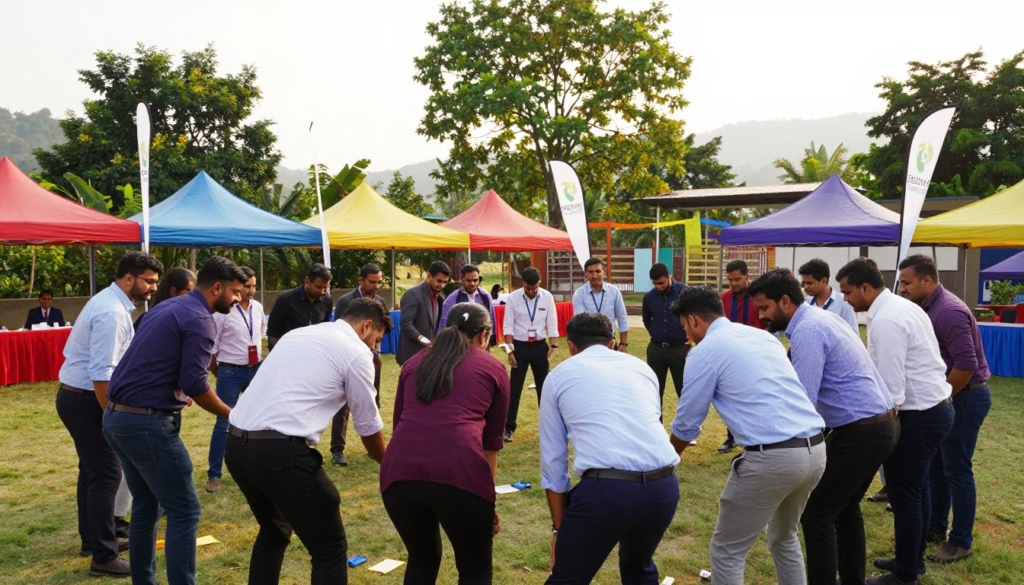
To overcome these challenges, organisations can implement various team building activities that promote trust and cohesion. These activities are designed to be engaging, interactive, and relevant to the Indian corporate context.
Examples include:
- Outdoor adventure challenges
- Problem-solving workshops
- Collaborative games and simulations
- Cultural immersion experiences
Translating Team Building Success to Workplace Performance
The ultimate goal of team building initiatives is to enhance workplace performance. By fostering a more cohesive and collaborative team, organisations can expect to see improvements in productivity, employee satisfaction, and overall business outcomes.
| Team Building Outcomes | Workplace Impact |
|---|---|
| Improved Communication | Enhanced collaboration and reduced misunderstandings |
| Increased Trust | Better teamwork and more effective problem-solving |
| Boosted Morale | Increased employee engagement and reduced turnover |
By investing in team building, Indian corporates can create a more unified, productive, and successful workforce. Effective team building is not a one-time event but a continuous process that requires commitment and follow-through.
Types of Experiential Learning Activities and Programmes
Experiential learning in India has evolved to include a diverse range of activities and programmes designed to enhance corporate training. These initiatives are tailored to meet the specific needs of organisations, focusing on skill development, team building, and leadership enhancement.
Adventure-Based Learning and Outdoor Challenges
Adventure-based learning and outdoor challenges are integral components of outbound training programmes. These activities encourage participants to step out of their comfort zones, fostering personal growth and team cohesion. Examples include trekking, rock climbing, and wilderness survival exercises.
Business Simulations and Strategic Games
Business simulations and strategic games are designed to mimic real-world business scenarios, allowing participants to experiment with different strategies and decision-making processes. These activities enhance problem-solving skills, promote teamwork, and encourage innovative thinking.
Role-Playing and Behavioural Exercises
Role-playing and behavioural exercises are effective tools for developing soft skills and improving interpersonal communication. By simulating real-life workplace scenarios, participants can practice and refine their behavioural responses in a safe and supportive environment.
Problem-Solving and Innovation Workshops
Problem-solving and innovation workshops challenge participants to think creatively and develop novel solutions to complex problems. These workshops often involve collaborative activities, brainstorming sessions, and design thinking exercises, all aimed at fostering a culture of innovation within the organisation.
| Activity Type | Objective | Benefits |
|---|---|---|
| Adventure-Based Learning | Team Building, Leadership Development | Enhanced teamwork, improved leadership skills |
| Business Simulations | Strategic Thinking, Problem-Solving | Better decision-making, increased strategic thinking |
| Role-Playing Exercises | Soft Skills Development | Improved communication, enhanced interpersonal skills |
| Problem-Solving Workshops | Innovation, Creative Thinking | Increased innovation, creative problem-solving skills |
Industry-Specific Applications of Experiential Learning
The versatility of experiential learning is evident in its successful application across diverse sectors. Organisations across India are leveraging this approach to address their unique challenges and enhance their capabilities.
Experiential learning programmes are designed to cater to the specific needs of various industries, ensuring that the training is relevant and impactful. Sieger’s programs, for instance, are tailored for CXOs, leadership teams, managers, sales teams, and cross-functional groups, supporting organisations undergoing growth, transformation, or performance improvement initiatives.
Technology and IT Sector Solutions
In the technology and IT sector, experiential learning is used to foster innovation, enhance problem-solving skills, and promote collaboration among team members. Activities such as hackathons, coding challenges, and tech-savvy escape rooms are designed to stimulate creative thinking and improve technical skills.
- Enhancing technical skills through hands-on activities
- Fostering a culture of innovation and experimentation
- Improving collaboration and communication among team members
Manufacturing and Pharmaceutical Industry Programmes
For the manufacturing and pharmaceutical industries, experiential learning focuses on improving operational efficiency, ensuring compliance with safety regulations, and enhancing team collaboration. Programmes may include simulations of manufacturing processes, safety drills, and team-building activities that mirror the challenges faced in these sectors.
Key benefits include:
- Improved operational efficiency
- Enhanced safety awareness and compliance
- Better team collaboration and communication
Banking, Finance and Professional Services Training
In the banking, finance, and professional services sectors, experiential learning is utilised to develop leadership skills, enhance client management capabilities, and improve risk management practices. Customised programmes may involve business simulations, leadership challenges, and client interaction scenarios.
These programmes help organisations in these sectors to:
- Develop effective leadership and management skills
- Enhance client relationship management
- Improve risk assessment and management capabilities
Retail and Hospitality Sector Applications
The retail and hospitality sectors benefit from experiential learning through programmes that focus on customer service excellence, team collaboration, and adaptability. Activities may include customer service simulations, mystery shopping exercises, and team-building challenges that reflect the fast-paced nature of these industries.
By tailoring experiential learning programmes to the specific needs of different industries, organisations in India can achieve significant improvements in performance, employee engagement, and overall business success.
The Experiential Learning Journey: Design to Delivery
Empowering organisations through experiential learning involves a meticulous process from needs assessment to programme delivery. This comprehensive approach ensures that training solutions are tailored to meet specific organisational objectives, thereby enhancing overall effectiveness.
Comprehensive Needs Assessment and Goal Setting
The first step in the experiential learning journey is a thorough needs assessment. This involves working closely with organisations to understand their unique challenges and objectives. By identifying key areas for improvement, Empower Activity Camps can design programmes that address specific needs.
A critical aspect of this phase is setting clear, measurable goals that align with the organisation’s overall strategy. This ensures that the training programme is focused and impactful.
Customised Programme Design for Your Organisation
Once the needs are assessed, the next step is to design a customised programme. This involves selecting activities and workshops that are relevant to the organisation’s objectives. Experiential learning in India offers a diverse range of options, from outdoor challenges to business simulations, ensuring that there is something to suit every organisational need.
- Adventure-based learning activities
- Business simulations and strategic games
- Role-playing and behavioural exercises
- Problem-solving and innovation workshops
Expert Facilitation and Safe Programme Delivery
Effective facilitation is crucial to the success of any experiential learning programme. Experienced facilitators ensure that activities are conducted safely and that participants derive maximum benefit from the experiences. Safety standards are paramount, and programmes are designed to minimise risk while maximising impact.
The delivery of the programme is tailored to the organisation’s culture and needs, ensuring seamless integration with existing training initiatives.
Post-Programme Integration and Workplace Application
The final stage of the experiential learning journey involves integrating the learning back into the workplace. This includes providing support to ensure that the insights and skills gained during the programme are applied in daily operations.
Key aspects of post-programme integration include:
- Debriefing sessions to reinforce learning
- Ongoing support for participants
- Evaluation of programme effectiveness
Measuring Success: Evaluating Training Effectiveness and ROI
To gauge the true value of experiential learning initiatives, organisations must implement a robust evaluation framework that assesses both immediate and long-term effects. This involves a comprehensive approach to measuring training effectiveness and return on investment (ROI).
Experiential learning programs, such as those offered by Sieger Group, incorporate a variety of engaging activities including simulations, facilitated discussions, case-based learning, role plays, team challenges, and guided debriefs. These activities are designed to strengthen trust, accountability, and decision-making capabilities within teams.
Key Performance Indicators for Experiential Learning
To effectively measure the success of experiential learning programs, organisations should track key performance indicators (KPIs) that reflect both qualitative and quantitative outcomes. Some essential KPIs include:
- Participant engagement and satisfaction levels
- Knowledge retention and application rates
- Improvement in team collaboration and communication
- Leadership skill development and behavioural changes
- Impact on business performance metrics such as productivity and revenue growth
Participant Feedback and Behavioural Change Assessment
Gathering participant feedback is crucial for understanding the immediate impact of experiential learning programs. This can be achieved through surveys, focus groups, and one-on-one interviews. Additionally, assessing behavioural changes post-training provides insights into the program’s long-term effectiveness.
“The true measure of a training program’s success lies not just in the immediate feedback, but in the observable changes in behaviour and performance over time.”
Long-Term Organisational Impact Metrics
To fully understand the ROI of experiential learning initiatives, organisations must also consider long-term impact metrics. These may include:
| Metric | Description | Timeframe |
|---|---|---|
| Employee Retention | Rate of employee retention post-training | 6-12 months |
| Productivity Gains | Measurable improvements in productivity | 3-6 months |
| Promotion Rates | Rate of promotions among participants | 12-18 months |
By incorporating these metrics and feedback mechanisms, organisations can comprehensively evaluate the effectiveness of their experiential learning programs and make informed decisions about future investments in team building corporate India initiatives.
Partner with Experienced Experiential Learning Professionals
To maximise the effectiveness of your experiential learning initiatives, partnering with experienced professionals is crucial. Experiential learning programs are most impactful when designed and delivered by experts who understand the nuances of corporate training and development.
Why Expertise and Track Record Matter
Experienced facilitators bring a wealth of knowledge and a proven track record to the table. They have the expertise to craft customised learning experiences that cater to the specific needs of your organisation. For instance, Outlife has a team of expert facilitators who create adventures and team activities with strong debriefing that have a great impact.
Their extensive experience ensures that the programs are not only engaging but also aligned with your organisational objectives. This expertise is crucial in creating meaningful learning experiences that drive real change.
Safety Standards and Quality Assurance in Training Delivery
Safety is paramount in experiential learning programs. Reputable providers adhere to stringent safety standards, ensuring that participants are in a secure environment while they challenge themselves and learn. Quality assurance measures are also in place to guarantee that the programs meet the highest standards of delivery.
| Safety Aspect | Description | Benefit |
|---|---|---|
| Risk Assessment | Thorough evaluation of potential risks | Minimised risk of accidents |
| Trained Facilitators | Facilitators are trained in safety protocols | Ensured participant safety |
| Emergency Procedures | Established protocols for emergency situations | Prompt response to emergencies |
Customised Solutions Tailored to Your Organisational Needs
Every organisation is unique, with its own set of challenges and objectives. Experienced providers of experiential learning programs understand this and offer customised solutions that are tailored to meet the specific needs of your organisation.
By understanding your goals and challenges, they can design programs that address your specific requirements, ensuring that the learning experiences are relevant and impactful.
Get Started: Contact Our Team Today
If you’re looking to elevate your corporate training through experiential learning, we are here to help. Our team of experts is ready to collaborate with you to design and deliver a program that meets your needs.
To get started, simply contact us at:
- Phone: +91 99000 11601, +91 99000 11602, +91 99000 11603
- Email: [email protected]
Conclusion
Experiential learning and outbound training have emerged as powerful tools for transforming corporate teams in India. By leveraging real-world experiences, organisations can foster a culture of growth, innovation, and collaboration.
Team building corporate India initiatives have shown significant benefits in enhancing employee engagement, leadership skills, and overall business performance. As organisations continue to navigate the complexities of the modern business landscape, incorporating experiential learning into their training programmes can be a strategic differentiator.
By partnering with experienced professionals and tailoring programmes to meet specific organisational needs, businesses can unlock the full potential of their teams. As the corporate landscape in India continues to evolve, embracing experiential learning will be crucial for organisations seeking to stay ahead of the curve and achieve their objectives.
FAQ
What defines experiential learning India as a transformative tool for modern organisations?
It is a methodology that shifts the focus from passive instruction to active engagement. By placing professionals in real-world scenarios, experiential learning India facilitates deeper knowledge retention and capability enhancement, allowing participants to internalise lessons more effectively than in traditional classroom settings.
How does outbound training differ from conventional corporate workshops?
Traditional workshops often rely on theoretical lectures within a static environment. In contrast, outbound training utilizes the “learning by doing” cycle in diverse settings. Organisations such as Tata Group and Infosys frequently employ these methods to break down hierarchical barriers and encourage authentic communication away from the boardroom.
Why is team building corporate India becoming a priority for leading firms?
The Indian business landscape is increasingly complex and collaborative. Team building corporate India initiatives address specific cultural dynamics, fostering trust and cohesion. Companies like Wipro and Reliance Industries leverage these programmes to ensure their workforces are aligned with overarching business objectives and operational capabilities.
What are the primary benefits of adventure-based learning for leadership development?
Adventure-based activities provide a safe yet challenging environment where leaders must exercise decisive action and strategic problem-solving. These programmes help executives from firms like HDFC Bank or Aditya Birla Group develop resilience and adaptability, which are essential for navigating volatile market conditions.
How do business simulations contribute to strategic thinking?
Business simulations act as a bridge between theory and practice. They allow teams to test various strategies and witness the consequences of their decisions in a controlled, risk-free setting. This leads to improved management solutions and a more profound understanding of complex organisational structures.
Can experiential learning be customised for specific industries like technology or manufacturing?
Absolutely. Whether it is the fast-paced technology sector or the precision-driven manufacturing industry, programmes are tailored to meet unique needs. For instance, Maruti Suzuki may focus on process efficiency and lean management, while Google might prioritise creativity and psychological safety within teams.
What locations in India are most effective for outbound training programmes?
Natural environments such as the foothills of the Himalayas, the wilderness of Coorg, or the rugged terrains of Rajasthan provide ideal backdrops. These settings remove participants from their comfort zones, making the learning experiences more memorable and impactful for teams from organisations like Flipkart or Zomato.
How is the success and ROI of these training programmes measured?
Success is evaluated through a combination of immediate participant feedback, Key Performance Indicators (KPIs), and long-term behavioural assessments. By tracking improvements in employee engagement and team productivity, organisations can see a clear return on their investment in human capital.
Why is it essential to partner with professional facilitators for these programmes?
Professional facilitators bring the necessary expertise to ensure safe programme delivery and psychological depth. They bridge the gap between activity and workplace application, ensuring that the insights gained during outbound training are effectively integrated into the organisation’s daily operations.
How does experiential learning impact employee engagement and retention?
By investing in the growth and enlightenment of their workforce, organisations demonstrate a commitment to individual development. This increases morale and fosters a sense of belonging, which is critical for retaining top talent in competitive sectors such as banking, finance, and professional services.
Table of Contents
Recent Comments