
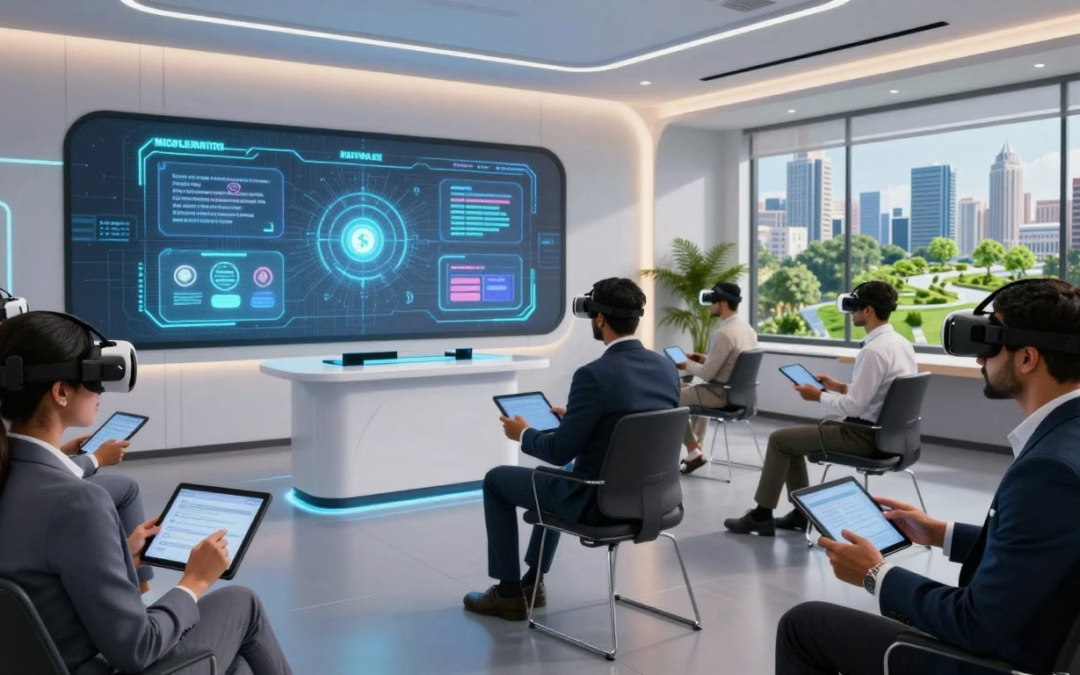
Recent research indicates that nearly 70% of high-growth firms in the subcontinent plan to completely overhaul their employee development strategies this year. This massive shift signals a move away from rigid, traditional methods toward a future where digitalisation defines organisational success. Leaders are now looking for ways to foster a culture of continuous growth and adaptability.
The professional ecosystem is witnessing a rapid evolution fuelled by hybrid work models and skills-based hiring protocols. To navigate this changing landscape, organisations must embrace innovative AI learning systems that personalise development at scale. These tools allow for a more precise alignment between individual talent and broader business goals.
Entities aiming to elevate their human capital can connect with experts at [email protected] or call +91 99000 11601 to explore modern solutions. Bodhih enables teams to meet strategic objectives through advanced capability building and structured growth paths. Enhancing workforce potential is no longer an option but a necessity for survival.
Key Takeaways
- Widespread adoption of digitalisation in professional development.
- Increased reliance on hybrid-friendly instructional models.
- Integration of personalised growth through intelligent automation.
- Emphasis on skills-based hiring to bridge performance gaps.
- Focus on elevating organisational capabilities for long-term impact.
- Growing demand for microlearning to suit busy professional schedules.
The Evolution of Corporate Training in India: Setting the Stage for 2025
Indian organisations are increasingly recognising the importance of investing in the right kind of learning to stay competitive in a globalised economy. The evolution of corporate training in India has been marked by a significant shift from traditional, one-size-fits-all approaches to more nuanced, technology-driven strategies.
This transformation is driven by the need to enhance employee capabilities, improve productivity, and foster a culture of continuous learning.
The corporate training landscape in India has undergone substantial changes over the years. Historically, training programmes were often generic and lacked personalisation.
However, with the advent of technology and the rise of the digital economy, organisations are now adopting more sophisticated training methodologies. These include leveraging artificial intelligence, gamification, and microlearning to create engaging and effective learning experiences.
Organisations are no longer asking, “Should we invest in learning?” Instead, they are asking, “Are we investing in the right kind of learning?” This shift in mindset reflects a deeper understanding of the importance of aligning training programmes with business objectives and employee needs.
As we look towards 2025, it is clear that the corporate training landscape in India will continue to evolve. Emerging technologies, changing workforce demographics, and evolving business needs will shape the trends and practices in corporate training.
Corporate Training Trends India 2025: A Comprehensive Overview
In the rapidly evolving business environment of India, organisations are recognising the critical role that comprehensive training programmes play in driving success. The convergence of digitalisation, hybrid work models, and skills-based hiring means training and development (T&D) programmes must be smarter, faster, and more impactful than ever before.
Why Indian Organisations Are Prioritising Learning and Development
Indian organisations are prioritising learning and development to stay competitive in a global market. This shift is driven by the need to upskill and reskill employees to meet the demands of an increasingly digital and automated workplace.
- Increased competitiveness: Organisations are recognising that a well-trained workforce is crucial for maintaining a competitive edge.
- Technological advancements: The rapid pace of technological change necessitates continuous learning and adaptation.
- Changing workforce demographics: The influx of younger employees with different learning preferences is driving the adoption of modern training methodologies.
The Impact of Digital Transformation on Workplace Learning
Digital transformation is revolutionising workplace learning in India. The adoption of digital technologies is enabling organisations to deliver training programmes that are more accessible, engaging, and effective.
The impact of digital transformation on workplace learning is multifaceted:
- Personalisation: Digital platforms allow for personalised learning experiences tailored to individual employee needs.
- Accessibility: Online training programmes can be accessed from anywhere, at any time, making learning more flexible.
- Engagement: The use of gamification and interactive content is enhancing employee engagement with training programmes.
Key Drivers Shaping Training Investments in 2025
Several key drivers are shaping training investments in India in 2025. These include the need for gamification training and microlearning solutions that cater to the diverse needs of the modern workforce.
- Technological innovation: Advances in technologies such as AI, VR, and AR are creating new opportunities for innovative training solutions.
- Changing business needs: Organisations are adapting their training programmes to address emerging business challenges and priorities.
- Employee expectations: The modern workforce expects training to be engaging, relevant, and accessible, driving the adoption of new training methodologies.
AI-Powered Learning: Revolutionising Corporate Training Delivery
AI-powered learning is transforming the corporate training landscape in India by providing personalised and efficient learning experiences. This transformation is driven by the ability of AI to analyse vast amounts of data, identify skill gaps, and recommend tailored training modules.
How Artificial Intelligence Is Personalising Employee Learning Experiences
Artificial Intelligence is revolutionising the way employees learn by providing personalised learning paths. AI algorithms can assess individual skill levels, learning styles, and preferences to create customised training plans.
Adaptive Learning Platforms and Content Recommendations
Adaptive learning platforms use AI to adjust the difficulty level of course materials based on an individual’s performance. These platforms also provide content recommendations that are relevant to the learner’s needs, enhancing the overall learning experience.
Natural Language Processing for Enhanced Content Delivery
Natural Language Processing (NLP) is a subset of AI that enables machines to understand and generate human language. In corporate training, NLP can be used to create interactive content, such as chatbots and virtual assistants, that engage learners and provide real-time feedback.
AI-Driven Analytics and Performance Tracking
AI-driven analytics is crucial for measuring the effectiveness of corporate training programs. By analysing data on learner engagement and performance, organisations can identify areas for improvement and optimise their training initiatives.
Real-Time Assessment and Feedback Mechanisms
AI-powered assessment tools can evaluate learner performance in real-time, providing instant feedback and recommendations for further learning. This approach enables learners to track their progress and adjust their learning strategies accordingly.
| Feature | Description | Benefits |
|---|---|---|
| Adaptive Learning | Adjusts course difficulty based on learner performance | Personalised learning experience, improved learner engagement |
| NLP-powered Content | Creates interactive content using natural language processing | Enhanced learner engagement, real-time feedback |
| AI-driven Analytics | Analyses learner data to measure training effectiveness | Data-driven decision making, optimised training programs |
Chatbots and Virtual Assistants in Corporate Training
Chatbots and virtual assistants are being increasingly used in corporate training to provide learners with support and guidance. These AI-powered tools can answer frequently asked questions, provide additional learning resources, and facilitate communication between learners and trainers.
By leveraging AI-powered learning solutions, Indian organisations can create a more efficient, personalised, and engaging corporate training environment that drives business growth and employee development.
Gamification Training: Engaging Employees Through Play
As Indian corporates continue to evolve, gamification training emerges as a key strategy to enhance employee engagement and productivity. This innovative approach to learning leverages game design elements to create an immersive and interactive experience, driving behavioural change and improving overall performance.
The Psychology Behind Gamification in Learning
Gamification taps into fundamental human motivations, such as the desire for achievement, recognition, and rewards. By incorporating game mechanics into training programmes, organisations can foster a more engaging and motivating learning environment.
Motivation, Rewards, and Behavioural Change
The psychological impact of gamification is rooted in its ability to stimulate intrinsic motivation. Rewards, leaderboards, and challenges encourage learners to participate actively, driving behavioural change and skill acquisition.
“Gamification is not just about making learning fun; it’s about creating an environment that motivates employees to learn and grow.”
Real-World Applications of Gamification in Indian Corporates
Indian businesses are increasingly adopting gamification to address various training needs, from sales and compliance to soft skills development.
Sales Training Gamification Success Stories
Several Indian companies have successfully implemented gamified sales training programmes, resulting in significant improvements in sales performance and employee engagement.
| Company | Gamification Strategy | Outcome |
|---|---|---|
| XYZ Corp | Sales competition with leaderboards and rewards | 25% increase in sales |
| ABC Ltd | Interactive quizzes and challenges | 40% improvement in product knowledge |
Compliance Training Through Game Mechanics
Gamification is also being used to enhance compliance training, making it more engaging and effective. Interactive modules and scenario-based games help employees understand complex regulations and policies.
Measuring ROI on Gamified Training Programmes
To assess the effectiveness of gamification training, organisations must measure its return on investment (ROI). This involves tracking key metrics such as learner engagement, knowledge retention, and behavioural change.
- Learner engagement metrics (e.g., time spent on training, completion rates)
- Knowledge retention and assessment scores
- Behavioural change and application of skills on the job
By analysing these metrics, organisations can refine their gamification strategies and maximise their ROI.
Microlearning: Bite-Sized Knowledge for Maximum Impact
The modern Indian workforce requires agile, bite-sized learning solutions, making microlearning an indispensable tool for corporate training. Microlearning delivers short, focused learning modules that employees can complete quickly, catering to their busy schedules and shorter attention spans.
Why Microlearning Suits the Modern Indian Workforce
The contemporary Indian employee is characterised by a diverse demographic and a dynamic work environment. Microlearning aligns perfectly with this landscape by offering flexible, accessible learning opportunities.
Attention Spans and Learning Retention Rates
Research indicates that shorter learning modules significantly improve knowledge retention rates. Microlearning’s concise format helps in maintaining employee engagement and enhancing the overall learning experience.
“Microlearning is not just a trend; it’s a necessity in today’s fast-paced work environment. It allows employees to learn at their own pace and apply their knowledge immediately.”
Best Practices for Implementing Microlearning Modules
To maximise the effectiveness of microlearning, organisations should consider several best practices.
Optimal Content Length and Delivery Frequency
The ideal length for microlearning modules is between 3 to 5 minutes. Delivery frequency should be regular, with modules spaced out to maintain learner engagement without overwhelming them.
Creating Engaging Micro-Content Formats
Utilising a variety of content formats such as videos, infographics, and interactive quizzes can keep the learning experience fresh and engaging.
| Content Format | Engagement Level | Retention Rate |
|---|---|---|
| Video | High | 80% |
| Infographic | Medium | 70% |
| Interactive Quiz | High | 85% |
Mobile-First Microlearning Strategies for Indian Employees
Given the high mobile penetration in India, a mobile-first approach to microlearning is crucial. This involves designing content that is easily accessible and navigable on smartphones.
By adopting mobile-first microlearning strategies, Indian organisations can ensure that their employees have access to learning materials anytime, anywhere, thereby enhancing their capabilities and driving business growth.
Hybrid and Blended Learning Models: The New Normal
In the realm of corporate training, the year 2025 is poised to witness a significant shift towards hybrid and blended learning models. This shift is driven by the need for flexibility, scalability, and personalisation in employee development programmes.
The blended model—mixing instructor-led, virtual, and self-paced learning—is emerging as the norm. Hybrid models enable organisations to scale training across geographies while retaining the instructor/mentor component. This approach not only enhances the learning experience but also caters to the diverse needs of the modern workforce.
Effective Combination of In-Person and Virtual Training
Combining in-person and virtual training effectively is crucial for the success of hybrid learning models. Organisations must identify the right mix of training methods based on the subject matter, learner preferences, and business objectives.
Key Considerations:
- Identifying the right content for virtual and in-person delivery
- Ensuring seamless integration of technology for virtual components
- Fostering engagement and interaction across both formats
Technology Infrastructure for Hybrid Learning
A robust technology infrastructure is the backbone of successful hybrid learning models. This includes Learning Management Systems (LMS), virtual classroom tools, and mobile learning platforms.
| Technology Component | Functionality | Benefits |
|---|---|---|
| Learning Management System (LMS) | Manages and tracks learning activities | Centralised administration, personalised learning paths |
| Virtual Classroom Tools | Facilitates live online training sessions | Real-time interaction, flexibility for remote learners |
| Mobile Learning Platforms | Enables learning on mobile devices | Accessibility, flexibility for learners on-the-go |
Synchronous Versus Asynchronous Learning Approaches
Understanding the difference between synchronous and asynchronous learning approaches is vital for designing effective hybrid training programmes. Synchronous learning involves real-time interaction, while asynchronous learning allows learners to access content at their convenience.
By embracing hybrid and blended learning models, Indian organisations can stay ahead of the curve in corporate training trends for 2025, enhancing their capabilities and achieving business objectives more effectively.
Personalised Learning Pathways and Adaptive Content
With the rise of AI learning, personalised learning pathways are becoming increasingly sophisticated, offering tailored training experiences that cater to the unique needs of individual employees.
Personalisation in corporate training means that the content adapts to an individual’s skill gaps, role requirements, and pace of learning. This approach ensures that employees receive relevant training, enhancing their engagement and knowledge retention.
Creating Customised Training Journeys for Different Roles
Customised training journeys are essential for addressing the diverse needs of various roles within an organisation. This involves developing role-specific curricula that align with the specific responsibilities and challenges faced by employees in different positions.
Role-Based Learning Curricula Development
Role-based learning curricula development involves creating training programmes that are tailored to the specific needs of different job roles. This ensures that employees acquire the skills and knowledge required to excel in their positions.
The process includes:
- Identifying the key responsibilities and challenges associated with each role
- Developing training content that addresses these specific needs
- Continuously assessing and updating the curricula to reflect changing job requirements
Skill Gap Analysis and Targeted Development Plans
Skill gap analysis is a critical component of personalised learning pathways. It involves assessing the current skills of employees and identifying areas where they require additional training or development.
Assessment Tools and Competency Mapping
Assessment tools and competency mapping are used to identify skill gaps and create targeted development plans. These tools help organisations understand the current competency levels of their employees and design training programmes to bridge the gaps.
The following table illustrates a sample competency mapping framework:
| Role | Required Skills | Current Competency Level | Skill Gap |
|---|---|---|---|
| Sales Manager | Leadership, Communication, Negotiation | 7/10 | 3/10 (Negotiation) |
| Software Developer | Programming, Problem-Solving, Collaboration | 8/10 | 2/10 (Collaboration) |
| Marketing Executive | Creativity, Data Analysis, Brand Management | 6/10 | 4/10 (Data Analysis) |
By leveraging personalised learning pathways and adaptive content, organisations can ensure that their employees receive targeted training that addresses their specific needs, ultimately enhancing their capabilities and driving business success.
Immersive Technologies: Virtual Reality and Augmented Reality in Training
Immersive technologies, including VR and AR, are revolutionising the way Indian organisations approach corporate training by providing interactive and engaging learning experiences.
Immersive learning uses gamification, Augmented Reality (AR), and Virtual Reality (VR) to simulate real-world scenarios. It helps employees practice skills safely, engage deeply, and retain knowledge better.
VR Simulations for High-Risk Scenarios and Soft Skills Development
VR simulations are being increasingly used to train employees in high-risk scenarios and soft skills development. This immersive technology allows for a safe and controlled environment where employees can practice and learn without the consequences of real-world mistakes.
Safety Training in Manufacturing and Construction
Safety training in manufacturing and construction is a critical application of VR simulations. Employees can be trained to handle hazardous situations and equipment, reducing the risk of accidents on the job.
For instance, a construction company can use VR to simulate a construction site, allowing workers to practice safety protocols and emergency procedures in a realistic environment.
Leadership and Communication Skills Through VR
VR is also being used to develop leadership and communication skills. By simulating real-world scenarios, employees can practice leadership skills and receive feedback on their performance.
“VR allows leaders to practice and develop their skills in a safe and controlled environment, which can lead to improved performance in real-world situations.”
AR for On-the-Job Training and Technical Skills
AR is being used to enhance on-the-job training and technical skills development. By overlaying digital information onto the real world, AR provides employees with the information they need to perform tasks more effectively.
For example, AR can be used to provide step-by-step instructions for complex equipment maintenance, reducing the risk of errors and improving efficiency.
| Technology | Application | Benefits |
|---|---|---|
| VR | Safety Training, Soft Skills Development | Improved retention, reduced risk |
| AR | On-the-Job Training, Technical Skills | Improved efficiency, reduced errors |
Cost Considerations and Implementation Challenges in India
While immersive technologies offer many benefits, there are also cost considerations and implementation challenges to be addressed. Indian organisations need to weigh the costs of implementing VR and AR against the potential benefits.
Some of the challenges include the high cost of VR and AR equipment, the need for specialised content creation, and the requirement for technical support.
Social and Collaborative Learning Platforms
In the evolving landscape of corporate training, social and collaborative learning platforms have emerged as a crucial tool. These platforms facilitate a culture of continuous learning and knowledge sharing, which is essential for organisational growth and competitiveness.
By leveraging social and collaborative learning platforms, organisations can create an environment where employees can learn from each other, share experiences, and develop new skills. This approach not only enhances employee engagement but also fosters a sense of community within the organisation.
Peer-to-Peer Knowledge Sharing and Communities of Practice
Peer-to-peer knowledge sharing is a vital aspect of social and collaborative learning. It enables employees to share their expertise and experiences, creating a rich repository of knowledge that can be accessed by others. Communities of practice, facilitated by these platforms, allow employees with similar interests or roles to collaborate, share best practices, and learn from each other’s experiences.
Key benefits of peer-to-peer knowledge sharing include:
- Enhanced collaboration among employees
- Improved problem-solving capabilities
- Increased innovation through shared experiences
Leveraging Internal Social Networks for Continuous Learning
Internal social networks play a significant role in promoting continuous learning within an organisation. By leveraging these networks, organisations can disseminate knowledge, share updates, and encourage discussions among employees. This helps in creating a culture of continuous learning and development.
Organisations can use internal social networks to:
- Share learning resources and updates
- Facilitate discussions on various topics
- Recognise and reward employee achievements
Mentorship Programmes Enabled by Digital Platforms
Digital platforms have made it easier to implement and manage mentorship programmes. These programmes pair experienced employees with less experienced ones, providing guidance, support, and valuable insights. Mentorship programmes are crucial for employee development and retention.
The benefits of mentorship programmes include:
- Improved employee retention rates
- Enhanced skill development
- Better job satisfaction
By integrating social and collaborative learning platforms into their training strategies, organisations in India can create a more engaged, informed, and skilled workforce. This, in turn, can lead to improved productivity and competitiveness in the market.
Data-Driven Learning and Predictive Analytics
The integration of data-driven learning and predictive analytics is revolutionising corporate training in India. By harnessing the power of data analytics, organisations can now make informed decisions about their training programmes, tailoring them to meet the specific needs of their workforce.
Using Learning Analytics to Optimise Training Programmes
Learning analytics enable organisations to track the effectiveness of their training programmes, focusing on key metrics such as completion rates, engagement levels, and learning outcomes. This data-driven approach allows for the identification of areas where training can be improved, ensuring that programmes are optimised for maximum impact.
Completion Rates, Engagement Metrics, and Learning Outcomes
By analysing completion rates, organisations can identify which training modules are most engaging and which may require revision. Engagement metrics provide insights into how employees interact with training content, highlighting opportunities to enhance the learning experience. Learning outcomes, measured through assessments and quizzes, indicate the level of knowledge retention and application.
| Metric | Description | Actionable Insight |
|---|---|---|
| Completion Rates | Percentage of employees completing training modules | Identify modules with low completion rates for revision |
| Engagement Metrics | Time spent on training content, interactions with the platform | Enhance engagement through interactive content |
| Learning Outcomes | Assessment scores and knowledge retention | Adjust training content to improve knowledge retention |
Predictive Models for Employee Development and Retention
Predictive analytics takes learning data to the next level by forecasting future trends and identifying high-potential employees. This enables organisations to develop targeted development plans, improving employee retention and career progression.
Identifying High-Potential Employees Through Learning Data
By analysing learning data, organisations can identify employees who demonstrate a high level of engagement and aptitude in specific areas. These insights can inform succession planning and talent development initiatives, ensuring that the right employees are groomed for future leadership roles.
Data-driven learning and predictive analytics are transforming the corporate training landscape in India, enabling organisations to make informed decisions and drive business success.
Upskilling and Reskilling: Addressing the Skills Gap in India
Upskilling and reskilling are no longer optional for Indian organisations; they are essential strategies for survival and growth in a competitive landscape. The rapidly changing job requirements and technological advancements have created a significant skills gap that needs to be addressed.
Critical Skills for the Future Indian Workforce
The future Indian workforce will require a diverse set of skills to remain relevant in the job market. These skills can be broadly categorised into digital skills, technology competencies, soft skills, and emotional intelligence.
Digital Skills and Technology Competencies
As technology continues to evolve, the demand for professionals with expertise in areas such as data science, artificial intelligence, and cybersecurity is on the rise. Organisations are looking for employees who can not only understand but also leverage these technologies to drive business growth.
Soft Skills and Emotional Intelligence
While technical skills are crucial, soft skills and emotional intelligence are equally important. Skills such as communication, teamwork, and problem-solving are essential for effective collaboration and leadership. Emotional intelligence helps employees navigate complex workplace dynamics and build stronger relationships with colleagues and clients.
Government Initiatives and Corporate Partnerships for Workforce Development
The Indian government has launched several initiatives aimed at enhancing the skills of the workforce. Programmes such as the Skill India Mission are designed to provide training and certification in various vocational skills. Corporate partnerships play a vital role in complementing these initiatives by providing industry-specific training and resources.
| Initiative | Focus Area | Objective |
|---|---|---|
| Skill India Mission | Vocational Skills | To provide training and certification in various vocational skills |
| Corporate Partnerships | Industry-Specific Training | To provide industry-specific training and resources |
| Digital Literacy Programmes | Digital Skills | To enhance digital literacy among the workforce |
Transform Your Corporate Training Strategy with Expert Solutions
Elevating corporate training strategies to meet the demands of 2025 requires innovative solutions and expert guidance. In today’s fast-paced business environment, organisations must prioritise employee development to stay competitive.
Partnering with leading Learning and Development (L&D) specialists can significantly enhance the effectiveness of corporate training programmes. These experts bring extensive knowledge and experience in designing and implementing cutting-edge training solutions tailored to the specific needs of Indian organisations.
Partnering with Leading Learning and Development Specialists
Leading L&D specialists offer a range of benefits, including:
- Expertise in the latest training technologies and methodologies, such as gamification training and microlearning
- Customised training solutions that cater to the unique needs of each organisation
- Proven track records of improving employee engagement and performance
Customised Training Solutions for Indian Organisations
Every organisation is unique, with its own set of challenges and objectives. Customised training solutions are designed to address these specific needs, ensuring that employees receive the most relevant and effective training.
| Training Solution | Description | Benefits |
|---|---|---|
| Gamification Training | Interactive training modules that use game design elements to engage employees | Increased employee engagement, improved knowledge retention |
| Microlearning | Bite-sized learning modules that can be completed in a short amount of time | Flexible, self-paced learning that fits into busy schedules |
Get Started Today
To transform your corporate training strategy with expert solutions, contact us today at +91 99000 11601, +91 99000 11602, +91 99000 11603 or email [email protected] to learn more about how we can support your organisation’s growth and development.
Conclusion
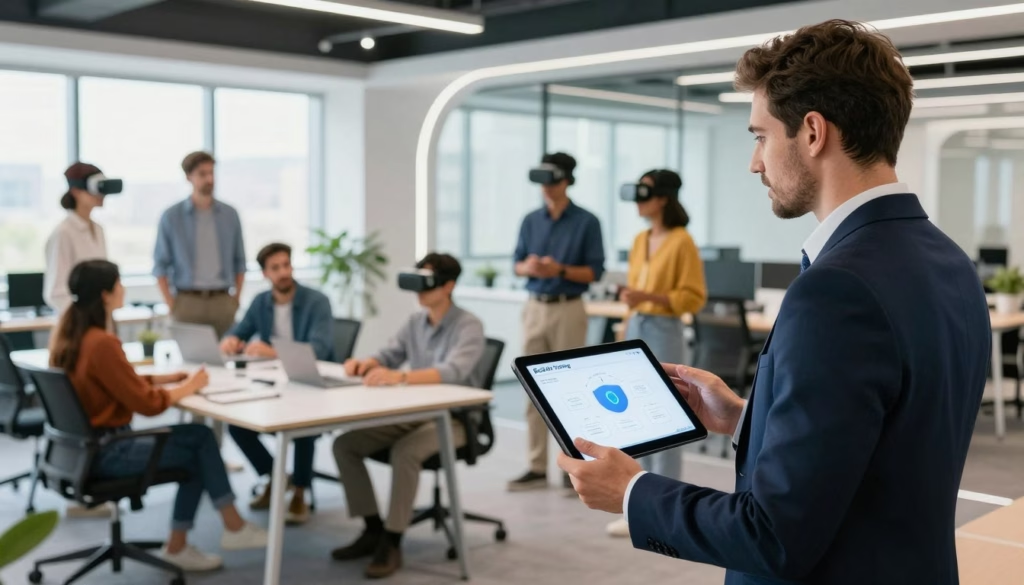
The corporate training landscape in India is undergoing a significant transformation, driven by five proven trends: microlearning, blended learning, personalisation & analytics, immersive/experiential learning, and soft skills/leadership development. As organisations in India continue to navigate the complexities of a rapidly changing business environment, embracing these corporate training trends India 2025 will be crucial in developing agile, adaptable, and high-performing workforces.
The integration of AI learning and other cutting-edge technologies is revolutionising the way companies approach employee development, enabling them to stay ahead of the curve and achieve their business objectives. By leveraging these trends, Indian organisations can create a more skilled, engaged, and productive workforce, ultimately driving growth and success in an increasingly competitive market.
As the Indian corporate landscape continues to evolve, it is essential for organisations to stay informed about the latest corporate training trends India 2025 and to adopt a forward-thinking approach to employee development. By doing so, they can unlock the full potential of their workforce and achieve their strategic goals.
Transform Your Corporate Training Strategy with Expert Solutions
Why Indian Organisations Are Prioritising Learning and Development
In a volatile market, Indian organisations are prioritising Learning and Development (L&D) to bridge the widening skills gap. By focusing on knowledge elevation, companies can ensure their teams possess the capabilities required to drive effective management and innovation.
The Impact of Digital Transformation on Workplace Learning
Digital transformation has redefined the workplace learning environment, moving it from the physical classroom to immersive, cloud-based platforms. This shift allows for greater scalability and ensures that learning interventions are accessible to a geographically dispersed workforce.
Key Drivers Shaping Training Investments in 2025
The primary drivers for investment include the need for technological literacy, the rise of the gig economy, and a renewed focus on leadership development. Organisations are now aligning their training budgets with long-term business objectives rather than short-term tactical needs.
How Artificial Intelligence Is Personalising Employee Learning Experiences
AI learning allows for the creation of personalised learning pathways that adapt to the pace and style of the individual learner. By analysing user data, AI can recommend specific content that addresses individual skill gaps, ensuring a more efficient path to capability building.
AI-Driven Analytics and Performance Tracking
With AI-driven analytics, L&D leaders can monitor progress in real-time. This performance tracking provides actionable insights into how training programmes are impacting organisational performance, allowing for data-backed adjustments to the curriculum.
Chatbots and Virtual Assistants in Corporate Training
Virtual assistants and chatbots provide instant support to employees, offering “just-in-time” learning. This technology ensures that knowledge is always within reach, facilitating a more enlightening and seamless developmental experience.
The Psychology Behind Gamification in Learning
Gamification training utilises game-mechanics—such as leaderboards, badges, and points—to tap into the intrinsic motivation of employees. This approach fosters a sense of achievement and healthy competition, which is vital for capability enhancement.
Real-World Applications of Gamification in Indian Corporates
Major Indian corporations are utilizing gamified modules for onboarding and sales training. By simulating real-world challenges, employees can practice decision-making in a risk-free environment, leading to better retention and application of knowledge.
Measuring ROI on Gamified Training Programmes
Measuring the return on investment (ROI) involves tracking engagement rates, completion times, and subsequent performance improvements. Gamification often results in higher completion rates compared to traditional e-learning, directly contributing to organisational objectives.
Why Microlearning Suits the Modern Indian Workforce
Microlearning delivers content in short, focused bursts, making it ideal for the modern Indian workforce which often faces time constraints. These bite-sized modules ensure that information is easily digestible and retained more effectively.
Best Practices for Implementing Microlearning Modules
Effective implementation involves focusing on a single learning objective per module and ensuring content is highly relevant to the employee’s daily tasks. This minimalist approach prevents cognitive overload and encourages continuous learning.
Mobile-First Microlearning Strategies for Indian Employees
With high smartphone penetration in India, a mobile-first strategy is essential. Microlearning modules should be optimised for mobile devices, allowing employees to elevate their skills during transit or between meetings.
Combining In-Person and Virtual Training Effectively
The hybrid model combines the collaborative nature of in-person workshops with the flexibility of virtual training. This blended approach ensures that employees benefit from social learning while maintaining the autonomy of self-paced digital modules.
Technology Infrastructure Requirements for Hybrid Learning
A robust technological infrastructure is the backbone of successful hybrid learning. This includes high-speed connectivity, secure Learning Management Systems (LMS), and advanced video conferencing tools to facilitate seamless synchronous learning.
Synchronous Versus Asynchronous Learning Approaches
Synchronous learning occurs in real-time, fostering immediate interaction, while asynchronous learning allows employees to engage with content at their convenience. A balance of both is required to support a high-performing workforce.
Creating Customised Training Journeys for Different Roles
Personalised learning pathways ensure that a software engineer and a marketing manager receive training tailored to their specific capabilities. This customisation aligns individual growth with organisational needs.
Skill Gap Analysis and Targeted Development Plans
Conducting a rigorous skill gap analysis is the first step in creating adaptive content. By identifying where competencies are lacking, organisations can deploy targeted development plans that yield measurable results.
VR Simulations for High-Risk Scenarios and Soft Skills Development
Virtual Reality (VR) is being used for safety training in manufacturing and construction, allowing workers to navigate high-risk scenarios without physical danger. Furthermore, VR is an excellent tool for leadership and communication skills, providing a realistic environment for role-playing.
AR for On-the-Job Training and Technical Skills
Augmented Reality (AR) overlays digital information onto the physical world, providing real-time guidance for technical tasks. This “on-the-job” assistance elevates the accuracy and efficiency of frontline workers.
Cost Considerations and Implementation Challenges in India
While the initial investment in immersive technologies can be high, the long-term benefits in safety and skill acquisition are significant. Indian firms are increasingly adopting these tools as hardware costs decrease and organisational benefits become more apparent.
Peer-to-Peer Knowledge Sharing and Communities of Practice
Social learning platforms facilitate peer-to-peer knowledge sharing, allowing employees to learn from the experiences of their colleagues. This collaborative environment fosters a sense of community and collective enlightenment.
Leveraging Internal Social Networks for Continuous Learning
By utilising internal platforms like Microsoft Teams or Slack, organisations can encourage informal learning. These channels serve as repositories for shared resources and discussion, supporting a culture of continuous professional development.
Mentorship Programmes Enabled by Digital Platforms
Digital platforms allow for the scaling of mentorship programmes, connecting senior leaders with emerging talent across different geographical locations. This ensures the transfer of critical organisational knowledge and leadership capabilities.
Using Learning Analytics to Optimise Training Programmes
Data-driven learning uses analytics to evaluate the effectiveness of training interventions. By examining engagement and assessment data, L&D professionals can optimise content to better serve business objectives.
Predictive Models for Employee Development and Retention
Predictive models can identify which employees are likely to excel or which may require additional support. This foresight allows for proactive career development, which is a key factor in improving employee retention.
Critical Skills for the Future Indian Workforce
The future workforce requires a blend of technical proficiency (such as AI and data science) and soft skills (such as emotional intelligence and critical thinking). Upskilling and reskilling initiatives are vital to prepare the workforce for these demands.
Government Initiatives and Corporate Partnerships for Workforce Development
Collaborations between the private sector and government initiatives like Skill India are essential for large-scale capability building. These partnerships ensure that the national talent pool remains relevant in the global economic landscape.
Partnering with Leading Learning and Development Specialists
To navigate these complex corporate training trends, organisations must partner with experts who understand the nuances of the Indian market. Bodhih provides the strategic oversight and execution capabilities required to transform your workforce.
Customised Training Solutions for Indian Organisations
We offer customised training solutions designed to align with your unique organisational objectives. Our approach focuses on knowledge elevation and the development of effective management solutions.
Get Started Today: Contact Us
Elevate your organisation’s potential. Contact our specialists at +91 99000 11601, +91 99000 11602, +91 99000 11603, or via email at [email protected] to begin your journey of capability enhancement.
Table of Contents
Recent Comments