

Promoting a top performer into their first management role seems like a natural reward for excellence. Yet, this transition often becomes a stumbling block for organizations. Studies show that nearly 60% of new managers fail within their first two years.
The problem isn’t capability. It’s preparation. When employees move from individual contributor to manager, everything changes. The skills that made them successful no longer apply. Now they must inspire team members, delegate tasks, handle conflict, and drive performance through others.
Without proper first time manager training, even your best employees struggle. They make costly mistakes. Team morale suffers. Projects derail. The organization loses both a great individual contributor and gains an ineffective manager.
Early intervention makes the difference. Comprehensive manager training during those critical first months sets new managers up for long-term success. It transforms uncertainty into confidence, confusion into clarity, and potential into performance.
Assess Your Organization’s Manager Readiness
Before investing in training, understand where your new managers stand. Bodhih’s comprehensive assessment tool identifies skill gaps and creates customized learning paths tailored to your organization’s specific needs.
The Critical Transition: Why New Managers Need Support
The shift from team member to team leader represents one of the most challenging career transitions. New managers face a complete role transformation that few are naturally prepared to handle.
From Doing to Leading
Individual contributors succeed through personal expertise and task completion. Managers succeed through people development and strategic thinking. This fundamental shift confuses many first-time managers who continue focusing on technical work instead of leadership responsibilities.
New managers often struggle to let go of their previous role. They micromanage because doing the work themselves feels safer than trusting team members. This creates bottlenecks and prevents team growth.

Relationship Dynamics Change Overnight
Yesterday’s peers become today’s direct reports. Former teammates now expect direction, feedback, and performance reviews. These relationship shifts create awkward situations that new managers aren’t trained to navigate.
Managers feel caught between maintaining friendships and establishing authority. Without formal training, they either become too distant or remain too casual, both approaches undermining their effectiveness.
New Skills, New Responsibilities
First-time managers must quickly develop skills they’ve never practiced. Constructive feedback delivery, conflict resolution, performance management, strategic planning, and emotional intelligence become daily requirements.
The learning curve steepens when organizations provide no structured support. New managers learn through trial and error, making mistakes that damage team morale and business results.
Technical Challenges
New managers must master tools and processes for workforce planning, budget management, and performance tracking while maintaining their leadership presence.
- Understanding HR systems and policies
- Managing team schedules and resources
- Setting and tracking performance goals
- Preparing budgets and forecasts
Interpersonal Challenges
Building relationships while maintaining authority requires emotional intelligence and communication skills that many new managers haven’t developed.
- Delivering difficult feedback conversations
- Resolving conflicts between team members
- Motivating diverse personalities
- Building trust across the team
Strategic Challenges
Managers must think beyond daily tasks to align team work with organizational goals and long-term vision.
- Translating company strategy to team goals
- Making decisions with limited information
- Prioritizing competing demands
- Balancing short-term and long-term needs
Personal Challenges
The psychological weight of responsibility for others’ careers and livelihoods affects new managers deeply.
- Managing stress and time pressure
- Maintaining work-life balance
- Dealing with imposter syndrome
- Building confidence in the new role
The Cost of Inadequate Preparation
Organizations pay dearly when new managers receive insufficient training. High turnover rates among both managers and their team members create recruitment and replacement costs. Low productivity during the learning period affects project delivery and customer satisfaction.
Employee engagement drops under ineffective management. Talented team members leave when they don’t receive proper guidance and development. The company culture suffers as poor management practices spread throughout the organization.
Don’t Let Unprepared Managers Cost Your Organization
Every day without proper training puts your new managers and their teams at risk. Connect with Bodhih’s learning specialists to design a comprehensive development program that delivers results from day one.
Why Early Manager Training Makes All the Difference
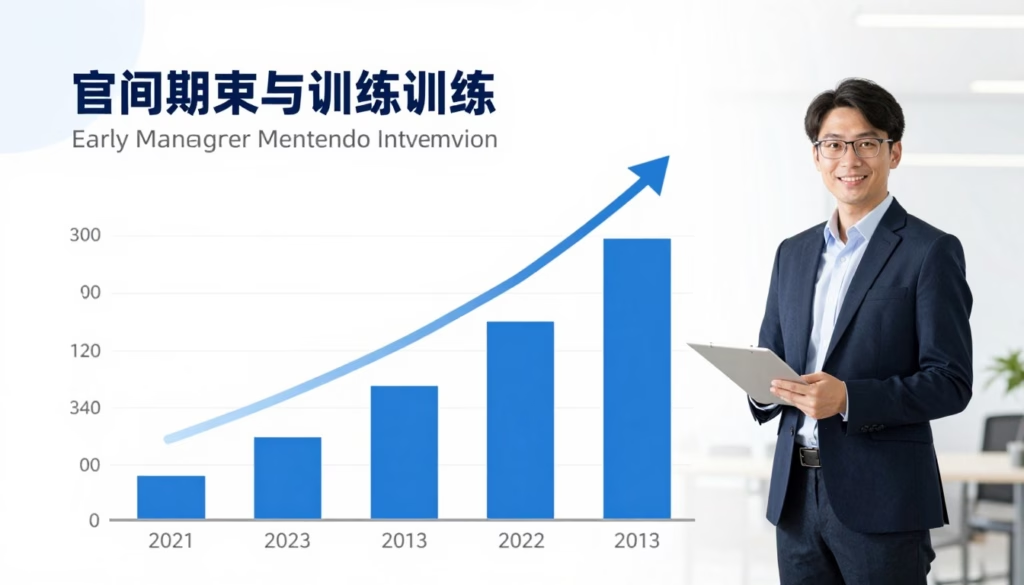
The first 90 days in a management role set the trajectory for long-term success. Research consistently shows that managers who receive formal training within their first three months outperform those who don’t across every metric.
Building the Right Foundation
Early training programs establish fundamental management principles before bad habits form. New managers learn evidence-based approaches to leadership rather than copying whatever management style they previously experienced.
Structured learning creates a common management language across the organization. All managers understand core concepts the same way, leading to consistent employee experiences regardless of which team they join.
Confidence Through Competence
Managers feel overwhelmed when thrust into leadership without preparation. Training programs reduce anxiety by providing practical frameworks for common situations. New managers gain confidence knowing they have tools and techniques for the challenges they’ll face.
This confidence translates into better decision-making. Managers who understand leadership principles make choices aligned with best practices rather than reacting emotionally to situations.
Key Insight: Organizations that invest in first-time manager training see 25% higher retention rates among new managers and their team members compared to those that provide no formal training.
Accelerated Performance Impact
Untrained managers take 12-18 months to reach acceptable performance levels. Properly trained managers reach those levels in 3-6 months. This acceleration means faster team productivity, quicker goal achievement, and earlier ROI on the promotion decision.
Training programs compress the learning curve by sharing proven strategies instead of forcing managers to discover everything through experience. Managers learn from others’ successes and failures without making all the mistakes themselves.
Essential Skills for Management Success
Comprehensive manager training covers the competencies that separate effective leaders from struggling ones. These skills form the foundation of successful management regardless of industry or organization type.
Communication Excellence
New managers need training in clear, direct communication that adapts to different situations and audiences. This includes one-on-one conversations, team meetings, written communication, and presentations.
Effective managers learn to listen actively, ask powerful questions, and tailor their message to the recipient. They understand when to be directive and when to be collaborative.
Feedback and Coaching
Delivering constructive feedback ranks among the most anxiety-inducing tasks for new managers. Training programs teach frameworks for feedback conversations that improve performance without damaging relationships.
Managers learn to separate behavior from identity, focus on specific examples, and create action plans for improvement. They discover how regular coaching conversations prevent performance problems before they escalate.
Delegation and Empowerment
Many new managers struggle to delegate effectively. They either micromanage everything or abdicate responsibility entirely. Training helps managers find the balance between providing support and allowing autonomy.
Effective delegation requires matching tasks to team member capabilities, providing clear expectations, and following up appropriately. Managers learn to empower team members while maintaining accountability.

Conflict Resolution
Team conflicts inevitably arise. Managers who lack conflict resolution skills let tensions fester until they explode. Training provides techniques for addressing disagreements early and facilitating productive discussions.
Managers learn to remain neutral, understand different perspectives, and guide teams toward mutually acceptable solutions. They develop emotional intelligence to recognize when conflicts need intervention.
Performance Management
Setting clear goals, monitoring progress, and conducting performance reviews require skills most new managers have never used. Training programs demystify the performance management cycle and provide practical tools.
Managers learn to set SMART goals, track metrics, document performance, and make fair evaluation decisions. They understand how performance management connects to employee development and organizational success.
Creating a Positive Team Culture
First-time managers inherit team culture but also shape it through their daily actions. Training helps managers understand how their behavior influences team morale, engagement, and productivity.
Managers learn to recognize and reinforce positive behaviors, address negative patterns early, and create an environment where team members feel valued and motivated. They discover how small actions compound into significant cultural impact.
Start Building Effective Leaders Today
Bodhih’s 3-month manager development program combines assessment-driven customization with blended learning delivery. Our proven methodology transforms first-time managers into confident, capable leaders who drive team performance and organizational success.
Bodhih’s Comprehensive First Time Manager Training Solution
Generic management training delivers generic results. Bodhih takes a different approach, creating customized learning experiences that address your organization’s specific challenges, culture, and goals.
The Three-Month Developmental Journey
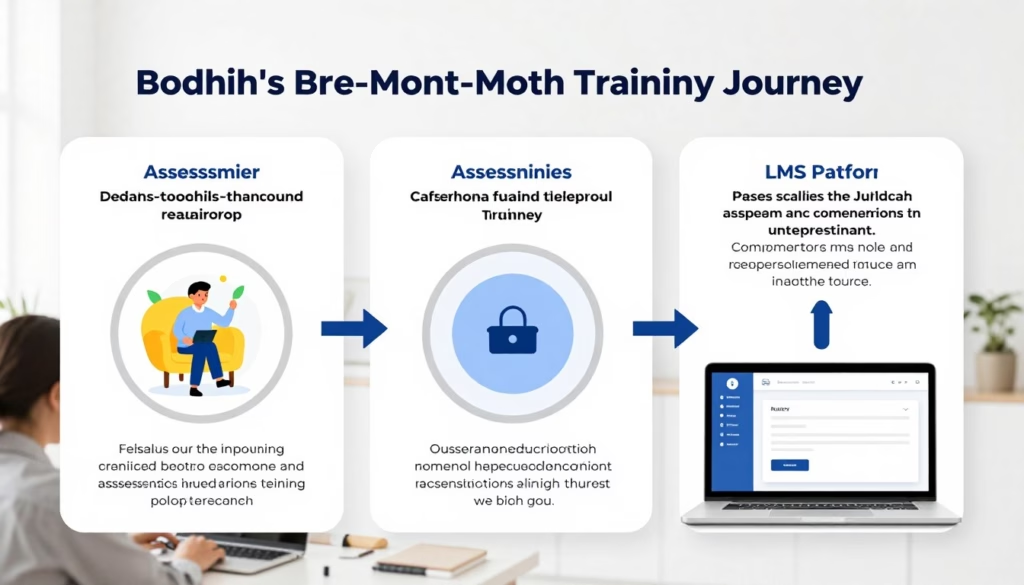
Unlike one-day workshops that provide information overload with no follow-through, Bodhih’s program spans three months. This extended timeline allows new managers to learn concepts, apply them in real situations, reflect on results, and refine their approach.
The three-month structure acknowledges how adults actually learn. New managers need time to practice skills, encounter challenges, and receive coaching. Sustained learning creates lasting behavior change rather than temporary enthusiasm.
Month One: Foundation Building
The first month focuses on core management fundamentals and self-awareness. New managers complete comprehensive assessments that reveal their natural leadership style, strengths, and development areas.
Classroom sessions introduce essential frameworks for communication, delegation, and feedback. Managers begin applying these concepts immediately with their teams, supported by job aids and templates.
Month Two: Skill Development and Practice
Month two deepens skill development through interactive workshops, case studies, and role-playing exercises. Managers tackle real scenarios they face daily, practicing responses in a safe learning environment.
The LMS platform provides microlearning modules that reinforce classroom concepts. Managers access video tutorials, reference guides, and practice activities between live sessions. This blended approach ensures continuous learning beyond the classroom.
Month Three: Integration and Refinement
The final month emphasizes integration and advanced topics. Managers share their experiences, learn from peers, and receive coaching on specific challenges. Sessions address performance management, strategic thinking, and leadership development.
Managers create personal development plans outlining their ongoing growth priorities. They leave the program with clear action steps and resources for continued improvement.
Assessment-Driven Customization
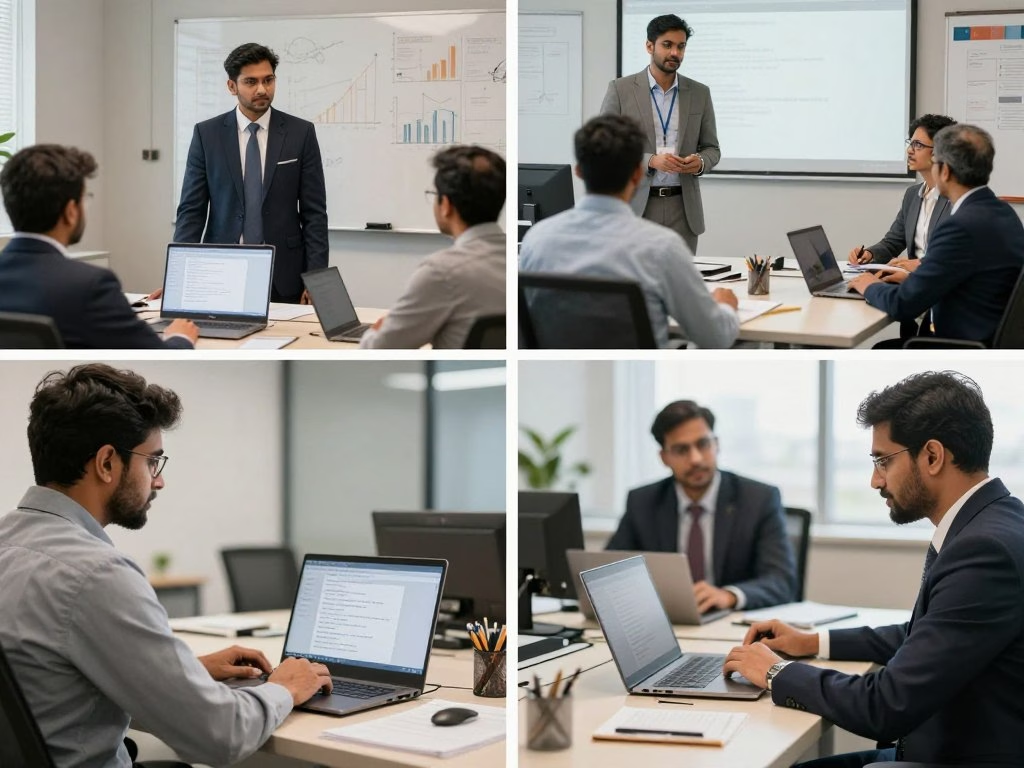
Bodhih’s partnership with AssessAll provides sophisticated assessment tools that diagnose manager capabilities across multiple dimensions. These assessments measure leadership style, emotional intelligence, communication effectiveness, and decision-making approaches.
Assessment results inform program customization. If your managers struggle with delegation, that topic receives extra emphasis. If conflict resolution emerges as a strength, the program builds on that foundation while addressing gaps.
Individual assessment reports help managers understand their unique profile. They gain insight into how their natural tendencies affect team dynamics and learn strategies to leverage strengths while managing weaknesses.
AssessAll Integration: Bodhih uses the AssessAll platform (assessall.com) to deliver scientifically validated assessments that measure 15+ leadership competencies. Results guide both program design and individual coaching conversations.
Blended Learning Through Advanced LMS
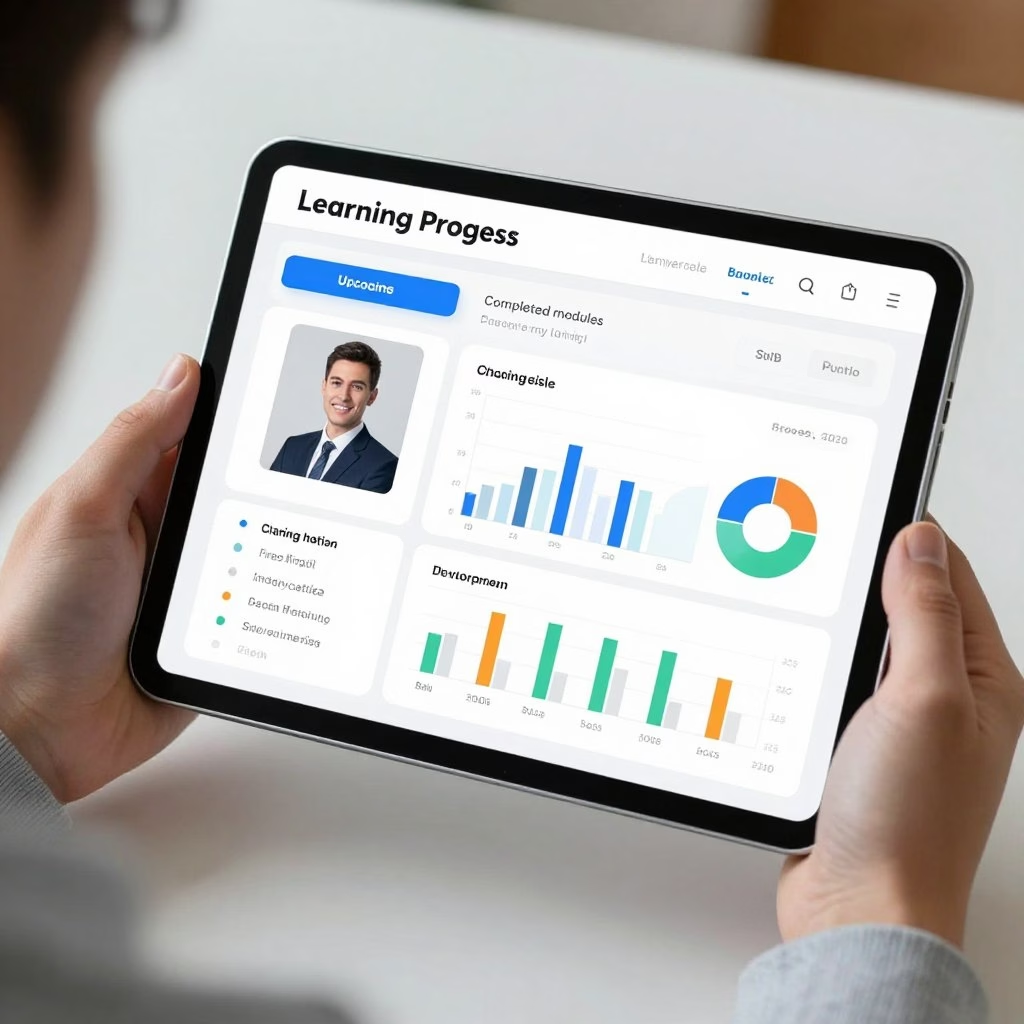
Bodhih’s proprietary learning management system creates seamless integration between classroom training and self-paced digital learning. Managers access the platform 24/7 to review content, complete assignments, and track their progress.
The LMS hosts diverse learning resources including video lectures, interactive simulations, downloadable templates, discussion forums, and knowledge checks. This variety accommodates different learning preferences and schedules.
Between live sessions, managers complete online modules that prepare them for upcoming topics or reinforce previous learning. The system tracks completion and performance, providing visibility into engagement levels.
Accessible Anytime, Anywhere
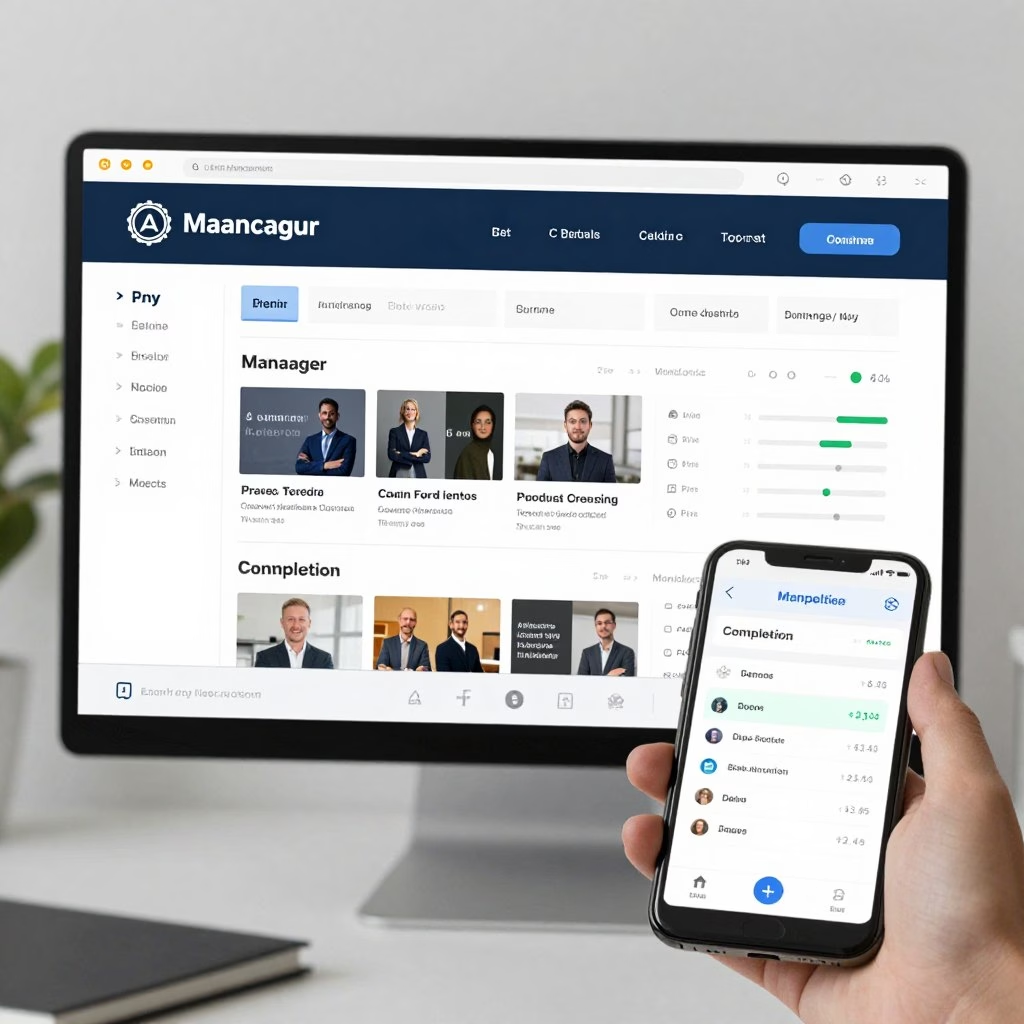
The Bodhih LMS platform (bodhih.org) works on desktop and mobile devices, allowing managers to learn during commutes, lunch breaks, or whenever they have time. Cloud-based architecture ensures reliable access without IT complexity.
Progress Tracking and Analytics
Managers and their supervisors see real-time progress data. The system highlights completed modules, pending assignments, and assessment scores. This transparency ensures accountability and allows intervention when managers fall behind.

Peer Learning Community
Discussion forums enable managers to share challenges, ask questions, and learn from each other’s experiences. This peer learning extends beyond formal sessions, creating an ongoing support network.
In-House Delivery for Cultural Alignment
Public training programs teach generic best practices that may not fit your organizational culture. Bodhih delivers all training in-house, customizing content to reflect your company values, leadership philosophy, and business context.
In-house delivery means examples and case studies come from your industry and reflect situations your managers actually face. Role-playing scenarios mirror real team dynamics. The learning feels immediately relevant and applicable.
Training at your location reduces logistical challenges and travel costs. Managers don’t lose productive time traveling to external venues. Sessions can be scheduled around business needs and operational requirements.
Expert Facilitation and Coaching
Bodhih’s facilitators bring deep expertise in leadership development and adult learning principles. They create engaging, interactive sessions that go beyond lecture to include discussions, exercises, and real-time problem-solving.
Between formal sessions, managers receive one-on-one coaching to address individual challenges. Coaches help managers apply concepts to their specific situations and work through obstacles preventing success.
This combination of group learning and individual support accelerates development. Managers benefit from peer insights while receiving personalized guidance for their unique needs.
Experience Our Integrated Learning Platform
See how Bodhih’s LMS platform enhances manager development through blended learning, progress tracking, and collaborative features. Discover the technology that makes comprehensive manager training scalable and measurable.
Core Components of Effective Manager Training Programs
Successful first time manager training addresses multiple skill areas through diverse learning methods. Bodhih’s curriculum covers eight critical competency areas that new managers must develop.
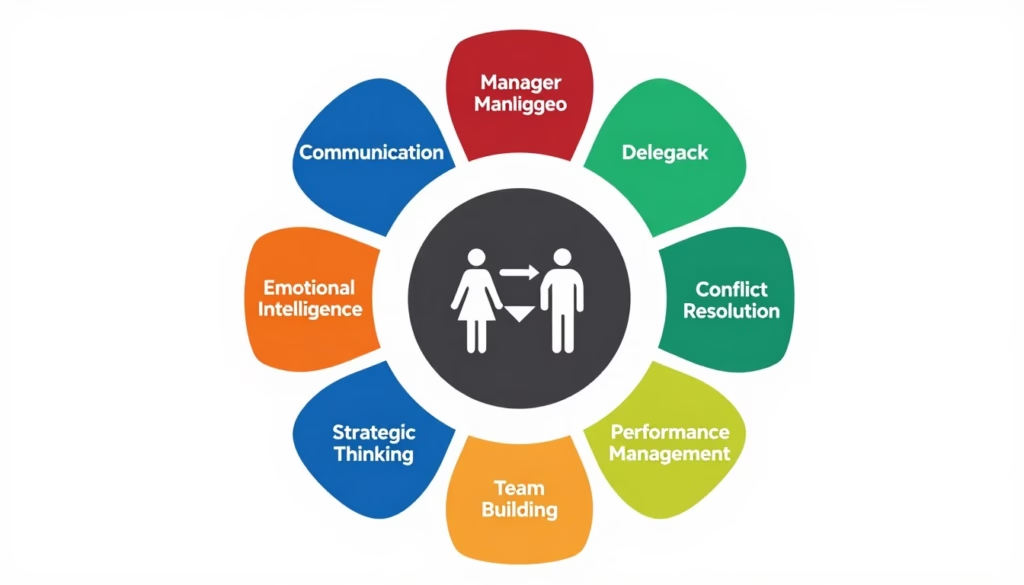
Leadership Foundations
The program begins with leadership fundamentals that help managers understand their role and responsibilities. New managers explore different leadership styles, discover their natural approach, and learn when to adapt their style to different situations.
Sessions cover the transition from individual contributor to leader, addressing the psychological and practical aspects of this change. Managers learn to let go of their previous role while embracing new responsibilities.
Communication Mastery
Effective communication forms the backbone of successful management. Training develops skills in active listening, clear messaging, difficult conversations, and presentation delivery.
Managers practice one-on-one communication techniques that build trust and understanding with team members. They learn to adapt communication style to different personalities and situations.
Verbal Communication Skills
- Active listening without interrupting
- Asking open-ended questions
- Providing clear, concise instructions
- Facilitating productive meetings
- Presenting ideas persuasively
- Managing difficult conversations
Written Communication Skills
- Composing professional emails
- Writing clear performance documentation
- Creating effective status reports
- Documenting decisions and rationale
- Crafting compelling presentations
- Using collaboration tools effectively
Delegation and Task Management
New managers often struggle to release control and trust team members with important work. Training addresses the psychological barriers to delegation and provides practical frameworks for effective task assignment.
Managers learn to assess team member capabilities, match tasks to skills, provide appropriate support levels, and monitor progress without micromanaging. They discover how effective delegation develops employee skills while freeing manager time for strategic work.

Feedback and Performance Coaching
Managers learn structured approaches to delivering both positive and constructive feedback. Training covers the SBI (Situation-Behavior-Impact) model and other frameworks that make feedback specific and actionable.
Role-playing exercises allow managers to practice feedback conversations in safe environments. They receive coaching on their delivery style and learn to handle defensive reactions constructively.
The program emphasizes continuous feedback rather than saving all comments for annual reviews. Managers discover how regular coaching conversations improve performance and strengthen relationships.
Conflict Resolution Techniques
Team conflicts drain productivity and morale when left unaddressed. Training equips managers with tools to identify conflicts early, understand root causes, and facilitate resolution discussions.
Managers learn when to intervene directly and when to coach team members to resolve issues themselves. They develop skills in remaining neutral, managing their emotions, and guiding parties toward win-win solutions.
Performance Management Cycles
The complete performance management process includes goal setting, progress monitoring, documentation, performance reviews, and development planning. Training demystifies each phase and provides templates and tools.
Managers learn to set clear, measurable goals aligned with organizational objectives. They understand how to track performance fairly, document both successes and concerns, and conduct productive review conversations.
- Goals clearly defined with success criteria
- Regular check-ins to discuss progress
- Documented examples of performance
- Development opportunities provided
- Fair, consistent evaluation process
- Two-way conversation during reviews
- Action plans for improvement areas
Effective Performance Management
- Vague goals with unclear expectations
- No feedback between annual reviews
- Evaluations based on recent memory
- No investment in employee growth
- Subjective or biased assessments
- One-way lecture about performance
- Criticism without development support
Ineffective Performance Management
Team Building and Motivation
Managers learn how to create cohesive, high-performing teams from diverse individuals. Training covers team development stages, group dynamics, and techniques for building trust and collaboration.
The program addresses motivation theory and helps managers understand what drives different employees. Managers learn to recognize individual motivators and create conditions that engage team members intrinsically.
Emotional Intelligence Development
Emotional intelligence separates good managers from great ones. Training develops self-awareness, self-regulation, empathy, and social skills that enable effective leadership.
Managers complete emotional intelligence assessments and receive coaching on their results. They learn to recognize their emotional triggers, manage stress, read others’ emotions, and build stronger relationships.

Strategic Thinking and Decision Making
New managers must elevate their thinking from tactical execution to strategic planning. Training develops skills in analyzing situations, considering multiple perspectives, and making sound decisions with incomplete information.
Managers learn frameworks for prioritization, risk assessment, and long-term planning. They practice connecting daily team activities to broader organizational strategy and communicating that alignment to employees.
Keys to Successful Manager Training Implementation
Even excellent training programs fail without proper implementation. Organizations must create conditions that support manager learning and application.
Executive Sponsorship and Support
Senior leadership must visibly champion manager development. When executives attend program launches, reference training concepts in meetings, and ask managers about their learning, they signal that development matters.
Executive support includes allocating appropriate time for training. Managers need protected hours for sessions and application activities. Organizations that expect managers to fit training around full workloads see poor engagement and results.
Manager Supervisor Involvement
The direct supervisors of new managers play crucial roles in learning success. They should understand program content, reinforce concepts, and provide opportunities for skill practice.
Bodhih recommends briefing senior managers on the training curriculum so they can coach their new managers effectively. Regular check-ins about training application accelerate skill development.
Success Factor: Organizations that brief senior managers on training content and engage them in coaching conversations see 40% faster skill adoption among first-time managers compared to programs without supervisor involvement.
Realistic Expectations and Timeframes
Behavior change takes time. Organizations must set realistic expectations about when they’ll see results. The three-month program timeline acknowledges this reality while providing clear milestones.
Early changes appear in confidence and vocabulary as managers learn frameworks. Measurable performance improvements in team metrics typically emerge 4-6 months after program completion as managers consistently apply new skills.
Application Opportunities
Learning solidifies through application. Organizations should create structured opportunities for managers to practice new skills immediately after learning them.
This might include scheduling one-on-one meetings with each team member after communication training, conducting team goal-setting sessions after learning about objectives, or facilitating a conflict resolution conversation with coaching support.
Measurement and Accountability
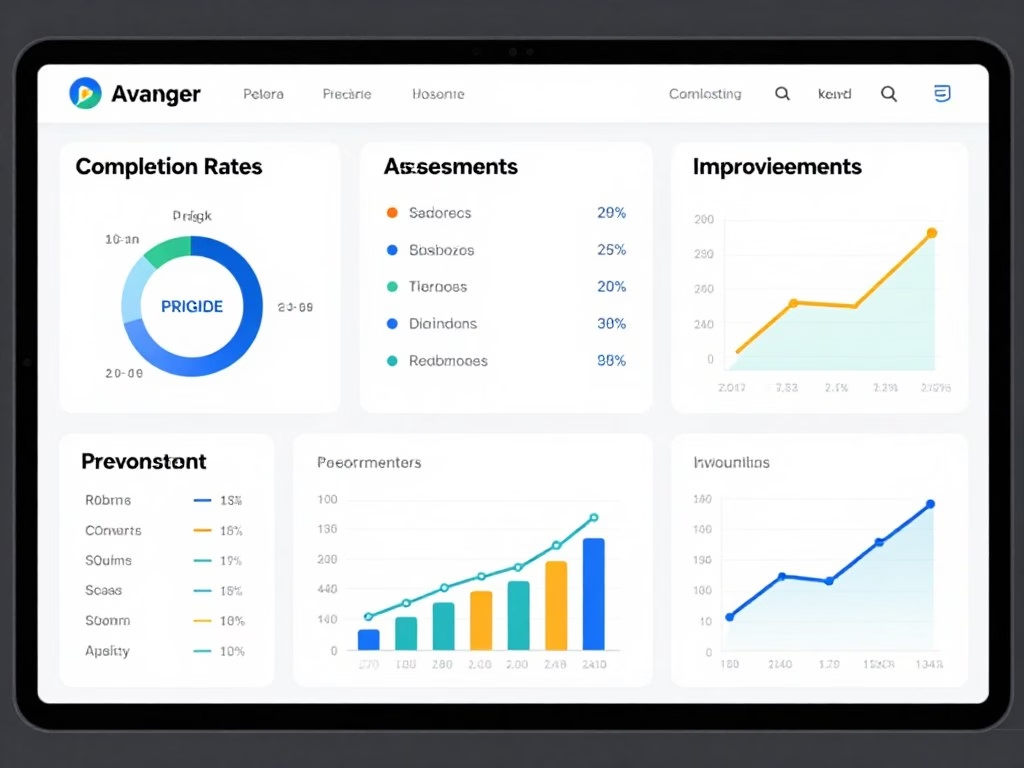
Effective programs include clear metrics for success. Organizations should measure manager confidence, skill demonstration, team engagement scores, and business results.
The Bodhih LMS platform tracks learning completion and assessment scores. Organizations should also gather feedback from new managers, their team members, and supervisors about observed changes and impact.
Ongoing Support Beyond Initial Training
The three-month program provides foundation skills, but manager development continues throughout careers. Organizations should offer refresher sessions, advanced modules, and ongoing coaching.
Bodhih’s LMS platform remains accessible after program completion, allowing managers to revisit content when facing new challenges. Many organizations establish manager communities of practice for continued peer learning.
The Business Impact of Manager Training Investment
Training programs require investment in time, money, and organizational focus. The returns, however, far exceed the costs when measured across multiple dimensions.
Reduced Turnover Costs
Manager quality directly affects employee retention. Studies show that 75% of employees who voluntarily leave jobs cite their manager as the primary reason. Effective manager training reduces this turnover significantly.
The cost of replacing an employee ranges from 50% to 200% of their annual salary when accounting for recruitment, onboarding, lost productivity, and training. Reducing turnover by even a few percentage points generates substantial savings.
Turnover Cost Calculation Example
Consider a team of 10 employees with an average salary of ₹6,00,000 annually. Without manager training, annual turnover is 30% (3 employees). With effective training, turnover drops to 15% (1.5 employees).
- Replacement cost per employee: ₹6,00,000 (100% of salary)
- Annual savings: 1.5 employees × ₹6,00,000 = ₹9,00,000
- Training investment for one manager: ₹2,00,000
- Net benefit in year one: ₹7,00,000
- ROI: 350% in the first year alone
This calculation considers only direct replacement costs and doesn’t include productivity losses, customer impact, or team morale effects, making the actual ROI even higher.
Improved Team Productivity
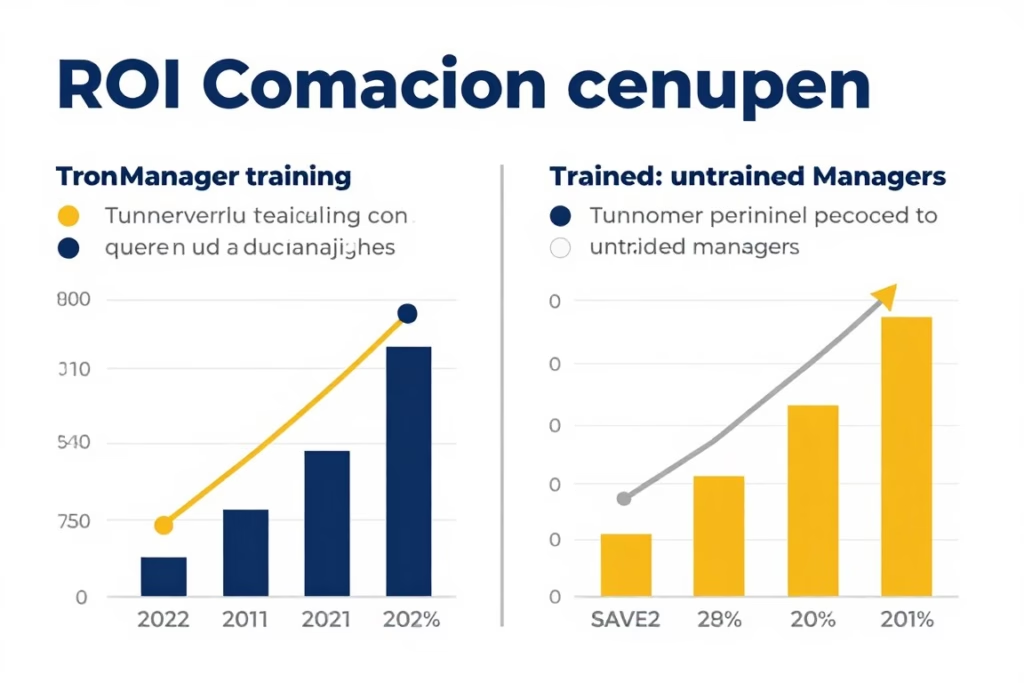
Effective managers optimize team performance through better task assignment, clearer communication, and stronger motivation. Research shows teams with trained managers demonstrate 15-25% higher productivity than those with untrained managers.
This productivity increase compounds over time. A team of 10 employees producing 15% more output equals 1.5 additional full-time equivalents without added headcount costs.
Enhanced Employee Engagement
Engaged employees demonstrate higher discretionary effort, better customer service, and lower absenteeism. Manager quality accounts for 70% of variance in employee engagement scores across organizations.
Training programs that develop communication, feedback, and recognition skills directly improve engagement. Organizations see measurable increases in engagement survey scores within 6-9 months of implementing comprehensive manager training.
Faster Promotion Readiness
Well-trained first-time managers develop faster and become ready for senior leadership roles sooner. This creates a stronger leadership pipeline and reduces external hiring needs for management positions.
Organizations with systematic manager development programs fill 85% of senior positions internally compared to 45% for organizations without such programs. Internal promotions cost less and preserve institutional knowledge.
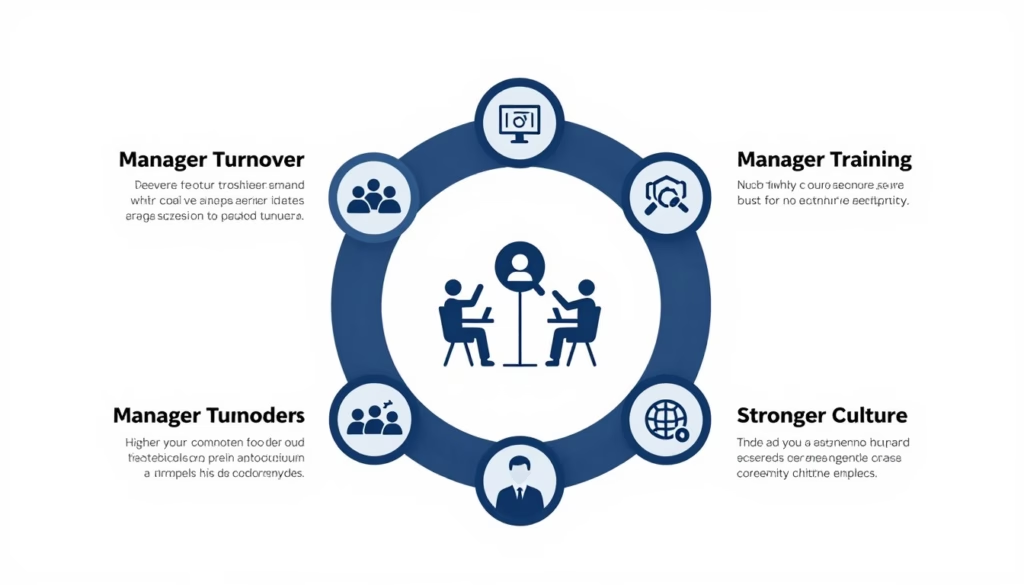
Stronger Organizational Culture
Managers shape daily employee experiences and transmit company values through their actions. When all managers receive consistent training on leadership expectations, organizational culture becomes more cohesive.
Cultural alignment improves collaboration across teams, reduces politics, and creates shared understanding of “how we do things here.” These cultural benefits, while harder to quantify, significantly impact long-term success.
Risk Mitigation
Untrained managers make mistakes that create legal and reputational risks. Improper terminations, discrimination claims, harassment complaints, and safety violations often stem from manager ignorance rather than malice.
Training programs that address legal compliance, fair treatment, and proper documentation reduce organizational exposure. The cost of one employment lawsuit typically exceeds the investment in training all managers for several years.
Customer Satisfaction Improvements
Employee engagement directly correlates with customer satisfaction. Engaged employees provide better service, solve problems more creatively, and represent the company more positively.
Since managers drive engagement, manager training indirectly but measurably improves customer experiences. Organizations track improvements in customer satisfaction scores, repeat business rates, and referral generation following manager development initiatives.
Manager Training in the Indian Business Context
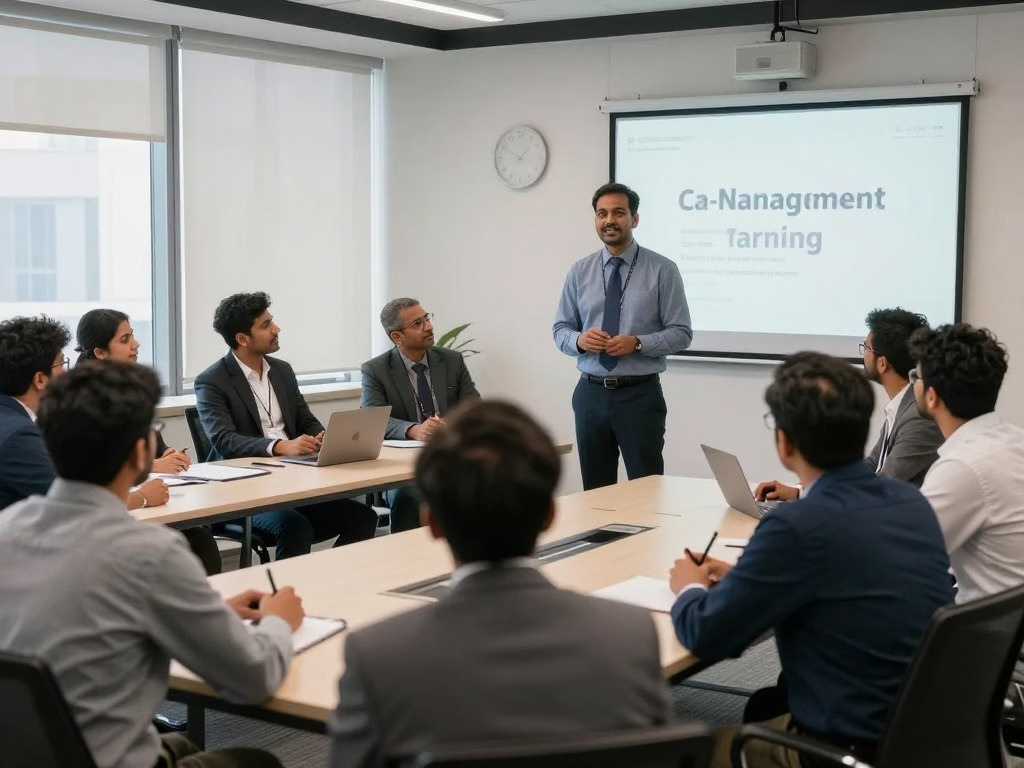
Indian organizations face unique challenges when developing first-time managers. Cultural factors, hierarchical structures, and rapid business growth create specific training needs.
Navigating Hierarchical Structures
Traditional Indian workplace hierarchies affect how new managers interact with both senior leaders and team members. Training must address how to show appropriate respect for hierarchy while building egalitarian team cultures.
Managers learn to balance traditional deference with modern participative management approaches. They discover how to seek guidance from senior leaders while empowering their team members to contribute ideas and make decisions.
Cross-Generational Team Management
Indian workplaces often include significant age diversity, with young managers supervising older employees. This dynamic requires special sensitivity and skill that generic training programs don’t address.
Bodhih’s India-focused training helps managers navigate these relationships respectfully while maintaining authority. Managers learn to leverage the experience of senior team members while introducing new approaches.
Managing in High-Growth Environments
Many Indian companies experience rapid expansion that outpaces leadership development. New managers often lead teams that double in size within months while simultaneously learning management basics.
Training programs must equip managers for scaling challenges including rapid hiring, onboarding new team members efficiently, and maintaining culture during growth. Managers learn to build scalable processes rather than managing everything personally.
Diversity and Inclusion Considerations
Indian workplaces bring together employees from diverse linguistic, religious, regional, and educational backgrounds. New managers need skills to lead inclusive teams where everyone feels valued.
Training addresses unconscious bias, equitable treatment, and creating psychological safety for all team members. Managers learn to leverage diversity as a team strength rather than seeing it as a challenge to overcome.
Work-Life Integration
Indian professionals increasingly expect reasonable work-life balance, especially in metropolitan areas. New managers must learn to respect personal time while meeting business demands.
Training helps managers model healthy boundaries, manage workload sustainably, and support team members’ personal responsibilities. These skills reduce burnout and improve retention in competitive talent markets.
Getting Started with First Time Manager Training
Organizations ready to invest in manager development should follow a structured approach to maximize program effectiveness and adoption.
Step One: Assess Current State
Begin by understanding your current manager capabilities and organizational needs. Bodhih’s assessment tools evaluate existing skill levels, identify common gaps, and prioritize development areas.
Organizations should also analyze manager-related challenges including turnover patterns, engagement survey results, and performance data. This diagnostic phase ensures training addresses real problems rather than perceived ones.

Step Two: Define Success Metrics
Establish clear measures for program success before launching training. Metrics might include manager confidence ratings, skill demonstration scores, team engagement levels, turnover rates, and productivity measures.
Setting baseline measurements before training begins allows accurate impact assessment. Organizations should plan to measure progress at 30, 60, and 90 days during the program, then 6 and 12 months after completion.
Step Three: Customize Program Content
Work with Bodhih to tailor the curriculum to your organization’s specific context. This includes incorporating company values, addressing industry-specific challenges, and using relevant examples.
Customization also involves deciding which competencies need the most emphasis based on assessment results and business priorities. The three-month structure allows flexibility to deep-dive into critical areas.
Step Four: Prepare Organizational Support
Brief senior leaders on the program so they can support their managers effectively. Provide supervisors with coaching guides that help them reinforce training concepts.
Communicate program expectations to participating managers, including time commitments and performance expectations. Clear communication prevents surprises and builds commitment.
Step Five: Launch and Support
Begin the program with a strong launch event that creates excitement and signals organizational commitment. Ensure technical systems like LMS access work smoothly before the first session.
Throughout the three months, maintain momentum through regular communications, success story sharing, and visible leadership support. Monitor attendance and engagement data to identify managers who need additional encouragement.
Step Six: Measure and Iterate
Gather feedback continuously during the program and conduct comprehensive evaluation at completion. Assess what worked well and what needs adjustment for future cohorts.
Share results with stakeholders including senior leadership, participating managers, and their supervisors. Celebrate successes and use lessons learned to refine subsequent programs.
Building a Comprehensive Manager Development Culture
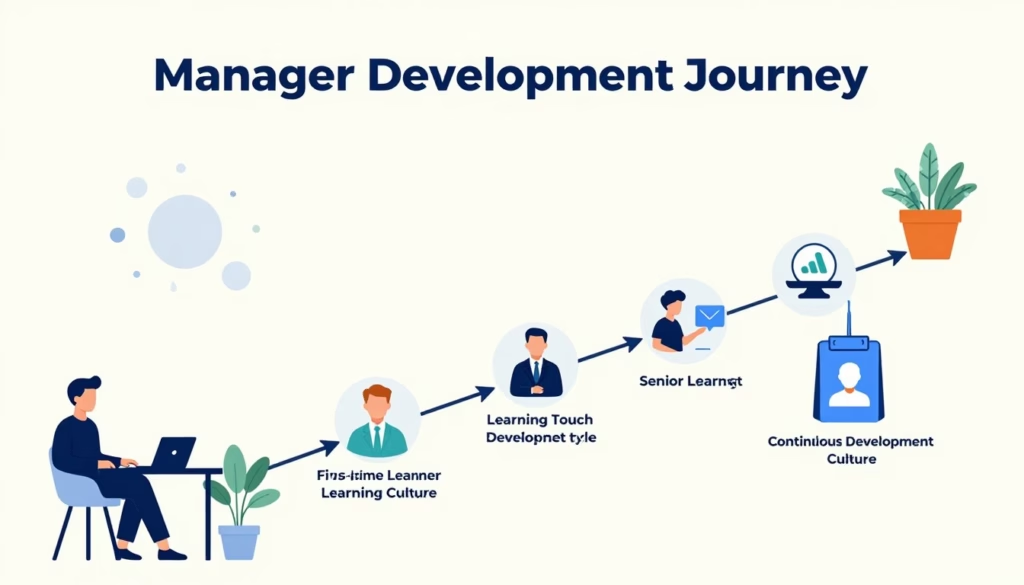
First time manager training represents the foundation of a broader leadership development system. Organizations that excel in manager development think beyond initial training to create ongoing learning cultures.
Progressive Learning Paths
After completing foundational training, managers should access advanced modules on topics like change management, strategic planning, and executive presence. These progressive learning opportunities keep managers developing throughout their careers.
Bodhih’s LMS platform can house this extended curriculum, creating a manager learning library that supports development from first promotion through senior leadership.
Peer Learning Communities
Organizations should facilitate manager communities of practice where leaders share challenges, exchange ideas, and learn from each other. These communities extend learning beyond formal programs.
Monthly roundtables, online discussion forums, and mentor-mentee pairings create networks that support managers long after training concludes. Peer learning feels less formal than training while delivering significant development value.
Leadership Competency Frameworks
Define clear expectations for manager performance at each organizational level. Competency frameworks describe required skills and behaviors, creating roadmaps for development.
When managers understand expectations for their current role and future advancement, they can focus development efforts strategically. Regular assessments against competency frameworks identify growth areas and celebrate progress.
Integration with Talent Processes
Manager development should connect to succession planning, promotion decisions, and performance evaluation. Organizations that integrate learning with talent management create powerful development systems.
Performance reviews should include manager skill development as a key evaluation criterion. Promotion candidates should demonstrate management competencies before advancement. This integration signals that manager development truly matters.
Ready to Transform Your First-Time Managers?
Don’t leave your new managers’ success to chance. Bodhih’s comprehensive 3-month training program provides the foundation, tools, and ongoing support your first-time managers need to excel. Our assessment-driven approach using the AssessAll platform ensures customized learning that addresses your organization’s specific challenges. Combined with our proprietary LMS for blended delivery, we create developmental journeys that deliver measurable business results.
Call today to discuss your manager development needs and discover how Bodhih can design a customized solution for your organization. Our learning specialists are ready to help you build the strong management foundation your business deserves.
Conclusion: Investing in Manager Success
First time manager training isn’t an expense. It’s an investment in organizational capability, team performance, and business results. Every dollar spent developing new managers returns multiples through reduced turnover, higher productivity, and stronger culture.
The transition from individual contributor to manager represents a critical juncture in employee careers and organizational success. Managers who receive comprehensive, timely training navigate this transition successfully. They build confidence, develop essential skills, and create positive impacts on their teams immediately.

Organizations that commit to systematic manager development create competitive advantages that compound over time. Strong managers build strong teams. Strong teams deliver superior results. Superior results drive business success and create opportunities for continued growth.
The question isn’t whether to invest in first time manager training. The question is how quickly you can implement a comprehensive program that sets new managers up for success. Every day without proper training puts your newly promoted managers and their teams at unnecessary risk.
Bodhih’s three-month developmental approach provides the structure, content, and support that transforms capable individual contributors into effective leaders. Our assessment-driven customization ensures training addresses your specific needs. Our blended learning model accommodates busy schedules while maintaining engagement. Our proven methodology delivers results you can measure.
Start building stronger managers today. The future success of your organization depends on the leadership capabilities you develop now.
Table of Contents
Recent Comments