

In the modern corporate landscape, organisational success relies on the ability to foster continuous growth. Professionals who master a structured ADDIE model approach gain the power to elevate individual performance and business outcomes.
Bodhih provides a transformative path for those seeking to refine their expertise. By focusing on systematic ADDIE model training design, participants learn to build effective frameworks that align with strategic objectives.
This journey toward instructional excellence ensures that your team remains competitive and agile. To begin your professional development, please contact our admissions team at +91 99000 11603 for registration enquiries.
Key Takeaways
- The framework provides a robust structure for organisational capability building.
- Structured approaches ensure that learning initiatives align with core business objectives.
- Participants gain the skills to create impactful and measurable educational programmes.
- Professional mastery of these techniques elevates the standard of corporate development.
- Interested candidates should contact the admissions team for registration enquiries.
The Evolution of Instructional Design in Corporate Training
The landscape of professional development has shifted significantly, moving away from informal methods toward rigorous, evidence-based practices. Organisations now recognise that instructional design is not merely an administrative task but a strategic necessity for growth. This transition reflects a broader commitment to transforming raw information into measurable employee capabilities.
The Shift Towards Structured Learning Methodologies
In the past, corporate training often relied on ad-hoc presentations that lacked clear learning outcomes. Today, the industry has embraced structured methodologies that prioritise the learner’s journey and long-term retention. By applying systematic instructional design principles, companies ensure that every training module serves a specific, identified purpose.
This scientific approach allows for the creation of content that is both engaging and highly effective. When learning is structured, it becomes easier to track progress and identify areas where further development is required. This shift ensures that training initiatives are no longer isolated events but part of a cohesive capability-building strategy.
Why Modern Trainers Need a Formal Design Framework
Modern trainers operate in a complex environment where business objectives change rapidly. A formal framework provides the essential blueprint needed to navigate these challenges while maintaining high standards of quality. Without a structured approach to instructional design, training programmes often fail to bridge the gap between theory and real-world application.
Adopting a recognised framework empowers trainers to align their efforts directly with the organisation’s overarching goals. It provides a common language for stakeholders and ensures consistency across diverse departments. Ultimately, a formal instructional design process transforms training from a cost centre into a powerful engine for organisational transformation.
Understanding the Core Philosophy of Bodhih’s Train the Trainer
The core of the Bodhih methodology lies in its commitment to transforming abstract learning theories into practical business success. By integrating a robust training design framework, the organisation ensures that every learning intervention serves a clear purpose. This philosophy bridges the gap between creative delivery and the disciplined application of instructional science.
The Bodhih Approach to Facilitation and Design
Bodhih champions a style that harmonises the art of facilitation with the precision of instructional design. Trainers are encouraged to move beyond traditional lecture formats to create immersive experiences. This training design framework empowers facilitators to adapt their methods to the unique needs of diverse corporate audiences.
The approach focuses on building learner-centric environments where engagement is not just a goal but a standard. By mastering this training design framework, professionals can ensure that their sessions remain dynamic and impactful. This balance is essential for maintaining high levels of participant retention and knowledge application.
Aligning Pedagogical Theory with Business Outcomes
Effective training must do more than impart knowledge; it must drive tangible organisational growth. Bodhih ensures that every element of its training design framework is mapped directly to specific business objectives. This alignment transforms training from a cost centre into a strategic asset for the enterprise.
By grounding pedagogical theory in real-world application, the programme helps trainers demonstrate clear return on investment. Participants learn to translate complex learning goals into measurable performance improvements. Ultimately, this training design framework serves as a catalyst for long-term professional and organisational transformation.
Deep Dive into ADDIE Model Training Design
The ADDIE model serves as the foundational architecture for modern instructional design excellence. By providing a clear roadmap, it ensures that learning initiatives remain aligned with broader organisational goals.
Breaking Down the Five Stages of ADDIE
The framework consists of five distinct phases that guide the creation of high-impact learning experiences. Each stage builds upon the previous one to ensure a cohesive final product.
- Analysis: Identifying the specific needs and gaps within the workforce.
- Design: Mapping out the learning objectives and the overall blueprint.
- Development: Creating the actual content and interactive materials.
- Implementation: Delivering the training to the target audience.
- Evaluation: Measuring the effectiveness and return on investment.
Why Bodhih Prioritises the ADDIE Framework
Bodhih recognises that effective learning is rarely a linear process. The organisation prioritises this framework because it provides a reliable structure while allowing for necessary adjustments throughout the development cycle.
This approach ensures that every piece of ADDIE training is purposeful and results-oriented. By adhering to these principles, trainers can consistently deliver programmes that drive real performance improvements.
The Iterative Nature of the Model
The true power of the ADDIE model lies in its capacity for continuous refinement. Rather than viewing the process as a single path, it encourages designers to revisit earlier stages based on feedback and performance data.
This iterative cycle allows for the constant polishing of content. It ensures that the final training solution remains relevant and highly effective for the end-user.
Flexibility Within a Structured Process
While the framework is highly structured, it offers significant flexibility to adapt to unique business challenges. Practitioners can scale the depth of each phase to match the complexity of the specific ADDIE training project.
This balance of rigour and adaptability is what makes the ADDIE model a preferred choice for professionals. It empowers designers to remain agile while maintaining a high standard of instructional quality.
Analysis: The Foundation of Effective Training Needs Analysis
The initial phase of the ADDIE training framework focuses on identifying core requirements. This stage serves as the bedrock for all subsequent design efforts, ensuring that learning interventions are both relevant and impactful. By conducting a rigorous assessment, organisations can align their educational goals with broader business objectives.

Identifying Skill Gaps in the Workplace
A skill gap exists when there is a measurable difference between the current performance of employees and the desired organisational standard. Identifying these gaps requires a systematic approach to data collection. Trainers must look beyond surface-level symptoms to uncover the root causes of performance deficiencies.
Effective analysis involves observing daily workflows and reviewing key performance indicators. When leaders pinpoint specific areas where capabilities are lacking, they can create targeted solutions. This proactive stance prevents the waste of resources on unnecessary training programmes.
Stakeholder Engagement and Requirement Gathering
Successful ADDIE training initiatives rely heavily on the active participation of key stakeholders. Engaging these individuals early in the process ensures that the training aligns with the strategic vision of the company. It fosters a sense of ownership and commitment across all levels of the organisation.
Requirement gathering involves structured conversations to understand the expectations of management and the needs of the learners. By synthesising these perspectives, designers can craft a clear roadmap for development. This collaborative effort transforms abstract business goals into concrete learning outcomes.
Tools for Conducting a Training Needs Analysis
Utilising the right instruments is essential for gathering accurate insights. Different methods offer unique advantages depending on the size and culture of the organisation. The following table outlines common tools used to facilitate this critical phase.
| Tool | Primary Purpose | Best Used For |
|---|---|---|
| Surveys | Quantitative data collection | Large, diverse groups |
| Interviews | Qualitative insights | Senior leadership feedback |
| Focus Groups | Collaborative discussion | Identifying team-wide gaps |
| Performance Audits | Objective data analysis | Technical skill verification |
By selecting the appropriate tools, professionals can ensure their ADDIE training design is built upon a foundation of reliable evidence. This methodical approach ultimately leads to higher engagement and improved performance outcomes.
Design: Crafting Learning Objectives and Blueprints
Designing effective training begins with the careful construction of a clear and actionable blueprint. This phase serves as the vital link between initial analysis and the final delivery of learning content. By establishing a solid foundation, organisations ensure that every session aligns perfectly with broader business objectives.
Writing SMART Learning Objectives
Clear objectives act as a compass for both the facilitator and the participant. We utilise the SMART framework to ensure that every goal is Specific, Measurable, Achievable, Relevant, and Time-bound. This precision removes ambiguity and provides a tangible benchmark for success.
When objectives are well-defined, learners understand exactly what is expected of them. This clarity fosters a sense of purpose and accelerates the acquisition of new skills. It also allows stakeholders to track progress against predefined performance indicators.
Structuring the Training Blueprint
A comprehensive blueprint acts as the architectural plan for the entire learning journey. It outlines the sequence of modules, the timing of activities, and the flow of information. Structuring the training blueprint effectively prevents cognitive overload and maintains high levels of engagement throughout the programme.
This document serves as a roadmap for the instructional designer. It ensures that the content remains logical and cohesive from start to finish. By mapping out the journey, designers can identify potential bottlenecks before they impact the learner experience.
Selecting Appropriate Instructional Strategies
The choice of methodology determines how effectively knowledge is transferred to the workplace. Designers must select strategies that resonate with the target audience and support the desired learning outcomes. Whether through interactive workshops, case studies, or digital simulations, the method must match the complexity of the subject matter.
Choosing the right approach is essential for designing effective training that sticks. By aligning pedagogical techniques with business goals, organisations can ensure that their investment in human capital yields measurable results. This strategic alignment is the hallmark of a truly transformative learning experience.
Development: Transforming Concepts into Engaging Content
Transforming instructional concepts into high-impact content is the heart of the development stage. This phase requires a meticulous approach to designing effective training that resonates with the modern learner. By converting blueprints into functional assets, organisations ensure that the final output aligns perfectly with the intended learning outcomes.
Creating Interactive Learning Materials
Interactive materials serve as the bridge between passive consumption and active knowledge retention. When learners engage directly with the content, they are more likely to apply new skills in real-world scenarios. Active participation transforms the learning journey from a static experience into a dynamic process.
To foster this engagement, developers should incorporate various interactive elements:
- Scenario-based simulations that mimic workplace challenges.
- Gamified quizzes to reinforce key concepts through friendly competition.
- Drag-and-drop exercises that encourage critical thinking and decision-making.
The Role of Multimedia in Modern Training
Multimedia integration is essential for maintaining attention in a fast-paced corporate environment. Visual and auditory stimuli help break down complex information into digestible segments. This approach significantly enhances cognitive retention by catering to diverse learning preferences.
High-quality video content, infographics, and audio podcasts provide variety to the training experience. These tools ensure that the delivery remains fresh and stimulating for the audience. When used strategically, multimedia prevents information overload and keeps the learner focused on the core objectives.
Best Practices for Content Curation
Content curation is a vital discipline for designing effective training that remains relevant over time. It involves selecting, organising, and presenting the most valuable information to the learner. By filtering out noise, trainers can focus on high-impact knowledge that drives performance.
Adopting a structured curation strategy ensures that training materials stay current with industry trends. Organisations should regularly review their content libraries to remove outdated information and replace it with fresh insights. This commitment to quality keeps the learning ecosystem agile and highly responsive to business needs.
Implementation: Delivering Training with Impact
Effective implementation ensures that the insights gained during the initial training needs analysis are fully realised in the classroom. This stage represents the transition from conceptual blueprints to the active delivery of knowledge. Precision in this phase is essential for achieving measurable business outcomes.
Preparing the Learning Environment
A professional learning environment serves as the foundation for successful knowledge transfer. Whether the setting is physical or virtual, the space must be optimised to minimise distractions and encourage focus. Trainers should ensure that all technical equipment and materials are ready before participants arrive.
Creating an atmosphere of psychological safety allows learners to engage more deeply with the content. When the environment is structured correctly, it reinforces the credibility of the programme. This preparation phase is a vital component of the broader training needs analysis strategy.
Facilitation Techniques for Diverse Audiences
Modern training requires a flexible approach to accommodate diverse learning styles and professional backgrounds. Facilitators must employ varied techniques to maintain high levels of engagement throughout the session. Using a mix of visual aids, interactive discussions, and practical exercises ensures that every participant finds value in the experience.
Managing Group Dynamics During Sessions
Group dynamics can significantly influence the flow and success of a training session. A skilled facilitator must remain observant, identifying potential friction points before they escalate. By fostering an inclusive culture, trainers can transform individual perspectives into collective growth.
| Environment Type | Key Advantage | Primary Challenge |
|---|---|---|
| In-Person | High interpersonal connection | Logistical constraints |
| Virtual Live | Global accessibility | Maintaining sustained focus |
| Hybrid | Maximum flexibility | Technical complexity |
Evaluation: Measuring Success and ROI
Evaluating the impact of learning initiatives is the final, critical step in the instructional design lifecycle. While many organisations focus solely on participant satisfaction, true success is measured by the tangible changes in workplace performance. By revisiting the initial training needs analysis, stakeholders can determine if the programme effectively addressed the identified skill gaps.
Kirkpatrick’s Levels of Evaluation
The Kirkpatrick Model provides a structured framework for assessing training effectiveness across four distinct levels. Level one measures reaction, capturing how participants felt about the learning experience. Level two evaluates learning, confirming whether the intended knowledge or skills were successfully acquired.
Level three focuses on behaviour, observing how participants apply their new skills in their daily roles. Finally, level four examines results, looking at the broader impact on organisational objectives. This hierarchy ensures that evaluation is comprehensive rather than superficial.
Gathering Feedback for Continuous Improvement
Continuous improvement relies on the systematic collection of high-quality data. Beyond end-of-course surveys, organisations should implement post-training assessments and follow-up interviews. These tools provide valuable insights into the long-term retention of information.
Feedback loops allow designers to refine materials and delivery methods for future cohorts. By consistently analysing this data, companies ensure their training remains relevant and effective. This iterative process is essential for maintaining a competitive edge in a changing business landscape.
Translating Training Results into Business Value
Connecting learning outcomes to financial performance is the ultimate goal of any professional development programme. When results are mapped back to the original training needs analysis, the return on investment becomes clear. This alignment helps stakeholders see the direct link between employee growth and business success.
Quantifiable metrics, such as increased productivity or reduced error rates, serve as powerful indicators of value. By presenting these findings clearly, L&D professionals can justify future investments in human capital. Ultimately, effective evaluation transforms training from a cost centre into a strategic asset for the organisation.
Key Features of the Bodhih Instructional Design Certification
The Bodhih certification programme provides a transformative path for professionals seeking to master the art of instructional design. By focusing on both cognitive development and practical skill acquisition, the curriculum ensures that participants are prepared to meet the evolving demands of the corporate training landscape.
Comprehensive Curriculum Overview
The programme offers a deep dive into the essential pillars of effective learning. Participants explore advanced methodologies that allow them to create impactful training solutions tailored to diverse organisational needs. This structured approach ensures that every aspect of instructional design is covered with precision and clarity.
Hands-on Projects and Peer Review
Theory alone is insufficient for true professional growth. Bodhih integrates hands-on projects that require participants to apply their knowledge to real-world scenarios. Through rigorous peer review, learners gain invaluable insights into their own work while refining their ability to provide constructive feedback to others.
Mentorship and Expert Guidance
Navigating the complexities of modern training requires seasoned support. Participants benefit from direct mentorship from industry experts who guide them through the nuances of instructional design. This personalised guidance helps bridge the gap between abstract concepts and successful implementation in the workplace.
| Learning Component | Primary Focus | Expected Outcome |
|---|---|---|
| Curriculum Modules | Theoretical Frameworks | Conceptual Mastery |
| Practical Projects | Applied Instructional Design | Portfolio Development |
| Peer Review | Collaborative Analysis | Critical Thinking Skills |
| Expert Mentorship | Strategic Guidance | Professional Confidence |
Pros and Cons of the Bodhih Approach
The Bodhih instructional design certification offers a rigorous path for those seeking to elevate their L&D capabilities. By blending theoretical depth with practical application, the programme prepares professionals to navigate the complexities of modern corporate training. An objective assessment of this methodology highlights why it remains a cornerstone for many industry leaders.
Strengths of the Programme
One of the primary advantages of this approach is its unwavering focus on real-world outcomes. Participants gain access to a structured framework that simplifies the creation of high-impact learning materials. The curriculum is designed to ensure that every training module aligns perfectly with broader business objectives.
Furthermore, the programme fosters a deep understanding of learner psychology. By mastering these techniques, trainers can create environments that encourage active participation and long-term knowledge retention. This instructional design certification is highly regarded for its ability to transform abstract concepts into actionable professional skills.
Potential Challenges for Participants
While the rewards are significant, the intensity of the programme can be demanding. Participants must be prepared to dedicate substantial time to mastering the nuances of the ADDIE model. The depth of the content requires a high level of commitment and critical thinking throughout the duration of the course.
Some learners may find the transition from traditional training methods to this structured framework challenging. It requires a shift in mindset, moving away from content delivery toward a more strategic, design-led approach. However, this rigour is exactly what ensures the long-term success of the graduates.
How to Maximise Your Learning Experience
To gain the most from this instructional design certification, participants should engage actively with the peer review sessions. Sharing insights with fellow professionals provides diverse perspectives that enrich the learning process. Additionally, applying the framework to current workplace projects allows for immediate testing of new strategies.
| Feature | Benefit | Consideration |
|---|---|---|
| Structured Framework | Consistency in design | Requires initial effort |
| Practical Projects | Real-world application | Time-intensive tasks |
| Expert Mentorship | Accelerated growth | Active participation needed |
Who Should Enrol in This Instructional Design Programme
The path to becoming a master facilitator begins with a rigorous and industry-recognised instructional design certification. This programme is specifically tailored for L&D professionals and business leaders who are committed to elevating their instructional capabilities within the corporate landscape.
Ideal Candidates for the Certification
The curriculum attracts individuals who manage human capital and seek to improve organisational performance. Ideal candidates include corporate trainers, HR business partners, and learning consultants who want to move beyond basic delivery to strategic design.
Participants should possess a foundational understanding of adult learning principles. This ensures that the advanced concepts taught during the programme are applied effectively to real-world business challenges.
Benefits for L&D Professionals
Enrolling in this programme provides practitioners with a structured framework to create high-impact learning experiences. By mastering the ADDIE model, professionals can ensure their training initiatives align perfectly with core business objectives.
The instructional design certification offers a significant competitive advantage in the modern workplace. It equips leaders with the tools to measure training effectiveness and demonstrate clear return on investment to stakeholders.
Career Advancement Opportunities
Achieving this qualification serves as a powerful catalyst for professional growth. It signals to employers that a candidate possesses the technical expertise required to lead complex training projects and drive organisational transformation.
Graduates often find themselves better positioned for senior leadership roles within the L&D function. The ability to design scalable learning solutions is a highly sought-after skill in today’s global market.
| Candidate Profile | Primary Focus | Key Benefit |
|---|---|---|
| Corporate Trainer | Delivery Excellence | Enhanced Facilitation |
| HR Manager | Skill Gap Analysis | Strategic Alignment |
| L&D Consultant | Instructional Design Certification | Career Advancement |
Practical Application of the Training Design Framework
Bridging the gap between instructional theory and corporate reality requires a robust training design framework. While models provide a necessary structure, their true power emerges when they are adapted to meet specific organisational needs. Professionals must learn to navigate the nuances of their unique business environments to ensure learning initiatives drive actual performance.
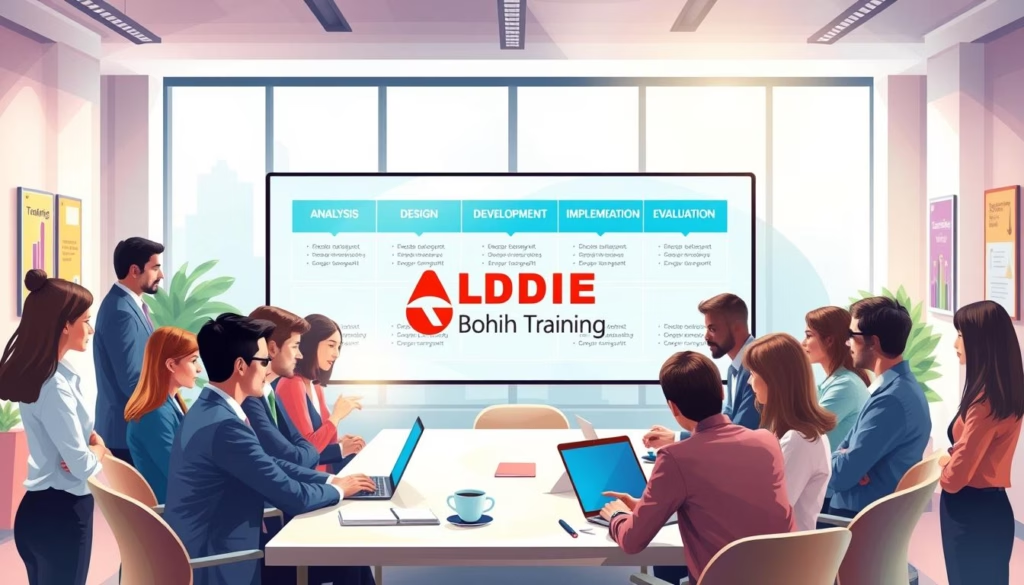
Applying ADDIE to Real-World Scenarios
The ADDIE model serves as a versatile guide for instructional designers across various industries. By treating each phase as a dynamic process rather than a rigid checklist, teams can tailor their approach to suit tight deadlines or shifting project scopes. Flexibility remains the key to success when applying this training design framework to complex corporate projects.
Designers often find that iterative cycles within the development phase allow for faster prototyping. This method ensures that stakeholders remain engaged throughout the lifecycle of the project. By maintaining clear communication, teams can align their outputs with broader business objectives effectively.
Overcoming Common Design Obstacles
Instructional development frequently faces hurdles such as limited budgets, time constraints, or resistance from subject matter experts. A well-implemented training design framework helps mitigate these risks by providing a clear roadmap for resource allocation. Proactive planning allows designers to anticipate potential bottlenecks before they impact the final delivery.
Case Studies of Successful Implementations
Organisations that have adopted a structured approach often report significant improvements in learner engagement and retention. For instance, a global retail firm successfully utilised the ADDIE model to standardise its onboarding process across multiple regions. By focusing on measurable outcomes, they achieved a 20% increase in operational efficiency within the first quarter.
| Common Obstacle | Strategic Solution | Expected Outcome |
|---|---|---|
| Limited Stakeholder Buy-in | Early requirement gathering | Increased project support |
| Tight Development Timelines | Agile prototyping methods | Faster deployment cycles |
| Poor Learner Engagement | Interactive content design | Higher knowledge retention |
| Undefined Success Metrics | Alignment with business KPIs | Clearer ROI demonstration |
Registration Details and How to Get Started
Securing your place in our instructional design programme is the first step toward mastering advanced training methodologies. This journey is designed for those who are ready to elevate their professional capabilities and influence organizational growth through structured learning.
Enrolment Process and Prerequisites
The enrolment process is straightforward, ensuring that every participant is prepared for the rigour of our curriculum. Candidates should possess a foundational understanding of training delivery or a strong desire to transition into a formal design role. Professional readiness is essential to derive maximum value from the hands-on projects and peer reviews included in the course.
To help you assess your current standing, we have outlined the typical profile requirements below. This ensures that the cohort remains balanced and highly engaged throughout the training duration.
| Candidate Profile | Experience Level | Primary Goal |
|---|---|---|
| Aspiring Trainer | Entry-level | Skill acquisition |
| Corporate L&D Lead | Mid-career | Strategy refinement |
| Instructional Designer | Advanced | Methodology mastery |
“The capacity to learn is a gift; the ability to learn is a skill; the willingness to learn is a choice.”
Contacting the Admissions Team
Our admissions team is dedicated to providing a seamless experience for all prospective participants. We encourage you to reach out if you have specific questions regarding the curriculum, scheduling, or how this certification aligns with your long-term career objectives. Personalised guidance is available to ensure you select the right path for your professional development.
For registration inquiries, please contact us at +91 99000 11603.
By connecting with our team, you gain access to detailed insights into the programme structure and upcoming cohort dates. We look forward to supporting your transformation into a highly effective instructional designer.
Conclusion
Mastering the ADDIE model represents a vital shift for professionals dedicated to instructional excellence. This structured framework empowers trainers to move beyond basic delivery and create meaningful learning experiences that drive performance.
Bodhih provides the essential tools to elevate these capabilities. By aligning design choices with core business objectives, practitioners ensure that every training initiative delivers measurable value to the organisation.
The journey toward becoming a master designer requires commitment and a willingness to refine one’s craft. Those who embrace this disciplined approach gain a distinct advantage in the competitive corporate landscape.
The path to professional growth starts with a single decision to enhance one’s methodology. Interested individuals should contact the Bodhih admissions team to begin this transformative process today.
FAQ
What is the fundamental purpose of the ADDIE model in instructional design?
The ADDIE model serves as the gold standard training design framework, providing a structured, five-stage process—Analysis, Design, Development, Implementation, and Evaluation. At Bodhih, we utilise this framework to elevate the quality of corporate education, ensuring that every learning intervention is academically rigorous and perfectly aligned with specific organisational objectives.
Why is a formal training needs analysis considered the foundation of effective learning?
A thorough training needs analysis is critical because it identifies the precise skill gaps within the professional landscape. By engaging stakeholders and gathering requirements during the initial phase, Bodhih ensures that the resulting instructional design addresses real-world challenges, thereby maximising the return on investment for the organisation.
How does Bodhih’s programme assist professionals in designing effective training blueprints?
Our instructional design certification teaches participants how to translate strategic intent into actionable blueprints. This involves writing SMART learning objectives and selecting appropriate instructional strategies that facilitate effective knowledge transfer. This disciplined approach ensures that the ADDIE training remains focused on achieving tangible business outcomes.
What role does multimedia play in the development phase of the ADDIE model?
During the development phase, creative concepts are transformed into interactive learning materials. Bodhih emphasises the strategic use of multimedia to enhance learner engagement and retention. By following best practices for content curation, trainers can produce high-impact resources that resonate with a modern, diverse audience.
How is the success of a training programme measured using the ADDIE framework?
Success is measured through a systematic evaluation process, often employing Kirkpatrick’s Levels of Evaluation. Beyond simple participant satisfaction, Bodhih teaches L&D professionals how to gather data for continuous improvement and how to translate training results into clear, measurable business value that demonstrates a positive impact on the organisation’s capabilities.
Who should consider enrolling in the Bodhih instructional design certification?
This programme is specifically designed for L&D professionals, corporate trainers, and business leaders who wish to elevate their instructional capabilities. It is an ideal choice for those seeking career advancement and a deeper understanding of how to manage complex training projects within a professional corporate environment.
How can I register for Bodhih’s Train the Trainer and ADDIE training sessions?
To begin your journey toward mastering instructional design, you can contact our admissions team directly. For registration inquiries, please contact us at +91 99000 11603. Our consultants will provide you with the necessary prerequisites and guide you through the enrolment process to ensure you are prepared for this transformative professional experience.
Table of Contents
Recent Comments