
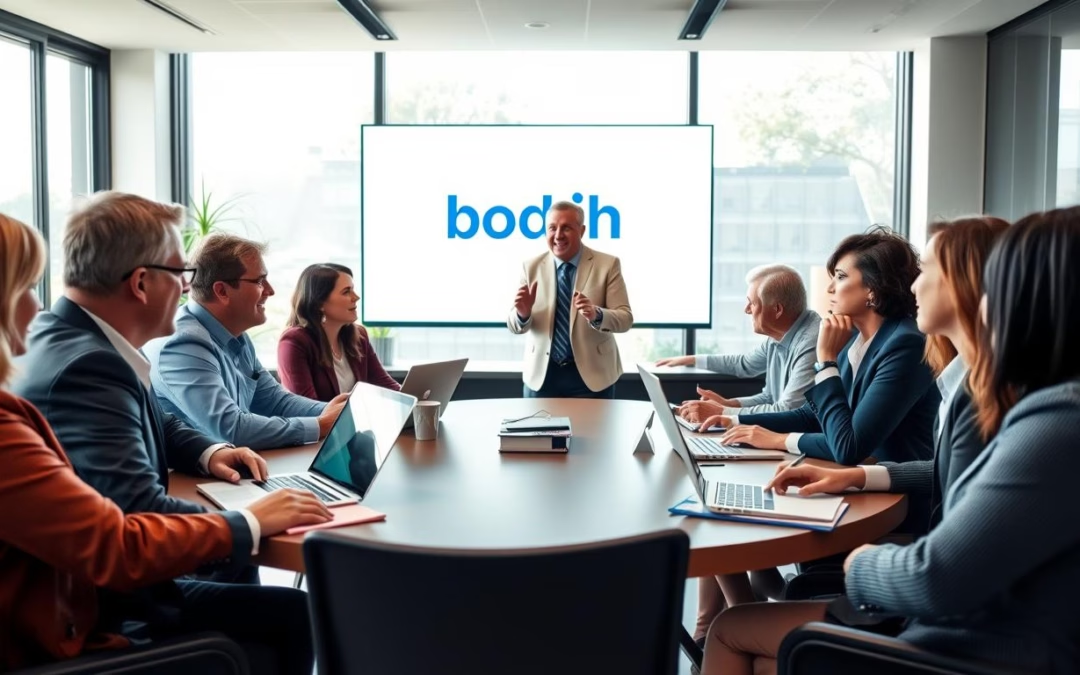
Research suggests that 70% of high-level executives fail to meet long-term organisational goals due to a lack of adaptive skill sets. Are your top-tier executives truly prepared to navigate the complexities of today’s volatile business landscape?
Professional development is no longer optional; it is the bedrock of sustained success. Bodhih provides targeted interventions that transform individual potential into collective excellence. By engaging in these leadership workshops for senior leaders, management teams gain the clarity needed to drive meaningful change.
These programmes ensure that your organisation remains agile and competitive. Through strategic capability enhancement, your firm can effectively bridge the gap between current performance and future objectives.
Key Takeaways
- Prioritising professional development is essential for long-term organisational success.
- Strategic interventions help bridge the gap between current performance and future goals.
- Modern businesses require agile management to maintain a competitive edge.
- Bodhih focuses on transforming individual potential into collective excellence.
- Targeted training programmes provide the clarity needed to navigate complex market landscapes.
The Evolving Landscape of Executive Leadership in India
The Indian corporate landscape is undergoing a profound transformation that demands new leadership paradigms. As organisations expand their global footprint, the expectations placed upon senior executives have shifted significantly. Continuous skill validation is now an essential operational discipline required to prevent capability decline in this fast-paced market.
Navigating Complexity in Modern Corporate Environments
Modern business environments in India are defined by high levels of volatility and interconnected global demands. Leaders can no longer rely on static models to guide their teams through these turbulent times. Instead, they must cultivate agility and foresight to anticipate market shifts before they impact the bottom line.
Success in this complex arena requires a deep understanding of both local nuances and international standards. Executives who embrace proactive learning are better positioned to steer their organisations toward sustainable growth. By fostering a culture of adaptability, leaders ensure their firms remain resilient against unforeseen economic pressures.
The Shift from Operational Management to Strategic Vision
A critical transition is occurring as senior leaders move away from granular operational oversight toward high-level strategic vision. While managing daily processes remains important, the primary value of an executive lies in their ability to define the long-term trajectory of the enterprise. This shift allows for more effective resource allocation and clearer communication of corporate objectives.
The following table illustrates the fundamental differences between traditional management and the modern strategic approach required today:
| Leadership Focus | Traditional Management | Modern Strategic Vision |
|---|---|---|
| Primary Goal | Efficiency and Control | Innovation and Growth |
| Decision Making | Reactive and Hierarchical | Proactive and Collaborative |
| Skill Development | Task-based Training | Continuous Capability Validation |
| Market Outlook | Short-term Quarterly Results | Long-term Sustainable Impact |
By prioritising strategic foresight, leaders empower their teams to achieve greater results. This evolution is not merely a change in title, but a fundamental change in how value is created within the organisation. Embracing this transition is the hallmark of a truly effective executive in the current Indian business climate.
Why Senior Leaders Require Bespoke Development Programmes
Bespoke development programmes serve as a vital catalyst for leaders operating within the demanding Indian corporate landscape. Standardised training often fails to address the nuanced challenges that define the upper echelons of management. Customised interventions ensure that every learning moment aligns perfectly with specific organisational objectives.
Addressing the Isolation of the C-Suite
Professional isolation remains a silent hurdle for many top-tier executives. When leaders reach the pinnacle of their organisations, the opportunity for candid feedback and peer-level support often diminishes. Bespoke programmes create a secure environment where leaders can exchange insights without the pressure of hierarchy.
This collaborative space allows executives to reflect on their decision-making processes. By engaging with peers who face similar high-stakes pressures, leaders gain fresh perspectives that are impossible to find in isolation. Building a community of practice is essential for sustained professional growth at the executive level.
Bridging the Gap Between Strategy and Execution
A common failure in corporate environments is the disconnect between high-level vision and daily operational reality. Bespoke development programmes are designed to translate abstract strategic goals into tangible, actionable results. They ensure that leadership intent permeates every layer of the organisation.
These programmes focus on the practical application of leadership principles within the context of specific business challenges. By aligning individual capabilities with broader corporate goals, leaders can effectively steer their teams through periods of change. Transforming vision into execution is the ultimate hallmark of an effective senior leader.
Core Pillars of Bodhih Corporate Leadership Training
The framework of bodhih corporate leadership training rests upon a foundation of transformative pillars designed for the modern executive. These elements ensure that senior leaders possess the necessary tools to navigate complex organisational challenges with precision and clarity.
By focusing on these fundamental areas, the programme enables professionals to move beyond traditional management styles. It fosters a culture of continuous improvement and strategic foresight.
Cultivating Emotional Intelligence for High-Stakes Decision Making
Emotional intelligence serves as a critical asset for leaders who must make high-stakes decisions under immense pressure. In the fast-paced Indian business environment, the ability to remain composed while processing complex data is vital.
Through bodhih corporate leadership interventions, executives learn to recognise their own emotional triggers. This self-awareness allows for more objective decision-making, ensuring that personal biases do not cloud strategic judgement during moments of crisis.
Developing Resilience and Adaptability in Volatile Markets
Resilience and adaptability are essential traits for navigating volatile market conditions. Leaders who embrace change as a constant are better positioned to steer their organisations toward sustainable growth.
The training emphasises the importance of maintaining a growth mindset even when faced with unforeseen disruptions. By building these capabilities, participants ensure their teams remain agile and responsive to shifting consumer demands.
| Leadership Pillar | Primary Focus | Expected Outcome |
|---|---|---|
| Emotional Intelligence | Self-Regulation | Improved Decision Quality |
| Resilience | Stress Management | Organisational Stability |
| Adaptability | Market Agility | Competitive Advantage |
| Bodhih Corporate Leadership | Strategic Vision | Long-term Success |
Strategic Leadership Sessions: A Methodology for Impact
Transforming management potential into high-impact performance demands a rigorous, evidence-based approach. Strategic leadership sessions serve as the cornerstone for this evolution, moving beyond abstract concepts to deliver tangible results. By focusing on precision and clarity, these interventions ensure that every leader gains the tools necessary to navigate complex corporate environments.
The Science of Experiential Learning for Executives
The methodology behind these sessions is rooted in the science of experiential learning. This approach prioritises active engagement over passive observation, ensuring that knowledge is both measurable and repeatable. When executives participate in structured simulations, they develop the agility required to handle high-stakes decision-making with confidence.
“Leadership is not about being in charge; it is about taking care of those in your charge.”
To ensure sustainable performance, the learning process must remain highly relevant to the specific role of the executive. By grounding development in proven psychological frameworks, the sessions foster a deeper understanding of human behaviour and organisational dynamics. This scientific rigour transforms theoretical insights into actionable management solutions that endure long after the workshop concludes.
Integrating Real-World Business Challenges into Workshops
Integrating actual business hurdles into the training environment bridges the gap between strategy and execution. Participants are encouraged to apply their learning to current organisational problems, turning the workshop into a laboratory for innovation. This practical application ensures that the strategic leadership sessions provide immediate value to the enterprise.
| Learning Feature | Traditional Training | Experiential Methodology |
|---|---|---|
| Primary Focus | Theoretical Knowledge | Practical Application |
| Outcome | Information Retention | Behavioural Change |
| Relevance | Generalised Concepts | Role-Specific Challenges |
| Measurement | Attendance Metrics | Performance Impact |
This immersive approach allows leaders to test new strategies in a safe, controlled setting before implementing them in the field. By aligning these interventions with core business objectives, organisations can drive sustainable growth and maintain a competitive edge. Ultimately, this methodology empowers senior professionals to lead with vision, resilience, and clarity.
Empowering Organisational Success Through Targeted Interventions
Organisations thrive when leadership behaviours are synchronised with their strategic vision. Targeted interventions act as a powerful catalyst for this transformation, ensuring that senior leaders do not merely manage tasks but actively shape the future of the enterprise. By refining individual approaches, companies can foster a culture that is both resilient and highly adaptable to market shifts.
Aligning Leadership Behaviours with Corporate Culture
A disconnect between executive conduct and organisational values often leads to fragmented teams and stagnant performance. When leaders embody the core principles of their firm, they create a cohesive environment where employees feel inspired to contribute their best work. This alignment ensures that every decision made at the top resonates throughout the entire hierarchy.
Effective leadership development focuses on bridging this gap by embedding cultural intelligence into daily operations. Leaders learn to communicate the company mission with clarity, ensuring that their personal influence reinforces the shared identity of the organisation. This consistency is essential for maintaining morale and driving collective progress.
Driving Sustainable Growth Through Visionary Management
Sustainable growth requires more than just short-term gains; it demands a forward-thinking mindset that anticipates future challenges. Visionary management empowers leaders to look beyond immediate obstacles and focus on long-term value creation. By adopting this perspective, executives can steer their organisations through volatile markets with confidence and precision.
These targeted interventions provide the tools necessary to cultivate a culture of innovation and continuous improvement. When leaders prioritise long-term objectives, they ensure the organisation remains competitive and relevant in an ever-changing global landscape. Ultimately, this approach creates a lasting impact that transcends individual training sessions, securing the future success of the entire business.
Executive Leadership Training: Customisation and Personalisation
True transformation in the corporate world begins when training programmes are uniquely crafted for the individual. Standardised approaches often overlook the distinct strengths and weaknesses that define a leader’s professional journey. By prioritising executive leadership training that is bespoke, organisations can unlock the true potential of their senior management teams.
Assessing Individual Leadership Styles and Gaps
Effective development starts with a deep understanding of the current leadership landscape. Facilitators utilise advanced diagnostic tools to map out individual styles and identify specific capability gaps. This analytical process ensures that every intervention is grounded in data rather than assumptions.
By pinpointing exactly where a leader needs support, the training becomes highly focused. This precision allows for the rapid acceleration of professional growth. It transforms the executive leadership training experience from a general exercise into a targeted strategic initiative.
Tailoring Content to Industry-Specific Requirements
Every sector in India faces unique market pressures and regulatory environments. A one-size-fits-all model rarely addresses the complexities of industries like finance, technology, or manufacturing. Customisation ensures that the content remains highly relevant to the daily challenges faced by participants.
When training is aligned with industry-specific goals, leaders can apply new skills immediately. This practical application is essential for driving sustainable results. The following table highlights the core differences between generic and bespoke development approaches.
| Feature | Standardised Training | Customised Training |
|---|---|---|
| Content Focus | General Management Theory | Industry-Specific Challenges |
| Assessment | Broad Competency Mapping | Individual Gap Analysis |
| Outcome | Basic Skill Acquisition | Strategic executive leadership training impact |
| Relevance | Low to Moderate | High and Immediate |
Measuring the Return on Investment for Leadership Workshops for Senior Leaders
Quantifying the success of leadership development is essential for modern organisations operating in competitive markets. When businesses invest in leadership workshops for senior leaders, they must ensure that these programmes translate into measurable improvements. A data-driven approach allows stakeholders to verify that their capital allocation supports genuine professional growth.
Defining Key Performance Indicators for Leadership Growth
To evaluate the effectiveness of any training initiative, organisations should establish clear Key Performance Indicators (KPIs) before the programme begins. These metrics provide a baseline for comparing performance levels before and after the intervention. By tracking specific outcomes, companies can determine if their leadership workshops for senior leaders are meeting strategic objectives.
Effective KPIs often include improvements in team retention rates, the speed of decision-making, and the successful implementation of new corporate strategies. These quantitative measures offer a transparent view of how leadership capabilities influence the bottom line. Consistent monitoring ensures that the development process remains accountable to the broader business vision.
Long-Term Impact Assessment and Behavioural Change
True leadership transformation is rarely an overnight occurrence; it requires sustained effort and continuous reinforcement. Regular assessments and microlearning refreshers help teams stay aligned with SOPs and compliance standards long after the initial training concludes. This ongoing engagement fosters a culture of continuous improvement and ensures that new behaviours become deeply embedded in daily operations.
Organisations that prioritise long-term impact assessment often see a significant shift in internal communication and conflict resolution. By observing changes in leadership style over several months, businesses can validate the lasting value of their investment. The following table outlines the core metrics used to track this evolution.
| Metric Category | Short-Term Indicator | Long-Term Outcome |
|---|---|---|
| Operational Efficiency | Adherence to new SOPs | Reduced process bottlenecks |
| Team Engagement | Feedback survey scores | Higher employee retention |
| Strategic Alignment | Goal setting clarity | Achievement of annual targets |
| Decision Quality | Speed of resolution | Improved market adaptability |
The Bodhih Advantage in Executive Development
Organisations navigating the complexities of the Indian market require more than standard training solutions. Bodhih corporate leadership programmes provide a distinct competitive edge by blending global best practices with local market insights. This approach ensures that senior leaders are equipped to handle both immediate operational hurdles and long-term strategic goals.
Expert Facilitators with Global Industry Experience
The strength of any development programme lies in the quality of its delivery. Bodhih employs facilitators who possess extensive international experience across diverse sectors. These experts bring a wealth of knowledge that transcends theoretical concepts, offering practical wisdom gained from real-world business environments.
By engaging with mentors who have navigated global markets, leaders gain a broader perspective on decision-making. This exposure is vital for those aiming to scale their operations or manage cross-cultural teams effectively. The following table illustrates why professional facilitation outperforms generic internal training models.
| Feature | Internal Training | Bodhih Approach |
|---|---|---|
| Industry Insight | Limited to internal scope | Broad global perspective |
| Methodology | Standardised modules | Customised interventions |
| Facilitator Calibre | Peer-led or HR-led | Expert industry veterans |
Commitment to Excellence in Professional Development
A steadfast dedication to quality defines the core of bodhih corporate leadership. Every intervention is designed to meet rigorous standards of efficacy, ensuring that participants experience measurable growth in their professional capabilities. This commitment transforms standard workshops into catalysts for organisational change.
“True leadership is not about maintaining the status quo, but about creating an environment where excellence becomes the standard for every individual.”
The focus remains on delivering high-impact results that align with the specific objectives of the client. By choosing bodhih corporate leadership, organisations invest in a partnership that prioritises sustainable development and long-term success. This rigorous approach ensures that every leader is prepared to steer their organisation through the challenges of a volatile economic landscape.
Engaging with Bodhih for Your Leadership Transformation
Organisations seeking to elevate their management standards can initiate a transformative journey through our proven engagement model. We believe that executive leadership training must be deeply rooted in the specific cultural and operational realities of your business. Our approach ensures that every intervention serves as a catalyst for sustainable growth and professional excellence.
Consultation Process and Programme Design
The journey begins with a comprehensive discovery phase where our experts analyse your current leadership landscape. We engage with key stakeholders to identify critical gaps and align our objectives with your long-term corporate vision. This collaborative partnership allows us to craft bespoke modules that address your unique challenges.
Our programme design process is iterative and highly focused on measurable outcomes. We integrate real-world business scenarios to ensure that the learning experience remains relevant and impactful for your senior team. By prioritising strategic alignment, we guarantee that the final curriculum supports your broader organisational goals.
| Engagement Stage | Primary Focus | Expected Outcome |
|---|---|---|
| Discovery | Needs Assessment | Gap Identification |
| Design | Curriculum Tailoring | Strategic Alignment |
| Delivery | Experiential Learning | Behavioural Change |
| Review | Impact Analysis | Sustainable Growth |
Contacting the Team for Strategic Planning at +91 99000 11601/602/603
Taking the first step towards organisational transformation is a vital decision for any forward-thinking enterprise. We invite you to discuss your requirements with our dedicated consultants to explore how our executive leadership training can empower your future success.
To begin your journey, please call +91 99000 11601/602/603 to speak with our strategic planning team. We are ready to assist you in designing a roadmap that elevates your leadership capabilities and drives lasting value across your organisation.
Conclusion
Investing in high-level leadership development creates a lasting foundation for organisational growth. Leaders who prioritise continuous capability enhancement remain prepared for the shifting demands of the global market.
Bodhih provides the tools necessary to turn complex business challenges into opportunities for innovation. Strategic interventions allow executives to refine their vision while maintaining focus on core corporate objectives.
Organisations thrive when their senior teams possess the agility to adapt to new environments. A commitment to professional excellence ensures that management remains effective during periods of rapid change.
The path to sustainable success requires a proactive approach to skill development. By choosing targeted training, businesses empower their leaders to drive meaningful impact across every department.
Begin the journey toward enhanced leadership performance today. Reach out to the experts at Bodhih to design a programme that aligns with your unique vision for the future.
FAQ
Why is the transition from operational oversight to visionary leadership essential for executives in India?
Within the dynamic Indian corporate environment, executive leadership training facilitates the critical shift from day-to-day operational management to visionary leadership. This transition is vital for ensuring long-term organisational stability and navigating the increasing complexity of global market demands. Through bodhih corporate leadership interventions, senior professionals undergo continuous skill validation, which serves as a necessary discipline to prevent capability decline and elevate professional perspectives.
What methodology does Bodhih employ during strategic leadership sessions to ensure actionable results?
Bodhih utilises a methodology rooted in the science of experiential learning. By integrating real-world business challenges into strategic leadership sessions, the training ensures that the knowledge acquired is measurable, repeatable, and directly relevant to the executive’s role. This approach effectively transforms theoretical management concepts into practical management solutions, allowing senior leaders to bridge the gap between high-level strategy and daily execution.
How can organisations measure the return on investment for leadership workshops for senior leaders?
Measuring the impact of leadership workshops for senior leaders involves defining clear key performance indicators (KPIs) that track growth and behavioural change over time. Bodhih employs a data-driven approach, utilising regular assessments and microlearning refreshers to ensure leadership teams stay aligned with SOPs and corporate compliance. This ensures that the development programme remains a transparent, measurable, and accountable investment for the business.
Are the executive leadership training programmes tailored to specific industry requirements?
Yes, Bodhih specialises in bespoke development that addresses the unique isolation of the C-suite and the specific demands of various sectors. By assessing individual leadership styles and identifying specific capability gaps, the content is customised to foster emotional intelligence, resilience, and adaptability. This personalisation ensures that the training is directly aligned with the organisation’s unique culture and strategic objectives.
How can a business initiate the consultation process for Bodhih corporate leadership development?
Organisations seeking to enhance their organisational capabilities and drive sustainable growth can engage with the Bodhih team for a comprehensive consultation. The process involves strategic planning and bespoke programme design to meet specific business objectives. To begin this transformation, decision-makers are encouraged to call +91 99000 11601/602/603 to speak with a consultant regarding their executive leadership training requirements.
Table of Contents
Recent Comments