
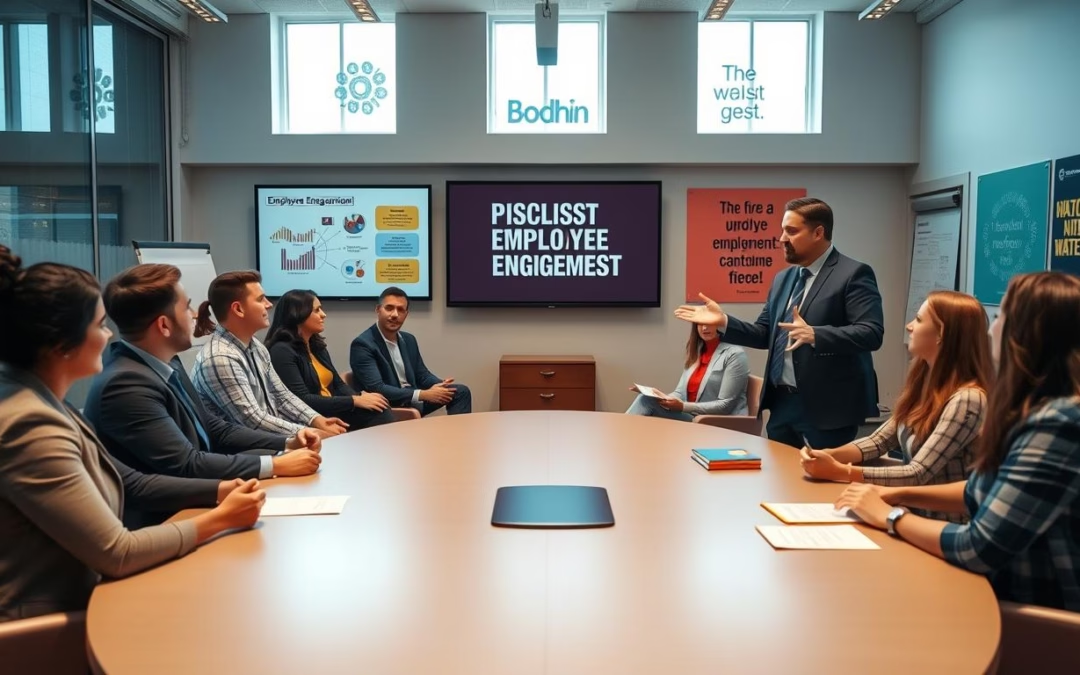
Did you know that nearly 70% of corporate development initiatives fail to deliver lasting results? This staggering statistic often stems from a fundamental oversight: organisations frequently launch development efforts before cultivating the necessary awareness or desire for change among their staff.
Without this vital mental preparation, even the most sophisticated employee engagement training programs struggle to gain traction. True transformation requires a shift in mindset, not just a change in policy.
Bodhih serves as a catalyst in this complex landscape, guiding firms to align their internal culture with long-term objectives. By prioritising readiness, they ensure that every initiative fosters genuine commitment rather than mere compliance. This strategic approach elevates individual capabilities and secures sustainable growth for the entire enterprise.
Key Takeaways
- Development initiatives often falter when launched without prior staff preparation.
- Building awareness is the essential first step for any successful organisational shift.
- Bodhih focuses on mental readiness to ensure that new skills are effectively utilised.
- Strategic alignment between culture and objectives drives long-term business success.
- Professional guidance helps firms move beyond simple compliance towards active participation.
The Critical Importance of Employee Engagement in the Modern Indian Workplace
Organisations across India are discovering that true competitive advantage lies in the depth of their employee commitment. The modern professional landscape is shifting rapidly, moving away from rigid hierarchies toward more agile and collaborative structures. In this environment, employee engagement training serves as a vital catalyst for long-term growth.
Many enterprises are now realising that compliance is no longer sufficient to drive performance. While meeting basic regulatory standards is necessary, it does not inspire the discretionary effort required for innovation. Leaders must foster a culture where individuals feel a genuine connection to the organisational vision.
This transition requires a strategic focus on human capital as a primary driver of business objectives. When staff members are truly invested in their roles, productivity levels rise and sustainable success becomes attainable. Implementing robust employee engagement training ensures that managers possess the tools to nurture this commitment effectively.
Ultimately, the ability to maintain a high level of engagement defines the most successful Indian firms. By prioritising the psychological and professional needs of the workforce, companies can navigate market volatility with greater resilience. Transformation begins when an organisation chooses to value its people as its most significant asset.
Understanding the Core Components of Effective Employee Engagement Training Programs
Building a culture of commitment starts with identifying the core components that transform passive employees into active contributors. Organisations that prioritise employee engagement training create a foundation where talent flourishes and productivity reaches new heights. By focusing on these essential elements, leaders can foster an environment that encourages long-term dedication and professional excellence.
Psychological Safety and Its Impact on Performance
At the heart of any high-performing team lies the concept of psychological safety. This state allows individuals to express ideas, take calculated risks, and admit mistakes without the fear of negative consequences. When employees feel secure, their cognitive resources shift from self-protection to creative problem-solving and collaboration.
A robust employee engagement training framework prioritises the development of trust-based relationships. Managers who cultivate this safety net see a direct improvement in team agility and innovation. It is the bedrock upon which all other engagement initiatives are built, ensuring that every voice contributes to the collective success of the enterprise.
Aligning Individual Purpose with Organisational Vision
Meaningful work occurs when personal aspirations intersect with the broader goals of the organisation. The ADKAR model provides a vital roadmap for this alignment, teaching us that knowledge cannot be effectively built without first establishing awareness and desire. Employees must understand the ‘why’ behind their tasks to feel truly invested in the outcome.
Effective employee engagement training bridges the gap between individual ambition and corporate strategy. By clarifying how personal contributions drive the company forward, organisations inspire a deeper sense of ownership. This alignment transforms routine duties into a shared mission, ultimately elevating the capabilities of the entire workforce.
How Bodhih Transforms Organisational Culture Through Targeted Interventions
Organisational success relies on the deliberate culture building that aligns individual actions with broader business goals. Through specialised bodhih programs, companies can shift from passive environments to high-performance ecosystems. This transformation requires a clear vision and the right tools to empower every team member.
The Bodhih Methodology for Cultural Transformation
The methodology employed by Bodhih focuses on the Creator archetype, which prioritises the development of internal capabilities. By fostering a mindset of ownership, these interventions ensure that employees feel responsible for the collective success of the organisation. This approach moves beyond surface-level changes to create deep-rooted shifts in professional behaviour.
Effective culture building is not a one-time event but a continuous process of refinement. Bodhih programs provide the framework necessary to sustain this evolution over time. By equipping leaders with the right skills, the organisation ensures that the new culture remains resilient against market fluctuations.
Assessing Current Engagement Levels within Indian Enterprises
Before implementing change, it is vital to understand the existing landscape of employee sentiment. Bodhih utilises rigorous assessment tools to identify specific gaps in engagement that hinder productivity. These data-driven insights allow for the creation of highly targeted interventions that address the unique needs of the Indian workforce.
The following table illustrates the shift from traditional management styles to the transformative approach offered by Bodhih.
| Focus Area | Traditional Approach | Bodhih-Led Transformation |
|---|---|---|
| Employee Role | Task Execution | Value Creation |
| Cultural Driver | Top-down Mandates | Shared Purpose |
| Engagement Metric | Attendance Rates | Active Participation |
| Outcome | Compliance | Innovation |
Key Pillars of People Engagement Strategies for High-Performing Teams
Building a high-performing team requires more than just talent; it demands a deliberate approach to culture building. In the modern Indian business landscape, organisations must adopt robust people engagement strategies to maintain a competitive edge. These pillars provide the necessary structure for teams to thrive under pressure while maintaining high levels of morale.
Fostering Open Communication Channels
Transparency acts as the lifeblood of any successful team. When leaders encourage open dialogue, they create an environment where employees feel safe to share ideas and concerns without fear of judgement. This psychological safety is essential for innovation and rapid problem-solving.
Effective communication goes beyond simple information sharing. It involves active listening and the creation of structured feedback loops that allow for continuous improvement. By ensuring that every team member understands the broader organisational objectives, leaders can align individual efforts with the company’s vision.
Recognising and Rewarding Employee Contributions
Strategic recognition is a powerful tool for reinforcing positive behaviours and boosting motivation. When an organisation acknowledges the hard work of its staff, it validates their commitment and encourages sustained excellence. This practice is a cornerstone of effective culture building.
“Recognition is the greatest motivator for employees who want to feel that their contributions truly matter to the success of the organisation.”
To be truly impactful, recognition must be timely, specific, and meaningful. Whether through formal awards or simple verbal appreciation, these gestures strengthen the bond between the individual and the firm. Implementing consistent people engagement strategies ensures that high performance is not just expected, but celebrated as a core value of the workplace.
The Role of Leadership in Driving Sustainable Engagement
The foundation of a thriving workplace rests squarely on the shoulders of those in leadership positions. When managers prioritise people engagement strategies, they create an environment where employees feel valued and motivated to contribute their best work. Effective leadership acts as the primary catalyst for sustained professional growth and organisational capability enhancement.
Equipping Managers with Coaching Skills
Modern organisations must transition from traditional command-and-control structures to a coaching-led culture. By training managers to adopt coaching techniques, companies empower their teams to solve problems independently and take ownership of their professional development. This shift is essential for implementing robust people engagement strategies that stand the test of time.
Coaching involves active listening, asking powerful questions, and providing constructive feedback. When managers master these skills, they foster a culture of continuous learning. This approach ensures that every team member feels supported in their journey toward achieving shared business objectives.
Leading with Empathy and Emotional Intelligence
Navigating complex team dynamics requires a high degree of emotional intelligence. Leaders who demonstrate empathy can better understand the unique challenges faced by their staff, leading to higher levels of trust and commitment. Integrating emotional intelligence into people engagement strategies allows leaders to build resilient teams capable of adapting to the fast-paced Indian corporate landscape.
Empathy is not merely a soft skill; it is a strategic tool for driving performance. By acknowledging the human element of work, leaders create a safe space for innovation and open dialogue. The following table highlights the shift from traditional management to a more modern, engagement-focused approach.
| Management Attribute | Traditional Approach | Coaching-Led Approach |
|---|---|---|
| Primary Focus | Task Completion | Capability Development |
| Communication Style | Directive/Instructional | Inquisitive/Collaborative |
| Conflict Resolution | Authoritative Decision | Empathetic Mediation |
| Feedback Loop | Annual Reviews | Continuous Dialogue |
Ultimately, the commitment to developing leadership capabilities ensures that people engagement strategies remain effective. When leaders lead with both head and heart, they secure the long-term success of the entire organisation.
Designing Customised Engagement Workshops for Diverse Workforces
Successful companies recognise that a one-size-fits-all approach to training no longer suffices in the current Indian business environment. To foster true commitment, organisations must invest in engagement workshops that reflect the reality of their specific workforce structure. By prioritising inclusivity, businesses can ensure that every team member feels valued and heard.
“The strength of an organisation lies in its ability to adapt its culture to the unique needs of its people, ensuring that every voice contributes to the collective vision.”
Tailoring Content for Remote and Hybrid Teams
The shift towards distributed work models requires a fundamental change in how learning is delivered. Engagement workshops must be redesigned to function effectively across digital platforms without losing the human touch. Facilitators should utilise interactive breakout sessions and collaborative digital whiteboards to maintain high levels of participation.
Accessibility and flexibility are the cornerstones of successful remote training. By providing asynchronous resources alongside live sessions, organisations ensure that team members in different time zones remain aligned. This approach prevents the isolation often felt by remote staff and keeps them connected to the core organisational mission.
Addressing Generational Differences in the Workplace
Modern Indian offices are often home to a multi-generational workforce, ranging from seasoned veterans to digital-native Gen Z professionals. Effective engagement workshops must bridge these gaps by incorporating diverse learning styles and communication preferences. Trainers should balance traditional mentorship models with modern, tech-driven collaborative exercises.
Understanding the distinct motivations of each generation allows for more targeted interventions. While some employees may value structured career progression, others might prioritise purpose-driven work and immediate feedback loops. By creating a curriculum that respects these varied perspectives, companies can build a more cohesive and high-performing culture.
Measuring the Return on Investment of Employee Engagement Training
Quantifying the impact of human capital investments remains a top priority for modern Indian enterprises. Organisations that implement structured engagement workshops often seek to understand how these efforts translate into tangible business outcomes. By applying rigorous analytical frameworks, leadership teams can validate the financial benefits of their development programmes.
Key Performance Indicators for Engagement Initiatives
To effectively measure success, companies must track specific metrics that reflect the health of their workforce. These indicators serve as a compass for evaluating the efficacy of various engagement workshops conducted across departments. Common metrics include employee net promoter scores, participation rates in internal surveys, and the frequency of peer-to-peer recognition.
Establishing a baseline before and after training is essential for accurate comparison. When organisations monitor these data points, they gain a clearer picture of how cultural interventions influence daily operations. The following table outlines critical metrics used to assess the success of these initiatives.
| Metric Category | Primary Indicator | Business Impact |
|---|---|---|
| Participation | Workshop Attendance | Cultural Alignment |
| Sentiment | Employee Net Promoter Score | Workplace Satisfaction |
| Efficiency | Task Completion Rate | Operational Productivity |
Analysing Long-term Retention and Productivity Gains
The true value of investing in engagement workshops emerges over time through improved retention and sustained output. High engagement levels correlate strongly with lower turnover rates, which significantly reduces the costs associated with recruitment and onboarding. Furthermore, employees who feel valued are more likely to contribute to long-term organisational goals.
“What gets measured gets managed, and what gets managed gets improved. The ROI of engagement is found in the sustained growth of human potential.”
Productivity gains are often observed in the form of higher quality output and faster project turnaround times. By fostering a culture of continuous development, firms ensure that their workforce remains agile and committed. Ultimately, the strategic measurement of these outcomes proves that engagement is not merely a soft benefit but a core driver of commercial success.
Overcoming Common Barriers to Employee Engagement in India
Achieving high levels of employee engagement necessitates a clear understanding of the specific challenges prevalent in the Indian corporate landscape. Organisations often find that legacy systems and cultural norms create friction when implementing modern, inclusive strategies. Successfully navigating these obstacles requires a deliberate shift in perspective and a commitment to structural evolution.
Navigating Hierarchical Challenges
Many Indian enterprises are rooted in traditional, top-down management styles that can stifle open dialogue. This rigid hierarchy often prevents junior staff from sharing innovative ideas or voicing concerns, which directly impacts overall engagement levels. Breaking down these silos is essential for fostering a culture where every voice feels valued and heard.
Leaders must actively encourage a transition toward more collaborative and transparent communication models. By empowering middle management to act as facilitators rather than mere taskmasters, organisations can bridge the gap between leadership and the workforce. This shift promotes a sense of ownership among employees, which is a critical driver of long-term commitment.
Managing Burnout and Promoting Well-being
The fast-paced nature of the Indian market frequently leads to high levels of stress and professional burnout. When employees feel that their well-being is secondary to productivity, engagement inevitably declines. Prioritising mental and physical health is no longer an optional perk but a fundamental requirement for a sustainable, high-performing organisation.
“True engagement flourishes only when an organisation treats its people as its most valuable asset, ensuring that their personal well-being is as prioritised as their professional output.”
To combat these risks, companies should implement structured wellness programmes that go beyond basic health insurance. Providing access to counselling, flexible working arrangements, and mindfulness training can significantly reduce burnout rates. The following table highlights the shift from traditional to modern engagement strategies within the Indian context.
| Focus Area | Traditional Approach | Modern Strategy |
|---|---|---|
| Communication | Top-down directives | Two-way dialogue |
| Decision Making | Centralised authority | Empowered teams |
| Well-being | Reactive support | Proactive wellness |
| Feedback | Annual appraisals | Continuous coaching |
The Synergy Between Employee Development and Engagement
The bridge between individual ambition and organisational success is built through structured development initiatives. When employees perceive a direct link between their daily efforts and their long-term professional growth, their commitment to the organisation deepens significantly. This symbiotic relationship transforms the workplace from a mere site of production into a dynamic environment for personal and collective evolution.
Creating Clear Career Progression Pathways
Transparency regarding future opportunities is a cornerstone of a modern, engaged workforce. Employees are far more likely to remain invested in their roles when they understand the specific milestones required to advance within the company. Clear career progression pathways remove ambiguity and provide a roadmap for success that aligns individual aspirations with business objectives.
Organisations that map out these journeys demonstrate a genuine commitment to their talent. By providing visibility into potential roles and the necessary competencies for each, companies empower their staff to take ownership of their professional trajectory. This clarity fosters a sense of security and purpose, which are essential drivers of sustained engagement.
Upskilling as a Tool for Retention
In an era of rapid technological and market shifts, upskilling has emerged as a vital strategy for maintaining a competitive edge. Providing access to continuous learning opportunities signals that the organisation values the long-term potential of its people. This investment serves as a powerful retention tool, as employees feel supported in their quest to remain relevant and skilled.
When staff members acquire new capabilities, they often experience a renewed sense of enthusiasm for their work. This intellectual stimulation prevents stagnation and encourages a culture of innovation. Ultimately, by prioritising the development of human capital, organisations cultivate a loyal workforce that is equipped to meet the challenges of an evolving global market.
Leveraging Technology to Enhance Engagement Initiatives
The integration of advanced technology is fundamentally reshaping how Indian enterprises approach employee engagement. By moving away from static, annual reviews, organisations can now foster a culture of continuous improvement and transparent communication. This digital shift allows leaders to capture the pulse of their workforce with unprecedented precision.
Digital Platforms for Continuous Feedback
Modern digital platforms provide the infrastructure necessary for real-time dialogue between management and staff. These tools enable organisations to deploy pulse surveys and sentiment analysis, ensuring that leadership remains attuned to the needs of their teams. By gathering data frequently, companies can address concerns before they escalate into significant cultural barriers.
“Technology is not just a tool for efficiency; it is the bridge that connects the human experience to organisational purpose in the digital age.”
The transition to digital feedback loops empowers employees by giving them a consistent voice. When staff members see that their input leads to tangible organisational changes, their sense of ownership and commitment naturally deepens. This cycle of feedback is essential for maintaining high morale in a fast-paced business environment.
Gamification in Training and Development
Gamification introduces elements of play and competition into the learning landscape, making professional development more engaging and memorable. By incorporating leaderboards, digital badges, and progress tracking, organisations can significantly boost participation rates in training programmes. This approach transforms mandatory learning into an exciting journey of skill acquisition.
The following table illustrates the shift from traditional engagement methods to modern, technology-driven solutions:
| Feature | Traditional Approach | Digital/Gamified Approach |
|---|---|---|
| Feedback Frequency | Annual or Bi-annual | Real-time and Continuous |
| Learning Style | Passive Classroom | Interactive and Gamified |
| Data Insights | Manual and Delayed | Automated and Predictive |
| Employee Motivation | Extrinsic Rewards | Intrinsic and Achievement-based |
Ultimately, the strategic use of these digital tools ensures that development initiatives remain relevant and impactful. By embracing innovative technology, Indian businesses can create a more dynamic environment where employees feel valued, challenged, and motivated to excel.
Partnering with Bodhih for Long-term Organisational Success
Achieving long-term organisational success requires a strategic commitment to professional development. Businesses that invest in their people create a culture of excellence that drives sustainable growth. By aligning internal goals with expert-led training, companies can navigate the complexities of the modern Indian market with confidence.
Why Indian Organisations Choose Bodhih
Organisations across India select Bodhih because of a relentless focus on quality and measurable outcomes. The training methodology integrates global standards, such as the DIHK-AHK certification, to ensure that every intervention meets rigorous pedagogical benchmarks. This commitment to excellence provides a globally recognised standard that elevates the professional capabilities of the entire workforce.
Contacting Bodhih for Bespoke Training Solutions
Every enterprise faces unique challenges that require tailored interventions rather than generic solutions. Our team works closely with leadership to design bespoke bodhih programs that address specific cultural and operational needs. These initiatives are crafted to foster deep engagement and long-term skill retention across all levels of the organisation.
Reaching Out for Consultations at +91 99000 11601/602/603
Decision-makers ready to transform their workplace culture are invited to initiate a conversation with our expert consultants. You can call +91 99000 11601/602/603 to discuss your specific requirements and explore how our solutions can support your business objectives. Taking the first step towards a more engaged and productive workforce begins with a simple consultation.
Conclusion
Modern business success relies on the strength of the human capital within an enterprise. Investing in robust employee engagement training programs transforms the way teams interact and perform. These initiatives serve as the foundation for a resilient and motivated workforce.
Organisations that prioritise these developmental efforts see a clear shift in their internal culture. Strategic interventions foster an environment where talent thrives and innovation becomes a standard practice. Bodhih provides the expertise required to navigate these complex shifts in workplace dynamics.
Leaders must view engagement as a core business objective rather than a peripheral task. Integrating comprehensive employee engagement training programs ensures that every team member aligns with the broader vision of the company. This commitment drives long-term growth and secures a competitive advantage in the Indian market.
Begin the journey toward a more connected and productive organisation today. Reach out to the team at Bodhih to explore how tailored solutions can elevate your current capabilities. Your path to sustainable success starts with a dedication to your people.
FAQ
Why is employee engagement training essential in the modern corporate landscape?
In the contemporary professional environment, employee engagement training serves as the foundational element for long-term organisational growth. By ensuring that team members are mentally prepared for development, Bodhih facilitates a profound transformation that aligns individual mindsets with corporate objectives, ultimately enhancing the overall capabilities of the workforce.
How do Bodhih programs address the psychological foundations of performance?
Bodhih programs are designed to foster psychological safety, which is a critical driver of performance. By creating structured learning environments, these interventions allow individuals to align their personal purpose with the broader organisational vision, thereby elevating their professional contributions and ensuring they feel valued within the enterprise.
What is the role of culture building in transforming an organisation?
Effective culture building involves targeted interventions that assess and refine the existing values within an enterprise. Bodhih employs a rigorous methodology to evaluate current engagement levels, implementing strategies that bridge the gap between the current state and a high-performing, engaged workforce.
Which people engagement strategies are most effective for high-performing teams?
Successful people engagement strategies prioritise open communication channels and the consistent recognition of employee contributions. By establishing clear frameworks for feedback and rewarding excellence, organisations can sustain high levels of motivation and ensure that talent remains committed to the business objectives.
How does leadership influence sustainable engagement within a team?
Leadership is the primary catalyst for sustainability. By equipping managers with advanced coaching skills and the ability to lead with emotional intelligence, organisations can create a supportive atmosphere. This empathetic approach ensures that engagement is not merely a transient initiative but a permanent feature of the management landscape.
Can engagement workshops be customised for remote and hybrid workforces?
Yes, bespoke engagement workshops are specifically tailored to meet the unique demands of diverse workforces, including remote and hybrid teams. These sessions address generational differences and geographical dispersion, ensuring that the training remains relevant and impactful regardless of the physical work environment.
How is the return on investment for engagement initiatives measured?
The return on investment is quantified through specific Key Performance Indicators (KPIs), such as long-term retention rates and measurable productivity gains. By analysing these metrics, organisations can see the tangible impact of capability enhancement on their bottom line.
What are the common barriers to engagement in the Indian workplace?
Common challenges include navigating rigid hierarchical structures and managing burnout. Bodhih addresses these barriers by promoting well-being and introducing more fluid communication models that empower employees at all levels of the organisation.
How do employee development and upskilling contribute to retention?
There is a powerful synergy between employee development and engagement. Creating clear career progression pathways and providing continuous upskilling opportunities serve as vital tools for retention, as employees are more likely to remain with an organisation that invests in their professional future.
What role does technology play in modern engagement initiatives?
Technology enhances engagement through digital platforms that facilitate continuous feedback and gamification in training. These tools make the learning process more interactive and provide real-time data to help leaders refine their engagement strategies.
Why should organisations partner with Bodhih for their training needs?
Partnering with Bodhih ensures access to training quality that adheres to global standards, such as the German AEVO pedagogical framework. Decision-makers seeking to elevate their organisational capabilities can initiate a consultation for bespoke solutions by contacting the team at +91 99000 11601/602/603.
Table of Contents
Recent Comments