
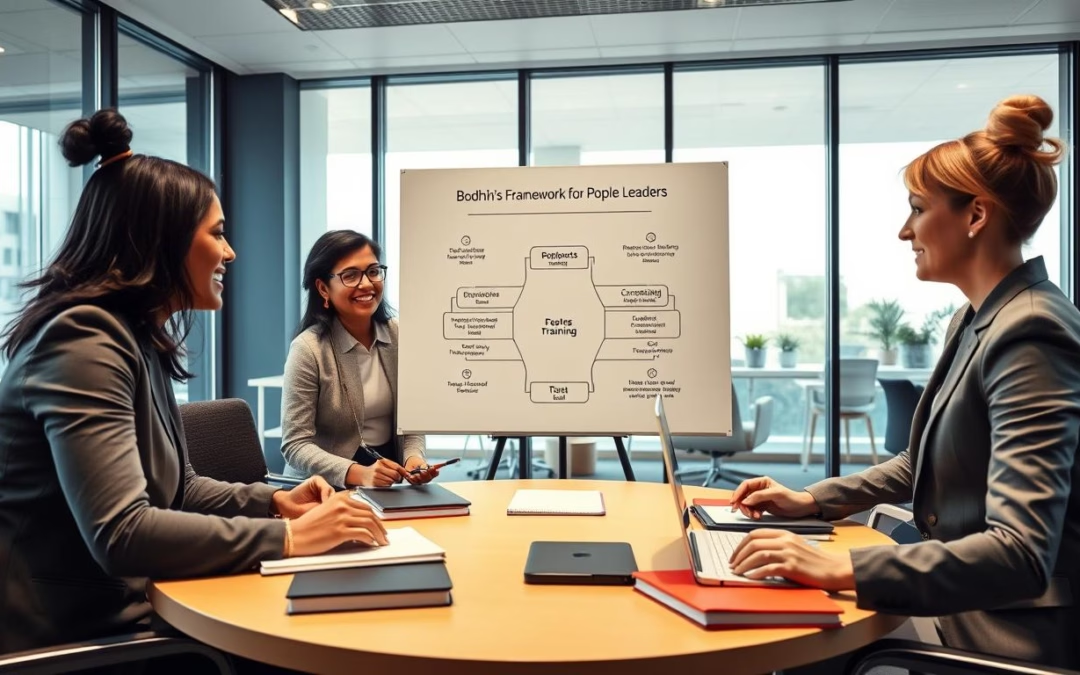
Research indicates that nearly 70% of employee engagement is directly influenced by the quality of direct supervision. If technical expertise alone cannot guarantee team success, why do so many organisations continue to overlook the human element of leadership?
In the modern corporate landscape, the ability to inspire and guide teams is the ultimate competitive advantage. Bodhih provides a sophisticated approach to leadership development, ensuring that leaders possess the emotional intelligence required to navigate complex business objectives.
Our bespoke behavioural skills training for managers serves as a catalyst for professional transformation. By refining interpersonal capabilities, we help leaders foster environments where innovation and accountability thrive. This framework is not merely a programme; it is a strategic investment in long-term organisational health. Embracing this behavioural skills training for managers allows your leadership team to master the art of influence and drive sustainable growth across the enterprise.
Key Takeaways
- Leadership quality remains the primary driver of employee engagement and retention.
- Technical proficiency must be balanced with emotional intelligence to achieve business objectives.
- Bodhih offers a structured framework to elevate core leadership capabilities.
- Effective communication and empathy are essential for navigating modern workplace challenges.
- Strategic development programmes foster a culture of accountability and high performance.
The Evolving Landscape of People Management in India
A significant shift is currently reshaping the landscape of people management within the Indian business sector. Organisations are moving away from rigid, task-oriented supervision toward more human-centric leadership models. This transition is essential for driving engagement and fostering long-term loyalty in a highly competitive market.
Shifting Expectations for Modern Managers
Today, the role of a manager extends far beyond assigning tasks and monitoring output. Leaders are now expected to act as mentors who cultivate talent and support the holistic well-being of their team members. This evolution requires a deep understanding of emotional intelligence and the ability to inspire diverse groups toward a shared vision.
Effective people management now demands that leaders remain adaptable and empathetic. By prioritising the human element, managers can unlock higher levels of productivity and innovation. This approach ensures that employees feel valued, which is a critical factor in maintaining a stable and motivated workforce.
The Critical Gap Between Technical Proficiency and Soft Skills
Many professionals in India rise to leadership positions based primarily on their technical expertise. However, a noticeable gap often exists between their functional knowledge and the interpersonal skills required to lead effectively. While technical proficiency is vital for operational success, it is rarely sufficient for managing complex team dynamics.
Bridging this divide is the primary challenge for contemporary organisations. Without the necessary behavioural competencies, even the most skilled technical experts may struggle to resolve conflicts or communicate strategic objectives clearly. The following table highlights the core differences between traditional and modern management approaches.
| Feature | Traditional Management | Modern Management |
|---|---|---|
| Primary Focus | Task Completion | Team Development |
| Communication | Top-Down Directive | Collaborative Dialogue |
| Conflict Style | Avoidance or Authority | Resolution through Empathy |
| Success Metric | Output Volume | Employee Engagement |
Understanding Behavioural Skills Training for Managers
Behavioural skills training serves as the bridge between raw potential and high-impact leadership in the Indian corporate sector. It moves beyond the surface level of management tasks to address the underlying human dynamics that drive team success. By focusing on intentional growth, organisations can cultivate leaders who navigate complexity with confidence.
Defining Core Behavioural Competencies
Effective leadership is defined by a specific set of interpersonal and cognitive abilities. These competencies allow managers to influence outcomes through positive engagement rather than mere authority. Emotional intelligence, active listening, and adaptive communication form the bedrock of this framework.
When managers master these skills, they create an environment where talent thrives. Behavioural skills training ensures that these traits are not just understood in theory but are practised daily. This consistent application is what separates good managers from truly transformative leaders.
Why Behavioural Training Outperforms Traditional Management Workshops
Traditional management workshops often rely on short-term knowledge transfer that fades quickly after the session ends. In contrast, behavioural skills training for managers focuses on long-term habit formation and cognitive shifts. This approach prioritises sustained development over quick fixes.
The following table highlights the fundamental differences between standard workshops and comprehensive behavioural development programmes.
| Feature | Traditional Workshops | Behavioural Training |
|---|---|---|
| Focus Area | Process and Policy | Human Dynamics |
| Learning Style | Theoretical Lectures | Experiential Practice |
| Outcome | Temporary Awareness | Lasting Behavioural Change |
| Application | Limited to Classroom | Integrated into Daily Work |
By choosing a structured path, organisations ensure that their leaders are equipped for the future. This investment in human capital yields measurable improvements in team morale and overall productivity. It is the most reliable way to build a resilient leadership pipeline.
The Philosophy Behind Bodhih Corporate Programs
Bodhih corporate programs are built upon a unique vision that transforms how managers interact with their teams. This approach moves beyond traditional instruction to foster a deeper understanding of the leadership role. By focusing on the creator archetype, these initiatives aim to reshape management practices for the modern Indian business landscape.
Human-Centric Leadership Models
The core of this philosophy rests on the belief that people are the primary drivers of success. Human-centric models prioritise the well-being and professional growth of every team member. When leaders invest in the human element, they unlock higher levels of engagement and loyalty.
This model encourages managers to view their staff as individuals with unique aspirations rather than mere resources. By fostering an environment of empathy and support, leaders can elevate the collective capability of their departments. Such a shift is essential for building resilient teams in a fast-paced market.
Aligning Individual Growth with Organisational Objectives
Effective leadership requires a seamless connection between personal development and company goals. Bodhih corporate programs provide the tools necessary to bridge this gap, ensuring that every employee understands their contribution to the broader mission. This alignment creates a cohesive and high-performing culture where everyone moves in the same direction.
When individual growth is synchronised with organisational objectives, employees feel a greater sense of purpose. This clarity reduces friction and enhances overall productivity across the enterprise. Ultimately, this strategic integration allows businesses to achieve sustainable growth while nurturing the talent that makes it possible.
Core Pillars of the Bodhih Framework
At the heart of the Bodhih methodology lie specific pillars that transform how managers interact with their teams. These pillars provide a structured roadmap for leaders who wish to elevate their professional impact. By focusing on these core areas, organisations can refine their approach to people management and drive sustainable growth.
Emotional Intelligence as a Foundation
Emotional intelligence serves as the bedrock for all successful leadership interactions. It enables managers to recognise their own triggers while remaining attuned to the needs of their colleagues. This self-awareness is a critical component of effective people management, as it fosters trust and psychological safety within the workplace.
Communication Strategies for High-Performance Teams
High-performance teams rely on clear, transparent, and purposeful communication. Managers must move beyond simple information sharing to master the art of active listening and constructive feedback. When communication is handled with precision, it aligns individual efforts with broader organisational objectives.
Conflict Resolution and Negotiation Dynamics
Interpersonal friction is inevitable in any dynamic business environment. The Bodhih framework equips leaders with the tools to navigate these challenges through structured negotiation and empathetic resolution techniques. By addressing conflict early, managers ensure that disagreements become opportunities for innovation rather than barriers to progress.
| Pillar | Primary Focus | Expected Outcome |
|---|---|---|
| Emotional Intelligence | Self-awareness and Empathy | Enhanced Team Trust |
| Communication | Clarity and Feedback | Aligned Performance |
| Conflict Resolution | Negotiation and Mediation | Productive Collaboration |
Developing Managerial Skills Through Experiential Learning
Developing robust managerial skills demands a shift from passive learning to immersive, real-world application. Traditional classroom settings often fail to capture the nuance of complex human interactions. By adopting an experiential approach, leaders can bridge the gap between theoretical knowledge and daily operational success.
The Role of Simulations in Skill Acquisition
Simulations offer a controlled environment where leaders can test new behaviours without the risk of real-world failure. These exercises mimic high-pressure scenarios, allowing managers to refine their decision-making processes in real-time. By engaging with these lifelike challenges, participants gain the confidence needed to navigate intricate team dynamics.
This method of skill acquisition ensures that learning is not just memorised but internalised. When managers face simulated conflict or negotiation, they develop a deeper understanding of their own reactions. This practical application is essential for long-term professional transformation.
Reflective Practice and Peer Feedback Loops
Sustaining growth requires more than just initial training; it demands consistent reflection. Reflective practice encourages leaders to analyse their actions and outcomes critically. By documenting these insights, managers can identify patterns in their behaviour that may hinder or help their team’s performance.
Peer feedback loops further enhance this process by providing diverse perspectives on leadership effectiveness. When colleagues share constructive observations, it creates a culture of continuous improvement. This collaborative approach ensures that managerial skills remain sharp and relevant in an ever-changing business landscape.
| Learning Aspect | Traditional Training | Experiential Learning |
|---|---|---|
| Primary Focus | Theoretical Concepts | Practical Application |
| Environment | Passive Classroom | Active Simulation |
| Feedback Source | Instructor Only | Peer and Self-Reflection |
| Skill Retention | Short-term Recall | Long-term Mastery |
The Impact of Manager Coaching on Retention and Engagement
Manager coaching serves as a powerful catalyst for transforming classroom insights into consistent professional habits. While formal training provides the necessary foundation, the ongoing support of a coach ensures that these lessons take root in the workplace. This process is essential for maintaining high levels of employee engagement and long-term retention.
Bridging the Gap Between Training and Daily Application
The transition from a learning environment to the complexities of daily operations often presents significant challenges. Many leaders struggle to implement new strategies when faced with immediate deadlines and team pressures. Manager coaching acts as the vital bridge, helping individuals navigate these hurdles with confidence.
By focusing on real-time scenarios, coaches help managers apply theoretical concepts to actual business problems. This practical application reinforces learning and builds the resilience required for modern leadership. When managers see their new skills yielding positive results, their commitment to the organisation deepens significantly.
“Coaching is unlocking a person’s potential to maximise their own performance. It is helping them to learn rather than teaching them.”
Personalised Coaching Pathways for Emerging Leaders
Every leader possesses a unique set of strengths and areas for development. Standardised training programmes often fail to address these individual nuances, which is why manager coaching must be tailored to the specific needs of the participant. Personalised pathways allow emerging leaders to focus on the competencies that matter most to their current roles.
These bespoke journeys foster a sense of investment in the individual’s future, which is a primary driver of retention. By providing targeted feedback and actionable insights, organisations demonstrate a clear commitment to professional growth. This supportive environment encourages managers to remain engaged and motivated as they climb the corporate ladder.
Ultimately, the integration of coaching into the development framework ensures that training translates into measurable business outcomes. It transforms leadership from a static skill set into a dynamic, evolving practice that benefits the entire enterprise.
Overcoming Common Challenges in Managerial Development
Achieving excellence in leadership development demands a proactive approach to overcoming organisational hurdles. While many firms invest in behavioural skills training, the path to genuine transformation is rarely linear. Leaders must navigate psychological barriers and structural inertia to ensure that new competencies take root within the workplace.
Addressing Resistance to Behavioural Change
Resistance often stems from a lack of clarity regarding the purpose of development initiatives. Employees frequently ignore 360-degree feedback because they do not trust the process or fail to understand the why behind the assessment. Without a clear connection to their personal growth, these insights remain unutilised.
To counter this, organisations must provide explicit guidance on the how of application. When managers understand that feedback is a tool for empowerment rather than a critique, they are more likely to embrace change. Providing structured support ensures that managerial skills are not just learned in a classroom but are actively integrated into daily operations.
Measuring the Return on Investment for Soft Skills Training
The true value of any development programme is found in its application. Feedback left in an inbox results in zero return on investment, representing a missed opportunity for both the individual and the firm. Leaders must shift their focus from mere attendance to measurable behavioural outcomes.
Effective measurement requires tracking specific performance indicators over time. By aligning training objectives with business goals, organisations can quantify the impact of their investment. The following table illustrates the shift from traditional metrics to outcome-based evaluation.
| Metric Category | Traditional Approach | Modern ROI Focus |
|---|---|---|
| Feedback Usage | Completion rates | Action plan implementation |
| Skill Adoption | Workshop attendance | Observed behavioural change |
| Business Impact | Training satisfaction | Team productivity growth |
| Long-term Growth | One-off sessions | Continuous coaching cycles |
By adopting these rigorous standards, companies ensure that their commitment to professional development yields tangible results. This strategic approach transforms potential resistance into a culture of continuous improvement and high performance.
Integrating Bodhih’s Framework into Your Corporate Culture
Implementing professional development initiatives is most effective when tailored to the unique maturity of your leadership team. By adopting bodhih corporate programs, organisations can create a structured path toward sustainable growth. This integration process ensures that new management behaviours become a permanent fixture of the daily operational fabric.
Assessing Current Leadership Maturity Levels
Before launching any development initiative, it is vital to establish a clear baseline of existing managerial capabilities. Diagnostic assessments allow leaders to identify specific strengths and areas requiring immediate attention. This objective evaluation prevents a one-size-fits-all approach and ensures that resources are directed where they are needed most.
Understanding the current maturity level helps in setting realistic expectations for behavioural change. When leaders recognise their starting point, they are more likely to engage with the training process. This clarity fosters a culture of continuous improvement and professional accountability across all departments.
Customising Training Modules for Diverse Teams
Every organisation possesses a unique set of challenges and cultural nuances that influence how teams interact. Bodhih corporate programs offer the flexibility required to adapt content for diverse groups, ranging from emerging supervisors to senior executives. Customisation ensures that the training remains relevant to the specific industry context and individual career stages.
Effective customisation involves aligning learning outcomes with broader organisational objectives. By incorporating real-world scenarios, teams can apply new skills immediately to their daily tasks. This practical application is essential for driving long-term capability enhancement within the Indian corporate landscape.
| Maturity Level | Primary Focus | Expected Outcome |
|---|---|---|
| Foundational | Basic Communication | Improved Team Clarity |
| Intermediate | Conflict Resolution | Enhanced Collaboration |
| Advanced | Strategic Leadership | Organisational Growth |
Ultimately, the successful adoption of these frameworks relies on a commitment to bespoke learning pathways. By prioritising individual growth alongside collective goals, companies can ensure that their investment in bodhih corporate programs yields significant returns. This strategic alignment transforms management training from a singular event into a powerful driver of organisational success.
The Role of Senior Leadership in Sustaining Behavioural Change
Organisational transformation begins when senior leaders actively embody the values they expect from their teams. True change is rarely a bottom-up phenomenon; it requires a clear mandate and visible participation from those at the helm. When executives align their daily actions with the desired cultural shifts, they provide a tangible blueprint for the entire workforce.
Modelling Desired Behaviours from the Top Down
Leadership influence acts as the primary catalyst for embedding new behavioural standards. When managers observe their superiors demonstrating empathy, active listening, and accountability, they are far more likely to adopt these traits themselves. This cascading effect ensures that training initiatives are not viewed as isolated events but as core components of the company identity.
“Leadership is not about being in charge. It is about taking care of those in your charge.”
To maintain momentum, leaders must consistently demonstrate the competencies they wish to see in their subordinates. This alignment between rhetoric and reality builds organisational trust. It transforms abstract corporate values into concrete, observable actions that define the daily work experience.
Creating a Supportive Environment for Continuous Learning
Sustaining behavioural change requires a culture that prioritises psychological safety and growth. Senior leaders must actively dismantle barriers to learning by encouraging open feedback and rewarding intellectual curiosity. When employees feel safe to experiment and learn from their mistakes, the entire organisation becomes more agile and resilient.
The following table illustrates the shift from traditional management styles to the active, supportive leadership required for modern success.
| Leadership Aspect | Passive Management | Active Leadership |
|---|---|---|
| Feedback Loop | Annual reviews only | Continuous, real-time dialogue |
| Learning Focus | Compliance-based training | Growth and skill mastery |
| Error Handling | Punitive measures | Learning opportunities |
| Cultural Impact | Stagnation | Innovation and engagement |
Ultimately, the commitment from the highest levels of management serves as the bedrock for long-term development. By fostering an environment where continuous improvement is celebrated, senior leaders ensure that behavioural training delivers lasting value. This dedication turns individual growth into a collective competitive advantage for the enterprise.
Connecting with Bodhih for Bespoke Leadership Solutions
Elevating management standards in India requires a bespoke approach that aligns with your specific organisational goals. Every enterprise faces unique challenges that demand tailored interventions rather than generic training modules.
Consultation Processes for Indian Enterprises
Our consultation process begins with a deep dive into your current leadership maturity levels. We work closely with your stakeholders to identify capability gaps and define clear success metrics for your teams.
This collaborative phase ensures that our manager coaching programmes are perfectly synchronised with your corporate culture. By focusing on your specific operational environment, we deliver solutions that drive measurable growth and long-term engagement.
Contacting the Bodhih Team at +91 99000 11601/602/603
Ready to transform your leadership landscape? We invite you to initiate a partnership that prioritises your organisation’s future success.
To discuss your requirements or to schedule an initial discovery session, please call +91 99000 11601/602/603. Our team is prepared to guide you through the next steps of your leadership development journey.
Conclusion
Effective people management serves as the bedrock for long-term organisational prosperity. Leaders who master behavioural competencies transform their teams into engines of innovation and high performance.
Bodhih provides the essential framework to bridge the gap between technical expertise and human-centric leadership. Adopting these structured methodologies ensures that individual growth remains perfectly aligned with broader business objectives.
Organisations in India now face a unique opportunity to redefine their management standards. Prioritising capability enhancement acts as a strategic imperative in this competitive corporate landscape.
Investing in behavioural development creates a culture of continuous improvement and psychological safety. This commitment empowers managers to navigate complex challenges with clarity and purpose.
The future of business belongs to those who cultivate empathy alongside operational excellence. Start this journey today to secure a legacy of sustainable success and inspired leadership.
FAQ
How does behavioural skills training differ from traditional management workshops?
While traditional workshops often focus on technical processes, behavioural skills training at Bodhih prioritises the psychological and interpersonal aspects of leadership. Our framework focuses on capability enhancement through human-centric leadership models, ensuring that managers can navigate the complex emotional landscape of modern people management.
Why is there a focus on manager coaching alongside corporate training?
Training in isolation often fails at the point of daily application. Manager coaching provides the necessary bridge between theory and practice, offering personalised pathways for emerging leaders. This approach ensures that newly acquired managerial skills are sustained, directly impacting employee retention and team engagement.
How do Bodhih corporate programs address resistance to organisational change?
Resistance often arises when employees lack trust in the process or fail to see the relevance of feedback. We address these structural barriers by providing actionable insights and strategies that move beyond the “inbox.” By fostering a supportive environment and modelling desired behaviours from the top down, we transform resistance into active participation.
What is the significance of emotional intelligence in the Bodhih framework?
Emotional intelligence serves as the foundation of our core pillars. It enables leaders to manage conflict, negotiate effectively, and build high-performance teams. By mastering these behavioural competencies, managers can align their personal growth with broader organisational objectives and foster a culture of continuous learning.
How can we measure the return on investment for soft skills development?
At Bodhih, we recognise that feedback left unaddressed results in zero ROI. We measure success by tracking improvements in leadership maturity, team productivity, and the successful resolution of internal conflicts. Our bespoke leadership solutions are designed to be measurable and impactful, ensuring that every initiative contributes to the organisation’s bottom line.
How can an enterprise initiate a consultation with Bodhih in India?
Organisations seeking to elevate their leadership capabilities can engage with our expert consultants to assess current maturity levels. To discuss your specific training requirements and customise modules for your teams, please call +91 99000 11601/602/603.
Table of Contents
Recent Comments