
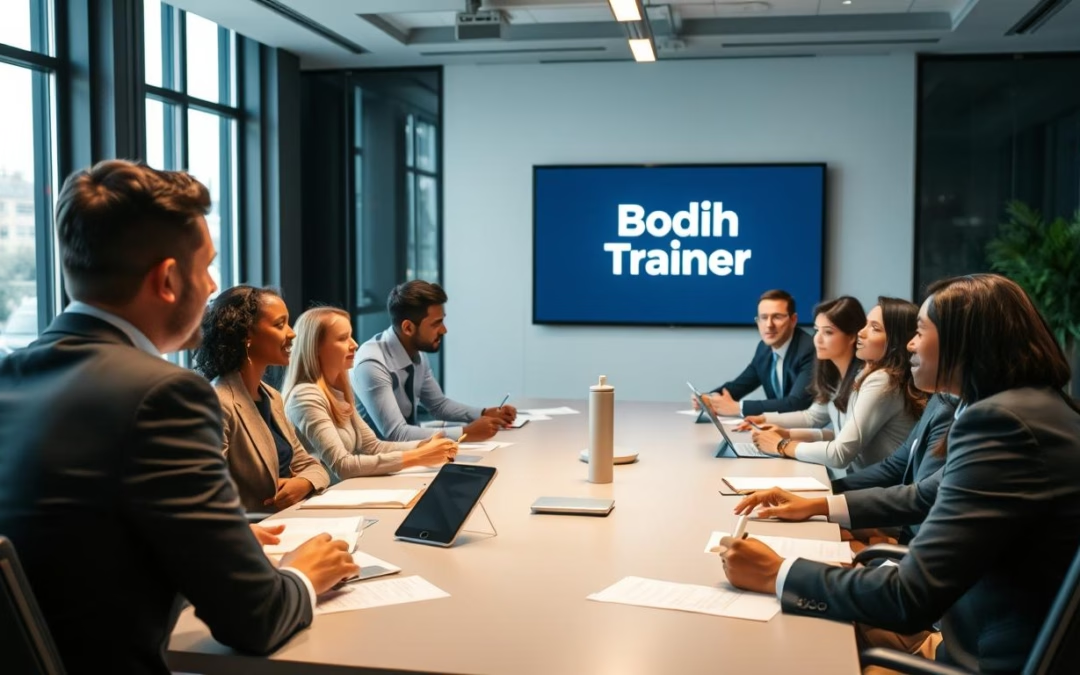
Imagine a brilliant engineer who possesses deep technical knowledge but struggles to share those insights with colleagues. Despite their expertise, the team remains stagnant because the delivery of information lacks structure and engagement. This common scenario highlights a critical gap in many modern businesses.
True organisational excellence begins when subject matter experts evolve into skilled facilitators. By investing in a robust train the trainer for corporate training programme, businesses can bridge this divide effectively. This transformation ensures that knowledge flows seamlessly across departments, fostering a culture of continuous improvement.
How can your organisation unlock hidden potential by turning technical experts into inspiring mentors who drive real change? Developing internal capabilities is not merely an operational task; it is a strategic necessity for long-term success. When staff members master the art of instruction, they become the architects of their own professional growth.
Key Takeaways
- Cultivating internal expertise creates a sustainable model for organisational development.
- Professional guidance transforms subject matter experts into highly effective facilitators.
- Structured programmes ensure that knowledge sharing leads to measurable business results.
- Empowering employees strengthens the overall competence of the workforce.
- Strategic investment in facilitation skills secures a competitive advantage in the market.
The Strategic Importance of Internal Capability Building
Developing an internal trainer program is a strategic move that secures long-term competitive advantages for modern enterprises. By shifting the focus from external reliance to internal mastery, organisations ensure that knowledge remains within their walls. This approach allows businesses to tailor learning experiences to their specific operational landscape.
Why Internal Trainers Outperform External Consultants
External consultants often lack the deep, nuanced understanding of a company’s unique culture and daily challenges. In contrast, internal trainers possess intimate knowledge of the business, allowing them to provide highly relevant and practical guidance. They understand the specific pain points that employees face, which leads to more effective problem-solving.
Furthermore, an internal trainer program fosters a sense of trust and credibility that is difficult for outsiders to replicate. When employees learn from their peers, they feel more comfortable sharing challenges and asking questions. This peer-to-peer dynamic significantly boosts the overall effectiveness of the training sessions.
Building a Culture of Continuous Learning
Organisations that invest in their own trainers naturally cultivate a growth-oriented environment. This commitment to development encourages staff to view learning as a daily habit rather than a one-off event. By embedding expertise within the workforce, companies become more agile and responsive to market shifts.
The Long-term Financial Benefits of In-house Expertise
Relying on external providers can become a significant financial burden over time. By developing an internal trainer program, companies reduce their long-term expenditure on consultancy fees. This investment in human capital yields a higher return on investment as internal trainers continue to refine their skills and deliver value for years.
| Feature | Internal Trainers | External Consultants |
|---|---|---|
| Contextual Knowledge | High (Deeply embedded) | Low (Requires onboarding) |
| Cost Efficiency | High (Long-term savings) | Low (High hourly rates) |
| Cultural Alignment | Strong (Native to culture) | Variable (May lack fit) |
| Sustainability | High (Knowledge stays) | Low (Knowledge leaves) |
Defining the Role of an Internal Trainer
The transition from a subject matter expert to a facilitator is a pivotal moment for any professional. An internal trainer does more than simply share information; they act as a catalyst for organisational growth. By mastering the art of employee training, these individuals ensure that knowledge flows effectively across all departments.
Core Competencies Required for Success
Effective trainers must possess a blend of technical knowledge and soft skills. They need to understand how adults learn, which requires a deep grasp of instructional design principles. Communication clarity and active listening are essential to ensure that every participant feels engaged and supported throughout the learning journey.
Beyond these basics, a successful trainer must be adept at managing group dynamics. They should be able to adapt their delivery style to suit different learning preferences within the room. This versatility is what distinguishes a standard instructor from a high-impact corporate educator.
Balancing Subject Matter Expertise with Facilitation Skills
Many organisations make the mistake of assuming that a subject expert is automatically a great teacher. While deep knowledge is vital, it must be paired with strong facilitation skills to produce meaningful results. The following table highlights the key differences between a traditional expert and a skilled facilitator.
| Attribute | Subject Matter Expert | Internal Facilitator |
|---|---|---|
| Primary Focus | Content delivery | Learner outcomes |
| Interaction Style | Lecture-based | Collaborative |
| Goal of Employee Training | Information transfer | Behavioural change |
The Mindset of a Transformational Trainer
A transformational trainer views every session as an opportunity to elevate the workforce. They possess a growth-oriented mindset that focuses on long-term capability building rather than short-term fixes. This perspective allows them to inspire peers and foster a culture of continuous improvement.
These trainers are not just instructors; they are mentors who care deeply about the success of their colleagues. By maintaining this transformational approach, they ensure that the impact of their employee training initiatives lasts long after the session concludes. This dedication is the hallmark of a truly effective internal trainer.
Identifying Potential Candidates for Your Train the Trainer for Corporate Training Programme
Selecting the right individuals is the cornerstone of a successful internal training initiative. When you implement a train the trainer for corporate training programme, the quality of your facilitators directly influences the growth of your workforce. A strategic selection process ensures that you identify employees who possess both the technical expertise and the interpersonal depth required to lead others effectively.
Evaluating Soft Skills and Communication Abilities
Technical knowledge alone does not make a great trainer. You must look for candidates who demonstrate exceptional communication skills and the ability to simplify complex concepts. These individuals should be adept at active listening, ensuring they can address the unique needs of diverse learners within the organisation.
Soft skills such as patience, empathy, and adaptability are essential for managing a classroom environment. A strong candidate remains calm under pressure and adjusts their delivery style to suit different learning preferences. These traits are vital for maintaining engagement and ensuring that knowledge transfer is both effective and sustainable.
Recognising Passion for Mentorship
The most effective trainers are those who possess a genuine desire to see their colleagues succeed. Look for employees who naturally take on a mentorship role within their teams. These individuals often provide guidance without being asked and show a deep commitment to the professional development of their peers.
This intrinsic motivation is difficult to teach, making it a key indicator of long-term success. When a trainer is passionate about empowering others, they create a positive learning culture that encourages continuous improvement. Identifying this passion early allows you to nurture talent that will drive your organisation forward.
The Selection Process: Interviews and Practical Assessments
A rigorous selection process is necessary to validate your choices. Start with structured interviews that focus on past experiences where the candidate has shared knowledge or led a project. Follow this with a practical assessment, such as a mock training session, to observe their facilitation style in real-time.
This approach provides objective data to support your decision-making. By evaluating candidates against specific criteria, you ensure that your train the trainer for corporate training programme is built on a foundation of excellence and reliability.
| Candidate Trait | Importance | Assessment Method |
|---|---|---|
| Communication | High | Presentation Task |
| Empathy | High | Behavioural Interview |
| Technical Mastery | Medium | Subject Knowledge Test |
| Mentorship Drive | High | Peer Feedback Review |
Assessing Current Skill Gaps in Your Workforce
Organisations often struggle to bridge the divide between current employee performance and future business requirements. To remain competitive in the Indian market, leaders must move beyond generic training solutions. A systematic approach to skill assessment ensures that your development efforts are never wasted on irrelevant topics.
By identifying specific competency deficits, you create a clear roadmap for growth. This process is essential for any internal trainer program that aims to deliver measurable results. When you understand exactly where your team lacks expertise, you can tailor your interventions to drive meaningful change.
Conducting a Thorough Training Needs Analysis
A robust Training Needs Analysis (TNA) serves as the diagnostic tool for your organisation. It involves gathering data through surveys, performance reviews, and direct observation. This rigorous evaluation highlights the difference between the skills your staff currently possess and those required for future success.
Effective analysis requires input from both management and frontline employees. By capturing diverse perspectives, you gain a holistic view of the operational landscape. This data-driven foundation prevents guesswork and ensures that every learning initiative addresses a genuine need.
Mapping Skills to Business Objectives
Once you have identified the gaps, you must align them with your broader corporate strategy. Every internal trainer program should be designed to support specific business goals, such as increasing sales or improving customer satisfaction. If a training module does not contribute to these objectives, it may not be worth the investment.
Mapping skills to outcomes allows you to track progress against key performance indicators. This alignment ensures that your workforce development remains purposeful and focused. It transforms training from a simple administrative task into a strategic engine for growth.
Prioritising Training Initiatives for Maximum ROI
Not all skill gaps require immediate attention. You must prioritise initiatives based on their potential impact on the bottom line. High-priority areas are those that directly influence revenue, efficiency, or risk mitigation.
By focusing your resources on these critical areas, you ensure a higher return on investment. A well-structured internal trainer program will always target these high-impact gaps first. The following table outlines how to categorise and address these needs effectively.
| Priority Level | Impact on Business | Recommended Action |
|---|---|---|
| High | Critical for core operations | Immediate internal training |
| Medium | Supports long-term growth | Scheduled workshops |
| Low | General professional development | Self-paced learning modules |
Designing a Comprehensive Curriculum for Internal Trainers
Effective corporate training programmes rely on a well-structured curriculum that bridges the gap between theory and practice. By creating a clear roadmap, organisations ensure that their trainers possess the necessary tools to drive leadership development and operational excellence. A thoughtful design process transforms abstract concepts into actionable skills for every participant.
Structuring Modules for Progressive Learning
A successful curriculum follows a logical progression, moving from foundational knowledge to complex application. This scaffolded approach allows trainers to build confidence before tackling more demanding topics. By breaking content into manageable segments, learners can absorb information without feeling overwhelmed.
Consider the following structure for your training modules:
- Foundational Phase: Core principles and communication basics.
- Intermediate Phase: Advanced facilitation techniques and group dynamics.
- Advanced Phase: Strategic problem-solving and leadership development integration.
Incorporating Practical Exercises and Role-plays
Theory alone is rarely sufficient for mastering the art of training. Practical exercises provide a safe environment for trainers to experiment with new methodologies and receive immediate feedback. Role-playing scenarios are particularly effective for simulating real-world challenges in a controlled setting.
These interactive sessions help trainers refine their delivery style and emotional intelligence. When trainers practise handling difficult questions or managing diverse group dynamics, they become better prepared for the actual classroom. Active participation ensures that skills are internalised rather than just memorised.
Ensuring Content Relevance to Your Industry
A curriculum must reflect the unique demands and culture of your specific industry to remain impactful. Generic training often fails to resonate with employees who face highly specialised challenges daily. By tailoring case studies and examples to your sector, you increase the perceived value of the programme.
Regularly review your materials to ensure they align with current market trends and internal objectives. This commitment to relevance keeps your training programme agile and responsive to change. Ultimately, a customised curriculum empowers your internal trainers to deliver results that directly support your broader business goals.
Mastering Adult Learning Principles and Methodologies
Mastering the art of adult learning is essential for any organisation aiming to elevate its internal training capabilities. When trainers understand the unique psychological needs of their peers, they facilitate a more seamless knowledge transfer. This approach ensures that training is not merely a delivery of facts, but a catalyst for professional growth.
Understanding Andragogy in the Workplace
Andragogy focuses on the specific ways adults learn best, prioritising self-direction and practical application. Unlike traditional academic settings, the workplace requires training that solves immediate problems and adds tangible value to daily tasks. Adults are motivated when they see the direct relevance of the material to their current roles.
By respecting the autonomy of the learner, trainers can foster a sense of ownership over the development process. This shift in perspective transforms the classroom into a collaborative space where experience is valued as much as theory. Effective knowledge transfer relies on this mutual respect between the facilitator and the participant.
Adapting Styles for Different Learning Preferences
Every workforce consists of individuals with diverse cognitive styles and preferences. A one-size-fits-all approach often fails to resonate with the entire group, leading to disengagement. Trainers must therefore diversify their delivery methods to ensure that every participant remains focused and involved.
- Visual learners benefit from diagrams, infographics, and structured slide decks.
- Auditory learners thrive during group discussions and verbal explanations.
- Kinesthetic learners require hands-on activities and practical simulations to grasp complex concepts.
Creating Interactive and Participatory Environments
Passive learning rarely leads to long-term retention or behavioural change. To ensure successful knowledge transfer, trainers should design sessions that require active participation from every attendee. This creates a dynamic atmosphere where ideas are exchanged freely and challenges are addressed collectively.
Interactive environments encourage participants to apply new skills in a safe, controlled setting. By incorporating role-plays, case studies, and real-time problem-solving, trainers bridge the gap between theory and practice. Engagement is the ultimate driver of professional transformation within the modern corporate landscape.
Developing Engaging Training Materials and Visual Aids
Creating effective learning resources is a critical step in your journey toward long-term capability building. When materials are designed with clarity and purpose, they bridge the gap between abstract concepts and practical application. High-quality assets ensure that the knowledge shared during sessions remains accessible long after the training concludes.
Best Practices for Presentation Design
Modern corporate presentations should favour minimalism over density. Use clean layouts that highlight one core idea per slide to prevent cognitive overload. By maintaining a consistent visual identity, you reinforce the professional standards of your organisation.
Focus on high-contrast typography and purposeful imagery to guide the learner’s eye. Avoid cluttering slides with excessive text, as this often distracts from the facilitator’s message. Effective design acts as a support system for the trainer rather than a replacement for their expertise.
Creating Handouts that Add Value
Handouts should serve as a bridge to capability building by providing structured summaries of the training content. Rather than printing full slide decks, offer concise checklists, templates, or decision-making frameworks that employees can use in their daily roles. These documents transform passive listening into active engagement.
Ensure that your handouts are action-oriented and easy to navigate. Include space for personal notes to encourage reflection and synthesis of the information provided. When participants have a tangible resource to reference, they are more likely to implement the new skills within their teams.
Utilising Multimedia to Enhance Retention
Integrating diverse media formats caters to different learning preferences and boosts overall retention. Short, focused videos can demonstrate complex processes that are difficult to explain through text alone. By utilising multimedia, you create a dynamic environment that supports continuous capability building across the workforce.
Interactive elements, such as digital polls or embedded simulations, keep participants engaged throughout the session. These tools provide immediate feedback, allowing trainers to adjust their pace based on the group’s understanding. Thoughtful integration of technology ensures that your training remains relevant in a fast-paced business landscape.
Techniques for Effective Classroom Management and Facilitation
Transforming a group of individuals into a cohesive learning unit demands advanced classroom management skills. Facilitators must act as architects of the learning experience, ensuring that the environment remains conducive to growth and discovery. Mastery of these techniques is a cornerstone of successful employee training, allowing trainers to guide participants through complex material with confidence and clarity.
The ability to maintain control while fostering an open dialogue is what separates a good trainer from a truly transformational one. By balancing structure with flexibility, facilitators can create a space where professional development thrives.
Handling Difficult Participants and Disruptions
Every trainer will eventually encounter challenging behaviours, such as side conversations or persistent negativity. The key is to address these disruptions with professionalism and emotional intelligence rather than confrontation. A proactive approach involves setting clear ground rules at the start of the session to establish expectations for respectful engagement.
When disruptions occur, redirecting the energy back to the learning objectives is often the most effective strategy. Acknowledging the participant’s perspective while gently steering the conversation back to the topic helps maintain the integrity of the employee training session. Consistency in applying these boundaries ensures that the learning environment remains fair and productive for everyone involved.
Managing Time and Pacing Effectively
Time is a finite resource in any corporate setting, making efficient pacing vital for meeting learning outcomes. Trainers should utilise a structured agenda that allocates specific time slots for theory, practical exercises, and group discussions. This framework prevents the common pitfall of rushing through critical content at the end of the day.
Monitoring the energy levels of the room allows for real-time adjustments to the pace. If a topic requires more depth, a skilled facilitator knows how to condense less critical sections without sacrificing the quality of the employee training. Strategic flexibility ensures that the most important business objectives are always prioritised.
Building Rapport with Diverse Audiences
Modern workplaces are increasingly diverse, requiring trainers to adapt their communication styles to resonate with various backgrounds and roles. Building genuine rapport starts with active listening and demonstrating a sincere interest in the unique challenges faced by each participant. When learners feel understood, they are significantly more likely to engage deeply with the material.
Facilitators should incorporate varied instructional methods to cater to different learning preferences, ensuring that no one feels excluded. By fostering an inclusive atmosphere, trainers can bridge gaps between different departments and levels of seniority. This connection is essential for ensuring that the impact of employee training extends well beyond the classroom walls.
Leveraging Technology in Modern Corporate Training
Technology serves as the backbone for effective knowledge transfer in today’s fast-paced business environment. Organisations that embrace digital tools can bridge geographical divides and ensure that training remains consistent. By adopting the right infrastructure, companies empower their internal trainers to reach employees regardless of their physical location.
Integrating Virtual Learning Platforms
Modern Learning Management Systems (LMS) and video conferencing tools have revolutionised how teams share information. These platforms provide a centralised hub for resources, allowing staff to access materials at their own pace. When trainers utilise these digital spaces, they facilitate seamless knowledge transfer that supports long-term retention.
Using Gamification to Boost Engagement
Engagement often wanes in digital settings, but gamification offers a powerful solution to maintain interest. By incorporating elements such as leaderboards, digital badges, and interactive quizzes, trainers can turn standard modules into compelling experiences. This approach encourages healthy competition and motivates participants to master new skills more effectively.
Managing Hybrid Training Environments
The rise of hybrid work requires a flexible approach to professional development. Trainers must master the art of balancing in-person interaction with virtual participation to ensure no one feels excluded. Successful knowledge transfer in a hybrid model relies on clear communication and the strategic use of collaborative software to keep all learners aligned with organisational objectives.
Providing Constructive Feedback and Coaching for Trainers
Elevating your internal training team starts with implementing robust feedback mechanisms and coaching support. When trainers receive consistent guidance, they refine their delivery and enhance their overall leadership development. This process transforms standard instruction into a powerful tool for organisational growth.
The Art of Giving Actionable Feedback
Effective feedback must be specific, timely, and focused on observable behaviours rather than personal traits. Trainers benefit most when they understand exactly which techniques resonated with their audience and which areas require adjustment. Clarity is the cornerstone of improvement in any professional setting.
- Focus on the impact of specific facilitation techniques.
- Provide concrete examples of successful interactions.
- Suggest alternative approaches for future sessions.
Establishing Peer-to-Peer Coaching Circles
Peer-to-peer coaching circles create a safe space for trainers to share experiences and solve common challenges together. By fostering a collaborative environment, organisations encourage leadership development through shared wisdom. This approach reduces isolation and builds a stronger, more cohesive training culture.
These circles allow trainers to observe one another and offer constructive insights in a non-threatening manner. When colleagues support each other, the entire organisation benefits from a more consistent and high-quality learning experience. Mutual support accelerates professional maturity across the board.
Using Video Analysis for Self-Improvement
Video analysis serves as an objective mirror for trainers, allowing them to review their own performance with a critical eye. By watching recorded sessions, trainers can identify subtle habits or pacing issues that might go unnoticed during live delivery. This practice is a vital component of leadership development for those who wish to master the art of facilitation.
“Self-reflection is the most powerful tool for a trainer who seeks to inspire and educate others effectively.”
Using video tools helps trainers see their body language, tone, and engagement levels from the perspective of the learner. This objective assessment empowers them to make precise changes that significantly improve their impact. Consistent review cycles ensure that every trainer continues to evolve and meet the changing needs of the workforce.
Measuring the Impact of Your Internal Trainer Programme
Measuring the return on investment for an internal trainer program transforms training from a cost centre into a strategic asset. Organisations that prioritise data-driven insights can effectively validate the growth of their workforce capabilities. By establishing clear metrics, businesses ensure their development initiatives align with broader corporate objectives.
Applying the Kirkpatrick Model of Evaluation
The Kirkpatrick Model provides a robust framework for assessing the effectiveness of an internal trainer program. It moves beyond simple attendance records to measure genuine transformation within the workplace.
- Reaction: Gauge how participants feel about the training experience.
- Learning: Measure the increase in knowledge or capability gained.
- Behaviour: Observe how trainees apply new skills in their daily roles.
- Results: Analyse the final impact on business outcomes and productivity.
Tracking Performance Metrics and KPIs
Quantitative data serves as the backbone of any successful internal trainer program. Leaders should track specific Key Performance Indicators (KPIs) to monitor progress over time. Consistency in data collection allows for meaningful comparisons across different departments and training cohorts.
Common metrics include the percentage of staff who achieve certification, the reduction in time-to-competency for new hires, and the overall improvement in departmental performance scores. These figures provide a clear picture of how internal expertise drives operational efficiency.
Gathering Qualitative Feedback from Trainees
While numbers tell a story, qualitative insights provide the context necessary to refine your internal trainer program. Engaging directly with participants through surveys, focus groups, and structured interviews reveals the human element of the learning journey.
“Feedback is the breakfast of champions, providing the essential nutrients for continuous improvement and organisational excellence.”
By asking open-ended questions, management can identify specific barriers to learning and uncover hidden opportunities for innovation. This holistic approach ensures that the training remains relevant, engaging, and deeply impactful for every employee involved.
Overcoming Common Challenges in Knowledge Transfer
Achieving seamless knowledge transfer requires a proactive approach to common organisational hurdles. While the benefits of internal training are significant, leaders must anticipate friction points that can impede progress. By identifying these obstacles early, companies can build a more resilient and effective learning ecosystem.
Addressing Resistance to Change
Resistance often stems from a lack of clarity regarding the value of new training initiatives. Employees may view changes to their routine as an unnecessary burden rather than an opportunity for growth. To mitigate this, leadership must clearly articulate the strategic benefits of the programme to all stakeholders.
- Engage influential team members early to act as internal champions.
- Provide transparent communication regarding the goals of the knowledge transfer process.
- Highlight individual career development opportunities to foster personal buy-in.
Ensuring Consistency Across Different Trainers
Maintaining a uniform standard of delivery is essential when multiple trainers are involved. Without a structured framework, the quality of instruction can vary significantly, leading to fragmented learning outcomes. Standardisation ensures that every participant receives the same high-quality experience regardless of who facilitates the session.
Organisations should implement a centralised repository of training materials and facilitator guides. These resources serve as a single source of truth, preventing the dilution of core messages. Regular calibration meetings allow trainers to align their delivery styles and share best practices.
Maintaining Quality Standards During Scaling
As training programmes expand to reach larger audiences, the risk of quality degradation increases. Scaling requires a shift from informal processes to robust, repeatable systems. It is vital to establish clear metrics that monitor the effectiveness of the knowledge transfer at every stage of growth.
Periodic audits and feedback loops are necessary to ensure that content remains relevant and impactful. By conducting regular reviews, organisations can identify performance gaps before they become systemic issues. This commitment to continuous improvement protects the integrity of the training programme as it evolves to meet new business demands.
Sustaining Momentum and Continuous Professional Development
Sustaining high-impact employee training programmes demands more than just an initial launch; it requires a culture of constant evolution. Organisations that thrive are those that view internal capability building as a dynamic, ongoing journey rather than a one-time event.
Creating Communities of Practice
Establishing communities of practice allows your trainers to share insights and solve complex challenges together. By fostering a collaborative environment, you ensure that collective wisdom becomes a core asset of your organisation.
These groups provide a safe space for trainers to discuss what works and what does not in their employee training sessions. Regular meetups help maintain high standards and keep everyone aligned with evolving business objectives.
Offering Advanced Certification Pathways
To keep your trainers motivated, you must provide clear opportunities for professional growth. Advanced certification pathways signal that the organisation values their expertise and is invested in their long-term career trajectory.
These programmes should focus on mastery, such as advanced facilitation techniques or digital learning design. By providing these pathways, you ensure that your employee training remains at the cutting edge of industry standards.
Recognising and Rewarding Internal Trainers
Recognition is a powerful tool for maintaining morale and commitment among your internal training staff. Acknowledging their contributions publicly reinforces the importance of their role in driving organisational success.
Consider implementing formal reward systems that celebrate milestones and exceptional performance. When trainers feel truly valued, they are more likely to remain engaged and continue delivering high-quality learning experiences for the entire workforce.
Aligning Internal Training with Organisational Goals
Aligning your internal training programmes with core business objectives is the hallmark of a mature organisation. When learning initiatives exist in a vacuum, they fail to drive the meaningful change required for long-term prosperity. True transformation occurs when every workshop and module serves a specific, measurable purpose within the company framework.
Linking Training Outcomes to Business Strategy
Effective training must be anchored in the broader mission of the enterprise. By mapping specific learning modules to key performance indicators, organisations ensure that every hour spent in the classroom contributes to the bottom line. This strategic approach transforms training from a cost centre into a powerful engine for growth.
Consider the following ways to ensure your training remains relevant:
- Identify the top three business challenges currently facing your departments.
- Design curriculum modules that directly address these specific pain points.
- Establish clear metrics to track how training improves operational efficiency.
Communicating Value to Stakeholders
Securing ongoing support from leadership requires transparent communication regarding the impact of your programmes. Decision-makers are more likely to invest in initiatives when they see a direct correlation between training and organisational success. Presenting data-driven reports helps to validate the necessity of continued investment in your internal trainers.
Focus your communication on the following areas to maintain stakeholder buy-in:
- Highlight the reduction in external consultancy costs over time.
- Showcase improvements in employee retention and internal promotion rates.
- Provide qualitative evidence of enhanced team collaboration and morale.
Adapting Training to Market Shifts
The modern business landscape is defined by rapid change and constant disruption. To remain competitive, your internal training must be as agile as the market itself. This is particularly vital for leadership development, as managers must be equipped to navigate uncertainty and guide their teams through evolving industry conditions.
By fostering a culture of continuous improvement, you ensure that your workforce remains resilient. Regularly reviewing your training content allows you to pivot quickly when new technologies or market trends emerge. Investing in robust leadership development today prepares your organisation to meet the challenges of tomorrow with confidence and clarity.
Partnering with Experts for Customised Training Solutions
Strategic partnerships serve as a bridge between current performance and future organisational success. While internal teams possess deep institutional knowledge, external specialists bring fresh perspectives and proven methodologies to the table. Engaging with industry leaders ensures that your development initiatives remain competitive and aligned with global standards.
When to Seek External Guidance
Organisations should consider external support when internal resources are stretched or when specific skill gaps hinder progress. If your current train the trainer for corporate training programme lacks the desired impact, an objective audit can identify hidden bottlenecks. External experts provide the necessary rigour to refine your curriculum and elevate facilitation standards.
How Bodhih Can Accelerate Your Programme
Bodhih specialises in transforming internal talent into high-performing facilitators. By leveraging our deep expertise, your organisation can rapidly scale its training capabilities without compromising on quality. We tailor every aspect of our train the trainer for corporate training solutions to meet your unique business objectives and cultural nuances.
Contacting Our Team for Bespoke Support
We invite you to discuss your specific requirements with our consultants to design a roadmap for success. Our team is dedicated to providing bespoke support that drives measurable growth and long-term capability building within your workforce.
Reach Us via Phone: +91 99000 11601 / 602 / 603
Email Your Requirements: [email protected]
Conclusion
Building a robust internal training framework transforms how organisations manage knowledge and growth. This strategic shift ensures that every learning initiative remains tightly linked to core business objectives.
Effective capability building serves as the foundation for long-term success in a competitive market. Organisations that prioritise the development of their own trainers create a sustainable cycle of improvement. This approach empowers teams to adapt quickly to shifting industry demands while maintaining high standards of professional excellence.
Investing in your people fosters a culture where knowledge flows freely across all departments. Such commitment to internal growth secures a future defined by innovation and operational efficiency. Leaders who champion these programmes position their companies to thrive in an evolving corporate landscape.
Begin your journey toward enhanced performance by evaluating your current internal resources today. Reach out to the team at Bodhih to explore how tailored support can accelerate your path to mastery. Elevate your workforce and drive meaningful results through dedicated capability building efforts.
FAQ
Why should an organisation prioritise a train the trainer for corporate training programme over external consultants?
Internalising training functions ensures that knowledge transfer is perfectly aligned with the specific organisational landscape. By leveraging internal Subject Matter Experts (SMEs), businesses foster a culture of continuous learning, reduce long-term costs, and ensure that the delivery of training remains contextually relevant and highly practical.
How can we identify the most suitable candidates for an internal trainer program?
Selection must go beyond technical aptitude. Ideal candidates possess a blend of subject matter expertise and strong interpersonal skills. During the selection process, look for individuals who demonstrate a natural passion for mentorship and the communication abilities required for effective leadership development.
What role does a training needs analysis play in capability building?
A thorough training needs analysis is the foundation of any strategic initiative. It allows an organisation to identify specific skill gaps that hinder progress. By mapping these findings to business objectives, you ensure that your employee training efforts are prioritised to deliver the highest possible return on investment.
How does the application of andragogy improve the effectiveness of knowledge transfer?
Andragogy, or the science of adult learning, focuses on the autonomy and experience of the learner. By creating interactive and participatory environments, internal trainers can adapt their styles to various learning preferences. This approach significantly enhances engagement and retention, making the training far more impactful than traditional, passive methods.
What are the best practices for designing a curriculum for internal trainers?
A successful curriculum should be structured into progressive learning modules that incorporate practical exercises and role-plays. This ensures that the content remains highly relevant to the industry’s specific demands. Focus on capability building by balancing theoretical knowledge with hands-on application to reinforce new skills.
How can technology be integrated into employee training to maintain engagement?
In a modern digital landscape, leveraging virtual platforms, gamification, and hybrid models is essential. These tools ensure seamless knowledge transfer across distributed teams. Technological proficiency allows trainers to maintain a consistent experience, ensuring that all participants remain engaged regardless of their physical location.
How can we measure the tangible impact of our training initiatives?
The Kirkpatrick Model is a globally recognised standard for evaluation. By tracking performance metrics, gathering qualitative feedback, and monitoring behavioural changes, organisations can quantify how their internal trainer program contributes to broader business objective achievement and improved operational efficiency.
What steps can be taken to ensure the long-term sustainability of training results?
Sustaining momentum requires a commitment to continuous professional development. Establishing communities of practice and offering advanced certification pathways keeps trainers motivated. Recognising and rewarding their contributions ensures high morale and helps maintain a robust framework for leadership development within the organisation.
How does Bodhih assist organisations in refining their training capabilities?
Bodhih provides bespoke support to accelerate the implementation of high-impact training strategies. By partnering with experts, organisations can refine their instructional design and facilitation techniques. To explore tailored solutions for your organisation, contact our team at +91 99000 11601 or via email at [email protected].
Recent Comments