
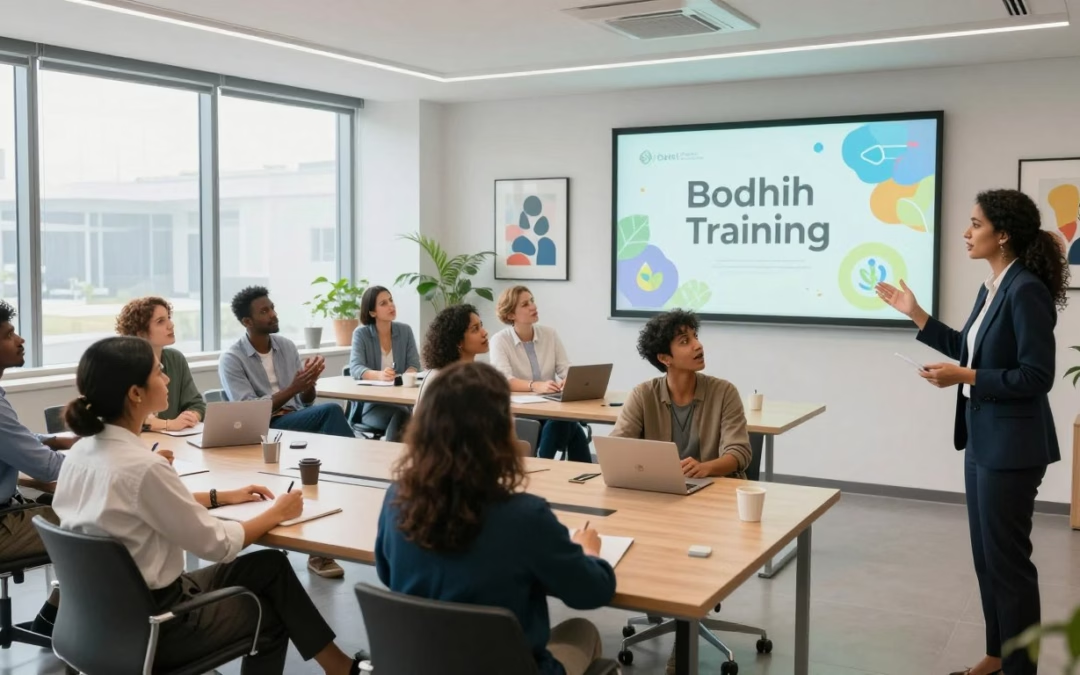
Have you ever wondered if the only barrier to your success is the hidden potential of your staff? Elevating capabilities is the best way to gain a lasting edge throughout the market. This journey toward excellence starts with a simple commitment to knowledge.
Choosing a top corporate training company helps organisations link staff capabilities with business goals. Bodhih offers expert tools to help leaders build strong teams and foster growth. Their solutions transform basic workflows into high-performance cultures.
Smart learning plans enlighten staff and boost total output. Contact Bodhih today through their official website to see how professional growth refines your results and elevates your path to mastery.
Key Takeaways
- Recognise how building capabilities links directly to annual revenue.
- Utilise strategic learning to bridge existing capability gaps.
- Optimise organisational performance through expert guidance.
- Align personal growth with broader business objectives.
- Enhance management maturity using proven methods.
- Empower teams to adapt within a shifting professional landscape.
📊 Corporate Training in India — Key Market Statistics
- India’s corporate training market is valued at over $7 billion and growing at a 15% annual rate, driven by rapid digital transformation. (Technavio, 2024)
- 87% of organisations globally — including India’s largest enterprises — cite skill gaps as their number-one business challenge. (McKinsey Global Survey, 2023)
- Organisations with strong learning cultures are 92% more likely to develop novel products and processes. (Deloitte Human Capital Trends, 2023)
- Indian companies that invest in structured upskilling report 26% higher workforce productivity compared to those without formal L&D frameworks. (NASSCOM Workforce Report, 2022)
- Employees at organisations with robust training are 2× more likely to be engaged and stay beyond three years. (Gallup State of the Global Workplace, 2022)
Understanding Corporate Training in India
Corporate training in India has emerged as a pivotal factor in enhancing organizational performance and driving business growth. As businesses navigate the complexities of a rapidly changing market, the need for effective training programs has become increasingly evident.
Definition and Importance
Corporate training refers to the process of enhancing the skills and knowledge of employees to improve job performance and achieve organizational objectives. In India, corporate training is crucial for businesses to stay competitive, innovate, and expand their operations.
The importance of corporate training lies in its ability to elevate employee capabilities, drive business growth, and foster a culture of continuous learning. Effective training programs help organizations to address skill gaps, improve productivity, and enhance overall performance.
Key Components of Effective Training
Effective corporate training programs in India typically comprise several key components, including:
- Needs Assessment: Identifying the training needs of employees to ensure that programs are relevant and impactful.
- Customized Content: Tailoring training content to meet the specific needs of the organization and its employees.
- Experienced Trainers: Utilizing trainers with industry expertise to deliver high-quality training.
- Interactive Learning: Incorporating interactive elements, such as simulations and group discussions, to enhance engagement and retention.
By incorporating these components, organizations can ensure that their training programs are effective and meet the needs of their employees.
Current Trends in the Indian Corporate Training Landscape
The Indian corporate training landscape is witnessing significant trends, driven by technological advancements and changing business needs. Some of the current trends include:
- Digital Learning: The adoption of e-learning platforms and mobile learning applications is on the rise, enabling flexible and accessible training.
- Leadership and Soft Skills Training: There is a growing emphasis on leadership development and soft skills training, as organizations recognize the importance of these skills in driving business success.
- Personalized Learning: Organizations are moving towards personalized learning experiences, tailored to the individual needs and preferences of employees.
These trends are shaping the future of corporate training in India, enabling organizations to stay ahead of the curve and drive business success.
The Benefits of Corporate Training
By implementing comprehensive corporate training, businesses can unlock their full potential and achieve their objectives. Corporate training is a strategic investment that yields numerous benefits for both employees and the organization as a whole.
Enhancing Employee Skillsets
Corporate training programs are designed to enhance employee skillsets, making them more proficient in their roles. For instance, training in sales and communication skills can significantly improve an employee’s ability to interact with clients and close deals.
A well-structured training program can lead to improved job performance and increased productivity. Employees who receive regular training are more likely to stay updated with the latest industry trends and best practices.
| Skillset | Pre-Training Proficiency | Post-Training Proficiency |
|---|---|---|
| Sales Skills | 60% | 85% |
| Communication Skills | 70% | 90% |
| Technical Skills | 50% | 80% |
Boosting Employee Morale and Engagement
Corporate training not only enhances skills but also boosts employee morale and engagement. When employees feel that their employer is invested in their growth, they are more likely to be motivated and committed to their work.
Training programs demonstrate an organization’s commitment to its employees’ development, leading to increased job satisfaction and reduced turnover rates.
Improving Overall Organizational Performance
The cumulative effect of enhanced employee skillsets and boosted morale is improved overall organizational performance. Organizations that invest in corporate training are better positioned to achieve their business objectives and stay competitive in the market.
By leveraging the services of a reputable corporate training company, organizations can tailor their training programs to meet their specific needs and drive business success.
Types of Corporate Training Programs
To elevate business performance, Indian companies can leverage different types of corporate training programs. These programs are designed to address specific organizational needs, enhancing overall capabilities and driving growth.
Corporate training programs can be broadly categorized into three main types: technical skills training, soft skills development, and leadership and management training. Each type plays a crucial role in shaping the workforce and achieving business objectives.
Technical Skills Training
Technical skills training is essential for equipping employees with the knowledge and expertise required to perform their job-specific tasks efficiently. This type of training is particularly relevant in industries that are rapidly evolving, such as technology and healthcare.
By investing in technical skills training, organizations can ensure that their workforce remains competent and up-to-date with the latest industry trends and technologies.
Soft Skills Development
Soft skills development is another critical aspect of corporate training. It focuses on enhancing interpersonal skills, communication, teamwork, and problem-solving abilities.
Soft skills are vital for effective collaboration and for creating a positive work environment. By developing these skills, employees can better interact with colleagues, manage conflicts, and contribute to a more productive workplace.
Leadership and Management Training
Leadership and management training programs are designed to develop the skills and competencies required for effective leadership and management. These programs help individuals understand their roles, make informed decisions, and lead their teams towards achieving organizational goals.
By investing in leadership and management training, organizations can cultivate a strong leadership pipeline, driving long-term success and sustainability.
In conclusion, the diverse range of corporate training programs available in India allows organizations to tailor their training initiatives to specific needs. By understanding the different types of training programs, businesses can make informed decisions and invest in the development of their workforce.
The Role of Technology in Training
The integration of technology in corporate training has revolutionized the way businesses approach skill development and employee enhancement. Technology has enabled organizations to create more engaging, accessible, and effective training programs.
E-Learning Platforms and Virtual Training
E-learning platforms have emerged as a cornerstone of modern corporate training, offering a flexible and scalable solution for businesses. These platforms provide a range of tools and resources that cater to diverse learning needs, from technical skills training to soft skills development. For instance, a corporate training company can utilize e-learning platforms to deliver comprehensive training programs that enhance sales and communication skills.
- Personalized learning experiences tailored to individual needs
- Access to a vast library of training content
- Flexibility in terms of time and location
- Cost-effectiveness by reducing the need for physical infrastructure
Mobile Learning Applications
Mobile learning applications have further expanded the reach of corporate training, enabling employees to access training content on-the-go. These applications are particularly useful for businesses with a dispersed workforce or those operating in multiple locations.
- Microlearning modules that facilitate bite-sized learning
- Interactive content that enhances engagement
- Offline access to training materials
- Real-time tracking and assessment capabilities
Gamification in Corporate Training
Gamification is another significant trend in corporate training, leveraging game design elements to make learning more engaging and interactive. By incorporating elements such as rewards, leaderboards, and challenges, businesses can enhance employee participation and motivation.
| Benefit | Description |
|---|---|
| Increased Engagement | Gamification makes learning more interactive and enjoyable, leading to higher levels of employee engagement. |
| Improved Retention | The use of game design elements can improve knowledge retention by making learning more memorable. |
| Enhanced Motivation | Gamification can motivate employees to participate in training programs and achieve their learning objectives. |
By embracing technology, businesses can create more effective and engaging corporate training programs that drive growth and capability enhancement.
Assessing Training Needs
The foundation of a successful corporate training strategy lies in accurately assessing training needs. This critical step enables organisations to identify the skills and knowledge gaps that exist within their workforce, allowing them to design targeted training programs that address these specific needs.
Conducting Effective Needs Assessments
Conducting an effective needs assessment involves gathering data from various sources to understand the current capabilities of the workforce and the requirements of the business. This can be achieved through surveys, interviews, and performance data analysis. By using a combination of these methods, organisations can gain a comprehensive understanding of their training needs.
Key steps in conducting a needs assessment include:
- Identifying the objectives of the training program
- Gathering data on current employee skills and performance
- Analysing the data to identify gaps and areas for improvement
- Prioritising training needs based on business objectives
Aligning Training with Business Goals
Aligning training programs with business goals is crucial for ensuring that the training has a positive impact on the organisation’s overall performance. This involves understanding the strategic objectives of the business and designing training programs that support these goals.
For instance, if a company is looking to expand its operations into new markets, it may need to provide leadership and soft skills training to its managers to equip them with the skills necessary to lead international teams.
Involving Employees in the Process
Involving employees in the training needs assessment process can provide valuable insights into the skills and knowledge gaps that exist within the organisation. This can be done through employee surveys, focus groups, or one-on-one interviews.
By engaging employees in this process, organisations can not only identify training needs more accurately but also increase employee engagement and motivation by demonstrating that their opinions and perspectives are valued.
In conclusion, assessing training needs is a vital component of creating effective corporate training programs, particularly in a city like Bangalore, which is known for its vibrant corporate training landscape. By conducting thorough needs assessments, aligning training with business goals, and involving employees in the process, organisations can ensure that their training programs are targeted, relevant, and impactful.
Best Practices for Implementing Training Programs
To elevate business performance, Indian companies are increasingly focusing on best practices for implementing comprehensive training programs. Effective corporate training is pivotal for enhancing employee capabilities and driving business growth.
Developing a Comprehensive Training Plan
A well-structured training plan is the foundation of any successful corporate training program. It involves identifying the training needs of employees, aligning these needs with the organization’s objectives, and selecting the most appropriate training methods.
Key Considerations:
- Conducting thorough needs assessments to identify skill gaps.
- Setting clear, measurable objectives for the training program.
- Choosing training methods that are engaging and relevant to the learners.
Establishing Clear Objectives and Outcomes
Clear objectives are crucial for the success of any training program. They help in focusing the training content and in evaluating its effectiveness.
Best Practices:
- Ensure that the training objectives are aligned with the organization’s overall goals.
- Make sure that the objectives are specific, measurable, achievable, relevant, and time-bound (SMART).
- Involve stakeholders in the objective-setting process to ensure buy-in and support.
Measuring Training Effectiveness
Evaluating the effectiveness of training programs is essential to understand their impact on business performance. This involves assessing the extent to which the training objectives have been met.
Evaluation Metrics:
| Metric | Description |
|---|---|
| Participant Feedback | Collecting feedback from participants to understand their satisfaction with the training. |
| Knowledge Assessment | Testing participants’ knowledge before and after the training to measure learning outcomes. |
| Application on the Job | Observing the application of new skills and knowledge on the job. |
Key Players in India’s Corporate Training Sector
Several key players are shaping the corporate training landscape in India. The sector is witnessing significant growth driven by the demand for skilled professionals and the need for continuous learning and development.
Renowned Training Institutions
Renowned training institutions play a crucial role in India’s corporate training sector. These institutions offer a wide range of programs designed to enhance employee skills and organizational performance. Bodhih is one such prominent player known for its comprehensive training solutions.
Bodhih offers leadership and soft skills training that cater to the diverse needs of corporate clients. Their programs are designed to elevate individual and organizational capabilities, driving business success.
Industry-Specific Training Providers
Industry-specific training providers are also making a significant impact in the corporate training sector. These providers offer specialized training programs tailored to the unique needs of different industries.
| Industry | Training Focus | Key Providers |
|---|---|---|
| IT and Technology | Technical skills, software development | Bodhih, NIIT |
| Finance and Banking | Financial analysis, risk management | ICFAI, Bodhih |
| Healthcare | Clinical skills, healthcare management | Apollo Hospitals, Bodhih |
Corporate Partnerships for Talent Development
Corporate partnerships are essential for talent development in India. Companies are collaborating with training providers to create customized training programs that meet their specific needs.
These partnerships are driving business growth and enhancing employee capabilities. By working together, corporates and training providers can create a more skilled and competitive workforce.
Overcoming Challenges in Corporate Training
Corporate training is a vital component of organizational development, yet it is often fraught with challenges that can impede its effectiveness. The path to successful corporate training is fraught with challenges that can be overcome with the right strategies. As organizations in India continue to invest in enhancing their employees’ skills, particularly in areas such as sales and communication skills, understanding and addressing these challenges becomes crucial.
Addressing Cultural Differences
India’s diverse cultural landscape can significantly impact the effectiveness of corporate training programs. Different regions and communities may have unique cultural norms and values that influence how training is received and implemented. To address this, training programs must be tailored to accommodate these cultural differences.
“Cultural sensitivity is key to the success of any training program,” as it allows trainers to connect with participants on a more meaningful level. This can involve incorporating local languages, customs, and examples into the training content to make it more relatable and engaging for the participants.
Managing Resistance to Change
Resistance to change is a common challenge in corporate training, as employees may be hesitant to adopt new practices or technologies. Effective change management strategies are essential to overcome this resistance. This includes communicating the benefits of the training clearly and involving employees in the change process.
By engaging employees early and often, organizations can build trust and reduce resistance. Leadership buy-in is also crucial, as it sets the tone for the rest of the organization and encourages participation.
Ensuring Continuous Improvement
Continuous improvement is vital to the long-term success of corporate training programs. This involves regularly assessing the effectiveness of training and making necessary adjustments. Feedback from participants is invaluable in this process, as it provides insights into what works and what doesn’t.
- Regularly solicit feedback from training participants.
- Use data and metrics to assess training effectiveness.
- Make adjustments to training content and delivery as needed.
By adopting a culture of continuous improvement, organizations can ensure that their corporate training programs remain relevant and effective over time. As noted by industry experts, “Continuous learning is the key to staying ahead in today’s fast-paced business environment.”
Future Trends in Corporate Training in India
The future of corporate training in India is poised to be shaped by several key trends that will redefine the way businesses approach employee development.
As the Indian corporate landscape continues to evolve, it is becoming increasingly clear that the traditional one-size-fits-all approach to training is no longer effective. Instead, companies are moving towards more personalized and adaptive training solutions.
Shift Toward Personalized Learning
Personalized learning is emerging as a significant trend in corporate training. This approach involves tailoring training programs to meet the individual needs and learning styles of employees.
By leveraging data analytics and AI, organizations can create customized learning paths that cater to the unique requirements of each employee, thereby enhancing the overall effectiveness of the training.
Emphasis on Continuous Learning Culture
Another key trend is the emphasis on creating a culture of continuous learning within organizations. This involves fostering an environment where employees are encouraged to continually update their skills and knowledge.
Companies are achieving this by implementing ongoing training programs, providing access to a wide range of learning resources, and recognizing and rewarding employees for their learning achievements.
Integration of Artificial Intelligence in Training
The integration of artificial intelligence (AI) in corporate training is also gaining momentum. AI-powered training solutions can offer real-time feedback, simulate real-world scenarios, and provide insights into employee performance.
| Trend | Description | Benefits |
|---|---|---|
| Personalized Learning | Tailoring training to individual needs and learning styles | Enhanced training effectiveness, improved employee engagement |
| Continuous Learning Culture | Fostering an environment for ongoing skill development | Increased employee adaptability, better retention of talent |
| AI in Training | Using AI for real-time feedback and performance insights | Improved training outcomes, data-driven decision making |
These trends are set to revolutionize the corporate training landscape in India, enabling businesses to develop more effective training programs that meet the evolving needs of their workforce.
Conclusion: The Path Forward for HR and Business Leaders
As the corporate landscape in India continues to evolve, the importance of a well-structured corporate training program cannot be overstated. By investing in employee development, organizations can enhance their overall performance and stay competitive.
Elevating Capabilities
Building a training-driven culture is crucial for success. This involves not only providing technical skills training but also focusing on sales and communication skills to ensure employees are equipped to meet business objectives.
Navigating the Evolving Landscape
To stay ahead, HR and business leaders must prioritize lifelong learning, leveraging the expertise of a reputable corporate training company to drive growth and transformation.
Empowering Future Success
By emphasizing continuous learning and development, organizations can empower their workforce to achieve excellence. For tailored corporate training solutions, contact Bodhih at [email protected] or call +91 99000 11601 / 602 / 603 to elevate your organization’s capabilities.
FAQ
Why is corporate training in India essential for modern business performance?
In the rapidly evolving global marketplace, corporate training in India serves as a vital catalyst for capability enhancement. It allows organisations to bridge the gap between current employee skills and future business demands, ensuring that the workforce remains competitive. By investing in professional development, companies can optimise their internal talent, resulting in heightened productivity and the achievement of strategic objectives.
How does Bodhih distinguish itself as a leading corporate training company?
As a premier corporate training company, Bodhih adopts the role of both Sage and Creator. The organisation focuses on providing enlightening knowledge and building transformative solutions that empower professionals. By aligning training methodologies with specific organisational goals, Bodhih ensures that every intervention leads to measurable growth in leadership, management, and functional expertise.
What are the primary advantages of pursuing corporate training in Bangalore?
Corporate training in Bangalore offers unique access to a sophisticated ecosystem of technology and innovation. As the silicon hub of India, the city hosts a concentration of global enterprises, making it a fertile ground for high-impact leadership and soft skills training. Organisations in this region benefit from a culture of continuous learning and proximity to world-class training experts who understand the nuances of the modern corporate landscape.
How do leadership and soft skills training contribute to effective management?
Leadership and soft skills training are fundamental to creating a cohesive and high-performing organisational culture. These programmes focus on critical competencies such as emotional intelligence, strategic thinking, and conflict resolution. By elevating these capabilities, managers can lead with greater clarity, fostering an environment where innovation and effective management thrive.
In what ways do sales and communication skills impact the bottom line?
Refined sales and communication skills are directly linked to revenue growth and client retention. Training in these areas ensures that professionals can articulate value propositions with precision and build lasting commercial relationships. By mastering persuasive communication and modern sales techniques, employees are better equipped to navigate complex negotiations and drive business success.
What role does technology play in modern corporate training solutions?
Technology serves as a transformative force in the delivery of knowledge. Current trends include the integration of Artificial Intelligence, gamification, and mobile learning applications to create a more immersive experience. These tools allow for personalised learning paths, enabling employees to engage with content at their own pace while ensuring that the training remains relevant to their specific roles.
How should HR leaders assess the effectiveness of their training programmes?
Effectiveness is best measured by aligning training outcomes with predefined business objectives. HR leaders should conduct thorough needs assessments to identify skill gaps and then employ metrics such as the Kirkpatrick Model to evaluate reaction, learning, behaviour, and results. Ensuring that the training is directly applicable to the workplace is key to maintaining continuous improvement.
How can an organisation begin a partnership with Bodhih for training needs?
Organisations seeking to elevate their human capital can contact Bodhih directly to discuss tailored training solutions. For enquiries regarding comprehensive development programmes, business leaders may reach out via email at [email protected] or contact the consultancy team via telephone at +91 99000 11601 / 602 / 603.
Recent Comments