
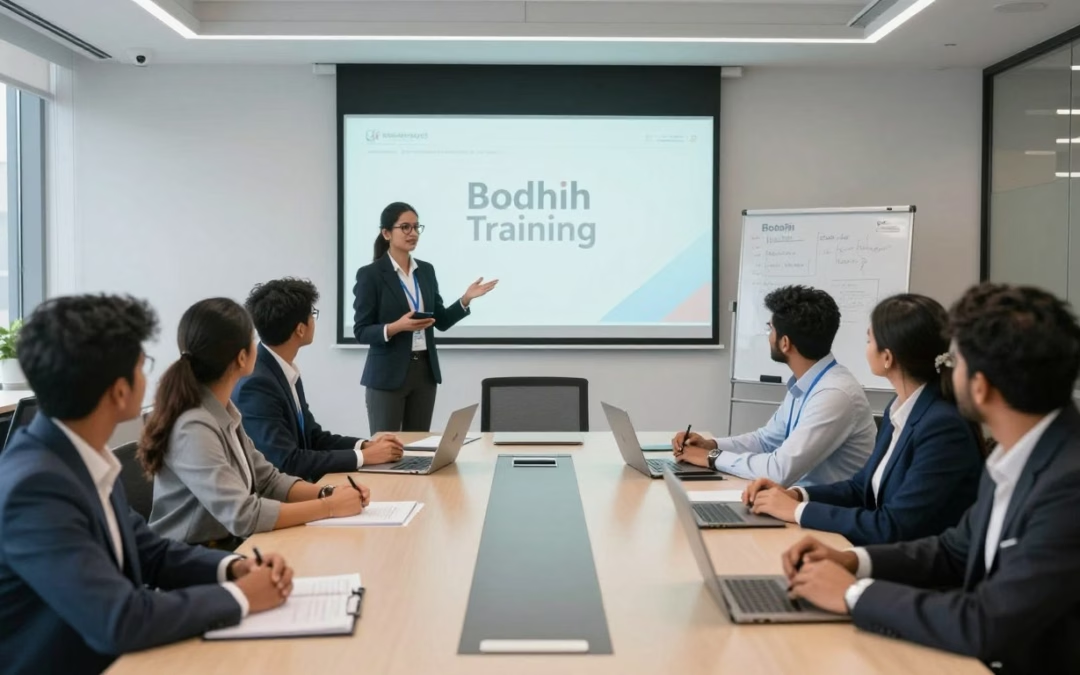
Did you know that the local market for professional growth is set to rise by 16.3% each year until 2027? This massive jump proves that modern organisations now prioritise learning to stay ahead in a fast-moving world. Leaders must embrace this change to foster talent and drive success.
Bodhih provides specialised corporate training programs India that focus on bespoke L&D plans. These solutions help elevate performance and align internal teams with clear business goals. By building new capabilities, your firm can navigate the shifting professional landscape with complete confidence.
You can reach our experts at +91 99000 11601 or +91 99000 11602 to discuss your needs. For further help, email [email protected] or call +91 99000 11603 today. We are ready to help your staff reach their full potential through modern learning methods.
Key Takeaways
- The market for skill development is growing at a 16.3% CAGR.
- Customised L&D plans are vital for both small firms and large enterprises.
- Capability enhancement leads to better organisational management.
- Professional solutions focus on long-term business objectives.
- Direct contact channels allow for tailored consultation and support.
- Continuous learning ensures teams remain competitive in global markets.
Why Corporate Training Programmes Matter for Indian Businesses
As India continues to emerge as a global economic powerhouse, the importance of corporate training programmes cannot be overstated. The rapidly changing business landscape demands that organisations invest in the continuous development of their workforce to remain competitive.
With over 38 million jobs in India’s organised sector expected to be transformed by 2030, the need for new-age skills such as AI literacy, process automation, and digital decision-making is becoming increasingly critical. Corporate training programs help companies address these challenges by providing structured learning paths and measurable results.
The Evolving Skill Landscape in India’s Workforce
The Indian workforce is undergoing a significant transformation, driven by technological advancements and changing industry requirements. As automation and artificial intelligence continue to reshape the employment landscape, there is a growing need for skills that complement these technologies.
To stay relevant, employees must acquire skills in areas such as data analysis, digital marketing, and cloud computing. Corporate training programmes play a crucial role in equipping the workforce with these skills, thereby enhancing their productivity and employability.
Bridging the Talent Gap Through Strategic L&D Initiatives
One of the significant challenges faced by Indian businesses is the talent gap – the mismatch between the skills possessed by the workforce and those required by the industry. Strategic L&D initiatives are essential for bridging this gap.
By investing in comprehensive training programmes, organisations can ensure that their employees possess the necessary skills to drive business success. This not only improves employee performance but also enhances the overall competitiveness of the organisation.
Competitive Advantages of Continuous Learning Culture
A culture of continuous learning provides numerous benefits to organisations, including improved employee retention, increased productivity, and enhanced innovation capabilities. By fostering an environment that encourages learning and development, businesses can stay ahead of the competition.
Moreover, a continuous learning culture helps organisations to be more agile and responsive to changing market conditions. It enables them to innovate and adapt, thereby driving long-term success.
Understanding Customised L&D Solutions for Different Business Scales
Organisations across India are recognising the importance of tailored corporate training programs to enhance their workforce’s capabilities. As businesses grow and evolve, their training needs change, necessitating adaptable and customised L&D solutions.
Enterprise-Level Training Requirements and Challenges
Large enterprises have complex training needs due to their size and diverse operations. They require comprehensive enterprise training programs that cater to various departments and levels of employees.
- Leadership development programs for senior executives
- Technical skills training for IT and operations teams
- Soft skills enhancement for customer-facing staff
These programs must be scalable, flexible, and integrated with the organisation’s existing learning management systems.
SME-Specific Learning Needs and Budget Considerations
Small and medium-sized enterprises (SMEs) have unique training needs and budget constraints. They require cost-effective, relevant, and easily accessible training solutions that can be implemented quickly.
Key considerations for SMEs include:
- Affordable pricing models
- Customisable content that addresses specific business challenges
- Flexible delivery methods, such as online or blended learning
Tailoring Content to Organisational Maturity and Growth Stage
Organisations at different stages of maturity and growth require tailored L&D solutions. For instance, a startup may need training focused on foundational skills, while a mature organisation might require more advanced leadership development programs.
Understanding the organisation’s growth stage and maturity level is crucial in designing effective training programs that meet their specific needs and objectives.
Comprehensive Range of Corporate Training Programs India Organisations Can Access
Indian organisations now have access to a diverse array of corporate training programs designed to elevate their workforce’s capabilities. The range of programs available is comprehensive, addressing various aspects of organisational development and employee growth.
Leadership and Management Development Programmes
Effective leadership is crucial for organisational success. Leadership and management development programs focus on enhancing the skills of current and future leaders, enabling them to drive business objectives efficiently. These programs cover areas such as strategic planning, decision-making, and team management.
- Strategic leadership development
- Operational management skills enhancement
- Change management and innovation
Technical Skills Enhancement and Certification Training
As technology continues to evolve, the need for upskilling and reskilling employees becomes increasingly important. Technical skills enhancement programs provide employees with the latest knowledge and certifications in their respective fields, ensuring that the organisation remains competitive.
Top corporate training platforms in India, such as CPHR Services, Disprz, and Simplilearn, offer a wide range of technical training programs. These include:
- Programming and software development
- Data analytics and science
- Cybersecurity and network administration
Soft Skills and Communication Excellence
Soft skills are essential for effective collaboration and communication within the workplace. Training programs focused on soft skills and communication excellence help employees improve their interpersonal skills, leading to better teamwork and customer service.
“Soft skills are the new currency in the corporate world. Investing in soft skills training can significantly enhance team collaboration and productivity.”
Digital Transformation and Emerging Technology Training
With the rapid pace of digital transformation, organisations must equip their workforce with the knowledge and skills to adapt to emerging technologies. Training programs in this area cover topics such as:
- Artificial intelligence and machine learning
- Blockchain technology
- Cloud computing and migration
Compliance, Regulatory and Governance Training
Compliance with regulatory requirements is critical for organisations to avoid legal and financial repercussions. Compliance, regulatory, and governance training programs ensure that employees understand the relevant laws and regulations affecting their industry.
These programs cover areas such as:
- Industry-specific regulations
- Data protection and privacy laws
- Corporate governance best practices
By accessing these comprehensive L&D solutions, Indian organisations can significantly enhance their workforce’s capabilities, driving business growth and competitiveness.
Industry-Specific Training Solutions Across Key Sectors
As industries evolve, the need for tailored training programs that address specific sectoral needs has become increasingly evident. Companies like NIIT and Simplilearn are at the forefront of offering industry-specific training solutions that cater to the unique requirements of various sectors.
These training programs are designed to enhance the capabilities of the workforce, ensuring they remain competitive and adept in their respective domains. The following sections outline the training solutions available for key industries.
Information Technology and Software Development
The IT and software development sector requires continuous upskilling to keep pace with technological advancements. Training programs in this sector focus on emerging technologies such as AI, cloud computing, and cybersecurity.
- Technical skills enhancement through certification courses
- Specialised training in software development methodologies
- Emerging technology workshops
Banking, Financial Services and Insurance (BFSI)
The BFSI sector demands rigorous training to comply with regulatory requirements and to adopt new financial technologies. Training solutions include compliance training, risk management, and digital banking.
Key areas of focus:
- Regulatory compliance and governance
- Financial technology (FinTech) adoption
- Risk management and mitigation strategies
Manufacturing, Engineering and Supply Chain
The manufacturing, engineering, and supply chain sectors benefit from training programs that enhance operational efficiency and adopt lean manufacturing practices. Training solutions cover areas such as supply chain management, quality control, and engineering skills development.
Healthcare, Pharmaceutical and Life Sciences
The healthcare, pharmaceutical, and life sciences industries require specialised training to ensure compliance with regulatory standards and to adopt new medical technologies. Training programs focus on clinical research, pharmaceutical manufacturing, and healthcare management.
Key training areas include:
- Clinical research and trials management
- Pharmaceutical manufacturing and quality control
- Healthcare management and leadership development
By providing industry-specific training solutions, organisations can ensure their workforce is equipped to meet the unique challenges of their respective sectors, driving growth and innovation.
The Customisation Process: From Assessment to Implementation
To elevate organisational capabilities, it’s essential to follow a structured customisation process for corporate training. This process ensures that the training programs are aligned with the organisation’s specific needs and objectives.
Comprehensive Training Needs Analysis and Gap Assessment
A thorough training needs analysis is the foundation of any effective corporate training program. It involves identifying the skills and knowledge gaps within the organisation and understanding the specific requirements of different departments and teams. Companies like CPHR Services and Disprz offer tailored L&D solutions that begin with a comprehensive analysis to determine the training needs.
“Understanding the unique challenges and objectives of an organisation is crucial for designing training programs that deliver real impact,” says an expert in the field.
Designing Bespoke Learning Pathways and Curricula
Once the training needs are identified, the next step is to design bespoke learning pathways and curricula that cater to the organisation’s specific requirements. This involves creating a tailored learning journey that addresses the identified gaps and aligns with the organisation’s overall objectives.

Flexible Delivery Methods and Learning Modalities
Flexible delivery methods are crucial for ensuring that the training programs are accessible to all employees, regardless of their location or schedule. Various learning modalities can be employed to cater to different learning preferences.
Instructor-Led Training (ILT) in Classroom Settings
ILT in classroom settings provides an interactive and engaging learning experience, allowing for real-time feedback and discussion.
Virtual Instructor-Led Training (VILT) for Remote Teams
VILT offers the same benefits as ILT but is conducted online, making it ideal for remote teams or organisations with multiple locations.
Blended Learning Approaches for Maximum Impact
Blended learning combines different training methods, such as ILT, VILT, and e-learning, to create a comprehensive learning experience that caters to various learning styles.
Self-Paced E-Learning Modules and Microlearning
Self-paced e-learning modules and microlearning provide employees with the flexibility to learn at their own pace, making it easier to fit training into their busy schedules.
By incorporating these flexible delivery methods and learning modalities, organisations can ensure that their training programs are effective and engaging, leading to improved employee performance and productivity.
Strategic Benefits of Investing in Corporate Training Programmes
Organisations in India that invest in comprehensive corporate training programs often experience substantial improvements in various operational aspects. These programs are designed to enhance employee capabilities, drive business growth, and foster a culture of continuous improvement.
Enhanced Employee Performance and Productivity Metrics
Investing in corporate training programs leads to significant improvements in employee performance and productivity. By equipping employees with the necessary skills and knowledge, organisations can enhance their overall efficiency and effectiveness.
Data from various studies indicates that companies investing in training see a 21% higher per-employee income, driven by improved productivity and efficiency. This directly impacts the bottom line, making a strong case for the implementation of robust training programs.
| Performance Metrics | Pre-Training | Post-Training |
|---|---|---|
| Employee Productivity | 70% | 85% |
| Employee Satisfaction | 60% | 80% |
| Revenue per Employee | £50,000 | £60,500 |
Improved Retention Rates and Employee Satisfaction
Corporate training programs also play a crucial role in improving employee retention rates and satisfaction. When employees feel that their organisation is invested in their growth and development, they are more likely to be engaged and committed to their roles.
This, in turn, leads to reduced turnover rates and the associated costs of recruiting and training new employees. Organisations that prioritise employee development tend to have a more stable and motivated workforce.
Building a Culture of Innovation and Continuous Improvement
A key benefit of corporate training programs is the cultivation of a culture of innovation and continuous improvement. By encouraging employees to learn and adapt, organisations can stay ahead of the curve in terms of industry trends and technological advancements.
This culture not only drives business growth but also fosters an environment where employees are empowered to suggest new ideas and solutions, further enhancing the organisation’s competitive edge.
Strengthening Organisational Capabilities for Future Growth
Finally, investing in corporate training programs is essential for strengthening organisational capabilities for future growth. By developing a skilled and adaptable workforce, organisations can better navigate the challenges of an ever-changing business landscape.
This forward-thinking approach ensures that organisations are well-positioned to capitalise on new opportunities and drive long-term success.
Measuring Training Effectiveness and Return on Investment
The true value of corporate training lies in its ability to drive tangible business results, which can be measured through various metrics. To ensure that their training programs are effective, organisations must adopt a comprehensive approach to evaluation.
Key Performance Indicators for L&D Programmes
To measure the effectiveness of L&D programs, organisations should track key performance indicators (KPIs) such as:
- Participant satisfaction and engagement
- Knowledge retention and application
- Job performance improvement
- Return on Investment (ROI)
- Return on Expectation (ROE)
These KPIs provide insights into the impact of training on employee performance and business outcomes.
Assessment and Evaluation Methodologies
Organisations can use various assessment and evaluation methodologies to measure training effectiveness, including:
- Surveys and feedback forms to gauge participant satisfaction
- Quizzes and assessments to measure knowledge retention
- Performance metrics to track job performance improvement
- ROI analysis to evaluate the financial impact of training
By combining these methodologies, organisations can get a comprehensive picture of their training programs’ effectiveness.
Tracking Long-Term Impact on Business Outcomes
To understand the long-term impact of training on business outcomes, organisations should track metrics such as:
- Employee retention and turnover rates
- Productivity and efficiency gains
- Revenue growth and cost savings
- Innovation and competitiveness
By monitoring these metrics, organisations can assess the sustained impact of their training programs.
Utilising Learning Analytics and Data-Driven Insights
Learning analytics can provide valuable insights into training effectiveness by tracking learner engagement, progress, and outcomes. Organisations can use data-driven insights to:
- Identify skill gaps and training needs
- Optimise training content and delivery
- Predict learner performance and outcomes
- Measure the ROI of training programs
By leveraging learning analytics, organisations can make informed decisions about their L&D strategies and improve training effectiveness.
Selecting the Right Corporate Training Partner in India
The process of identifying a suitable corporate training partner in India involves careful consideration of several key factors. Organisations must assess potential partners based on their ability to deliver customised training solutions that align with the company’s specific needs and objectives.
Evaluating Credentials and Industry Experience
When evaluating potential corporate training partners, it is essential to assess their credentials and industry experience. Reputable training providers such as CPHR Services and NIIT offer robust solutions backed by strong industry expertise. Organisations should look for partners with a proven track record of delivering effective training programs that meet the specific needs of their industry.
Some key considerations include:
- Relevant certifications and accreditations
- Experience working with similar organisations or industries
- Case studies or testimonials from previous clients
Flexibility and Customisation Capabilities
A good corporate training partner should be able to offer flexible and customised training solutions that cater to the organisation’s unique requirements. This may involve tailoring content, delivery methods, or assessment techniques to ensure that the training is relevant and effective.
Organisations should look for partners that can:
- Conduct comprehensive training needs analyses
- Design bespoke learning pathways and curricula
- Offer a range of delivery methods, including online and offline options
Technology Infrastructure and Learning Management Systems
The right technology infrastructure is crucial for delivering effective corporate training programs. Organisations should evaluate potential partners based on their learning management systems (LMS) and other technological capabilities.
Key considerations include:
- The ability to track learner progress and engagement
- Mobile compatibility and accessibility
- Integration with existing HR systems
Post-Training Support and Continuous Learning Resources
Finally, organisations should consider the level of post-training support and continuous learning resources offered by potential partners. A good training partner should provide ongoing support to ensure that learners can continue to develop their skills and knowledge over time.
This may include:
- Access to additional learning resources or materials
- Ongoing coaching or mentoring services
- Regular updates to training content to reflect changing industry needs
Get Started with Customised L&D Solutions for Your Organisation
Embark on a transformative journey with our customised L&D solutions tailored to elevate your organisation’s capabilities. Our expert team is dedicated to helping you achieve your business objectives through strategic learning and development initiatives.
Contact Our Training Specialists
To initiate your journey, connect with our training specialists who will guide you through the process of identifying your organisation’s unique learning needs.
Phone: +91 99000 11601
Phone: +91 99000 11602
Phone: +91 99000 11603
Email: [email protected]
Schedule a Complimentary Consultation to Assess Your Training Needs
Our complimentary consultation will help you understand your organisation’s training requirements and design a bespoke learning pathway. This initial step is crucial in creating a tailored L&D solution that aligns with your business goals.
Request a Customised Training Proposal for Your Team
Upon assessing your training needs, we will provide a customised training proposal outlining the scope, methodology, and expected outcomes of our L&D solutions. This proposal will be designed to meet your organisation’s specific requirements, ensuring maximum ROI on your training investments.
Conclusion
The corporate training landscape in India is undergoing a significant transformation, driven by the need for continuous learning and skill development.
As organisations navigate the complexities of a rapidly evolving business environment, investing in customised corporate training programs India becomes crucial for staying competitive.
By leveraging AI-driven personalisation, microlearning, and skills-based learning, businesses can elevate their capabilities and achieve their objectives.
Companies that prioritise continuous learning will be better positioned to thrive in a competitive market, driving growth and innovation.
With the right corporate training programs India, organisations can bridge the talent gap, enhance employee performance, and build a culture of innovation.
FAQ
What defines the most effective corporate training programs India currently offers for modern businesses?
The most effective corporate training programs India provides are those that offer a blend of customised L&D solutions tailored to the specific objectives of the organisation. These programmes focus on capability building, addressing the evolving skill landscape, and ensuring that the workforce is equipped to handle both digital transformation and complex leadership challenges within the enterprise training framework.
How can strategic L&D solutions bridge the talent gap within Indian organisations?
Strategic L&D solutions identify specific capabilities that are lacking and create bespoke learning pathways to address them. By focusing on continuous learning, organisations like Tata Consultancy Services or Infosys can ensure their workforce remains agile, effectively bridging the talent gap and maintaining a competitive advantage in a globalised landscape.
What is the difference between SME-specific training and large-scale enterprise training?
A: Enterprise training is often designed for scale and complexity, focusing on governance, compliance, and global leadership development across multiple tiers. Conversely, SME-specific learning is typically more agile, focusing on immediate productivity metrics, technical skills enhancement, and capability growth aligned with the organisational maturity and budget considerations of a developing business.
Which industries benefit most from industry-specific customised L&D solutions?
While all sectors benefit, high-growth industries such as Information Technology, BFSI (Banking, Financial Services, and Insurance), and Healthcare require highly specialised customised L&D solutions. These programmes address unique regulatory requirements and technical skills, ensuring that professionals in firms like HDFC Bank or Apollo Hospitals meet stringent industry standards.
How does the customisation process ensure that training is relevant to business objectives?
The process begins with a comprehensive training needs analysis and gap assessment. This allows training specialists to design bespoke learning pathways that align directly with the business objectives. By using flexible delivery methods, the training is integrated seamlessly into the organisational workflow, ensuring enlightenment and practical application of new skills.
What strategic benefits can an organisation expect from investing in corporate training programs India?
Organisations can expect enhanced employee performance, improved retention rates, and a robust culture of innovation. Beyond immediate productivity, these programmes elevate the internal capabilities of the firm, making it more resilient and prepared for future growth within the Indian business landscape.
How is the return on investment (ROI) measured for L&D initiatives?
ROI is measured through learning analytics, assessment methodologies, and Key Performance Indicators (KPIs). By tracking long-term impact on business outcomes—such as reduced operational errors or increased sales performance—organisations can quantify the value of their L&D solutions and make data-driven decisions for future investments.
What should decision-makers look for when selecting a corporate training partner?
It is essential to evaluate a partner’s industry experience, technology infrastructure, and flexibility. A reputable partner, such as Reliance Industries‘ internal training wings or established consultants like KPMG India, should provide post-training support and demonstrate a proven ability to elevate organisational capabilities through effective management solutions.
How can an organisation begin its journey toward enhanced capability building?
The first step is to contact our training specialists to schedule a complimentary consultation. This allows for a preliminary assessment of your training needs, leading to a customised training proposal that outlines the strategic L&D initiatives required to achieve your specific organisational objectives.
Table of Contents
Recent Comments